
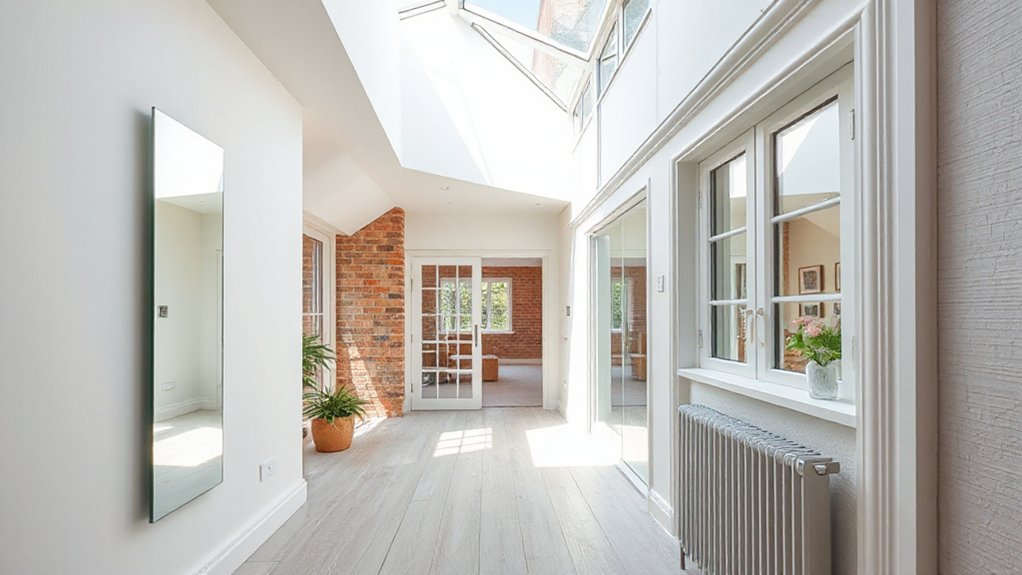

You might worry that narrow terraces can never feel bright, but smart placement and simple tweaks can change that. Start by aligning openings with the sun, add clerestories or continuous glazing, and bounce light with mirrors or glossy surfaces. We’ll also trim obstructors outside and use light-reflecting colors inside. If you want practical steps and real-life results, there’s more to contemplate as you plan the upgrades.
Why Daylight Matters in Narrow Terraces (And What You’ll Gain)
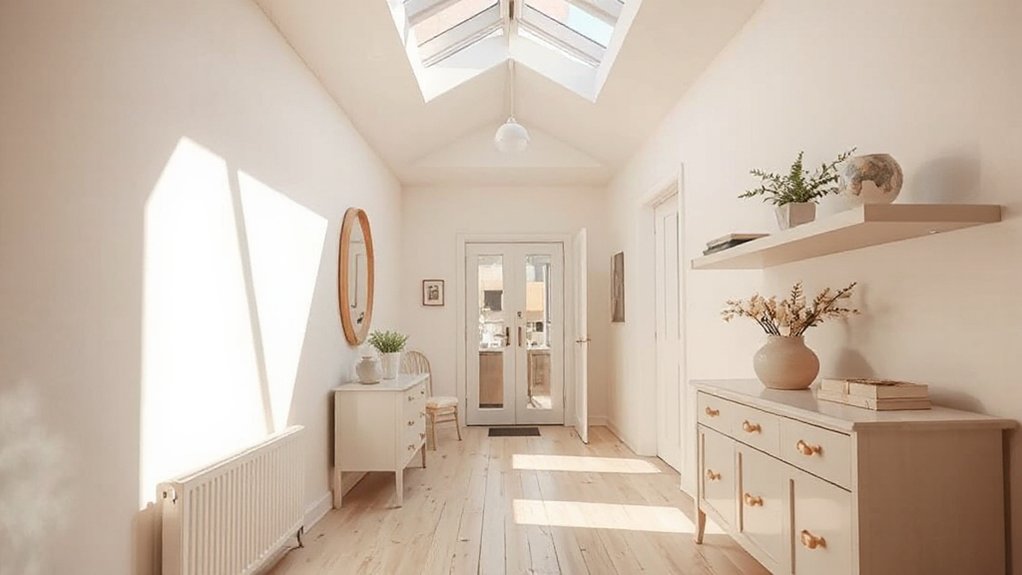
Daylight matters in narrow terraces because it affects how spacious and comfortable your home feels, how well you can see without artificial lighting, and how your plants, fabrics, and finishes look true to color. You gain a clearer sense of space, better mood, and reduced energy use when daylight streams in.
With thoughtful outdoor shading, you control glare and heat, extending usable hours near windows and doors. You can position furniture to maximize reflections and avoid blocked sightlines.
Combine daylight with strategic artificial lighting for depth and task-specific illumination, especially in corners and work zones. Prioritize durable materials that resist fading and simplify maintenance.
Practical shading choices and layered lighting deliver reliable comfort, flexibility, and visual harmony throughout your narrow terrace.
Assess Your Current Daylight: Measure and Read Clues
Start by measuring current daylight levels in key rooms at different times of day to establish a baseline.
Look for natural clues like window size, overlap of shadows, and brightness on walls to gauge quality and duration of light.
Use these measurements and clues to pinpoint where improvements will have the biggest impact.
Measure Daylight Levels
To assess your current daylight, start by taking a few quick measurements and noting the results. Measure illuminance in key rooms at the typical usage height (about 1.2 meters) with a simple light meter or a well-calibrated app. Record at multiple times of day to capture seasonal variations, and compare against a baseline you’ll use for improvements.
Note window orientation, wall reflectance, and any shading from nearby structures. Track how long direct sun reaches each space and whether passive glare affects comfort. Use these findings to prioritize changes: reposition furniture, trim obstructions, or resize openings.
In dim zones, plan for artificial lighting as a fallback, ensuring consistent brightness without overreliance. Document results for future benchmarking and progress checks.
Read Natural Clues Likely
If you want a quick, practical read on how daylight behaves in your spaces, start by noting the natural clues around you: where light enters, how it travels, and where it fades as the day progresses.
- Observe where natural clues are strongest—entry points, gaps, and shelves that cast shadows.
- Track daylight cues through the rooms at different times, noting brightness, color, and diffusion.
- Record any dead zones and moments when light bounces off surfaces to illuminate corners.
Window Placement for Daylight in Narrow Terraces
To maximize daylight in narrow terraces, start by aligning window orientation with the sun’s path to capture dawn-to-dusk light efficiently.
Consider layout options that create continuous light corridors, such as high side windows and strategically placed clerestories that don’t sacrifice privacy.
We’ll explore practical placements and daylight corridors that you can implement without costly renovations.
Window Orientation Strategies
Strategically placing windows is the fastest way to maximize daylight in a narrow terrace. Your orientation choices should prioritize minimizing shading and capturing low-angled winter sun while avoiding overheating in summer. Consider these practical steps:
- Align tall, rectilinear windows along the longest wall to channel light deeper into rooms.
- Use staggered heights and transoms to bounce light between spaces without sacrificing privacy.
- Pair window placement with color contrast and roof color choices that reflect daylight rather than absorb it, brightening interiors.
Understand you’ll gain more consistent illumination by balancing window size with internal reflections. Place reflective surfaces opposite windows to push light further.
Keep openings away from obstructed views and avoid narrow, single-pane configurations that trap shadows.
Dawn-to-Dusk Light Pathways
Prioritize continuous glazing on the side facing the sun’s arc, and place high clerestory or transom windows to bounce brightness toward the core. Avoid obstructions like bulky furniture or dark finishes that absorb light.
Use light-colored walls and reflective surfaces to amplify every ray. Plan sunrise rituals around opening skylights or gap-lit curtains for early glow, then shift to shaded textures as the day advances.
Capture dawn photography moments, but preserve glare-free, evenly lit interiors throughout the afternoon.
Interior Windows: Options to Bend Light Indoors
Interior windows can be a simple, effective way to bend light through a narrow terrace home. You’ll optimize both depth and brightness without major renovations. Use strategically sized panes, corner casings, and lighter window surrounds to reflect more daylight inward.
- Maximize glazing: choose higher transparency glazing and slim frames to reduce light loss.
- Mirror and bevel tricks: add reflective borders or interior mirrors near window walls to bounce daylight deeper.
- Plant-friendly light: position indoor plants where they receive indirect sun, leveraging leaves to scatter light.
Beyond layout, couple with artificial lighting to maintain luminosity after dusk. Keep trim minimal and opt for soft, cool-toned bulbs. This approach preserves natural color while supporting energy efficiency.
When to Add Skylights or Light Tubes
If you’ve already thinly stretched daylight with interior windows, adding skylights or light tubes can be the next smart step to flood vertical spaces with natural light. Choose timing based on roof condition and seasonal glare. Install during a dry window in mild weather to avoid sealant issues and compression shifts.
Prioritize roof insulation first; a well-insulated attic keeps heat transfer minimal and reduces condensation risks around fixtures. Light tubes suit shallow ceilings and limited attic space, while skylights excel in deeper rooms and larger openings.
Consider window tinting on skylight glazing to curb infrared heat and glare without sacrificing daylight. Plan venting or faint-mre ventilation if needed to prevent humidity buildup in narrow cores.
Schedule professional sizing to maximize daylight, not skylight count.
Glass Doors and Partitions to Invite More Daylight
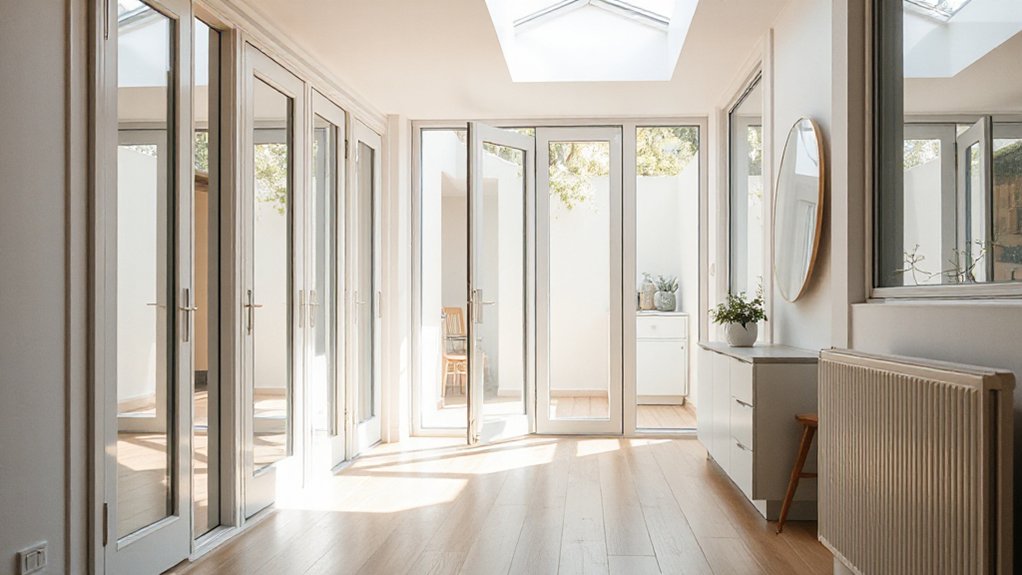
Glass doors light up adjacent spaces without hogging wall area, so you get brighter rooms without sacrificing flow. Use clear partitions to maintain sightlines while softly diffusing light across interiors.
Consider door and partition layouts that prioritize direct light paths—the goal is consistent daylight from entry to living zones.
Glass Door Lightflow
Glass doors and partitions can substantially boost daylight in narrow terraced homes by opening sightlines and letting sunlight flow through from room to room.
You’ll optimize lightflow with practical choices:
1) Choose clear or low-iron glass to maximize brightness without distortion.
2) Install floor-to-ceiling panels where possible to extend sightlines.
3) Use slim frames and recessed handles to minimize visual barriers.
Tips to implement:
- Use interior doors that swing or slide smoothly to preserve openness.
- Keep adjacent walls light-colored and reflective to bounce light deeper.
- Consider frosted panels only where privacy is needed, not to block daylight.
Brighten With Partitions
Partitions, including glass doors, are a fast track to brighter spaces because they open sightlines while keeping rooms distinctly defined. You’ll brighten narrow layouts by selecting clear or low-iron glass to maximize light transmission and minimize tint.
Prioritize Partition placement that aligns with natural light sources: position panels to bounce daylight from windows into deeper zones without blocking activity zones. Use frameless or slim-framed designs to reduce visual clutter and preserve openness.
Consider hinged, sliding, or pocket options based on traffic flow to avoid obstructing walkways. Guarantee seals are tight to prevent drafts and dust collection, maintaining clarity.
For space division, choose materials and heights that create defined zones without isolating areas, preserving a cohesive, airy feel throughout the home.
Indoor-Outdoor Lightways
Could you boost daylight in a narrow terrace by linking indoors and outdoors with glass doors and unobtrusive partitions? Yes—this approach creates continuous sightlines, reduces shadowed corners, and welcomes daylight deeper into your home.
Use clear or lightly tinted glazing to maximize brightness without glare. Pair doors with slim partitions that don’t obstruct flow, and keep frames minimal to preserve views. Integrate indoor plants near openings to reflect light and soften edges, while artificial lighting supplements low-sun days without overpowering the scene.
To implement quickly:
1) Install floor-to-ceiling glass where practical to extend daylight zones.
2) Choose ultra-thin framing and swing or bi-fold options for flexible access.
3) Place mirrors and light-colored surfaces opposite openings to bounce light further.
Focus on practicality, precision, and daily use.
Reflective Finishes to Brighten a Space
Reflective finishes can noticeably brighten a space by bouncing natural light around the room. You’ll use mirrors, glossy tiles, and high-sheen paints strategically to maximize daylight without clutter.
Place a large mirror opposite a windowsill to double the apparent light, and choose framed mirrors with slim profiles to avoid visual heaviness.
Opt for ceramic or glass tiles with a polished surface in zones prone to dimness, such as entryways or kitchens, to reflect overhead light.
Paint walls with a semi-gloss or satin finish in cool, light tones to minimize absorption and amplify brightness.
Keep fixtures minimal and cleanable, ensuring reflections aren’t obstructed by grime.
For natural light integration, align reflective elements with window angles and shadows throughout the day.
Neutral Palettes That Expand a Room
Neutral palettes are a simple, effective way to make a narrow terraced space feel larger. By choosing light, neutral tones, you reflect more natural light and create a cohesive canvas for your room. Use color psychology to pick hues that feel airy—soft whites, warm beiges, and pale grays. Pair with practical window treatments that maximize daylight without clutter.
- Select a consistent base shade across walls, ceiling, and furniture to reduce visual fragmentation.
- Introduce small, cooler accents in fabrics or accessories to enhance perceived depth.
- Keep fixtures and storage in matte neutrals to minimize glare and maintain cohesion.
This approach relies on deliberate contrast and texture. Window treatments should be light and translucent, avoiding heavy drapes that absorb light.
Flooring and Rugs That Reflect Daylight
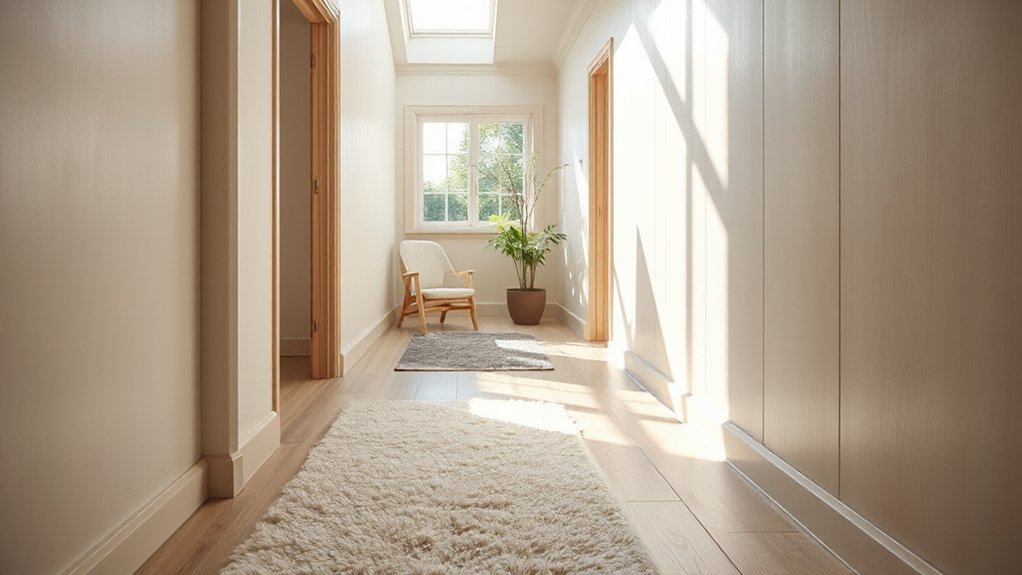
Opt for reflective flooring options, like polished or light-wood finishes, to bounce daylight deeper into narrow spaces.
Pair these with light-enhancing rug patterns that feature subtle contrast and long, linear shapes to guide illumination along the room.
Choose brightness-boosting materials—suited underfoot and easy to maintain—to maximize light without sacrificing comfort or cohesion.
Reflective Flooring Selection
Choosing flooring and rugs with high reflectivity can dramatically brighten narrow terraced spaces. To select the right option, focus on these practical criteria:
- Choose light-toned, matte or satin finishes that bounce daylight without glare.
- Prioritize durable materials with low maintenance, ensuring long-term Floor aesthetics and material durability.
- Consider seamless gradations between rooms to maximize perceived width and daylight flow.
Key tips:
- Opt for neutral floors like pale oak or ash, which reflect more light than darker tones.
- Avoid busy textures that absorb light and add visual clutter.
- Pair reflective flooring with complementary wall and ceiling shades to amplify brightness consistently.
Light-Enhancing Rug Patterns
Rugs with daylight-maximizing patterns can dramatically brighten tight spaces, so choose designs that reflect rather than absorb light. To maximize impact, pick low-pile rugs with tight, high-contrast patterns that bounce rather than soak illumination.
Opt for light backgrounds paired with darker accents to create strong color contrast without overpowering the room. Avoid dense, shaggy textures that trap shadows; instead, favor flat-weave or short-pile rug textures that distribute light evenly across floor surfaces.
Position rugs to align with natural focal points—under seating or along entry sightlines—to extend brightness where you spend time. For small rooms, choose patterns with diagonal or geometric lines that guide the eye and create perceived depth.
Guarantee color coordination with walls and furnishings to maintain a cohesive, brighter feel.
Brightness-Boosting Materials
To keep daylight moving through tight spaces, choose flooring and rugs that reflect rather than absorb light. Bright, light-colored surfaces bounce more of your available daylight, widening perceived space and reducing the need for artificial illumination during the day.
Opt for low-pile textures and smooth finishes that minimize shadow traps and maximize reflectivity. Contrast matters, but keep tones cool and neutral to keep the glow steady.
- Select flooring with a satin or semi-gloss finish in pale hues.
- Layer rugs in lighter tones with subtle patterns to diffuse light evenly.
- Avoid dark furniture fronts that absorb brightness and create depth.
Pair these choices with decorative lighting that complements the palette, ensuring ample artificial illumination when needed.
Furniture Layout Ideas That Keep Daylight Flowing
Even with limited space, you can keep daylight flowing by arranging furniture to minimize obstructions. Start by placing sofas and chairs away from windows, creating clear sightlines and preventing blockages.
Use narrow, leg-height seating to avoid casting long shadows across rooms. Opt for wall-mounted shelving and slim consoles instead of freestanding units that steal floor space.
Choose lighter, reflective finishes to bounce natural light deeper into the room. Keep traffic routes unobstructed; stagger rug edges to guide movement without clutter.
Color schemes should emphasize pale tones with a few saturated accents to enhance brightness. Position art placement thoughtfully near light sources but away from direct glare.
Mirror placements can amplify daylight when angled to reflect windows. Prioritize multi-functional pieces to reduce excess furniture while preserving openness.
Exterior Tweaks That Increase Daytime Sun Exposure
Exterior tweaks can considerably boost daytime sun exposure by opening sightlines and removing barriers that shade entrances and windows. You’ll maximize light with simple, targeted changes that avoid overhauls.
Focus on two practical constraints: garden privacy and exterior paint. By rethinking fences, gates, and screening, you can lower shading without sacrificing privacy. Then refresh painted surfaces to reflect more light and brighten facades.
1) Swap dark, bulky fencing for low-profile panels or lattice that preserves privacy while letting light pass.
2) Reposition or remove obstructions near entryways and windows, like overhangs or planters that cast long shadows.
3) Use light-reflecting exterior paint colors and clean, glossy finishes to amplify daylight.
These tweaks are actionable, affordable, and keep daylight flowing into narrow spaces.
Landscaping and Roofline Changes to Boost Daylight
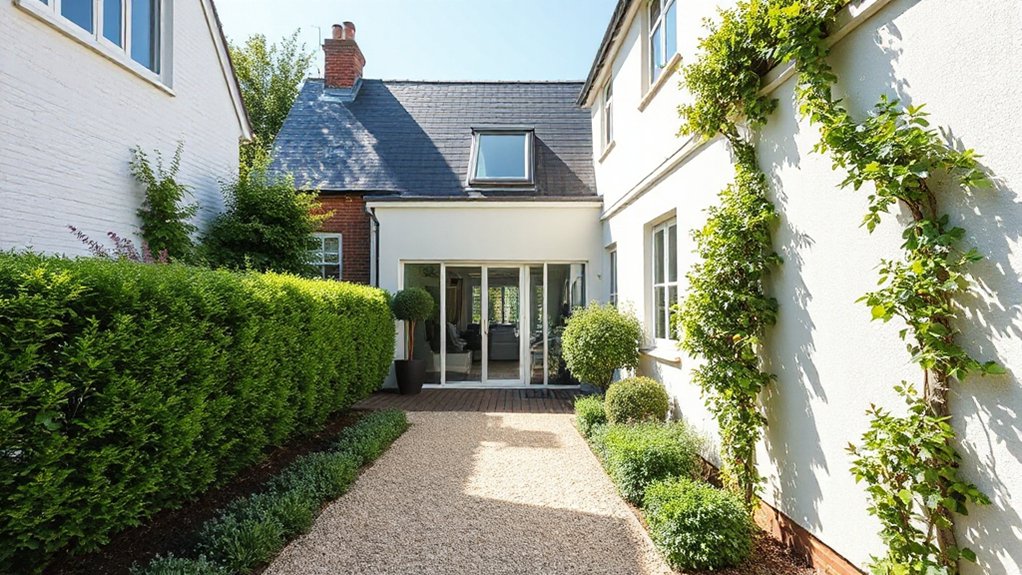
Strategic landscaping and roofline tweaks can markedly increase daytime light in narrow terraces when done with purpose. You’ll map light paths before planting or altering fascia, prioritizing slender, reflective foliage and vertical greens that don’t overshadow windows.
Choose garden furniture with light tones and open silhouettes to avoid blocking sightlines or casting heavy shade. Prune overhanging branches on adjacent properties and trim roof eaves to maximize sky exposure without compromising drainage.
Use roofline changes like shallow skylights or translucent panels where permitted to funnel additional light deeper into rooms. Layer planting with deciduous, light-reflecting species near facades to bounce daylight inward.
Complement with outdoor lighting that’s low-profile and indirect, ensuring night brightness doesn’t compete with daytime gains.
Energy Efficiency With Brighter Homes
Could brighter homes also cut energy use? Yes, and you’ll feel the difference quickly. By maximizing daylight, you reduce reliance on artificial lighting and lower heating costs through better heat distribution from sunlight benefits.
Focus on practical steps that tighten energy efficiency without sacrificing brightness:
- Use light shelves and strategically placed mirrors to bounce natural light into darker corners.
- Choose high-reflectance interior paints and surfaces to amplify daylight across rooms.
- Install vented skylights or roof windows that open seasonally, improving natural cooling and reducing HVAC load.
Together, these tactics deliver energy savings while preserving a brighter, more welcoming footprint. Keep windows clean and unobstructed, and align furnishings to maximize sunlit pathways.
Budget-Friendly Upgrades With High Impact
What small changes translate into big results in a tight budget? You can boost natural light with targeted, high-impact upgrades.
Begin with Garden planning: choose reflective surfaces, light-colored hardscapes, and minimal foliage near windows to bounce daylight inward.
Rework layout to maximize window exposure—remove obstructions, relocate heavy furniture, and create clear sightlines.
Exterior painting matters too: opt for bright, cool or neutral tones on facades and trims to mimic more light outside, making rooms feel airy.
Use energy-efficient glazing on existing windows if possible, and prioritize tasks that don’t require structural changes.
Cap it with smart, quick decluttering to reduce visual weight.
These steps deliver measurable brightness without a full renovation.
Light Management: Blinds, Shutters, and Smart Controls
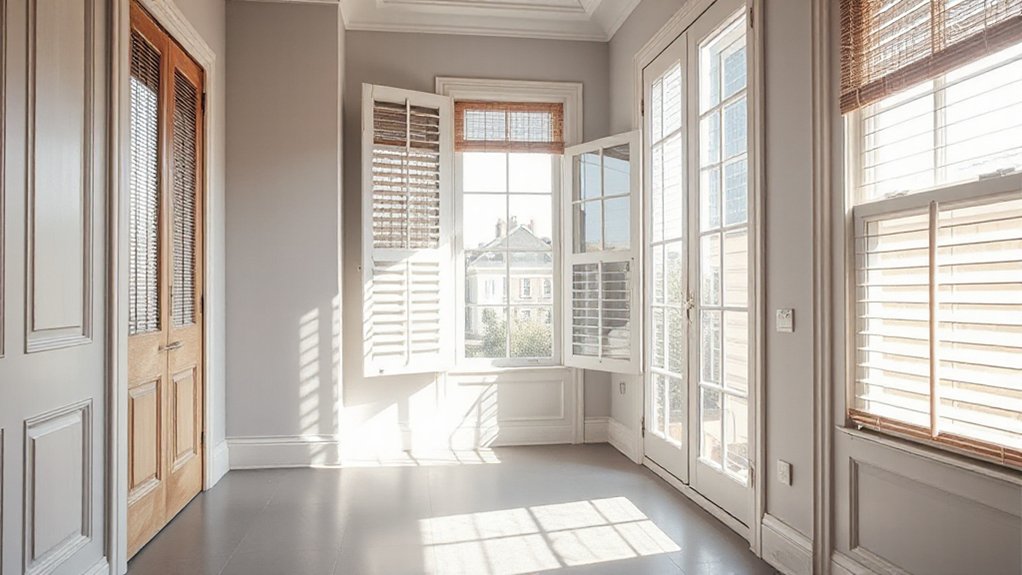
Shifting from exterior tweaks to interior controls, you can fine‑tune daylight with blinds, shutters, and smart systems. Use practical choices that fit narrow spaces and high ceilings, prioritizing light control, privacy, and energy efficiency. Focus on simple upgrades that yield quick results without major renovations.
1) blinds installation: choose slim profiles, outside‑mount where possible, and light‑diffusing fabrics to maximize daylight without glare.
2) shutter styles: favor louvered or tinted panels that can be angled for morning sun and evening shading, boosting perceived brightness.
3) smart controls: pair with dimmers and room sensors to automate scenes, preserving daylight while reducing heat gain.
Together, these elements deliver precise control, reduce flicker, and keep interiors bright and comfortable.
Case Studies: Before-and-After Daylight Transformations
Before-and-after daylight cases show how small changes yield big brightness gains in narrow terraced homes.
In Case Study A, you’ll see a tight stairwell brightened by a shallow skylight and a clerestory window, eliminating deep shadows along the landing.
Case Study B cuts glare and pulls light deeper into a lounge with light-reflective plaster, strategic mirror positions, and a narrow garden shading screen that preserves privacy while boosting perceived brightness.
Case Study C demonstrates the impact of window tinting on afternoon glare without darkening interiors, paired with a slender rooflight to maintain color accuracy.
Across all, you’ll note practical follow-through: measure before-and-after luminance, test glare indices, and document occupant comfort.
These results reinforce why garden shading and window tinting matter for daylight.
Maintenance Tips to Keep Daylight Flowing Year-Round
Maintaining daylight flow in narrow terraced homes demands regular checks and quick fixes. To keep light steady year-round, follow these practical steps:
- Inspect windows seasonally for seals, gaps, and condensation; reseal or replace as needed.
- Trim exterior obstructions and prune nearby branches to prevent shading and maximize sun penetration.
- Plan garden planning around light paths, choosing reflective surfaces and light colors to amplify brightness inside.
Regular cleaning of panes improves visibility and light transmission. Reorder interiors to reflect daylight toward darker zones, using mirrors and light-colored surfaces.
Schedule a once-a-year assessment of window coatings and skylights, if present, to guard against glare and UV fade. When updating spaces, consider color psychology to boost perceived brightness and mood.
This disciplined upkeep sustains daylight without costly renovations.
Frequently Asked Questions
How Can Light Affect Ceiling Height Perception in Narrow Terraces?
You’ll notice ceiling height feels higher with brighter light, a ceiling illusion you can leverage; maximize light perception by using light colors, reflective surfaces, and spaced lighting. Use vertical mirrors and glare-free luminaires to enhance perceived height.
What Hidden Sources of Daylight Exist Beyond Windows?
Sky-high brightness?! You’ll explore interior window options and skylight options to capture daylight from hidden angles. You can install clerestories, light tubes, and reflective panels, maximizing depth, reducing glare, and guiding daylight into interior rooms efficiently.
Do Reflective Paints Affect Color Accuracy and Glare?
Yes—reflective finishes and paint sheen can alter color accuracy and create glare, but you can manage it. Use neutral reflectivity, test colors under lighting, and choose low-sheen or satin for balanced, practical, glare-free results.
Can Plants Increase Apparent Brightness Without Blocking Light?
Plants do brighten spaces: indoor greenery can increase apparent brightness by reflecting light, like a mirror in a room. Use light-colored pots and glossy foliage to maximize Light reflection while avoiding dense layouts that block actual daylight.
What Safety Concerns Accompany Daylight Renovations in Terraces?
You should assess structural integrity and address ventilation concerns before daylight renovations. Check load-bearing constraints, avoid wall removals compromising support, and guarantee adequate air flow, moisture control, and fire safety, using compliant materials to protect occupants and the building.
Conclusion
You’ve learned practical, cost‑effective ways to invite daylight into narrow terraced homes. By aligning windows, adding clerestories, and using reflective finishes, you’ll soften shadows and extend daylight deeper indoors. Small exterior tweaks and smart shading keep glare in check while preserving privacy. Think of light as a gentle upgrade, not a gamble—simple adjustments, measured returns. With a clear plan and sensible tweaks, you’ll nurture a brighter, more welcoming interior that feels larger and calmer.