
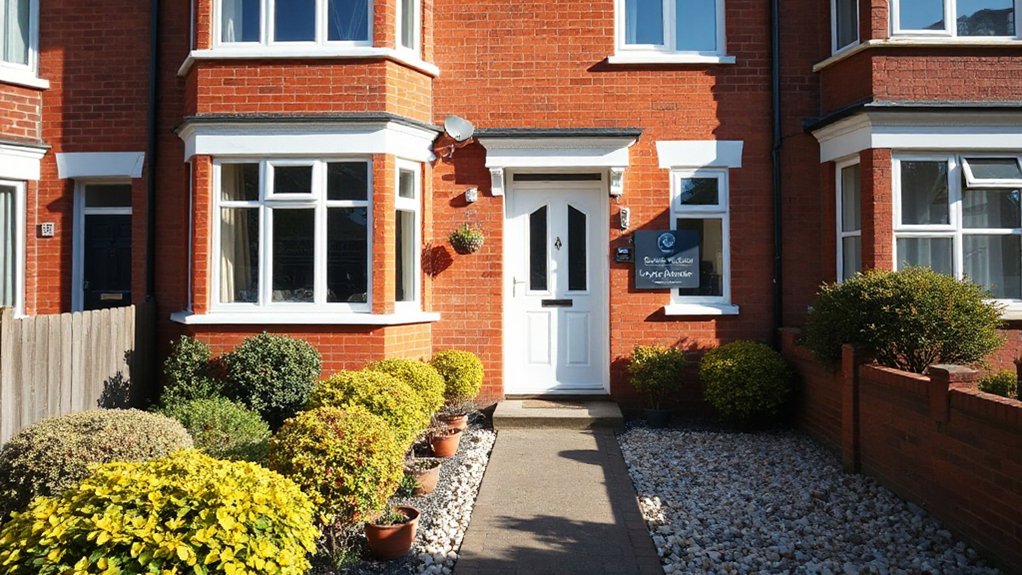

As you prepare your Birmingham property for sale, you’ll map goals, study market timing, and price realistically, then tackle quick upgrades that boost value without overspending. You’ll tighten curb appeal, declutter interiors, and document fixes to reassure buyers. With sharp photos, a clear listing, and a strategic timeline, you’ll set a compelling path to competitive offers. The next steps will sharpen your approach and keep you ahead in a fast-moving market.
Identify Your Birmingham Selling Goals and Timeline
To start, define your Birmingham selling goals and timeline to guide every decision. You’ll map what you want from the sale (price, hold time, flexibility) and set a realistic calendar for prep, listing, and negotiations.
Identify your target price range by analyzing recent comps and current demand, then align it with a practical deadline that respects your relocation plans or investment timeline.
Consider how neighborhood amenities influence buyer interest and adjust staging and disclosures accordingly.
Assess your daily and weekly tasks, from repairs to decluttering, and assign owners for each step.
Track progress with a simple dashboard, updating it as you hit milestones.
Also review Local school ratings as a reference point for family buyers, without delaying the listing.
Assess Birmingham Market Timing for Your List
Monitor Market Timing Indicators now to gauge when your Birmingham listing could hit peak interest, and align this with your goals.
Tracking listing window insights helps you spot seasonal patterns and momentum shifts before you sign or relist.
Use this lens to decide whether to list now or wait for a more favorable window.
Market Timing Indicators
If you’re selling in Birmingham, timing matters as much as condition. Market timing indicators guide when to push for peak price, not just exposure. You’ll track market fluctuations and seasonal trends to align your listing with buyer appetite and lender activity.
Look for price cycles, days-on-market patterns, and closings after tax credit changes to anticipate momentum shifts. Use this data to schedule photos, open houses, and offer windows for strongest response.
Stay nimble with price adjustments, marketing bursts, and targeted outreach during peak demand. Recording a concise timeline helps you avoid missed opportunities and keeps negotiations realistic.
Align readiness with market cadence to maximize value and minimize time on the market.
- Monitor market fluctuations and seasonal trends
- Align listing activities with demand peaks
- Schedule marketing bursts around momentum
- Adjust price and terms promptly as cycles shift
Listing Window Insights
Curious about when to list? In Birmingham, listing window insights help you time your sale with market momentum. You’ll assess seasonal demand, local inventory shifts, and buyer appetite, then align your strategy to peak activity.
Track days-on-market trends, pending sales, and price acceleration to gauge the best window for exposure. Consider how school cycles, events, and economic indicators impact buyer urgency, and adjust your listing date accordingly.
When you plan, you avoid gaps that let competition erode momentum or sprint too early and miss sustained demand. Pair timing with presentation by choosing practical, appealing styling that stays current.
Also evaluate window treatment options to maximize curb appeal during photos and showings, reinforcing timely buyer engagement through every viewing.
Price Your Birmingham Home Competitively and Realistically
To price smartly, start with a Competitive Pricing Strategy that reflects current Birmingham demand and shows value without leaving money on the table.
Ground your number in a Realistic Market Valuation, using recent comps, local trends, and property specifics to justify why your price fits today’s buyers.
This approach keeps momentum, attracts serious interest, and sets a solid foundation for a timely sale.
Competitive Pricing Strategy
Pricing your Birmingham home realistically starts with solid comparables and a clear market view; you’ll set a price that attracts buyers without leaving money on the table.
By applying sharp pricing strategies, you align value with demand and minimize negotiation friction. Start with a concise market analysis to identify recent sale speeds, over/under pricing biases, and your competition’s list ranges.
- Use comps, time on market, and bid activity to calibrate your price
- Set a flexible list price with a planned review cadence
- Highlight value features that justify your price point
- Prepare a strategy for multiple offer scenarios without overreliance on hype
This approach keeps you aligned with current trends, avoiding overpricing while maintaining credible, competitive positioning.
Realistic Market Valuation
Don’t rely on a single offer or a gut feel; triangulate values using multiple inputs to confirm a fair range. Consider seasonal activity, local economy shifts, and school district appeal that can tilt buyer interest.
Choose valuation methods that fit your property: comparative market analysis for situational pricing, and income or cost approaches only if applicable. Set a cautious, defendable price band rather than an extreme anchor.
This disciplined approach helps you attract qualified buyers, minimize days on market, and maximize negotiating power.
Quick Cosmetic Upgrades That Increase Value Fast
A few quick cosmetic upgrades can deliver noticeable value fast, without breaking the bank. You’ll focus on practical touches that look polished and modern, avoiding large renovations. Prioritize items that buyers notice first, like lighting, finishes, and small details that signal care.
Include strategic interior accents and subtle landscaping enhancements to boost curb appeal without overhauling the exterior.
- Refresh lighting in key rooms with brighter, warmer bulbs
- Add simple interior accents (pillows, art, new hardware)
- Install a neutral, stylish backsplash or updated fixtures
- Tidy, low-maintenance landscaping enhancements for instant appeal
These tweaks create a fresh, cohesive feel while keeping costs controlled. You’ll see faster buyer interest when spaces read bright, coordinated, and well-kept.
Boost Curb Appeal to Make a Strong First Impression
Your curb appeal is the first handshake buyers get, so you’ll want a concise plan that translates the quick cosmetic upgrades into an exterior-ready impression. Focus on cohesive landscape design that looks intentional from the street and signifies low maintenance.
Begin with a clean, inviting entry: paint or replace the front door, update hardware, and make sure lighting highlights key features without glare. Trim overgrowth, mulch beds neatly, and add seasonal color accents that complement the home’s facade.
Tidy pathways, fix cracks, and pressure-wash siding or brick to refresh texture. Consider front porch seating or a simple focal point that signals usable outdoor space.
Maintain symmetry where possible, avoid clutter, and preserve curb appeal with consistent, high-quality maintenance that tells buyers you care.
Stage Rooms to Highlight Flow and Usability
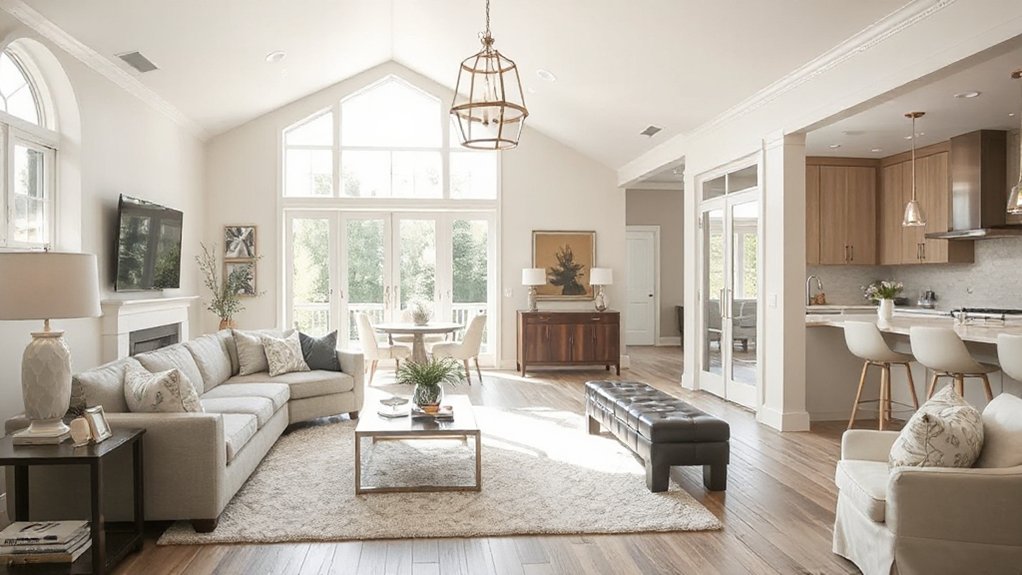
When you stage rooms, map the flow to guide buyers naturally from one zone to the next. Highlight how each space supports daily routines.
Emphasize usability by arranging furniture to create clear focal traffic pathways that feel intuitive and spacious.
Focus on how your layout supports practical living: traffic ease, function, and a seamless, visit-ready impression.
Stage Room Flow
To highlight flow and usability, stage rooms strategically guide buyers through the home, sequencing spaces to demonstrate practical paths, sightlines, and how rooms connect. You optimize progression by arranging corridors and doorways to mimic daily routines, showing intuitive navigation from entry to living areas and back.
Focus on visual cues that lead attention toward the living room and kitchen design, highlighting lighting, shifts, and scale relationships that feel natural rather than staged. Access points should feel seamless, with minimal obstructions and clear sightlines that imply spaciousness.
This approach reinforces usability, helping buyers imagine living there rather than merely viewing spaces.
- Align paths from entry to living room, then to the dining/kitchen area
- Highlight cohesive design cues and consistent finishes
- Create logical zones through lighting and furniture placement
- Emphasize functional sightlines and traffic flow
Highlight Usability Now
Emphasize usability features like logical room connections, clear traffic patterns, and reachable storage that supports everyday routines. Highlight a user-friendly design by presenting spaces that invite quick comprehension—no guesswork, just natural progression.
Use consistent scale and proportion so furniture feels balanced, making the layout legible from each viewpoint. Pair lighting and acoustics with these routes to reinforce comfort.
In Birmingham, showcase practical, modern details that translate into real-world convenience and contemporary living appeal.
Focal Traffic Pathways
- Clear routing between key spaces
- Consistent width and unobstructed doorways
- Strategic lighting to guide movement
- Consideration of neighborhood accessibility and parking
Prioritize Essential Repairs and Safety Fixes
As you prep a property for sale, start by identifying and tackling essential repairs and safety fixes that buyers notice first. Begin with structural integrity—fix leaks, cracks, and broken fixtures, and ensure handrails and stairs feel solid.
Prioritize safety concerns: functional smoke and carbon monoxide alarms, proper lighting, secure windows, and padlocked gates if needed. Schedule rapid roof inspections to catch hidden damage, and address any issues promptly to avoid renegotiation risks.
Check electrical outlets, circuit breakers, and visible wiring for hazards, updating as needed. Improve energy efficiency with seals around doors and windows. Maintain pest-control measures to prevent infestations that deter buyers.
Document all repairs with receipts and photos to build buyer confidence and streamline negotiations.
Cost-Effective Improvements With High ROI
In today’s market, you can boost appeal and value with cost-effective improvements that deliver high ROI. Focus on small, high-impact updates that buyers notice first—like home staging tweaks and curb appeal upgrades—without breaking the bank.
Prioritize improvements that increase perceived quality and reduce friction in inspections.
- Refresh paint in neutral tones and declutter to enhance room flow
- Improve curb appeal with fresh mulch, healthy greenery, and a tidy entry
- Update lighting and hardware for a modern, cohesive look
- Optimize staging for key areas (living room, kitchen, primary bathroom)
These steps create a polished impression, helping buyers visualize living there.
Target improvements that are easy to maintain and translate into broad appeal, aligning with Birmingham buyer preferences and market trends.
Gather Buyer-Wacing Documentation You’ll Need
You’ll want to gather essential documents upfront and verify buyer information to keep the process smooth. Start by collecting proof of funds, pre-approval letters, and identity documents.
Then, cross-check contact details and lender names for accuracy. This quick prep sets a credible timeline and reduces back-and-forth later in the sale.
Gather Essential Documents
Gather the right buyer-facing documents early, so there are no delays when offers come in. You’ll want a streamlined packet that signals readiness and confidence to prospects, without overcomplicating the process. Focus on clear, organized content that supports quick decision-making.
Include essential items that show strong legal footing and property appeal, with a nod to ongoing trends in Birmingham’s market.
- Property staging planner or updated room-by-room notes to highlight flow and potential
- Latest title and mortgage-free status, plus any encumbrances
- Up-to-date energy performance certificate and warranties
- Proof of prior inspections and disclosures, neatly organized
This approach keeps your listing competitive, precise, and aligned with legal documentation needs, while reinforcing buyer trust.
Verify Buyer Information
To verify buyer information efficiently, assemble and review the key documents early: pre-approval letters, proof of funds, mortgage details, and any underwriting conditions. You’ll want a clear checklist: confirm the loan type, contingency statuses, and funding timelines, then verify the buyer’s identity and contact details for seamless communication.
Gather related documents such as recent bank statements, tax returns, and employment verification to spot discrepancies before negotiations heat up. In Birmingham, align buyer readiness with market tempo by analyzing timelines against your listing’s schedule.
Consider how Home staging might influence offer credibility, and use Neighborhood analysis to gauge buyer interest drivers that affect financing conditions. Keep conversations precise, request updates promptly, and document all exchanges to minimize holds or surprises.
Build a Birmingham-Focused Marketing Plan
A Birmingham-focused marketing plan starts with clearly defining your target neighborhoods, buyer personas, and price band. Then, align messaging, channels, and timing to those specifics.
You craft a concise strategy that leverages local signals and buyer psychology, keeping interior design and neighborhood trends at the core of creative decisions.
Focus on high-impact platforms and timelines that reflect Birmingham’s market rhythms, avoiding generic tactics.
Track responses, optimize copy, and tighten visuals to match audience expectations.
A disciplined plan reduces wasted spend and speeds interest to offers.
- Define neighborhood targets and price bands with supporting buyer personas
- Align messaging tone and visuals to interior design cues and local trends
- Schedule channels and touchpoints around peak buyer activity
- Measure results and iterate based on real-time feedback
Capture Photos and Virtual Tours That Shine
Capturing compelling photos and engaging virtual tours starts with a simple rule: showcase the space as it feels, not just as it is. You optimize lighting first—shoot during bright, diffuse daylight and avoid harsh sun angles. Use a wide-angle lens carefully to prevent distortion, and steady your shots with a tripod for consistency.
Frame each room to highlight flow, scale, and key architectural details. In virtual tours, pace progressions to match real navigation, adding soft captions that guide buyers through focal points. Employ photography techniques such as balanced exposure, color accuracy, and texture depth to convey atmosphere.
When space benefits from tweaks, apply virtual staging to illustrate potential without overclaiming space. Keep a tidy, neutral backdrop to maximize appeal across Birmingham markets.
Craft Listings That Speak to Birmingham Buyers
Now that you’ve captured photos and virtual tours that shine, you’ll want listings that speak directly to Birmingham buyers. Craft descriptions that foreground feel, layout, and flow, using active voice and concrete details. Highlight Birmingham neighborhood vibes, school zones, and commute perks. Tie in local amenities like parks, eateries, and transit access to prove daily livability. Keep tone precise, not salesy, with measurable cues (“two-car garage,” “15-minute walk”). Align features with buyer priorities and Birmingham-market trends, updating language to reflect current demand.
Use scannable bullets and short paragraphs to boost readability. Remember to verify every claim and avoid hype. Position each room’s best angles, and weave in neighborhood context for stronger resonance with local buyers.
Birmingham neighborhood highlights and character
Proximity to local amenities and lifestyle benefits
Practical room by room details
Recent upgrades and energy efficiency
Plan a Strategic Sale Timeline and Open Houses
To maximize turnover and minimize downtime, map a strategic sale timeline that aligns with Birmingham buying cycles and local market quirks. Start with a realistic 4–6 week prep window, then layer in open houses that optimize weekend footfall and weather windows.
Schedule early-week touches: professional photos, then a soft online push before public listings. Plan staging furniture placements that highlight flow, daylight, and key angles, avoiding overcrowding to preserve room scale.
Build a calendar that coordinates pre-listing inspections, minor repairs, and paint touchups, so showings stay seamless. Mark neighborhoods in your plan to emphasize neighborhood amenities in listings and tours, leveraging nearby schools, parks, and dining to boost appeal.
Maintain a flexible buffer for interested buyers’ peak times, ensuring rapid response and consistent visibility.
Vet Offers and Negotiate for the Best Outcome
After you’ve attracted solid offers, you’ll vet each one carefully to protect your goals and keep the process moving smoothly. You’ll compare price, terms, contingencies, and timelines, then flag any red flags that could affect your net result. Vet offers, assess who’s truly ready, and confirm financing reliability before you respond.
You’ll set a clear negotiation strategy to maximize value without triggering a back-and-forth stalemate, using data from market activity and your preliminary goals. Negotiate effectively by prioritizing must-haves, concessions, and fallbacks, while maintaining professional rapport with buyers’ agents.
Stay responsive, document every change, and guard your timeline to avoid delays.
- Align offers with your priorities
- Confirm financing and timelines
- Leverage contingencies strategically
- Communicate transparently and promptly
Frequently Asked Questions
How Long Does It Typically Take to Sell a Birmingham Home?
Typically, it takes from a few weeks to a couple of months, depending on market conditions. You’ll benefit from home staging and cozy showing scripts, while property inspections reveal fixes, boosting appeal and shortening your Birmingham sale timeline.
What Taxes Are Due When Selling in Birmingham?
You’ll owe Capital gains tax on any profit above your allowances, and Stamp duty land tax may apply to the purchase, not the sale; plan timing, exemptions, and disclosures to minimize liabilities and stay compliant.
Should I Use a Local Birmingham Agent or Relocate to List?
Clear choice: you should weigh local Birmingham agents against relocation benefits, focusing on agent selection and timing. You can save time, leverage market signals, and trust local networks, while relocation benefits might offset some costs; decide pragmatically.
How Will Birmingham Market Conditions Affect My Listing Price?
Market fluctuations will influence your listing price, so you should adjust proactively. You’ll benefit from disciplined pricing strategies, closely tracking trends, seasonality, and demand shifts to stay competitive and maximize offers while avoiding overpricing missteps.
What Are Common Deal-Breakers on Birmingham Home Offers?
Some buyers bow out over a minor snag; you’ll want to flag home inspection concerns early and keep negotiations respectful. You prioritize property staging, avoid overthinking repairs, and stay practical, trend-focused about acceptable compromises and timelines.
Conclusion
As you wrap up, you’ll feel confident guiding your Birmingham sale with precise steps, realistic pricing, and fast, value-boosting upgrades. Stay practical: document every improvement, time your open houses, and vet offers with clear criteria. Think of your plan as a well-tuned engine—smooth, efficient, and ready to surge when the market shifts. You’ll attract ready buyers like a magnet, and secure a smooth close. Your prep is the craftsman’s blueprint, a beacon in a crowded market.