
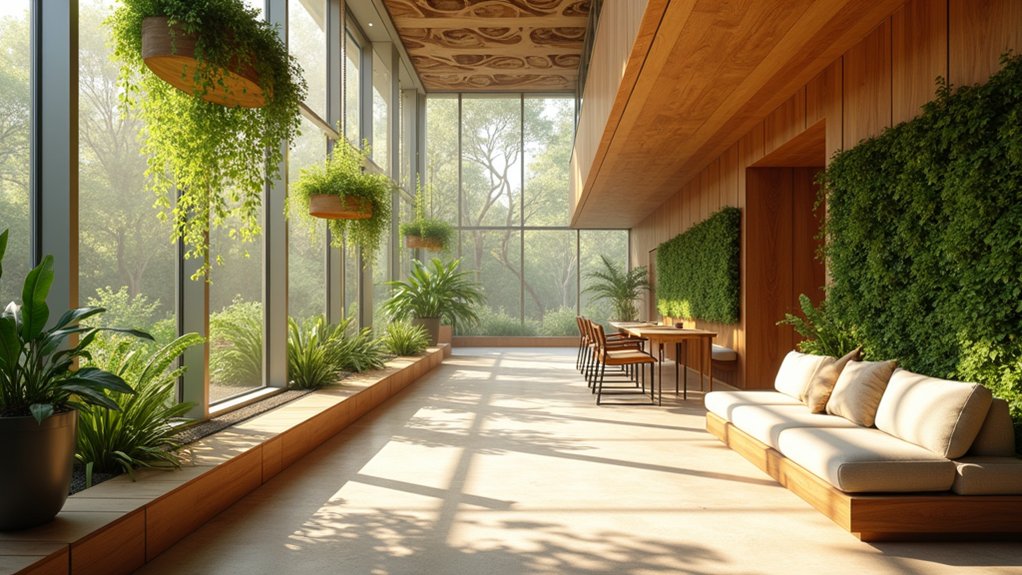

Biophilic design helps you reconnect with nature by blending daylight, natural materials, plant life, and calm, restorative layouts into your home. Start with light-forward floor plans that invite bright, clutter-free spaces and layered lighting for mood and function. Choose window strategies that maximize daylight while controlling glare, and place plants to improve air quality and well-being. Use sustainable materials, tactile textures, and meaningful decor to reinforce place. If you keep exploring, you’ll uncover deeper, practical applications.
What Biophilic Design Is and Why It Helps
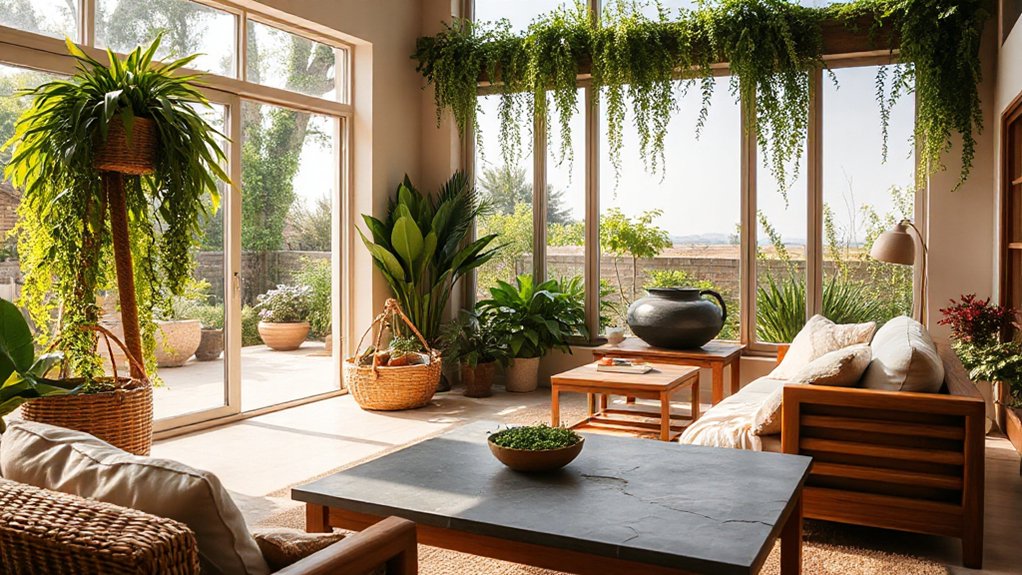
Biophilic design is an approach that reconnects people with nature through built environments. You implement it by recognizing that humans innately respond to natural patterns, materials, and processes, which strengthens well-being and performance.
The core idea is to integrate living systems and daylight to reduce stress, boost cognition, and support recovery. You’ll evaluate spaces for opportunities to connect with nature through sightlines, textures, and rhythm rather than decoration alone.
Practical tactics include prioritizing indoor plants in focal zones, optimizing natural lighting to enhance color rendition and circadian cues, and selecting materials with tactile or organic attributes. When executed with precision, this approach yields durable environments that feel healthier, inspiring, and more resilient for occupants and occupants’ routines.
Start With Light: Layouts for Bright, Airy Rooms
To create bright, airy rooms, start with light as a guiding layout principle. You’ll optimize sightlines and avoid clutter that blocks daylight, using open floor plans that feel continuous from entry to living areas.
Prioritize natural light by placing key activity zones along windows, with furniture arranged to reflect and amplify, not absorb, incoming sun. Choose light, neutral backdrops and reflective surfaces to bounce illumination without glare.
Incorpororate indoor plants where they can receive unobstructed light, ensuring foliage stays healthy and vibrant.
Use layered lighting—ambient, task, and accent—to extend the sense of brightness after sundown. This approach supports biophilic intent, enhances mood, and creates a breathable, breathable space that remains energy-efficient and visually calm.
Natural light remains central to sustainable, inviting interiors.
Bring in Natural Light: Window Strategies That Work
Maximize daylight by sizing and situating windows to capture changing light throughout the day. Place windows strategically to optimize orientation, glare control, and privacy without sacrificing views.
Start with precise measurements and consider room function to balance natural light with energy efficiency and occupant comfort.
Maximize Daylight Through Windows
Opening spacious, daylighting hinges on deliberate window placement and thoughtful glazing. You optimize light by aligning windows with room function and orientation, reducing glare while maximizing Sunlight penetration.
Use high-performance glazing to minimize heat gain without sacrificing brightness, and choose operable panes for seasonal air exchange.
Prioritize large, unobstructed panels on primary living facades and employ clerestories or transoms to pull light deeper into interiors.
Consider interior reflectance: light walls, ceilings, and floors amplify daylight without additional fixtures.
Select window treatments that adapt to changing sun angles—sheer shades for morning glow, blackout options for privacy at night.
Early planning with proper framing guarantees sunlit zones stay comfortable year round, delivering energy efficiency and a stronger biophilic connection.
Strategic Window Placement Tips
Strategic window placement begins with aligning glazing decisions to how you use each space, ensuring daylight enters where it delivers function and mood.
- Prioritize south-facing glazing for consistent daylight and seasonal warmth, supporting daylight optimization without glare.
- Use narrow, operable clerestory windows to illuminate high-traffic zones while preserving privacy and views.
- Combine fixed panes with high-contrast operables to balance natural light, ventilation, and energy efficiency.
- Position windows to frame nature views at eye level, enhancing mood while reducing reliance on artificial lighting.
Window placement guides daily rhythms, improves concentration, and creates a sense of openness.
You’ll experience steadier brightness, reduced energy use, and a closer connection to the outdoors, affirming daylight as a design asset rather than an afterthought.
Plant Picks: Which Greens Make a Difference
When you select plant types that matter, you prioritize species with proven air-quality and aesthetic impact that suit your space.
A quick care guide helps you maintain consistency without overcomplicating routines, while recognizing how foliage color and form influence mood and acoustics.
This discussion centers on which greens deliver visible results, how to care for them efficiently, and the visual payoff they offer in real environments.
Plant Types That Matter
Even with limited indoor space, selecting plant types that deliver tangible benefits is essential for biophilic design. You’ll prioritize species that maximize indoor greenery impact while supporting plant health, creating a visually cohesive, air-conscious environment.
1) Snake plant (Sansevieria): low maintenance, strong air filtration, tolerates neglect.
2) Pothos: rapid growth, resilience, brightens corners with continuous vigor.
3) ZZ plant: compact form, drought tolerance, steady, glossy presence.
4) Peace lily: year-round foliage, blooms softly, boosts humidity and mood.
Choosing these options helps you achieve measurable benefits: improved air quality, visual texture, and a calmer, more productive space.
With mindful placement, you optimize light, airflow, and maintenance efficiency, reinforcing your interior landscape as a functional, therapeutic asset.
Indoor greenery supports plant health through balanced watering and spot lighting.
Care Requirements Quick Guide
Care needs for popular greenery follow a practical, performance-focused framework that matches the plants’ strengths with your space. In this Quick Guide, you assess light, temperature, and humidity before selecting specimens, prioritizing proven performers for interiors.
Opt for robust picks with predictable watering needs, and group plants by similar care to reduce guesswork. Apply concise gardening techniques: establish a consistent schedule, use well-draining soil, and monitor pests with a targeted approach.
Keep foliage healthy through proper pruning and unobtrusive fertilization, avoiding overwatering or excessive feeding. Choose species that contribute to air quality and resilience, aligning with your comfort level and routine.
This method enhances wildlife habitats nearby and minimizes maintenance demands, delivering long-term, reliable greenery that reinforces biophilic design principles.
Visual Impact Of Foliage
Foliage shape, color, and texture drive interior mood just as much as scale and placement; choosing these attributes deliberately yields immediate visual impact. You’ll heighten rooms by prioritizing foliage arrangement and leaf texture to craft cohesion, contrast, and rhythm.
- Curated silhouettes: compact, arching, or spiky leaf forms create focal points without clutter.
- Texture play: mix matte, glossy, and velvety surfaces to add depth and tactile interest.
- Color strategy: pair pale new growth with deep greens to illuminate shadows and boost brightness.
- Seasonal cadence: rotate subtle accents to maintain energy while preserving a unified palette.
Where to Put Plants for Best Health and Mood
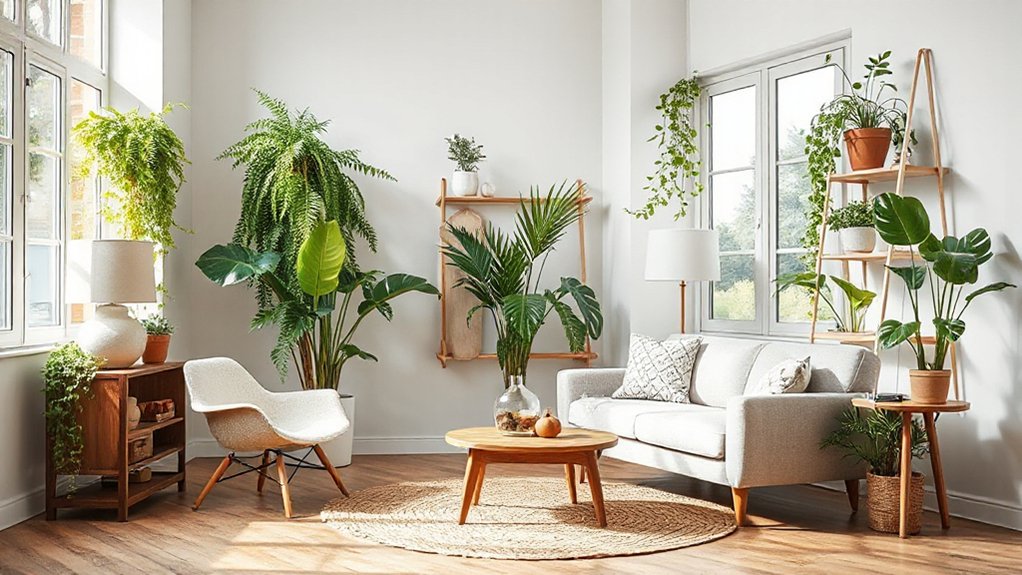
Strategically placing plants throughout your space optimizes air quality, comfort, and mood by leveraging light, humidity, and human interaction. In practice, position sun-loving species near southern or western windows to maximize photosynthesis without scorching leaves.
Shade-tolerant plants belong in rooms with limited natural light, such as hallways or north-facing spaces. Elevate greenery at varying heights—floor, pedestal, shelf—to create visual depth and gentle microclimates that modulate humidity.
Place moisture-sensitive species away from heating vents and drafts to prevent stress and leafdrop. For mood enhancement, cluster foliage where you spend extended time, like the living area or home office, and intersperse greenery with seating to encourage routine interaction.
Use plant placement to balance form and function, enriching daily experience without overcrowding.
Natural Materials That Feel Rich and Warm
Natural materials convey warmth and tactility by combining texture, color, and performance. You’ll feel the difference when you choose organic textures and warm finishes that age gracefully, resisting quick trends while supporting acoustics and comfort.
Prioritize materials that pair sustainability with refinement, so spaces read as cultured, not contrived. Aim for restrained palettes, letting natural veining and grain do the visual work.
Balance with substrates that tolerate daily life and guide light with soft, tactile surfaces. The result is a room that invites lingering, without clutter or glare.
- Reclaimed wood surfaces that reveal character and warmth
- Wool textiles and cork with gentle acoustic and thermal benefits
- Limestone and travertine for refined, mineral warmth
- Leather and suede accents that develop patina over time
Texture That Adds Depth Without Clutter
Texture with purpose starts with selecting silhouettes and materials that read as purposeful layers, not filler. You’ll layer subtle textures to create depth while keeping surfaces calm.
Using variations in scale, tactility, and light reflection helps guide attention. Focus on controlled, cohesive textures—each element earns its place and contributes to a streamlined, clutter-free biophilic scene.
Texture With Purpose
Texture can add depth without clutter by selecting materials and patterns that read as purposeful rather than decorative filler.
Texture With Purpose centers on reducing noise while enriching experience through deliberate tactility. You’ll prioritize textural contrast and tactile elements that guide mood, not merely decorate space.
Choose fabrics, woods, and surfaces that read as intentional layers, aligning with light, scale, and function. When done well, texture becomes a storytelling device—subtle, coherent, and enduring.
- Grounded materials create calm by balancing sheen, grain, and matte finishes.
- Layered textiles introduce warmth without visual chaos.
- Sculptural surfaces deliver tactile interest that remains cohesive.
- Color and texture work in concert to reinforce biophilic intent.
Subtle Texture Layers
Start with a textured wall as a backdrop; choose restrained patterns and natural pigments to avoid visual noise. Introduce layered textiles—a linen throw, a wool rug, and cotton cushions—in complementary tones to amplify warmth without piling elements.
Keep scale consistent: vary texture density rather than size to sustain rhythm. Use daylight to reveal subtle shifts in texture and color, reducing the need for bright accents.
Maintain negative space around furniture to let textures breathe, reinforcing a biophilic ethos of serene, connected interiors.
Views to the Outdoors You Can Achieve Today
Are you maximizing daylight and outdoor connection in your space today? You can align views with biophilic intent by choosing sightlines that extend beyond glass and frame seasonal changes with purpose. Prioritize layers of greenery, unobstructed sky, and reflective surfaces that amplify brightness without glare, while preserving outdoor privacy where needed.
1) Maximize window placement and glazing to capture morning and afternoon light, shaping mood and energy.
2) Use plant screens and trellises to soften views while preserving openness and seasonal texture.
3) Integrate operable openings for fresh air without sacrificing privacy.
4) Select outdoor-adjacent furnishings and materials that blur indoor/outdoor boundaries, supporting a seamless, restorative vista.
Water and Quiet: Soundscapes From Nature
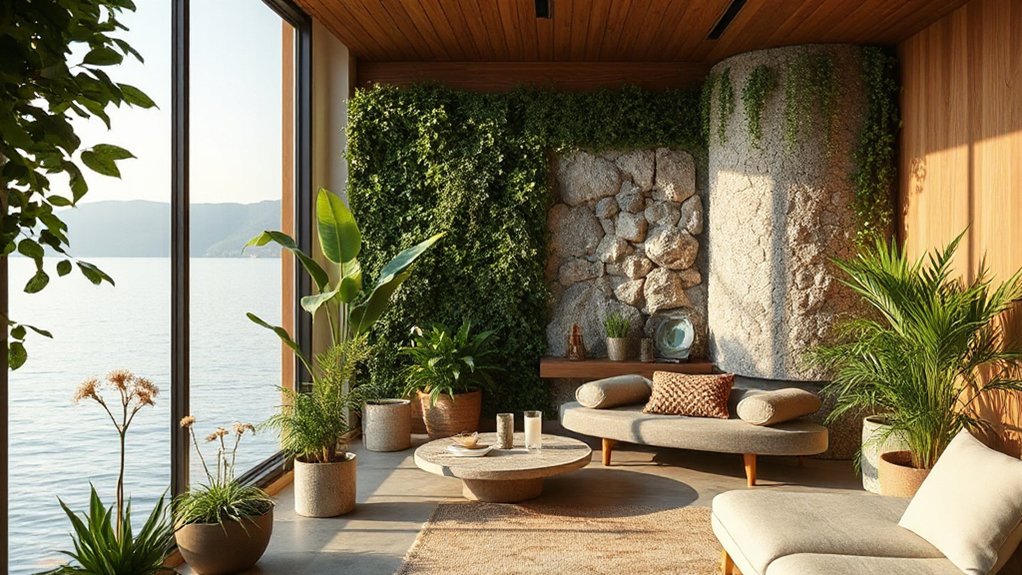
This approach emphasizes clarity, intentional acoustics, and measurable impact on occupant well-being.
Nature-Inspired Soundscapes
- Curate a gentle balance of water sounds and ambient air to nurture calm focus.
- Integrate forest melodies subtly, avoiding masking other acoustic cues.
- Use adjustable, low-volume equilibrium to prevent cognitive overload.
- Pair natural soundscapes with mindful routines for sustained productivity.
Quietude Through Design
In practice, you map ambient frequencies to human attention cycles, selecting materials and placements that minimize harsh echoes while reinforcing natural tranquility. You’ll integrate water features, scalable sound masking, and biophilic cues that cue restoration without distraction.
This approach translates into serene, occupancy-friendly zones, where conversations stay clear and focus remains intact. You leverage thresholds, drift, and damping to sculpt perceptual quiet, allowing occupants to breathe and reflect.
The payoff: serene retreats and peaceful sanctuaries that support well-being, productivity, and sustained engagement within everyday living environments.
Nature-Inspired Color Palettes for Calm
- Pair warm greens with neutral grays to evoke forest understory while preserving legibility in architectural lines.
- Use cool blues as accent anchors, supporting calm without overpowering furniture silhouettes.
- Introduce earthy terracotta or sand as grounding anchors that relay tactility and warmth.
- Maximize daylight through near-white backdrops with subtle undertones to sustain brightness and perceived space.
Acoustic Surfaces: Reducing Noise With Natural Elements
Acoustic surfaces that leverage natural elements can substantially reduce noise by absorbing sound energy rather than merely blocking it. You can achieve this by selecting materials that blend performance with aesthetics, aligning with biophilic goals.
Natural fibers, such as hemp or wool blends, transform wall and ceiling surfaces into quieting catalysts without visual heaviness. Acoustic panels made from these fibers offer controlled absorption across mid to high frequencies, mitigating echo without harsh harshness or artificial textures.
Consider modular panels installed at common reflection points, or textile-backed wall coverings that maintain warmth and tactility. Pair panels with perforated wood or cork accents to sustain rhythm and depth.
Prioritize breathable, sustainable options that sustain room air quality while delivering measurable decibel reductions in everyday living spaces.
Indoor-Outdoor Flow: Designing for Nourishment
To cultivate nourishment, prioritize seamless shifts between interior spaces and the outdoors, so occupants can access natural light, fresh air, and seasonal cues without barriers. You create vitality when boundaries blur, enabling daily rituals that reinforce connection with the landscape.
- Align doors, thresholds, and windows to maximize daylight and breeze, reducing reliance on artificial lighting.
- Use indoor plants near transitions to visually cue movement between environments and cleanse circulated air.
- Integrate shaded outdoor rooms that mirror indoor seating, extending comfort without enclosure.
- Schedule flexible zones that adapt to tides of weather, supporting nourishment through ever-changing views and scents.
Wellness-Driven Layouts: Circulation and Restorative Zoning
Wellness-driven layouts center circulation as a deliberate design tool, shaping how occupants move, rest, and recover throughout daily life. You implement restorative zoning to funnel attention toward calm passage spaces, minimizing exposure to noise and disruption.
Circulation paths should invite natural light, sightlines to foliage, and moments of pause, rather than forcing constant forward motion. Strategically placed thresholds, alcoves, and seating zones balance throughput with respite, supporting both activity and recovery.
Urban greenery, integrated through atriums, interior courtyards, and green walls, acts as a visual cue for boundary shifts between work, leisure, and sleep— reinforcing a restorative rhythm.
Choose Sustainable materials with low emissions, durable finishes, and tactile warmth to reduce sensory fatigue. Prioritize clear wayfinding, accessible routes, and customizable zoning that adapts to changing needs.
Low-Impact Details: Sustainable Materials and Smart Tech
Low-Impact Details hinge on selecting materials and technologies that minimize environmental footprint while maximizing indoor performance. You’ll prioritize durable, low-emission components that support long service life and easy end-of-life disposal, without compromising comfort or aesthetics.
Sustainable materials reduce embodied energy and indoor pollutants, while smart tech optimizes energy use, air quality, and comfort. You’ll evaluate lifecycle data, supplier transparency, and certifications to guarantee integrity across products.
This approach blends function with responsibility, delivering healthier spaces that feel calm and purposeful.
- Choose certified sustainable materials with low VOCs to protect indoor air quality.
- Integrate smart tech that learns your patterns, reducing energy waste.
- Favor locally produced or reclaimed elements to minimize transportation impact.
- Prioritize modular designs for easy upgrades and durable performance.
Personalizing With Meaningful Natural Decor
Moving from sustainable materials and smart tech, you’ll now shape spaces that feel personally meaningful through natural decor. By choosing elements that carry provenance, stories, and organic textures, you can reinforce biophilic intent without sacrificing durability or clarity.
You’ll curate personal touches that echo place, season, and craft, rather than generic filler. Meaningful artifacts—handmade pottery, reclaimed wood accents, pressed botanicals—anchor rooms with tactile memory and ecological honesty.
Prioritize materials sourced with transparency, and display them in moderation to preserve calm, legible design. Combine varied textures (linen, wool, sisal) to evoke nature’s richness without clutter.
Use purposeful grouping and negative space to let each piece breathe, ensuring a coherent narrative. The result: a resilient, sensorily resonant environment that reinforces well-being and environmental stewardship.
Frequently Asked Questions
How Does Biophilic Design Affect Mental Health Outcomes?
Natural light boosts mood and attention, while stress reduction flows from nature-inspired cues; you’ll experience calmer, more resilient mental health when spaces invite daylight, greenery, and organic textures, supporting sustained focus and decreased anxiety in daily life.
Can Small Changes Yield Noticeable Biophilic Benefits?
Yes, small changes can yield noticeable biophilic benefits. You’ll improve Indoor air quality and Natural lighting with simple steps, like plants and lighting adjustments, boosting mood and focus in your everyday spaces.
Which Plants Are Safest for Households With Pets?
Pet safe plants include areca palm, spider plant, Boston fern, and bamboo palm; these are non toxic greenery choices. You’ll protect pets while enhancing spaces, selecting these non toxic options supports safe interiors with expert, precise biophilic insight.
Do Biophilic Tools Require Professional Installation?
Biophilic tools don’t require professional installation you can handle, but you should seek DIY installation guidance for complex setups. Rely on professional guidance when uncertain, ensuring safety, efficiency, and ideal integration with your space’s design goals.
How to Balance Aesthetics With Practical Maintenance?
Can you balance aesthetics with practical maintenance by prioritizing natural lighting and durable material textures? You optimize daily upkeep with smart placements, low-fuss finishes, and modular elements, ensuring striking biophilic visuals while keeping routine care simple and efficient.
Conclusion
Like a well-tended conservatory, your home becomes a living metaphor for care. Biophilic design is the sun that energizes space, the breeze that guides movement, and the soil where wellness takes root. You’re the gardener and designer: align light, air, and textures to nurture mood and health. When plants, light, and materials harmonize, the house grows into a sanctuary—a resilient ecosystem where every detail supports calm, creativity, and sustainable living. Your space, blooming with intention.