
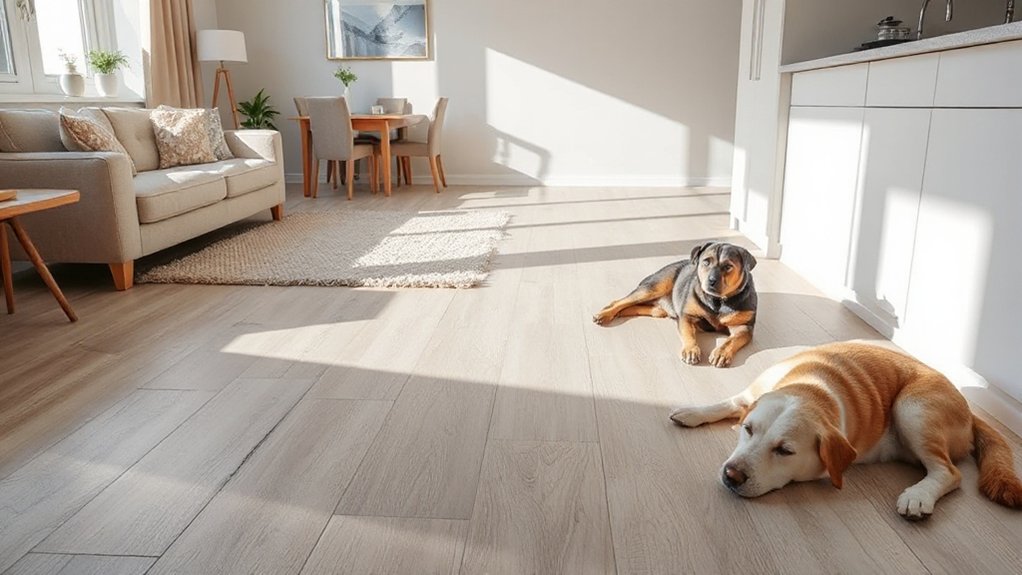

Think of your floor as a quiet battlefield where paws meet grout and grains of dust—but you’re equipped with the right choices. You’ll want materials that resist scratches, repel moisture, and clean up fast, yet feel practical underfoot in daily life. The right pick will cut upkeep and noise while standing up to spills and claws. There’s more to weigh, from underlay to room-by-room needs—so you’ll want to see what fits your space before you decide.
What Makes a Floor Pet-Friendly (in the UK Context)?

When selecting a floor for a UK home with pets, the key is balance: durability, ease of maintenance, and safety all come first. You’ll prioritise scratch resistance, stain resistance, and a non-slip surface to reduce accidents. Consider seams and joins; tight joints minimize dirt ingress and make cleaning simpler.
Pet friendly cleaning matters, so choose finishes and textures that resist oils, urine, and muddy paw prints without requiring aggressive scrubbing. Flooring allergy concerns should guide you toward low-dust options and surfaces that don’t trap allergens in fibers.
Look for water resistance or rapid drying for spills, and verify warranty terms that cover pet wear. Finally, assess installation practicality, future replacement costs, and compatibility with underfloor heating to sustain performance across UK seasons.
How to Judge Flooring for Pets: Durability, Moisture, and Cleaning
You’ll want flooring that resists scratches and maintains integrity under curious paws and claws.
Consider moisture tolerance and how easy it’s to clean spills or pet accidents without staining or warping.
Prioritize finishes and backing that stay stable with moisture, and pick cleaning routines that keep both look and function without damaging the surface.
Durability And Scratches
Durability is the core metric when choosing pet-friendly flooring: it should resist scratches, dents, and gouges from claws and paws, yet remain stable under moisture and routine cleaning. You’ll want a floor that maintains traction and finish after daily activity, with minimal maintenance.
- Scratch resistance ratings matter; prioritize harder top layers and wear layers to slow damage.
- Impact durability reduces gouges from rambunctious moments and furniture rearrangements.
- Edge stability prevents chipping along planks or tiles under repetitive tapping.
- Eco friendly materials can meet durability needs without compromising aesthetic options or indoor air quality.
Choose solutions with proven performance in real homes, balancing long-term cost, Eco friendly materials, and aesthetic options for a pet-friendly vibe.
Moisture And Cleaning
Moisture resistance and ease of cleaning go hand in hand for pet homes: the floor should repel spills and pet messes without staining, warping, or letting odors linger. When evaluating flooring for moisture, consider surface sealants, grout density, and underlayment choices that resist moisture ingress. Look for materials with low water absorption, tight seams, and antimicrobial finishes to deter pet odor and bacterial growth.
For cleaning, choose floors that respond well to routine mopping and quick spot treatment without dulling or fading. Stain removal should be straightforward: identify wear layers capable of withstanding frequent cleanup without discoloration.
Assess warranty specifics on moisture damage and cleanability so you’re covered if a spill or accident occurs. Prioritize practical performance over aesthetics alone.
Laminate vs Vinyl for Pets: Which Resists Paws and Spills Better?
When you weigh laminate against vinyl for pet ownership, focus on durability against scratches, plus water and spill resistance, so you don’t get surprised by accidents.
Consider comfort underfoot and how each option handles foot traffic, pets’ claws, and noise from walking or running.
I’ll compare installation practicality and long-term performance to help you pick the floor that keeps paws clean and living spaces quiet.
Durability Against Scratches
Laminate and vinyl both offer solid durability for homes with pets, but they withstand scratches and damage in distinct ways. You’ll notice laminate’s dense core cuts down on surface nicks, yet it can dent under sharp claws. Vinyl’s flexible planks absorb impact more, reducing visible gouges. For ongoing pet activity, consider wear layers and protective coatings.
- Expect laminate to resist routine traffic better on smooth paws, but avoid turfing claws that spike scratching.
- Choose vinyl with a high wear rating for better resilience against claws and spills.
- Look for embedded textures in either option to disguise minor abrasions.
- Prioritize maintenance routines that keep ventilation around flooring dust-free, supporting pet allergies.
Careful selection protects your floors and guarantees proper Flooring ventilation.
Water and Spill Resistance
If you’ve weighed scratch resistance, you’ll want to compare how laminate and vinyl handle spills and humidity. Laminate tends to be less forgiving with standing moisture; its core can swell if water seeps through poorly sealed edges, so you’ll favor tight installation and watertight trims.
Vinyl floors, especially luxury vinyl planks, resist moisture better and tolerate spills without swelling, making cleanup quicker and more complete. In real-world pet homes, you’ll appreciate vinyl’s spill resilience on spills from water bowls or muddy paws, plus easier maintenance.
Laminate offers decent water resistance on modern click systems, but you’ll need to monitor humidity and leaky basements.
Color options and design versatility matter; both options present varied aesthetics, yet vinyl often provides more consistent finishes for ongoing wear.
Comfort and Noise Levels
So, which option feels more forgiving under paws and footfalls—the softer give of laminate or the solid, sound-damping profile of vinyl? You’ll weigh comfort and acoustics, plus impact resistance, during everyday pet activity.
Laminate tends to feel warmer underfoot and can cushion small leaps, while vinyl offers superior sound control and moisture resilience, reducing squeaks and footstep disruption.
1) Compare impact noise: vinyl generally muffles more than laminate, aiding quieter rooms.
2) Assess foot comfort: laminate provides a slight cushion, but premium vinyl with underlay often surpasses it.
3) Evaluate spills: vinyl’s surface resists moisture, preserving acoustic stability after accidents.
4) Plan installation: budget for underlayment to optimize both sound and comfort in flooring installation.
Pet training and practical care influence long-term comfort and noise outcomes.
Luxury Vinyl Tiles (LVT): Warmth, Moisture Resistance, Easy Maintenance
Luxury Vinyl Tiles (LVT) offer a practical blend of warmth, moisture resistance, and easy maintenance that suits homes with pets. You’ll appreciate its engineered core and printed wear layer, which stand up to claws, spills, and daily tracked-in moisture.
When selecting luxury vinyl, look for embossed textures that mimic real surfaces without sacrificing cleanability. A stable click-lock installation minimizes gaps where dirt can hide, while thicker wear layers (at least 0.3–0.5 mm) improve longevity under busy pet traffic.
Maintenance is straightforward: sweep, then mop with a damp sponge—avoid soaking. Choose a product with a robust, protective coating to resist scratching.
For households with pet allergies, select LVT with low VOCs and a sealed surface to minimize allergen buildup.
Ceramic and Porcelain Tiles for Homes With Pets

Ceramic and porcelain tiles stand up well to pets, offering high durability and straightforward maintenance that helps you keep floors clean with minimal effort.
I’ll outline how their hardness reduces denting from claws, plus practical surface care and routine cleaning tips to prevent scratching and staining.
You’ll see the key pros for scratch resistance, plus how to optimize grout longevity with sealing and regular upkeep.
Durability For Pets
Porcelain and ceramic tiles offer standout durability for homes with pets, thanks to tough surfaces that resist scratches and easy maintenance. You’ll notice longevity when you choose certified tile products and proper installation, optimizing your flooring lifespan while lowering replacement frequency.
To help you decide, consider these points:
1) Scratch resistance holds up to claws with regular use
2) Stain resistance reduces accident residues and cleaning time
3) Impact tolerance protects against dropped toys and bowls
4) Maintenance practicality keeps surfaces looking new with minimal effort
Opt for pet friendly materials and verify wear ratings, glaze durability, and slip resistance to balance safety and value. When paired with correct grouts and underlayment, durability for pets translates into reliable, long-term performance.
Surface Maintenance Tips
Durable tiles make cleaning up after pets straightforward, but keeping them looking new requires a few targeted maintenance steps. Start with a regular sweep or vacuum to remove grit that can scratch glaze or grout.
Use a damp mop with a pH-balanced cleaner suitable for ceramic and porcelain; avoid abrasive cleaners that dull surfaces. Clean spills promptly to prevent staining, especially on lighter flooring color variants.
Seal porcelain grout if it isn’t pre-sealed, and re-seal ceramic grout every 1–2 years to minimize moisture intrusion. Protect high-traffic zones with mats, and place felt pads under furniture to prevent gouges.
Choose a consistent aesthetic with grout color that aligns with your tile; this supports cohesive aesthetic choices while minimizing visible wear. Regular care preserves performance and appearance.
Scratch Resistance Pros
Even when pets scratch, ceramic and porcelain tiles can stand up well, especially when you choose surfaces with high hardness ratings and proper installation. You’ll benefit from consistent wear resistance, minimal chipping, and stable grout lines that resist moisture and staining.
To maximize scratch resistance, prioritize tiles with an e.g. 7–9 Mohs scale hardness and ensure professional sealing where needed. The result is durable floors that stay looking new with routine care.
- Enjoy low maintenance, reducing daily grooming time around floors
- Prevent pet fur buildup and ease cleaning after muddy sessions
- Minimise allergy triggers through sealed surfaces and easy dust removal
- Feel confident in long-term investment with reliable performance
Pet grooming and allergy prevention become practical, everyday benefits.
Real Wood With Pets: When It Works and When to Avoid
Real wood can be a beautiful, durable choice for homes with pets, but it’s not universally suited to every animal or activity. You’ll benefit from understanding its resilience limits, finish options, and maintenance needs.
Engineered planks with plywood cores and protective top layers reduce moisture sensitivity and minimize checking, yet pets can still dent, scratch, or wear finishes over time. When you’re choosing, look for hard finishes (urethane or aluminum oxide) and a thicker wear layer for longevity.
Pet grooming reduces fur and dander that cling to gaps and crevices, aiding allergen control and inspection. Regular cleaning, prompt spill management, and proper humidity control help maintain stability.
If you have active or claw-prone dogs or cats, consider extra protection near entryways and crossroads in your layout to balance aesthetics with durability.
Comfort and Quiet Underfoot: Underlay and Padding for Pets
Soft, pet-friendly flooring needs more than a tough top layer; it requires a crafted underfoot system that cushions paws and dampens noise without compromising cleanliness. You’ll want underlays that balance cushioning with stability, and consider materials that resist moisture and odors. Focus on sound-dampening layers and compatible adhesives to keep joints secure and floors level. Choose options that perform in UK humidity and temperature ranges, and verify VOC ratings for pet safety.
Here are key points:
- Use pet safe adhesives to secure cushioned planks without toxic off-gassing.
- Select noise reduction underlays that preserve tread comfort and stair safety.
- Pair with compliant, durable underlays to minimize squeaks and wear patterns.
- Confirm warranty and maintenance guidance to sustain long-term sound suppression and hygiene.
Pet-Specific Maintenance Routines to Keep Floors Pristine

To keep floors pristine with pets, establish a routine that targets visibility of dirt, moisture, and fur as soon as it appears. You should sequence daily quick checks: scan high-traffic zones, spot moisture, and wipe debris with a microfiber cloth.
Schedule short, targeted sessions for pet grooming, focusing on brushing to reduce shedding, cleaning paws after outdoors, and trimming nails to minimize scuffs.
Implement permanent entry mats at doors and use a shoe-free policy to curb tracked grit. Coordinate training routines that reinforce litter- and water-spillage management, so pets seek designated zones for messes rather than carpeted areas.
Combine swift blotting with a mild, pH-balanced cleaner on hard floors, and spot-test before use. Maintain records of routine frequency to calibrate effectiveness over time.
Best Flooring by Room: Living Room, Kitchen, and Hallway Picks
Living rooms, kitchens, and hallways demand flooring that balances comfort, durability, and ease of cleaning when you have pets. You’ll prioritize surfaces that resist scratches, odors, and moisture while keeping a cohesive look that complements your home’s flooring aesthetics. Consider rooms individually, then unify with a consistent base underfoot.
Pet allergies may guide your choice toward low-particle, easy-to-clean options and finishes that minimize dust retention.
- Choose large-format planks or tiles with tight joints to reduce debris accumulation.
- Opt for cushioned underfoot comfort in living spaces without sacrificing durability.
- Prefer water-resistant, easy-to-maintain materials in kitchens and entryways.
- Align color and texture with your overall décor to enhance flooring aesthetics while supporting allergy-friendly maintenance.
Budget, Installation, and Total Costs for Pet-Friendly Floors
Moving from selecting pet-friendly materials to budgeting and installation specifics helps you plan a practical, cost-effective flooring upgrade.
You’ll compare upfront costs, ongoing maintenance, and replacement needs to choose a balance between price and performance. Start with a clear cost comparison across top options—laminate with a protective layer, vinyl planks, engineered wood, and tile—to gauge initial outlay and long-term value.
Installation costs vary by substrate and room size, but expect professional fitting for moisture-prone areas and subfloor prep for stability. Factor in underlayment, transition strips, and potential customization.
Material longevity matters: tougher surfaces resist scratches and gouges, reducing future refurbishments. Finally, budget for wear-free zones and incidental damage, ensuring a realistic total cost that aligns with your pet’s lifestyle and your home’s layout.
Frequently Asked Questions
How Do Felines and Dogs Differently Affect Floor Wear Ratings?
Felines and dogs wear floors differently: dogs cause deeper gouges and higher moisture load; cats scratch selectively and tread lightly. You’ll want pet stain resistance, durable finishes, and Flooring maintenance tips to preserve wear ratings and longevity.
Which Floors Resist Claw Scratches Without Harsh Finishes?
To answer: floors with high scratch resistance include certain engineered hard woods and luxury vinyl planks. You’ll want durability testing results showing minimal wear, and verify durability under clawed impact—these measures guarantee lasting scratch resistance without harsh finishes.
Can Underfloor Heating Impact Pet-Friendly Flooring Choices?
Underfloor heating can affect pet-friendly choices, so pick heat-tolerant materials like ceramic or porcelain tiles; avoid overly porous laminates. You’ll minimize pet odor and allergy control issues by choosing sealed, easy-clean surfaces and maintaining humidity.
Do Pets Influence Noise Reduction Needs in Flooring?
Yes, pets influence noise reduction needs, you’ll want targeted pet noise insulation and flooring soundproofing. Coincidence wise, you notice quieter mornings when you lay resilient underlayment, thicker planks, and proper cabinetry to minimize scratches and vibrations.
Are Hypoallergenic Floors Feasible for Pet Households?
Yes, you can have hypoallergenic floors for pets. They reduce allergens while offering solid material durability and easy cleanup; choose laminate or vinyl with sealed surfaces, plus proper ventilation, frequent cleaning, and HEPA filtration for best allergy prevention.
Conclusion
In every pawprint and spill, your floor becomes a quiet guardian. Choose LVT or ceramic tiles, with slip-resistant underlay, and sealant that holds like a steady shield. A practical, resilient surface isn’t just a material—it’s a promise: durability for the daily hustle, easy care for busy homes, warmth that welcomes steps, and quiet underfoot when peace returns. With the right choice, your spaces endure, while comfort and care walk hand in hand.