


You want more viewing requests? Start with vivid, well‑kept plantings and a clear path that guides the eye to a focal point—like a sculpture or water feature. Layer textures, add cohesive color, and light the scene so it reads from street level to porch. Create intimate privacy nooks and inviting entryways, then ease maintenance with smart hardscaping. It’s all about curb appeal that invites closer look—and what we do next could transform every inquiry.
Quick Wins to Boost Curb Appeal Today
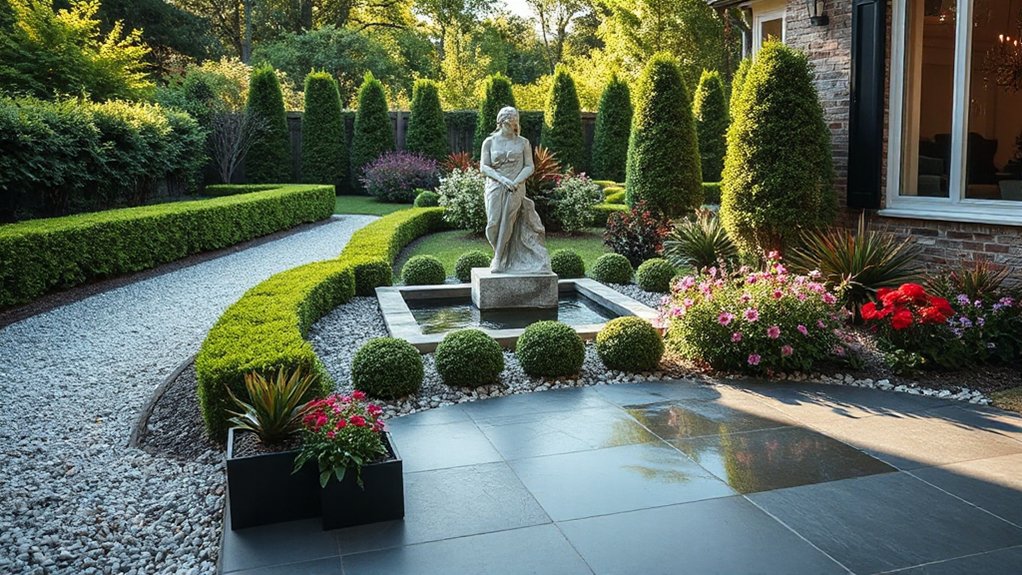
Spruce up your exterior in minutes with a few simple tweaks that deliver big impact. You’ll notice instant lift from fresh mulch in clean borders, bright container plantings, and a defined line where yard meets street.
Add garden art—a bold sculpture, a hanging mirror, or ceramic accents—that catches eye without crowding space. Choose colors that echo your home’s trim to unify the scene.
Tidy edges, prune stray branches, and rake so gravel or pavers read as deliberate, not neglected. Install quick, functional lighting to extend curb appeal after dusk and guide the eye to focal points.
For pest control, set out attractant-free traps away from entryways and trim vegetation away from walls. Small, deliberate updates compound into a noticeably welcoming exterior.
Design an Inviting Entry: Pathways, Gates, and Focal Points
Clear the path to your door with a welcoming route that invites exploration. Your entry forms the first impression, so pair clear lines with purposeful focal points, guiding visitors smoothly toward the door. Use entrance ornamentation to add personality without clutter, selecting materials and colors that echo your home’s facade.
A well‑designed gate design creates a controlled reveal—partial privacy, full curiosity—while framing landscaping vistas beyond. Choose a gate style that matches your architecture and scale, then balance openness with a touch of mystery at the threshold.
Ground pathways with texture, contrast, and lighting to sustain attention from curb to entry.
- Highlight a distinct focal feature near the gate
- Align pathway edges to frame the front fascia
- Integrate subtle lighting for dusk appeal
Create Layered Texture That Reads From the Street
From the street, layers of texture should read as a single, inviting message: bold groundcover, contrasting foliage, and architectural edges that guide the eye inward. You craft layered textures that respond to street perspective, so the scene feels cohesive at a glance.
Begin with a low, dense ground cover that anchors the view and hides scuffed pavement. Add mid-height shrubs with varied leaf shapes to create depth and shadow lines that push the foreground forward.
Place architectural elements—a slim brick edge or architectural screen—to define rhythm and provide strong vertical anchors. Keep color shifts deliberate: cool greens near the curb, warmer tones deeper in landscape.
This layered approach builds a welcoming, street-facing composition with immediate visual impact.
Outdoor Lighting That Guides the Eye and Adds Safety
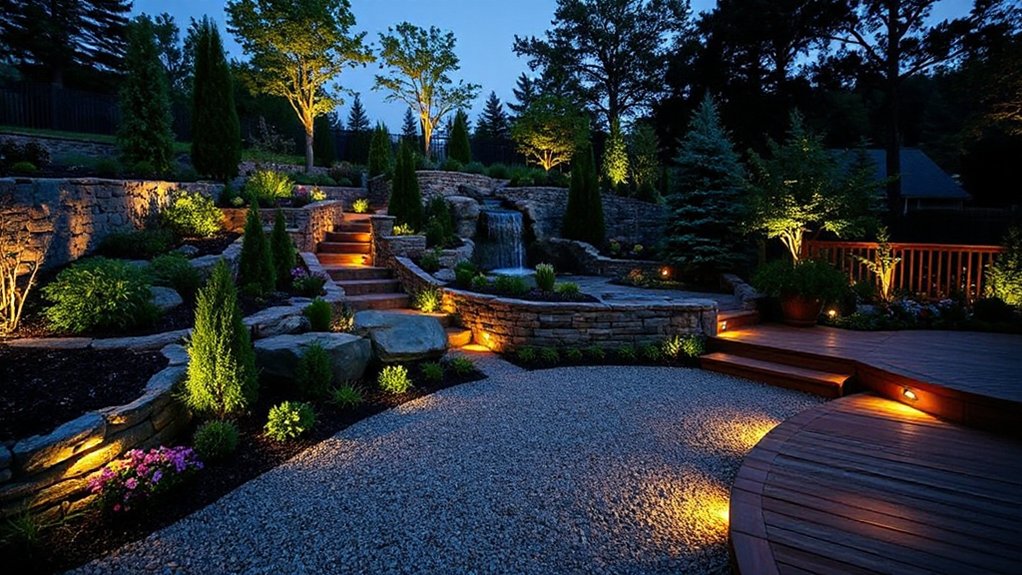
Outdoor lighting guides the eye and adds safety by outlining pathways, highlighting key plants, and creating inviting depth after dark. You’ll use deliberate illumination to frame the garden’s rhythm, guiding visitors smoothly from entry to focal points.
With garden path lighting and subtle downlighting, you define edges while avoiding glare, so steps feel secure and navigation feels effortless. Safety illumination emphasizes low, consistent brightness along walkways, reducing trip hazards without washing out textures.
The result is a coherent, approachable landscape that stays legible after sunset, inviting lingering attention on color, form, and texture.
- Highlight pathways with low, even lighting
- Emphasize focal plants using targeted accents
- Balance brightness to preserve atmosphere while improving safety
Privacy Nooks That Feel Intentional and Light-Filled
A privacy nook should feel intentional and light-filled, inviting you to linger without feeling enclosed. You’ll design tight, curated corners that read as deliberate retreats rather than afterthought corners.
Begin with a frame of low, tidy plantings and a bench or narrow seat that cushions without crowding. Use light-filled privacy through lattice or screens that cast soft shadows, not shade—think airy slats or woven panels.
Incorporate reflective surfaces, white grout, or pale stone to amplify daylight from a nearby opening. Choose compact, drought-tolerant greenery with seasonal color for year-round appeal.
Labeling and subtle accents keep the space coherent, so visitors experience calm and focus. This approach delivers light filled privacy and intentional nooks as clear value.
Sustainable Landscaping Wins: Low Maintenance, High Value
Sustainable landscaping pays off with low maintenance and high value, turning your yard into a durable, livable space. You’ll reduce upkeep while boosting curb appeal with purposeful design choices that endure. The focus is efficiency: native plants anchor soil, attract pollinators, and cut irrigation needs.
Pair these with eco friendly materials that resist wear and age gracefully, lowering replacement costs over time. Your landscape becomes a resilient backdrop for daily life, hosting gatherings and quiet mornings alike.
- Native plants thrive with less water and care, creating lasting structure
- Eco friendly materials minimize waste, extend lifespan, and simplify upkeep
- Smart zoning reduces mowing, feeds vitality, and enhances viewing appeal
Color and Planting Palettes That Pop From Curb to Porch
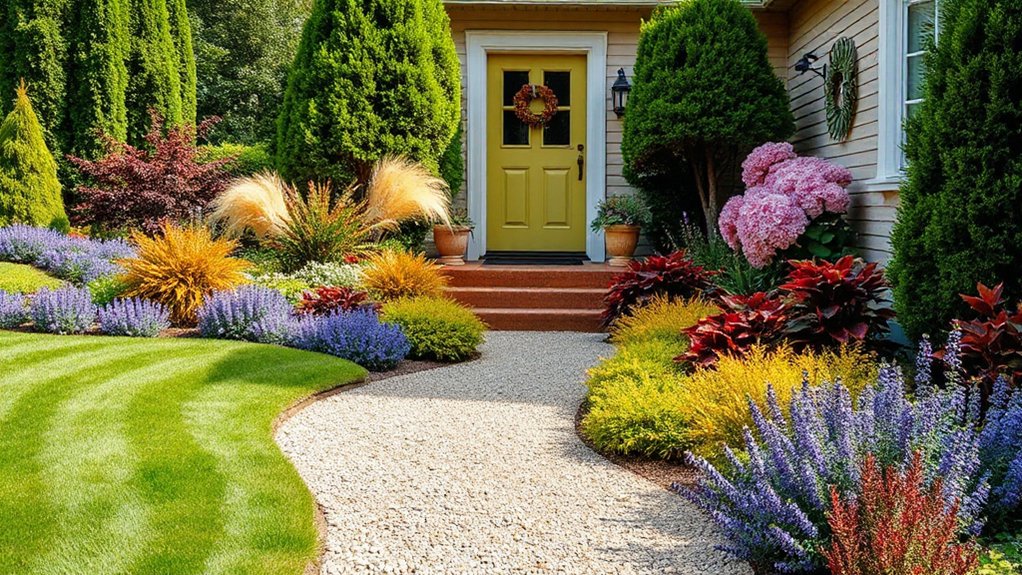
You’ll spark curb-to-porch cohesion with bold color combinations that catch the eye and guide the eye along your path. Aim for planting palette harmony that feels intentional, balancing blooms, greens, and textures so every season reads as a single, connected story.
Start with a clear curb-to-porch flow, letting bold accents lead and cohesive textures unite the border, mid-planting beds, and entryway display.
Bold Color Combinations
Bold color combos make curb appeal impossible to ignore. You’ll craft bold color combinations that grab attention and guide the eye from curb to porch. Use high-contrast pairings to create a striking visual contrast, then anchor with neutral foliage to prevent overwhelm. The result is a storefront-effect landscape that invites a closer look and more inquiries.
- Pair sunny yellows with deep purples for instant pop
- Layer cool blues with warm oranges to sharpen focal points
- Use black accents against bright greens to frame textures
Keep scale intentional: large blocks for impact, smaller splashes for nuance. Test lighting at dusk to confirm how colors read after sunset. Your curb-to-porch presentation should feel deliberate, cohesive, and instantly memorable.
Planting Palette Harmony
A cohesive planting palette connects curb to porch by pairing color with texture and form, so your landscape reads as a single, intentional composition. You create harmony by choosing a core color story and layering accents through seasonal color shifts, foliage shapes, and bloom times.
Start with a backbone of evergreen structure, then introduce plant pairing that reinforces rhythm from curb to entry. Use complementary textures—soft grasses with bold foliage and architectural blooms—to emphasize focal points along the path.
Limit palette to two to three main hues for cohesion, and let seasonal color do the lifting during peak moments. Plan bloom succession to keep interest year round, ensuring contrast and cohesion without visual clutter.
Leave room for growth, not abandonment.
Curb-to-Porch Flow
From curb to porch, let color and plant choices create instant impact by pairing a tight, two-to-three hue palette with varied textures and strong silhouettes. You’ll guide the eye along a seamless rhythm, then punch it with garden art accents and bold contrasts that read as one cohesive scene.
Pick foliage with purposeful contrast, and keep soil health at the core to sustain growth and color performance. Short interlopers like grasses or perennials anchor the look, while seasonal bloom pops provide dynamic motion.
Confirm mulch depth and soil amendments to optimize root vigor, so color stays vivid from curb to porch.
- Use a unified palette that repeats at key waypoints
- Place garden art and focal plantings to anchor sightlines
- Prioritize soil health for lasting curb appeal
Hardscaping as Sculpture: Seating, Paths, and Focal Features
Hardscaping functions as sculpture, shaping how you move, pause, and linger in the garden. You guide sightlines with seating that invites social breaks and solitary reflection alike. Benches, integrated walls, and stepping stones become deliberate pauses, not afterthought details, guiding your feet along a measured rhythm.
Paths define purpose: straight for focus, curves for discovery, each material chosen for texture and tone that echo surrounding plants, creating harmony rather than distraction. Focal features—a sculpture, a water trough, or a bold planter—anchor the scene, turning space into landscape art you can walk through.
This approach elevates garden sculpture into practical design, boosting engagement as visitors notice how form and function reinforce one another. The result: clearer, repeat-worthy viewing requests.
Quick Audit: A 12-Point Curb Appeal Check
You’ve seen how thoughtful hardscaping guides movement and highlights focal moments; now you’ll apply that eye to the home’s curb appeal with a quick, 12-point audit. Focus on clarity, balance, and first impressions, then track results with fast fixes. Each point translates into curb-appeal gains, from tidy planting to resilient soil health and smart water features that soften edges and reduce maintenance.
You’ll prioritize visibility, approach, and seasonal polish, ensuring the front yard signals welcome and value at a glance. Apply the audit, measure impact, and iterate for lasting appeal.
- Check grading and edging for clean lines that guide the eye toward the entry.
- Assess soil health and mulch, integrating water features that reduce runoff.
- Validate lighting, signage, and seasonal plant cues for year-round charm.
Frequently Asked Questions
What Features Attract More Viewing Requests Than Others?
You attract more viewing requests when you showcase striking garden lighting and serene water features, because those elements create ambiance, highlight focal points, and invite curiosity. You emphasize contrast, color, and movement, guiding visitors to imagine living there.
How Long Does a Curb Appeal Refresh Typically Take?
A curb appeal refresh typically takes 1–2 weeks, depending on scope. You’ll plan strategically, install garden lighting for evenings and outdoor furniture for staging, then refine textures and lines for immediate visual impact and faster viewing requests.
What Budget Range Yields the Best ROI for Landscaping?
Can you budget smartly to maximize value? A balanced range is $5,000–$20,000, depending on lot size and goals. You’ll prioritize budget planning and ROI analysis, maximizing curb appeal with durable plants, smart irrigation, and efficient lighting.
Which Plants Stay Vibrant Year-Round in My Climate?
Perennial flowers and evergreen shrubs keep your beds lively year-round, so you’ll enjoy continuous color and structure. You stay results-focused as you select hardy varieties, plan layered textures, and pair drought-tolerant options for stunning, maintenance-smart landscape impact.
How Can I Prioritize Designs for Different Home Styles?
Prioritize designs by home style, matching silhouettes and materials. You’ll map Garden pathways and Outdoor lighting to accent architecture, create flow, and highlight focal points, ensuring cohesive curb appeal and practical use with crisp, results-focused visuals.
Conclusion
Think of your garden as a first impression you can shape in minutes. By dialing up vibrant plantings, crisp pathways, and a welcoming entry, you invite inquiries before anyone steps inside. Layer textures, light up key features, and carve out privacy niches that feel intentional, not crowded. A few thoughtful hardscape touches turn curb appeal into a storefront—sustainable, low-maintenance, high-value. When you craft this vignette, curiosity follows like a moth to a porch light.