
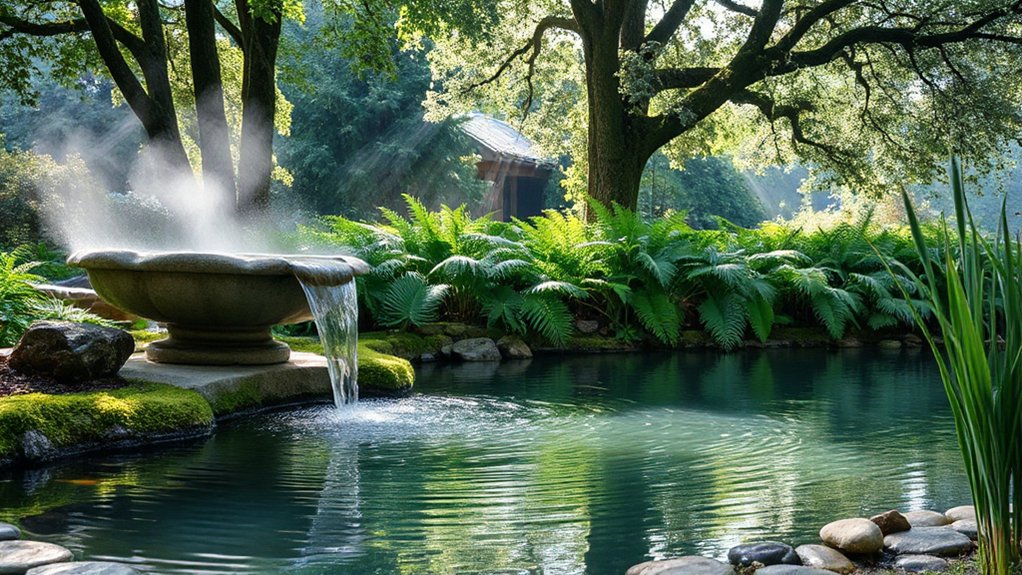

Garden water features can create a calm, multi-sensory backdrop in your yard by combining gentle sound, steady motion, and tactile elements. To maximize tranquility, plan for practical placement near seating and clear sightlines, choose durable materials, and prioritize quiet operation with simple maintenance. Start with a feature that fits your space and budget, then consider sound design, water quality, and seasonal care. The next step seems straightforward, yet the right balance invites you to test concepts in your own outdoor room.
What Makes Garden Water Features Calming
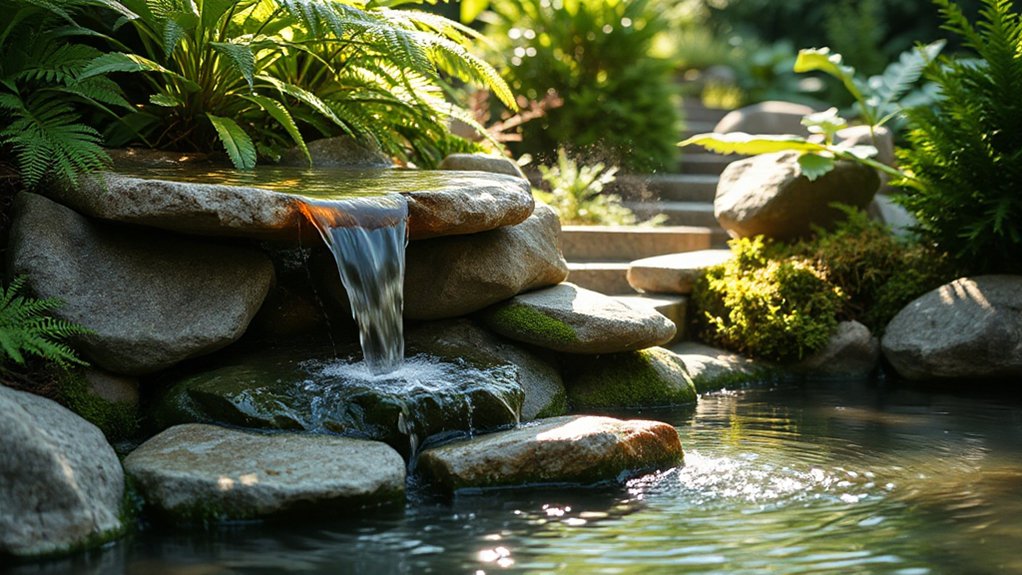
Water features calm by engaging multiple sensory channels and reinforcing predictable patterns. You design calm through consistent motion, sound, and tactile cues that reduce cognitive load.
In practical terms, consider flow rate, ripple texture, and water clarity, all tailored to your space. Natural filtration supports steadier clarity, minimizing short-term volatility that could disrupt focus or relaxation.
You’ll notice that gentle, periodic sounds create a sonic baseline, aiding concentration and mood stability. Visual cues, such as gradual lighting progressions and predictable water edge reflections, reinforce habit formation and reduce alertness fluctuations.
Wildlife attraction can be a secondary benefit when you balance plant density and habitat simplicity, but keep the system focused on reliability. Overall, precision in materials, placement, and maintenance sustains calming outcomes.
Choosing the Right Garden Water Feature for Your Space
Consider your space size and layout to determine feasible placements and maintenance access.
Evaluate your preferred sound level and motion, selecting features that provide the right balance between ambience and visibility.
Align these choices with the space considerations, as well as the available water capacity and energy use to optimize performance and efficiency.
Space Considerations
Selecting a suitable garden water feature starts with evaluating available space, foot traffic, and sun exposure; doing so helps prevent scale mismatches and placement issues before you buy. You assess dimensions, paths, and visibility to optimize impact and maintenance cycles, then align the feature with existing garden decor and planting integration.
- Measure clearance around utilities and plants to avoid future conflicts.
- Prioritize low-watertable zones for safety and access.
- Match flow rate to space size, avoiding overpowering noise.
- Plan seasonal access for cleaning and winterization.
Consider enclosure options or screens to manage wind exposure and provide microclimates for delicate plantings. Choose modular or compact forms for flexibility, ensuring the feature complements rather than competes with focal planting areas.
Sound and Motion Options
To choose the right garden water feature for your space, you’ll evaluate sound profiles and motion dynamics to match your site conditions and usage goals. Start by appraising desired sound levels: a gentle splash for relaxation, a rhythmic cascade for privacy, or a continuous pool tone for background ambience.
Motion options include variable flow, oscillating jets, and surface ripples, each shaping energy dissipation and acoustic character. Consider placement relative to rooms, wind patterns, and nearby hardscapes to prevent unwanted amplification.
For wildlife interaction, implement a gradual, shallow approach to water depth and provide ramps or shallow shelves. Birdsong enhancement benefits from quiet spillways and unobstructed perches nearby.
Wildlife attraction increases with diverse microhabitats, sheltered edges, and vegetation buffers integrated into the feature design.
Compact vs Large Garden Water Features: What Fits You
When choosing between compact and large garden water features, consider how available space and intended impact shape your decision. You’ll balance footprint, maintenance, and performance when selecting scale, flow, and filtration needs.
- Space utilization: assess width, height, and placement with access for service.
- Flow control: choose pumps and outlets that deliver the desired sound and movement for your yard.
- Filtration needs: evaluate natural filtration potential and ease of cleaning to sustain clarity.
- Wildlife attraction: plan plantings and features that invite birds, insects, or small aquatic life.
Compact units excel in tight spaces and faster setup, while large features deliver dramatic presence and extended circulation. Your choice hinges on space, maintenance tolerance, and desired ecosystem effects.
Start Now: Quiet, Low-Maintenance Options
Quiet, low-maintenance options emphasize reliability and simplicity, making them ideal for busy gardens. You’ll focus on proven designs that minimize parts subject to wear and reduce routine care. Choose components with solid warranties and accessible replacements, and favor sealed or self-contained units to limit leaks and maintenance.
Birdbath installation can be straightforward: select a stable pedestal, maintain level water, and use a shallow basin to reduce algae growth and evaporation. Integrate a compact water feature lighting kit for visibility after dusk without increasing energy demand.
Prioritize passive filtration, drip irrigation-ready settings, and easy-access cleaning ports. Opt for matte finishes that resist mineral buildup, and keep spare o-rings and seals on hand. This approach delivers dependable ambience with minimal ongoing effort.
Sound Design for Garden Water Features
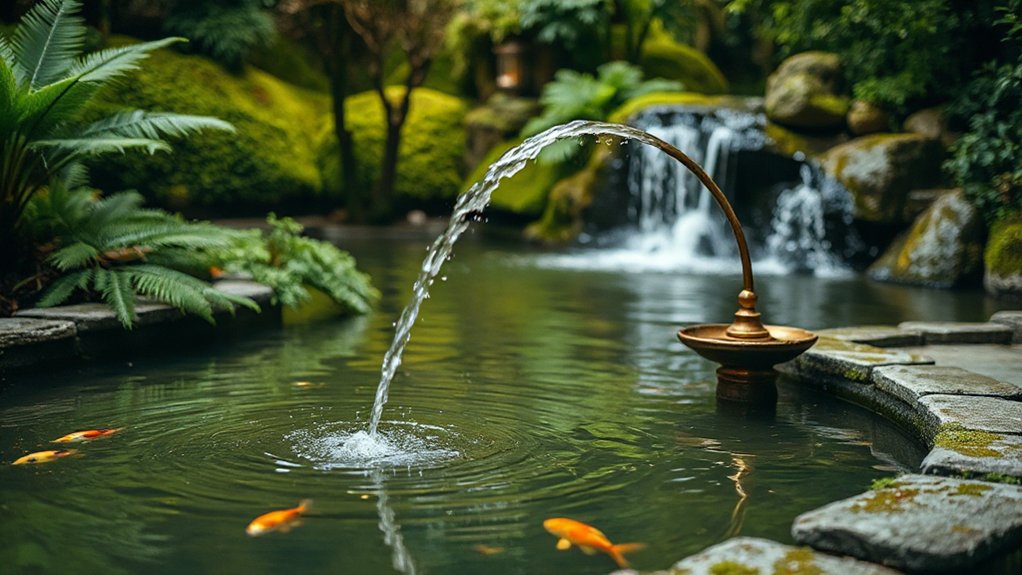
- Flow tuning for consistent tonal balance
- Surface selection to control splash energy
- Pump choice and placement for low-noise operation
- Vegetation and shelter to encourage wildlife interaction
Placement Principles for Maximum Calm
You’ll place features with spatial harmony in mind, balancing sightlines, sound, and movement to create calm throughout the space.
Consider soundscape positioning to keep low-noise zones near seating and higher acoustic elements away from hotspots, while preserving a coherent auditory backdrop.
Use flow and proximity guidelines to connect paths, seating, and water; guarantee distance cues support gentle shifts rather than abrupt stops.
Spatial Harmony Principles
Spatial harmony relies on deliberate placement that reconciles sightlines, sound, and movement. You balance focal points, pathways, and plantings so progression feel seamless and uncluttered, guiding attention without abrupt shifts.
Prioritize vertical layering and scale to preserve calm, avoiding visual competition between water features and surrounding scenery. Align water form, substrate, and border materials with the overall garden palette, emphasizing cohesion over novelty.
Consider sightlines from multiple seating areas to guarantee tranquility remains constant as you move. Integrate botanical diversity and eco-friendly installations to support resilience and seasonal interest.
Maintain muted textures and colors to reduce distraction, allowing water to remain the focal calm.
- Align focal elements with pathways and seating
- Use layered plantings for depth without crowding
- Choose low-maintenance, durable materials
- Stagger sound and motion to preserve quiet focus
Soundscape Positioning Tips
Align streams and droplets with prevailing wind paths to stabilize perception and reduce localized noise bursts. Place features near vegetation buffers that absorb high-frequency tones, improving overall tonal balance for listeners at rest.
Integrate passive sound masking from birds and ambient cues by sustaining subtle, consistent flow. Consider birdsong ambiance and wildlife attraction when selecting plant textures and waterplay directions, ensuring visual privacy complements acoustic intent.
Verify accessibility and maintenance routines don’t disrupt the calibrated soundscape or introduce abrupt variations.
Flow and Proximity Guidelines
When spacing features, you create deliberate distances to avoid crowding and to preserve audible clarity of each splash.
You place aquatic plants to midline the water surface, aiding filtration, easing maintenance, and guiding viewers along the intended sequence.
Proximity to seating or pathways relies on predictable, low-vibration zones to maintain calm.
Adjust lighting so Water lighting highlights runtime motion without glare, using staggered fixtures for even illumination.
Maintain consistent setback from edges to minimize debris entry.
- Spatial rhythm and sightline harmony
- Plant placement for flow control
- Lighting layering and glare management
- Vibration-sensitive seating adjacencies
Materials and Styles for Garden Water Features
Styles span modern, rustic, and classical, with modular kits or custom builds aligned to site geometry. For plant integration, consider planting pockets and substrate compatibility to support healthy plant combinations without compromising water flow. Container and pond features should support accessible filtration and predictable circulation.
Lighting effects enhance nighttime visibility; plan ingress, heat, and glare, ensuring electrical protection and maintenance access while preserving feature integrity.
Power, Plumbing, and Water Quality Essentials
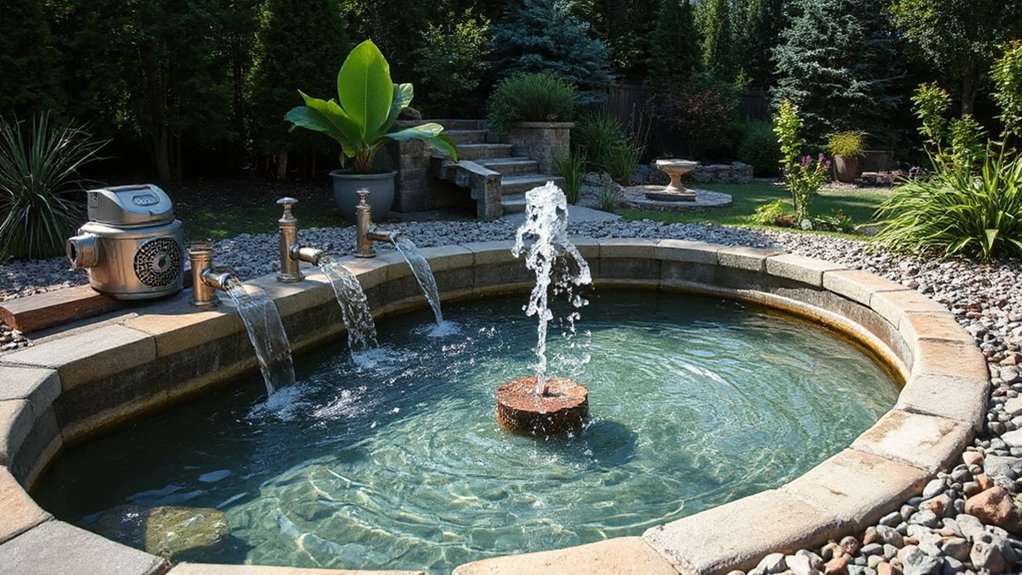
Power, plumbing, and water quality are the backbone of reliable garden water features. You optimize performance by sizing pumps for flow and head, routing tubing with minimal bends, and choosing resilient fittings. Aim for clean water paths, accessible cleanouts, and easy drainage to prevent clogs.
For safety, implement dedicated circuits with GFCI protection and weatherproof housings. Water filtration keeps debris out of the pump and reduces algae risk, while regular testing maintains correct pH and mineral balance. Use a pressure-rated manifold to balance returns and avoid leaks.
Maintain circulation schedules to prevent stagnation and odors.
- Install a dedicated, GFCI-protected circuit for pumps and controls
- Choose a compact, external filter suited to your flow
- Use clearly labeled shutoff valves for serviceability
- Schedule periodic water quality checks and maintenance
Seasonal Care for Year-Round Beauty
Seasonal care keeps water features vibrant throughout the year by aligning maintenance tasks with changing conditions. You’ll schedule inspections to match seasonal shifts: spring startup, summer operation, autumn shutdown, and winter protection.
In spring, verify pump seals, clean debris, and refresh rainfall or rain garden input paths to prevent clogs.
Summer requires monitoring flow and filtration efficiency; inspect lights, aeration, and water quality, adjusting chemical treatments as needed.
Autumn focuses on winterizing equipment, draining exposed lines, and securing covers to minimize freeze impact.
During winter, keep a minimal flow where applicable and protect fittings from freeze-thaw cycles.
For long-term resilience, integrate a compact water filtration routine and plan for seasonal sediment removal.
Rain garden integration aids drainage, while reliable filtration maintains clarity and reduces sediment load year-round.
Budgeting, Longevity, and Value
Budgeting basics guide your initial costs and ongoing maintenance, so you can forecast upfront spend, replacements, and seasonal repairs.
Longevity considerations focus on component quality, system efficiency, and expected lifespans to inform budgeting for durability.
Value assessment weighs purchase price against long-term performance and maintenance, guiding you to optimize for reliable function and overall cost of ownership.
Budgeting Basics
A solid budgeting plan for garden water features balances initial costs, ongoing maintenance, and expected longevity to deliver true value. You’ll approach cost as a lifecycle, not a single price, focusing on Budget planning and Cost comparison to choose durable, affordable options.
You’ll estimate upfront expenses, then project annual upkeep, energy use, parts replacement, and seasonal service. Prioritize modular components that scale with your needs, reducing risk if you resize later. Include contingencies for filtration, pump wear, and weather protection.
Your analysis should translate to a clear spend profile, a break-even timeline, and a value metric tied to performance.
- Define total cost of ownership across 5–10 years
- Compare vendor warranties and replacement parts
- Assess energy efficiency and running costs
- Plan for future upgrades without total overhaul
Longevity Considerations
Longevity matters as much as initial cost when planning garden water features; a durable setup minimizes downtime and total lifetime expense. You optimize longevity by selecting robust pumps, field-proven seals, and corrosion-resistant materials appropriate for your climate.
Plan for accessible service points, standard spare parts, and modular components that simplify upgrades without full replacement. Regular filtration and alignment checks reduce wear and noise, extending use cycles between maintenance events.
In budgeting, allocate for reliability-focused investments upfront to lower long-term expenses and downtime. Garden maintenance routines should emphasize component inspection, debris removal, and prompt seal or bearing replacements before failures occur.
Prioritize water conservation by implementing leak-tested piping, efficient pumps, and timed circulation that sustains aesthetics while reducing waste and energy use.
Value Assessment
When evaluating value in garden water features, you weigh upfront costs against long-term performance, reliability, and energy use to determine true lifecycle value. You’ll assess component quality, ease of maintenance, and replacement availability to forecast ongoing expenses.
Budgeting hinges on pump efficiency, filtration needs, and materials resilience, while longevity depends on corrosion resistance, seals, and exposure to weather. Value emerges from balancing initial investment with predictable operating costs and the feature’s contribution to habitat health.
Prioritize water plantings and design choices that reduce energy draw without compromising function, supporting aquatic habitats. Consider warranty coverage and service accessibility to safeguard future performance.
- Lifecycle cost analysis including energy and maintenance
- Component durability and warranty terms
- Pump and filter efficiency implications
- Impact on water plantings and aquatic habitats sustainability
Quick-Start Projects to Dip Your Toes In

If you’re just testing the waters, start with simple, low-cost projects that demonstrate core water-feature basics without requiring major renovations. Quick-start ideas emphasize modular components, predictable outcomes, and repeatable results.
Begin with a shallow tray or container pond, paired with a submersible pump and a simple filter, to observe flow, aeration, and surface movement. Consider a small RGB or white LED accent to study lighting effects at dusk.
For Plant integration, choose hardy aquatic plants and marginal species that tolerate variable moisture, then evaluate routine pruning and nutrient needs.
For Wildlife attraction, install a shallow dipping area and a shallow ramp to enable safe access, inviting birds and beneficial insects to explore.
Document measurements, adjust flow, and iterate to refine balance.
Frequently Asked Questions
How Loud Should a Garden Water Feature Be for Tranquility?
For tranquility, aim for a sound level around 40–50 dB at your seating area. You’ll manage noise control by spacing features, using diffusers, and layering sound. Avoid peaks above 60 dB; monitor with a meter.
Can I Install a Water Feature Without a Plumber or Electrician?
Yes, you can, but DIY installation demands electrical safety, proper grounding, and waterproof enclosures. Make certain you follow local codes, use GFCI outlets, and isolate the pump from water. If unsure, hire a pro.
What Maintenance Schedule Keeps Features Serene Year-Round?
Sure thing: Maintain serenity year-round with a consistent schedule. Weekly: inspect pump, clear debris; monthly: clean filter and surfaces; quarterly: treat algae, test water chemistry, adjust algaecide. Algae control, pump cleaning.
Which Wildlife-Friendly Features Best Suit Calming Gardens?
You should choose wildlife-friendly features like shallow banks and ponds with variable depths, creating a wildlife habitat, and plant native plants around the edges to support pollinators while maintaining calmed water; install gentle filtration for reliability.
Are Solar-Powered Pumps Reliable in Cloudy Weather?
Yes, solar-powered pumps can work, though reliability drops in cloudy weather. In practice, expect solar pump efficiency to decline with reduced sunlight, while weather impact may require larger panels or battery backup to maintain steady flow.
Conclusion
You’ve got what you need to build a tranquil garden, from calming sounds to quiet, low-maintenance design. Consider a small fountain near seating, or a shallow pond with a gentle ripple for visual balance. Think of maintenance like tuning a clock: regular checks keep harmony. A single anecdote: a neighbor added a 12-inch fountain and reported a 30% drop in perceived stress within a week. Start small, plan for seasons, and scale as you refine your chill.