


Like a well-tuned instrument, your space speaks through scale and line. You’ll want precise measurements, sturdy frame construction, and a fit that preserves traffic flow while meeting your daily needs. Start by defining style, color, and footprint, then match sofa size to room proportions, test cushions for support, and consider long-term durability. The next step reveals how these decisions shape layout and lighting, so you stay aligned with function and aesthetics before you commit.
What a Sofa Says About Your Space: Style, Proportion, and Use

A sofa communicates how the room is used and its overall proportion at a glance. You assess seating density, alignment with walls, and traffic flow to determine how space feels after entry.
Style cues indicate function: a compact silhouette signals casual use or small rooms, while a deep, structured form implies formal seating or multi-use lounges.
Proportion matters: chair-to-sofa scale, leg visibility, and rug footprint establish balance and sightlines from multiple angles.
You weigh fabric durability against expected wear in high-traffic zones and family areas, ensuring long-term performance.
Style versatility matters for future reconfigurations; choose neutral frames with adaptable upholstery options when you anticipate redecoration.
Clear, consistent proportions and durable materials yield predictable results for layout, acoustics, and visual coherence.
Measure Like a Pro: What to Grab and Record
To measure like a pro, grab a laser or steel tape, a notebook or measurement app, and a helper if possible; consistency matters. You’ll capture room length, width, and ceiling height, plus doorway and staircase clearances.
Record baseline party wall positions, window bezels, and any architectural protrusions that affect seating. Note sofa clearance for traffic paths and any rug overlaps to avoid mounting mismatches.
Measure from wall to wall at multiple points to catch irregular surfaces, documenting both maximum and minimums. For fabrics, record upholstery width, potential seam layout, and usable fabric repeat to estimate yardage accurately.
Also log anchor points for credenzas or lamps that could constrain placement. Track finish types, color warmth, and shadow lines to anticipate how fabric durability and style versatility will perform under daily use.
Choose a Sofa Type for Your Lifestyle
Choosing a sofa that fits your daily routines starts with matching its shape and scale to your lifestyle. To select a type, map activities to seating needs: lounging, hosting, work, and short, frequent sits.
Prioritize structure over aesthetics when function dominates. If you read or nap, prefer deeper cushions and low arms for relaxing posture, with solid wood or reinforced frames for durability.
If you entertain, consider modular or sectional configurations that reconfigure to accommodate guests without crowding.
For frequent multitasking, a compact loveseat or armless settee offers balance between space and usability.
Sofa materials guide longevity; upholstery options affect care, breathability, and stain resistance. Choose low-maintenance fabrics for high-traffic times, and select performance blends for easy cleaning and long-term stability.
Scale Rules: Matching Sofa Size to Room Proportions

Start by sizing your sofa to the room’s proportion: a too-large piece will overwhelm, while too-small leaves the space feeling unfinished.
Ceiling height matters, as higher ceilings can handle longer sofas without crowding walls, and lower ceilings benefit from compact silhouettes to preserve balance.
Don’t forget traffic flow—allow clear paths around the sofa and between entry points to maintain easy movement.
Proportion With Room
When sizing a sofa, you must match its scale to the room’s dimensions and traffic patterns. Proportion with room means the sofa should occupy a balanced visual footprint without obstructing pathways or sightlines.
Measure doorway clearance, window openings, and rug margins to confirm clearance corridors remain comfortable.
A compact living area benefits from a sofa with a lower profile and slimmer arms, while larger rooms tolerate deeper seating and extended lengths for seating clusters.
Align the sofa’s length to about two-thirds of the wall it faces, and leave at least 18 inches for side tables or accent furniture.
Fabric options and color palettes should be chosen to enhance proportion: select durable fabrics in restrained tones for small spaces and richer textures for spacious layouts.
Ceiling Height Impact
Ceiling height directly influences how a sofa reads in the space and guides your size choices. You’ll evaluate proportional lines by comparing floor area to vertical clearance, ensuring the sofa’s silhouette doesn’t visually crowd or underwhelm the ceiling plane.
In taller rooms, opt for longer, low-profile designs that maintain horizontal emphasis, avoiding excessive height that disrupts scale.
In lower ceilings, favor compact, streamlined forms with clean profiles to preserve openness without blooming into the room’s upper air.
Consider proportion to wall surface, not just width.
Lighting considerations matter: higher ceilings benefit from layered lighting that emphasizes depth, while low ceilings demand controlled illumination to prevent glare and shrinking effects.
Ceiling height informs selection, ensuring cohesive, balanced composition.
Ceiling height, lighting considerations.
Traffic Flow Considerations
Even with a well-sized sofa, traffic flow can make or break a room’s function; you must size and place the piece to keep clear paths and furniture access intact.
Begin with a measured footprint that matches room proportions, not just wall length. Maintain at least 3 feet of clear space for primary walkways and 2.5 feet for secondary routes around the sofa.
Position the sofa so that doors, windows, and vents remain unobstructed, and avoid placing it directly in line with high-traffic corridors.
Consider furniture placement that creates distinct zones while preserving sightlines and energy circulation. Use modular sections or rounded edges to reduce pinch points.
Test with moving obstacles before finalizing. Finally, document distances for scale, ensuring consistent traffic flow throughout the seating area.
Layout Strategies: Where a Sofa Works Best
Placing a sofa in a room hinges on whether you prioritize traffic flow, focal points, or conversation. To maximize function, map clear sightlines and accessible paths first, then position seating to frame the room’s anchor.
In rectangular spaces, place a sofa along a dominant wall, orienting toward the focal point while maintaining at least 36 inches of clearance for passage.
In open layouts, use the sofa to segment zones without blocking flow; consider a rounded or U-shaped arrangement for intimate conversation.
Choose fabric selection with durability and ease of cleaning in mind, especially in high-traffic areas.
Avoid placing the sofa directly in traffic corridors; preserve entryways and door swings to maintain uninterrupted movement.
Consider wall alcoves or windows as visual anchors to optimize balance.
Fabric Fundamentals: Texture, Durability, and Comfort
Fabric choices matter because texture, durability, and comfort collectively determine how a sofa performs day to day. You’ll evaluate fabric types by weave, fiber content, and abrasion resistance, then map these to your usage profile.
Texture selection matters; higher-pile fabrics feel plush but trap dust and wear faster under heavy abrasion, while tight weaves resist snagging and are easier to clean.
Prioritize durability ratings (double rubs or equivalent) aligned with your traffic level and pets. Consider upholstery backing and seam construction, since these influence long-term shape retention.
For fabric care, plan cleaning methods consistent with fiber composition and dye stability, and note potential dye transfer with light-colored options.
In short, align texture, durability, and comfort with your space, lifestyle, and maintenance capacity.
Color and Pattern: Building a Cohesive Palette
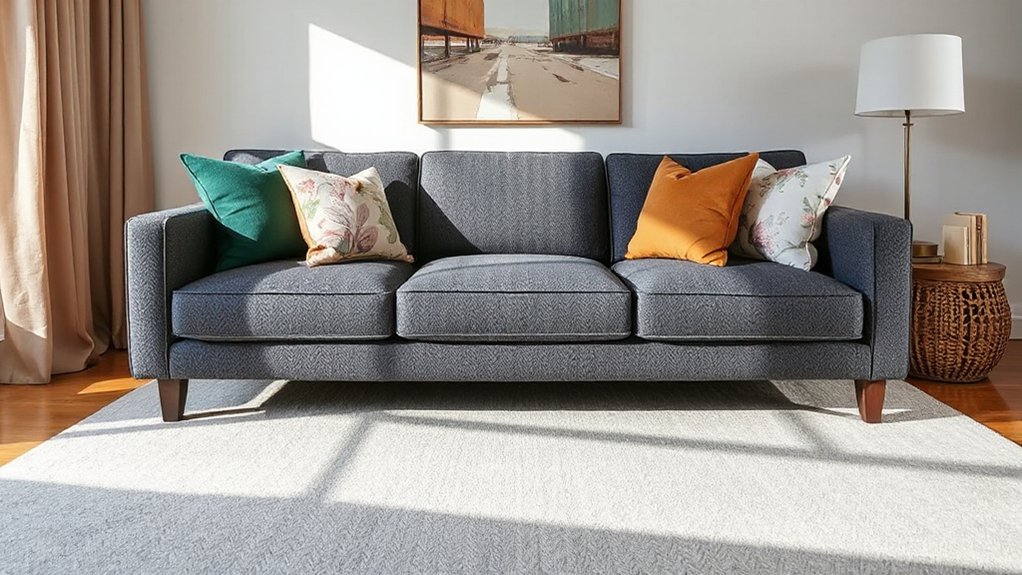
You’ll start by ensuring your sofa color harmonizes with the room’s dominant tones, creating a cohesive base for other elements.
Keep pattern scale balanced so small motifs don’t overwhelm large surfaces, and reserve larger patterns for accents or feature walls.
Use an accent color to tie together cushions, throws, and artwork, establishing a clear, repeatable palette across textiles and accessories.
Harmonize With Room
To harmonize a sofa with the room, start by identifying your primary color family and the dominant patterns already present in the space. You’ll build a cohesive palette by selecting upholstery that reflects those tones without competing with them.
Choose a sofa hue that anchors the room, then reinforce it with cushions, throws, and accents that echo or subtly vary that color family. Pay attention to texture and pattern scale, ensuring that prints aren’t overpowering relative to surrounding textiles.
Aim for style consistency across furniture, wall art, and accessories, so the overall look feels intentional rather than patched. This approach creates a calm, unified base, enabling you to harmonize ambiance while preserving identifiable personality within a balanced, functional arrangement.
Pattern Scale Balance
Pattern scale relates to how repeated motifs read from a distance; larger motifs dominate, smaller motifs recede. To achieve visual balance, pair a dominant upholstery with secondary elements—pillows or throws—in a contrasting but harmonious scale.
Maintain a consistent rhythm: limit bold patterns to one focal textile and offset with solid or micro-patterned accents. Consider the room’s proportions, ceiling height, and furniture layout to prevent crowding.
This approach minimizes clashing prints, increases perceived order, and yields a clean, purposeful palette that supports lasting visual balance.
Accent Color Ties
Choose an Accent color that recurs in smaller doses across accessories to reinforce unity without overpowering the main fabric. Limit the palette to three colors maximum for precise coordination, and document their RGB or CMYK values if you’re matching lighting or prints.
When mixing patterns, guarantee scale contrast aligns with the sofa’s frame; larger patterns demand simpler accents, while fine prints gain energy from bolder anchors.
Test contrast against room lighting at multiple times of day, adjusting as needed to maintain visual balance and functional clarity.
Frame Quality: What Stands Up to Everyday Use
Frame quality is the backbone of daily durability, so choose a solid ply or hardwood frame secured with reinforced joints and high-t visibility screws.
- Frame durability hinges on durable woods and precise joinery
- Opt for hardwoods or engineered core with load-tested supports
- Avoid weak dowels; look for block or mortise-and-tenon connections
- Confirm reinforced collision points and vibration control at corners
You’ll assess material selection by considering load, usage, and furniture weight distribution. Check hinge integration, leg anchors, and seat suspension alignment to prevent sagging.
A well-built frame resists twist and shift under daily stress, maintaining shape and symmetry. Look for reputable joinery standards and manufacturer test data. Prioritize consistent grain, minimal knots, and stable finishes.
If you understand frame durability and material selection, you’ll pick a sofa that stays true longer and feels solid every time you sit.
Cushion Comfort: Density, Fill, and Support
Cushion comfort starts where frame durability ends: the way cushions respond to daily use defines long-term satisfaction. You balance cushion firmness with the overall frame feel, guaranteeing no mismatch between support and resilience.
For longevity, prioritize foam density tied to expected load; higher density resists denting and maintains shape, while lower density may feel soft but compresses faster. Consider your seating frequency and user weight to choose an appropriate foam density, then verify core construction—all-foam cores behave differently from layered combinations.
Fill materials influence rebound, feel, and heat retention, so test a sample that mirrors your daily turns from lounging to hosting.
Pair firm edges with a forgiving center for consistent support, and guarantee the removable covers tolerate regular cleaning without abrasion.
Test Seating in Store: Sit, Sway, and Sprawl Like a Pro

When you’re in the showroom, test seating by sitting, swaying, and sprawling to gauge real-world response. You’ll evaluate support, balance, and edge comfort to guarantee performance under daily use. Focus on three criteria: sofa upholstery feel, armrest practicality, and frame rigidity.
Reproduce typical traffic patterns and seating angles to reveal fatigue points and settling. Use a stopwatch to notice rebound speed after shifting positions, and test internal cushions for looseness. Note how fabric grip interacts with clothing and movement.
Compare models for consistency of finish and construction across repeats. Listen for squeaks or creaks that signal joint wear. Make decisions based on repeatable, observable metrics rather than impression alone.
- Sofa upholstery assessment time and texture
- Armrest styles and ergonomic fit
- Frame stiffness and joint integrity
- Longitudinal comfort across positions
Care and Stain-Resistance: Caring for Your Fabric
Protecting fabric upholstery starts with a clear care plan: identify the fabric type, then follow manufacturer-recommended guidelines to prevent staining and premature wear. You’ll implement routine maintenance that preserves color, texture, and resilience.
Begin with regular vacuuming using a soft brush attachment to remove loose debris without abrading fibers.
For spills, act promptly: blot with a clean cloth—avoid rubbing, which embeds stains deeper. Use the specified cleaner or a mild solution, testing a hidden area first, then apply sparingly along the spill edge to prevent spreading.
Fabric care summaries should note stain resistance measures, enclosure covers, and air-drying times.
Schedule professional cleaning per fabric care labels to maintain performance.
If you treat fabrics accordingly, you sustain appearance, prolong lifespan, and reduce long-term replacement costs.
Corner and Modular Options: Flexible Solutions for Small Spaces
Corner and modular options offer practical, space-saving configurations that maximize seating without sacrificing functionality. You’ll appreciate corner versatility when you align seating to walls, isolating traffic lanes and preserving room flow. Modular flexibility lets you reconfigure for different activities, from lounging to hosting.
Choose pieces with compact depths and adjustable components to fit tight footprints while maintaining support.
- Optimize layout by pairing sectional modules with ottomans to create informal boundaries
- Select low-profile bases to preserve sightlines and openness
- Prioritize modular units with easy connectors for rapid reconfiguration
- Guarantee cushions maintain shape with high-resilience foam and durable covers
This approach minimizes wasted space, enabling versatile seating zones without clutter, and supports scalable arrangements as your space evolves.
Budgeting Smartly: Getting the Best Value for Your Space

Set a realistic budget first, then compare value against that limit rather than chasing the lowest price.
Look beyond sticker price to hidden costs like delivery, assembly, and maintenance.
Weigh durability, warranty, and upholstery quality.
Set a Realistic Budget
A realistic budget guides your sofa choice by balancing cost, quality, and space constraints, so start with a clear ceiling and a practical floor. You’ll apply Budget planning and use pricing strategies to map costs against needs, avoiding overextension.
Define a target price range, then evaluate construction, fabrics, and measurements within it.
- Set a ceiling based on room size and margins
- Compare similarly featured models across retailers
- Factor delivery, warranties, and returns into the total
- Prioritize materials and frame quality over trend
Remember to document compromises early, so you don’t chase features that exceed your budget.
This disciplined approach keeps you focused on value, not impulse, ensuring you get the best combination of durability and comfort for the space.
Compare Value, Not Just Price
When you’re budgeting, focus on value over price to maximize space and longevity. You’ll compare sofas by construction, materials, and long-term performance, not just sticker cost.
Prioritize fabric options that meet your use case—stain resistance, fade tolerance, and cleaning practicality—so you avoid premature replacement.
Assess frame durability by inspecting joinery, suspension, and edge integrity; a solid hardwood frame with reinforced corners and sinuous or grid support typically offers greater resilience.
Consider seat height and depth to balance comfort with space efficiency, ensuring the piece aligns with other furniture.
Evaluate warranty terms for coverage on fabric wear and frame failure, and estimate annualized cost based on expected lifespan.
Choose the model delivering the best value for your space, not the lowest price.
Account for Hidden Costs Within Budget
Hidden costs can erode the value of a sofa long after the sticker price is forgotten, so you’ll want to account for them up front. You’ll optimize budget considerations by forecasting true lifetime costs, not just upfront payment. Track delivery, assembly, and potential add-ons, then evaluate warranty terms and potential replacement needs.
Consider maintenance, slipcovers, and cleaning supplies as ongoing line items. Plan for insurance implications, accidental damage, and resale value when applicable.
- Delivery and assembly fees
- Warranties, repairs, and replacements
- Maintenance, cleaning, and accessories
- Long-term resale or depreciation impact
Delivery and Assembly: Getting It Right the First Time
Delivery and assembly don’t have to be a headache. You can streamline the process with careful planning and measured steps.
Verify delivery windows, entryway dimensions, and sofa重量 to guarantee clearance—no surprises at the door.
Prepare the space by removing obstacles, protecting floors, and assigning a clear path from curb to room.
Read assembly instructions thoroughly before arrival; confirm required tools and hardware are present.
Track components against the bill of materials, and label parts if needed to speed up on-site work.
Prioritize fabric durability checks for seat cushions and frame joints to prevent post-delivery sag.
During setup, align edges precisely, torque fasteners to spec, and test sit-and-feel for stability.
Finally, assure color coordination across throw pillows and nearby furnishings, avoiding mismatched hues.
Mixing Sofas With Other Seating: Proportion and Balance
Mixing sofas with other seating calls for careful proportion and balance so the room reads as cohesive rather than cluttered. You’ll create seating harmony by matching scale, depth, and leg visibility across pieces, avoiding abrupt size jumps. Place anchors first, then fill with complementary pieces that share line or material cues to reinforce visual balance.
- Align seating heights to maintain a smooth seat plane
- Vary shapes (sofa, armchairs, benches) but keep recurring materials
- Consider sightlines: keep pathways clear and focal seating dominant
- Use cushions and textiles to unify color and texture
Keep proportions intentional: unequal volumes still read coherent when materials and silhouettes repeat. Maintain visual balance through rhythm, spacing, and a consistent design language that guides the eye across the room.
Lighting and Accessories: Elevating Your Sofa’s Presence
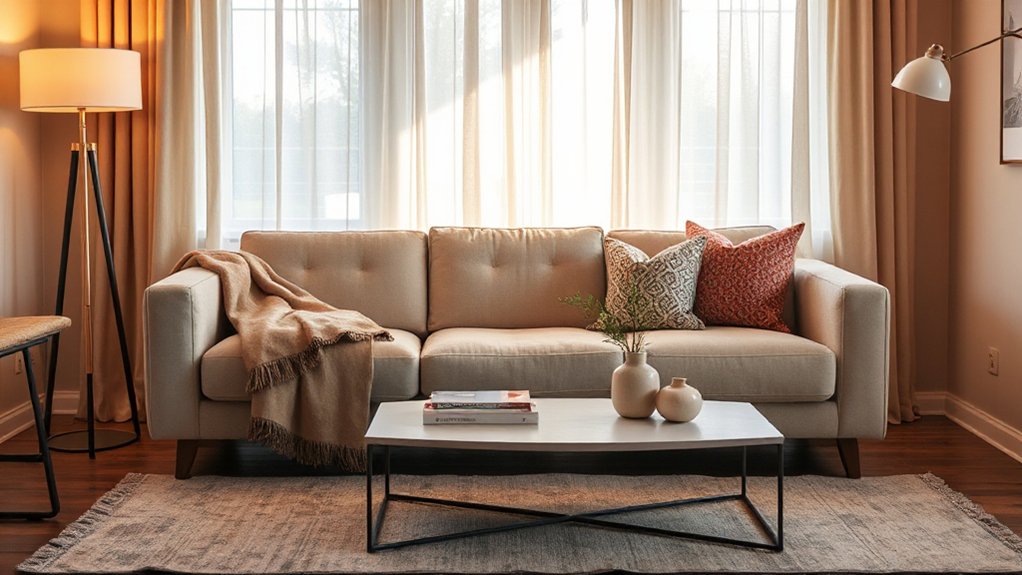
Lighting defines your sofa’s silhouette and mood, so position fixtures to highlight key lines and textures without glare.
Accessories act as cues, so choose lamps, art, and textiles that reinforce the room’s tone and create cohesive ambience.
This approach keeps focus on the sofa while elevating presence through purposeful lighting and complementary accents.
Lighting Enhances Sofa Presence
Have you considered how lighting shapes a sofa’s presence in a room? Lighting enhances how your sofa reads, defines its silhouette, and anchors the seating zone. You’ll optimize form and function by controlling brightness, color temperature, and direction. Precision lighting supports practical use while reinforcing style.
- Lighting ambiance: set the mood without overpowering the fabric or texture
- Sofa placement: align light sources with seating for even coverage
- Shadow control: minimize harsh spots that distort shape
- Layered cues: combine ambient, task, and accent lighting for depth
A thoughtful plan keeps glare off surfaces, preserves color accuracy, and highlights upholstery details. Implement dimmers, warm whites, and targeted sconces to maintain visual balance and functional clarity in everyday use.
Accessory Cues Create Ambience
Accessory cues shape the room’s mood as much as the sofa itself, pairing lighting with thoughtfully chosen accessories to elevate presence. You control this through deliberate layering: main ambient lighting, task beams, and accent accents that draw attention to textures and lines.
Choose fixtures that mirror your sofa’s scale and fabric, avoiding glare and mismatched finishes. Use ambient lighting to soften shadows and create depth, then place task lighting where you read or work, ensuring a comfortable sightline.
Accessories—pillows, throws, and art—should echo color, rhythm, and material without clutter. Maintain balance by limiting metallics and patterns to two or three accents.
Test spacing with a floor plan, adjusting height and distance until the sofa remains the focal point while the room feels cohesive.
Longevity Mindset: Maintaining Shape and Feel Over Time

A longevity mindset means prioritizing how a sofa holds its shape and feel long after you buy it. You’ll protect performance by targeting fabric longevity and cushion resilience from day one.
- Choose fabrics with high abrasion ratings and tight weaves
- Test cushion firmness and recovery under typical weights
- Evaluate frame joints, spring system, and seat height for lasting support
- Schedule proactive maintenance to minimize sag and fiber wear
With these checks, you sustain comfort and appearance. Regularly rotate cushions and vacuum fabric to reduce fibers buildup. Protect against sun exposure and moisture to slow color fade and fiber breakdown.
When selecting, favor modular components you can reupholster or replace, preserving value. This approach lets you enjoy consistent feel and shape without surprise replacements.
Quick Diagnostics: Common Sofa Snafus and Fixes
Common Sofa Pitfalls show up fast, so you’ll want a quick checklist for actionable fixes. Start with space-driven decisions to guarantee fit.
Then reference the quick fixes guide for common frame, cushion, and fabric issues. This sets a practical baseline to discuss typical diagnostics and targeted remedies without fluff.
Common Sofa Pitfalls
When a sofa doesn’t meet expectations, start with quick checks: seat height, depth, and firmness; frame twists; leg stability; fabric wear; and cushion sag.
- Evaluate Sofa color against lighting and adjacent tones.
- Inspect Fabric texture for wear, pilling, and seam integrity.
- Assess seat and back support for even distribution.
- Verify construction: joints, screws, and frame alignment.
Careful, targeted diagnostics reduce guesswork and guide decisions. If the color looks off in daylight or under lamps, note a sample swap before purchase.
Texture inconsistencies often signal wear or mismatched layers, not just aesthetics. Tighten screws and check legs; a wobbly base skews comfort and safety. If cushions sag excessively, consider density or insert replacements.
These quick checks keep you honest about ongoing comfort and durability, ensuring the sofa supports daily use without compromising style or fabric integrity.
Quick Fixes Guide
Sitting issues, wobbling frames, and fabric wear don’t just frustrate you—they signal where to act. When a cushion dips, check core support first: tighten screws, inspect springs, and test with incremental weight. If wobble persists, reattach legs or add parallel bracing; confirm the sofa sits level on the floor.
Fabric wear calls for targeted action: soothe frays with fabric-safe glue, and trim loose threads before they snag. For small stains, test a spot-clean solution compatible with your fabric texture, then blot gently—never rub.
Record care steps for future reference, so ongoing maintenance remains predictable.
Quick diagnostics also cover color schemes: evaluate contrast, cohesion, and lighting impact. Use a fabric texture map and a color scheme checklist to align future fixes with your room’s overall design.
Space-Driven Decisions
- Verify clearance: allow at least 30 inches around the sofa for traffic patterns and access.
- Check focal alignment: position to complement primary seating sightlines and TV or artwork.
- Assess scale: match sofa length to wall area and ceiling height to avoid crowding.
- Material and finish: select durable fabrics with low emissions and easy maintenance.
Your Personal Sofa Wheelhouse: Crafting a Tailor-Made Decision
Your personal sofa wheelhouse means turning choices into a clean, repeatable decision process. You’ll establish inputs, constraints, and success metrics before reviewing options.
Begin with fabric selection as a core filter: assess durability, stain resistance, and fiber mix for your environment, then map maintenance effort to lifestyle.
Next, isolate frame and spring construction, confirming load capacity and longevity targets to prevent sag and failure.
Translate style integration into measurable criteria: color temperature, leg exposure, and proportion with room geometry, ensuring consistent aesthetic alignment.
Build a decision rubric that scores each candidate against these benchmarks, plus ergonomics, accessibility, and delivery constraints.
Conclude with a documented rationale, so future purchases reuse the same logic, preserving coherence across spaces and time.
Frequently Asked Questions
How Do I Determine if a Sectional Fits My Room Layout?
To determine if a sectional fits, measure room dimensions and doorways, then map flow; guarantee at least 36 inches clearance. Consider room measurements and sectional styles to match traffic, focal points, and seating density.
What Are Hidden Costs Beyond the Sticker Price?
Hidden costs spike behind the sticker price; pricing transparency matters. You’ll spot fees like delivery, assembly, extended warranties, and protection plans, so compare total costs. Juxtapose upfront quotes with later charges to avoid surprise, budget effectively.
How Long Should a Sofa Typically Last With Daily Use?
A sofa typically lasts 7–15 years with daily use, depending on fabric durability and frame construction. You should inspect fabric wear, frame joints, and cushions regularly to spot deterioration before performance declines.
Can I Test Color Accuracy Under Store Lighting at Home?
You can test color accuracy at home, but acknowledge lighting matters; use natural daylight or calibrated LEDs. Color matching hinges on consistent lighting conditions, avoid mixed sources, and compare swatches under the same angle and intensity.
Which Warranty Exclusions Should I Expect and Verify?
You should look for warranty coverage details, and verify Exclusion specifics before purchase. You’ll want explicit coverage for structural integrity, upholstery, and frame, while noting exclusions for misuse, accidental damage, and improper assembly that void protection.
Conclusion
You’ve mapped your space, defined lifestyle needs, and checked scale, layout, and durability. With those inputs, you’ll pick a sofa that fits like a glove—comfortable, resilient, and true to your decor. Trust measurements, test cushions, and prioritize frame integrity. Grab swatches, consider lighting, and plan for maintenance to keep shape and feel. In short, make a data-driven choice you won’t regret—finding the right sofa is you finally nailing the perfect fit, once and for all. It’s a slam dunk.