

Loft Conversions in the UK: Everything You Need to Know Before You Start
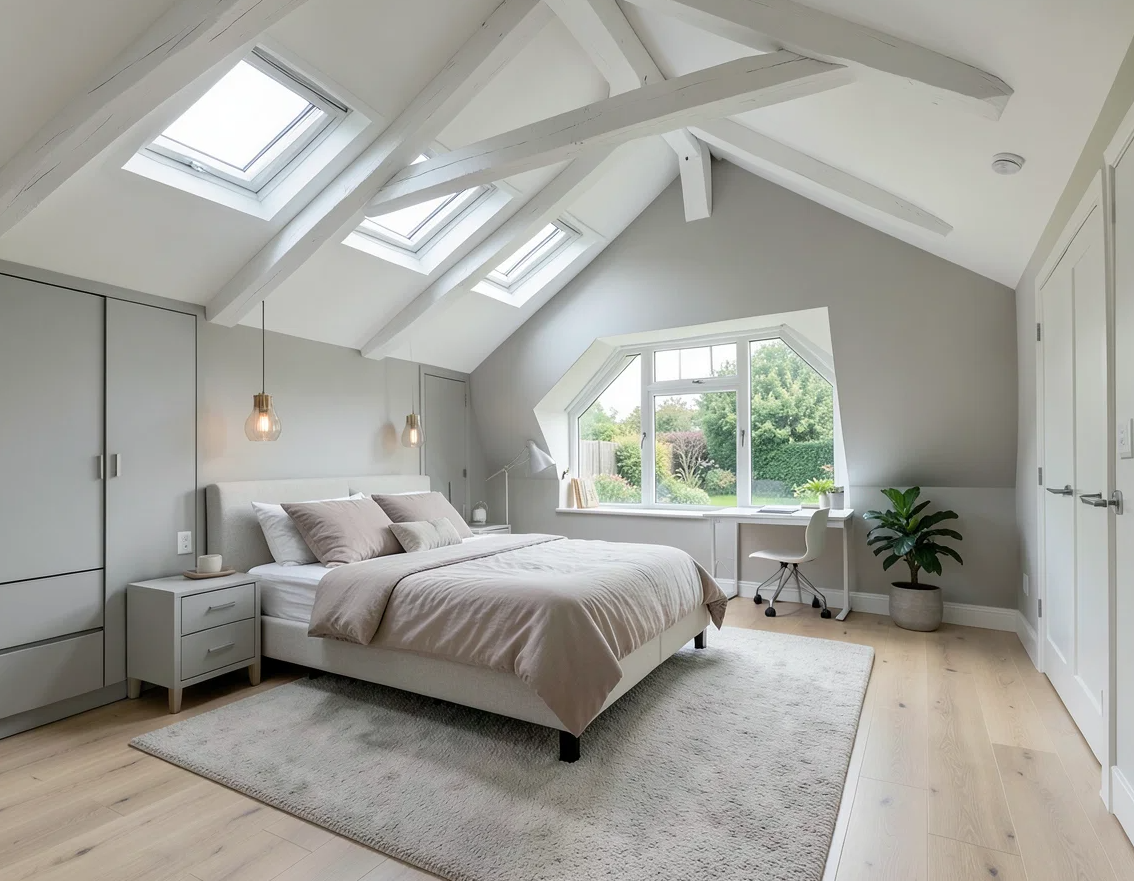
Adding a loft conversion is one of the most popular ways to increase living space in a British home. Whether you’re in a Victorian terrace in Manchester, a 1930s semi in Surrey, or a post-war detached in the Midlands, converting your roof space can add a usable room – and significant value – without touching your garden.
But it’s not as simple as putting up some plasterboard and adding a Velux window. There’s planning, structure, building regulations, and budget to consider. This guide covers everything you need to know before committing to a loft conversion project.
Is Your Loft Suitable for Conversion?
Before getting excited about the possibilities, you need to establish whether your loft is actually convertible.
Head Height
The most important factor is the existing head height. As a general rule, you need at least 2.2 metres from the floor joist to the apex of the roof. Anything less makes a habitable room difficult – and potentially non-compliant with building regulations.
You can measure this yourself with a tape measure before calling anyone in. If you’re borderline, a structural engineer or specialist loft conversion company can advise on solutions.
Roof Structure
Older properties – particularly those built before the 1960s – typically have cut rafter roofs, which are far easier to convert. Newer homes often have trussed roofs, which use a web of timbers for support. These can still be converted, but the work is more complex and costly, as the structure needs to be redesigned.
Pitch Angle
A steeper roof pitch gives you more usable space. A shallow pitch may technically have enough height at the apex but leave very little floor area where you can actually stand upright.
Types of Loft Conversion
There are several different conversion types, and the right one depends on your roof structure, budget, and planning situation.
Velux (Roof Light) Conversion
This is the simplest and most affordable option. It involves minimal structural changes – essentially, you’re insulating, flooring, and adding roof windows within the existing roofline.
- No external changes to the roofline
- Usually doesn’t require planning permission
- Quickest to complete (often 4-6 weeks)
- Best suited to properties with generous existing head height
Dormer Conversion
A dormer extends outward from the existing roof slope, creating a box-like structure that adds both headroom and floor space. It’s the most common type in the UK.
Rear dormers are generally permitted under Permitted Development rights, meaning you may not need full planning permission. However, this depends on your local authority and whether your home is in a conservation area or is listed.
Hip-to-Gable Conversion
Common in semi-detached and detached homes with hipped roofs, this conversion extends the sloping side of the roof to create a vertical gable wall. It significantly increases usable space and is often combined with a rear dormer.
End-of-terrace properties can also benefit from this approach. Planning permission is usually required.
Mansard Conversion
A mansard involves altering one or both roof slopes to near-vertical, with a flat or shallow-pitched roof on top. It maximises space but is the most expensive option and almost always requires planning permission.
Mansards are particularly popular in London, where they’re common on Victorian and Edwardian terraced houses.
Planning Permission and Permitted Development
Many loft conversions fall under Permitted Development (PD) rights, which means you can carry out the work without applying for full planning permission. However, there are strict limits.
Permitted Development Rules for Loft Conversions
To qualify under PD, your conversion must:
- Not exceed 40 cubic metres of additional roof space for terraced houses (50 cubic metres for detached and semi-detached)
- Not extend beyond the highest point of the existing roof
- Use materials that are similar in appearance to the existing house
- Not include a balcony, veranda, or raised platform
- Not overhang the outer face of the wall of the original house
Even if your project qualifies under PD, it’s worth applying for a Lawful Development Certificate from your local council. This provides written confirmation that the work is lawful – useful when you come to sell.

When You’ll Need Full Planning Permission
You’ll need to apply for planning permission if:
- Your property is in a conservation area or an Area of Outstanding Natural Beauty
- The property is a listed building
- Your roof extension exceeds PD limits
- Previous extensions have already used up your PD allowance
- Your local council has removed PD rights (common in some urban areas)
Building Regulations
Regardless of whether planning permission is needed, building regulations approval is always required for a loft conversion. This covers:
- Structural integrity – floor joists, steelwork, and load-bearing changes
- Fire safety – escape routes, fire doors, and smoke alarms
- Insulation – thermal performance to meet current standards
- Staircase – minimum dimensions and headroom
- Electrics – if new circuits are installed
Your builder or architect should manage the building regulations process, but as the homeowner, you’re ultimately responsible for ensuring approval is obtained. Always ask for the completion certificate at the end of the project.
How Much Does a Loft Conversion Cost?
Costs vary considerably depending on the type of conversion, your location, and the specification of finishes.
| Conversion Type | Approximate Cost (2024) |
| Velux conversion | £20,000 – £35,000 |
| Dormer conversion | £35,000 – £60,000 |
| Hip-to-gable | £45,000 – £70,000 |
| Mansard conversion | £55,000 – £90,000+ |
London and the South East typically sit at the higher end of these ranges. The North of England and Wales tend to be more affordable.
These figures usually include labour, materials, and building regulations fees, but not VAT, architectural drawings, or structural engineer reports – so factor those in separately.
Adding Value: What’s the Return on Investment?
A well-executed loft conversion can add between 15% and 25% to the value of a property, according to various UK estate agent surveys. In practice, this depends heavily on location, the local housing market, and the quality of the work.
In a three-bedroom semi-detached home where a fourth bedroom is in high demand, the uplift can be substantial. In an area where four-bedroom homes don’t command a significant premium, the return may be more modest.
It’s worth speaking to a local estate agent before committing – they can give you a realistic picture of what buyers in your area are actually paying for that extra bedroom.
Choosing the Right Contractor
This is where many homeowners come unstuck. The loft conversion industry includes excellent specialists but also plenty of firms that cut corners.
What to Look For
- Membership of a trade body – such as the Federation of Master Builders or the Structural Timber Association
- References and completed projects – ask to see examples and speak to previous clients
- A detailed written quote – not a ballpark figure on the back of an envelope
- Clarity on who manages building regulations – this should be clearly stated
Get at least three quotes before deciding. Be wary of any contractor who suggests skipping building regulations or offers a price significantly below the others without explanation.
Practical Considerations Often Overlooked
The Staircase
Many homeowners underestimate how much space a compliant staircase takes up. Building regulations require a minimum headroom of 1.9 metres above the pitch line. In older homes with tight layouts, finding room for the staircase can be the trickiest part of the whole project.
Natural Light
Roof windows and dormers bring in natural light, but think carefully about orientation. South-facing Velux windows can cause overheating in summer – consider solar-control glazing if this applies to your home.
Noise and Disruption
A loft conversion typically takes between six and twelve weeks, depending on the type. Most of the noisy, structural work happens in the first few weeks. If you’re working from home, this is worth planning around.
Conclusion
A loft conversion is one of the most rewarding home improvements you can make – but only when it’s planned properly. Understanding your roof structure, the planning rules that apply to your property, and the true cost of the project will save you time, money, and stress.
Get the groundwork right, choose a reputable contractor, and ensure building regulations are followed throughout. Do that, and you’ll end up with a space that adds real value – both to your daily life and to your home’s sale price when the time comes.