


You might not realize how small changes in shared spaces can double your rent roll, not just lift it a notch. Think durable fittings, quiet bedrooms, and smart controls that tenants actually use. You’ll see faster occupancy and steadier yields when each room feels modern, private, and energy-efficient. Ready to map which upgrades deliver the strongest ROI in a UK university town? Consider how the next decision could change your bottom line.
What Defines a High-Yield Rental in UK University Towns

In UK university towns, a high-yield rental isn’t just about a big rent check—it’s about consistent occupancy, solid capital growth, and efficient management. You define yield by net income relative to property price, but you must look beyond headline rent.
Focus on student demographics and how they shape demand, including course popularity, retention rates, and international mobility. A high-yield asset leverages proximity to campuses, reliable occupancy during term-time, and social infrastructure that sustains demand.
Monitor rental market trends: seasonal dips, renewal likelihood, and price elasticity across bed configurations. Prioritize robust tenancy productivity, minimal voids, and targeted pricing strategies that reflect demand segments.
Your plan should align cap growth with prudent upkeep, responsive property management, and data-driven adjustments to stay ahead.
Fast ROI Fundamentals for Student Rentals
Fast ROI for student rentals hinges on rapid, reliable occupancy and disciplined cost control. You’ll aim for efficient leasing cycles, first-tenant readiness, and predictable expense management to protect margins in a competitive Rental market.
Your approach prioritizes durable basics—proportions, durability, and clean, move-in ready condition—so tenants settle quickly and stay longer in Student housing.
Track turnover, utilities, and maintenance spend with tight approvals and clear vendor SLAs, reducing downtime between tenancies.
Align marketing, pricing, and incentives with demand peaks to minimize vacancy risk.
Build a simple, scalable process you can repeat across properties to stabilize cash flow and investor confidence.
- Occupancy speed strategies
- Cost discipline and vendor governance
- Consistent tenant-facing processes
Room-Level Optimization: Convert Underused Space Into En-Suites
You can open extra rent and boost occupancy by converting underused room space into en-suites, a move that enhances tenant appeal and reduces vacancy risk.
You’ll map current layouts to identify underused space where a compact bathroom can fit without compromising shared areas. Focus on plumbing efficiency, noise isolation, and durable fixtures to minimize maintenance once live.
Prioritize wall- or door-mounted solutions to save floor area and keep circulation clear.
Align room conversions with fire safety, egress requirements, and landlord-tenant regulations to avoid delays.
Communicate ROI up front: higher nightly rates, faster leasing, and longer tenancies.
Track occupancy and rent per room post-conversion to validate the investment.
This approach leverages underused space and targeted room conversion to maximize yield with precise, actionable steps.
En-Suite Design Standards That Attract Students

- Consistent aesthetic palette and durable materials
- Ergonomic fixture placement and accessible storage
- High-quality, low-maintenance fittings and lighting
Insulation Upgrades to Slash Energy Bills
Insulation upgrades are a practical, cost-focused move for university-city rentals, delivering immediate reductions in energy bills and long-term comfort for tenants. You’ll target walls, roofs, and floors with high-performance materials, sealing gaps to prevent heat loss and drafts.
Prioritize cost-benefit analyses that quantify payback periods and comfort gains, then present clear recommendations to investors. Align choices with historic preservation when working on older buildings, using discreet, compliant materials that respect period character while delivering modern performance.
Incremental upgrades—cavity wall fills, attic insulation, underfloor boards—can be phased to spread costs and limit disruption. Emphasize neighborhood safety by minimizing exterior penetrations and ensuring fire-rated, breathable barriers.
Document energy savings after completion to demonstrate tangible yield improvements and support future capital planning.
Smart Heating Systems for Comfort and Cost Control
Smart heating systems build on insulation upgrades by adding intelligent control and responsive operation that improve comfort while trimming costs. You’ll benefit from precise temperature zoning, quicker warmups, and fewer hot-cold swings, which appeal to tenants seeking consistency.
With smart thermostats and automated heating, you set schedules or adapt to occupancy, lowering waste and complaints. These systems also offer real-time energy data, enabling you to demonstrate value in marketing materials and lease agreements.
Installation is straightforward in modern flats and student lets, with minimal disruption and clear payback. Ongoing maintenance is minimal, thanks to robust components and remote monitoring. Rely on professional sizing to maximize comfort without overspending.
- Smart thermostats for zoning and ease of use
- Automated heating aligned to occupancy and schedules
- Remote monitoring and maintenance alerts
Solar-Ready Improvements for Long-Term Savings

You’ll start by outlining how solar tax benefits can improve your property’s cash flow over time, making the upfront costs more predictable.
Then, you’ll examine battery storage options to maximize daytime generation and provide resilient electricity during peak rates.
This discussion sets the stage for concrete budgeting tied to long-term savings and landlord-tenant value.
Solar Tax Benefits
Could solar tax benefits make a difference in your rental strategy? You’ll focus on how solar tax benefits and renewable incentives can improve cash flow, while keeping upfront costs manageable. You’ll assess eligibility, claim timelines, and the impact on net yield, so decisions stay grounded in data rather than hype.
In practice, expect guidance on landlord-friendly schemes, VAT considerations, and how to align incentives with tenancy terms. Planning early helps you optimize savings across properties, especially where tenancy durations and energy use patterns are predictable.
Track the interaction between tax credits and depreciation to maximize post-tax income. This approach keeps your portfolio resilient through energy price fluctuations and aligns with UK policy shifts.
- Eligibility and claim timelines for solar tax benefits
- Interaction of depreciation, credits, and renewables incentives
- Documentation and compliance for landlord applications
Battery Storage Options
Battery storage is a practical, long-term upgrade that can smooth energy costs and boost rental yield across UK university towns. You’ll pair high-quality energy storage with your existing solar setup to capture daytime generation for use at night or during peak tariffs.
Prioritize systems sized to meet typical evening peaks, guaranteeing enough Battery capacity to cover at least 4–6 hours of demand for common loads. Choose modular storage that scales with vacancy periods and future grid tariffs, reducing reliance on grid power and stabilising cash flow.
Confirm compatibility with current inverters and battery chemistry suitable for frequent cycling. Document warranty terms, maintenance access, and service response times.
Highlight energy storage benefits in tenant communications to reinforce long-term affordability and sustainability. Energy storage, Battery capacity.
Building-Level Upgrades That Boost Reputation and Rents

Building-level upgrades directly influence how a property performs in competitive university markets: smarter insulation, modernized systems, and durable finishes raise tenant satisfaction, command higher rents, and attract long-term leases.
You’ll prioritize features that signal quality and credibility, aligning with Historical preservation and Neighborhood revitalization to boost reputation without sacrificing practicality. Focus on durable, low-maintenance materials and efficient layouts that endure student cycles and turnover.
- Upgrade entryways and common areas with timeless, locally sourced finishes
- Install high-efficiency systems that reduce occupancy costs while supporting quiet study spaces
- Restore period details where feasible to support neighborhood storytelling and value
These choices create reliable rent growth, faster occupancy, and stronger referrals, while avoiding overreach into unrelated modern living configurations.
Modern Shared Living Configurations That Tenants Love
Modern shared living configurations are rising in popularity because they align with student budgets, study needs, and social rhythms, delivering higher occupancy and steady cash flow. You’ll see this in flexible room layouts, with private bedrooms and communal kitchens that encourage collaboration without sacrificing privacy.
Design choices focus on durable materials, easy cleaning, and scalable furniture that adapts to class schedules. Shared living appeals to tenant preferences for social interaction, predictable costs, and convenient locations close to campuses and transport links.
Streamlined maintenance routines, centralized amenities, and clear rules reduce friction and turnover risk. When you present options, emphasize reliability, safety, and value.
You’ll win buy-in from students and parents alike by delivering consistent, quality experiences that support academic focus and social balance.
Soundproofing Strategies to Reduce Turnover
Soundproofing can cut turnover by addressing common tenant complaints about noise, so we’ll focus on proven noise reduction techniques you can implement now.
Start with practical options like acoustic seals, suspended ceilings, and decoupled wall assemblies, then layer in the lightest, most effective materials to minimize cost and disruption.
We’ll evaluate which materials deliver the best balance of performance and install ease for your properties, keeping tenants happier and vacancies lower.
Noise Reduction Techniques
Noise can derail tenancy stability, so effective soundproofing is a practical investment for UK university city properties. You’ll prioritize proven techniques that reduce turnover without overhauling interiors. Focus on scalable solutions that protect rents and appeal to noise-sensitive tenants.
- Install soundproof barriers at boundary walls and shared corridors to lower external intrusion and internal transfer risk.
- Fit noise canceling windows in bedrooms and living areas to mitigate street, partying, and late-night activity.
- Seal gaps with acoustic seals around doors, windows, and skirting boards to cut phantom noise paths.
Implement a measured plan: assess common complaint points, budget for phased upgrades, and document performance. Track vacancy changes post-implementation to prove ROI and maintain tenant satisfaction.
Lightest Soundproofing Materials
Lightweight materials make effective soundproofing feasible without costly renovations or major downtime. You’ll prioritize thin, high-performance options that install quickly and minimize disruption for tenants. Look for composites and foams with low mass, high damping, and proven noise-insulation properties. Think closed-cell foams, mineral wool in ultra-thin batt form, and laminated panels designed for retrofit.
For ceilings and walls, consider resilient channels or decoupled assemblies that preserve room height while reducing flanking noise. Seal gaps with precise acoustic sealants to prevent air leaks, since performance hinges on airtight interfaces.
Select soundproofing materials that compress without permanent deformation and resist moisture in communal areas. Pair materials with practical, scraps-free installation guides to guarantee consistent results across units.
Prioritize maintenance-friendly finishes to sustain long-term noise insulation performance.
Practical Bathroom Upgrades That Pay Off
Upgrading a bathroom in university-city rentals pays off quickly when you focus on durable, low-maintenance choices that tenants notice. You’ll see higher perceived value with simple upgrades that resist wear and’re easy to clean, delivering steady appeal to student renters.
Focus on Bathroom aesthetics that feel fresh and practical, while prioritizing fixture upgrades that reduce upkeep.
- Choose moisture-rated fittings and anti-corrosion finishes to minimize calls and repairs.
- Install a compact vanity with integrated storage to maximize small bathroom usability.
- Opt for a quick-clean tile, sealed grout, and a smart, water-efficient shower head to cut maintenance time.
Keep expectations realistic: durable materials, straightforward maintenance, and visible quality lead to faster renewals and better tenant satisfaction.
Kitchen Refinements That Attract Student Tenants
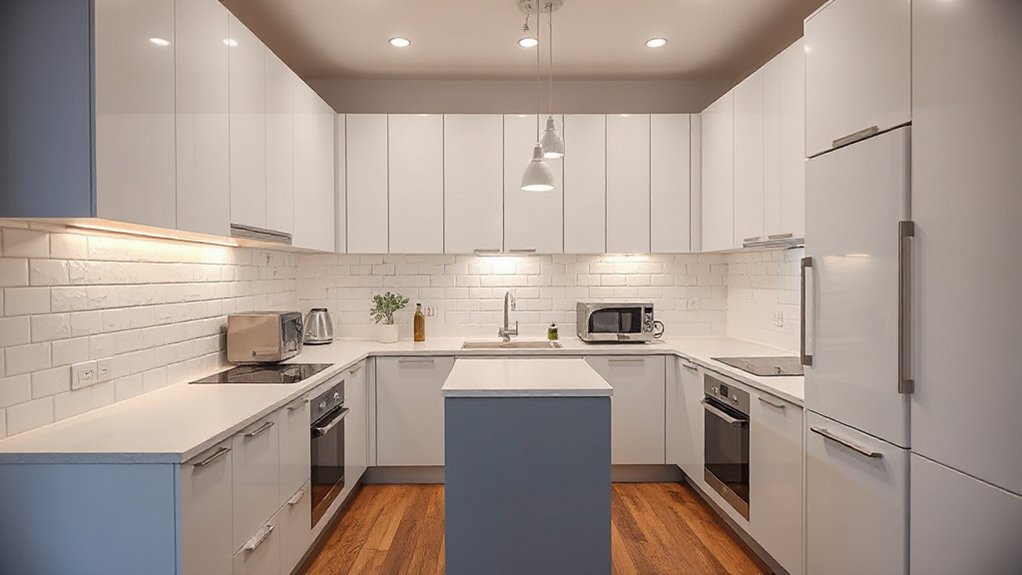
With student tenants in mind, kitchen refinements should emphasize durability, low maintenance, and clear value. You’ll prioritise robust units, easy-clean surfaces, and compact layouts that maximise storage without clutter.
Choose splashproof finishes and integrated appliances to reduce wear, while selecting neutral tones that enhance perceived space.
For Garden landscaping and interior decor, guarantee external access is tidy and inviting, since students often socialise around shared spaces.
Install modular cabinetry with concealed fixings to minimise damage, plus spill‑proof worktops for quick cleanup after meals or late-night study sessions.
Add energy-efficient lighting and task zones for cooking, prep, and study breaks.
Document warranties and maintenance guides for landlords, so future tenants understand care routines, protecting your investment and supporting steady rental yield.
Durable, Low-Maintenance Flooring for Rental Durability
Durable, low-maintenance flooring is essential for rental properties in university towns, where high traffic and quick turnover demand resilient materials that withstand spills, heavy furniture, and daily wear. You’ll prioritize products that resist scuffs and stains, are easy to clean, and won’t require frequent refinishing between tenancy changes.
Consider options that balance cost with long-term durability, minimizing guest services calls and downtime between lets. Installations should allow quick replacements of isolated sections if damage occurs, preserving overall unit value. For best results, pair durable flooring with sealed edges and moisture barriers to protect subfloors.
- Long-lasting composites and vinyl with realistic texture and grout-free seams
- Water-resistant laminate or ceramic alternatives for kitchen and entryways
- Subfloor prep and minimal maintenance routines to preserve durability
Efficient Lighting and Ambient Design for Small Spaces
Could small spaces feel brighter and more inviting with the right lighting plan? Yes, and you’ll see fast, practical gains in tenant appeal and energy efficiency.
Start with ambient lighting to create a uniform glow that reduces harsh shadows and makes rooms feel larger. Pair it with task lighting at desks and prep areas, enabling focused activity without overpowering the room.
Choose LED fixtures with dimmable controls to fine-tune mood and conserve power. Use light-colored, reflective surfaces and mirrors to amplify available light, enhancing space optimization.
Install under-cabinet LEDs in kitchens and bathrooms for safe, efficient illumination. Avoid cluttered fixtures; select slim profiles and plug-in options where possible.
This approach delivers a brighter, more functional foundation for rental units.
Exterior Upgrades and Curb Appeal Signals Quality

Exterior upgrades are the quickest way to signal quality to prospective tenants and justify higher rents. When you refresh the curb appeal, you set expectations for maintenance and care, which translates to fewer noise complaints and longer tenancies.
Focus on two visible signals: garden landscaping and exterior lighting. A well-kept front yard and smart lighting can transform first impressions without heavy investment.
Plan lighting paths, entrance illumination, and security-grade fixtures to boost safety. For garden landscaping, choose low-maintenance yet appealing plantings, a neat lawn, and clear boundaries.
The result is a cohesive, inviting facade that communicates reliability and value.
- Garden landscaping upgrades that balance aesthetics and upkeep
- Exterior lighting that enhances safety and mood
- Consistent, clean fascias, doors, and entrances to finish the look
Energy Performance Improvements Worth the Investment
What energy upgrades deliver the fastest, most reliable returns for rental properties in university towns? You’ll prioritise measurable gains that raise energy efficiency without overcomplicating management.
Begin with a solid energy audit to identify gaps and quantify potential savings.
Upgrading insulation, drafts, and glazing reduces heat loss and lowers monthly bills, boosting tenant comfort and demand.
Install high-efficiency boilers or heat pumps, paired with smart thermostats to curb usage without sacrificing convenience.
Consider solar PV where sun exposure justifies the capex, focusing on long-term depreciation and grant eligibility.
Confirm property certifications reflect improvements, simplifying mortgage and tenancy processes.
Documentation supports marketing and valuation, while Renewable energy incentives improve cash flow.
Track performance against targets to validate your investment and avoid overpaying.
Smart Tech Tenants Actually Use (and Landlords Control)
Smart tech in rental homes works best when tenants actually use it and landlords keep control where it matters. You’ll tailor tech to tenant preferences, balancing convenience with security. Use intuitive setups, clear onboarding, and reliable support so adoption isn’t a hurdle. Guarantee landlord controls are visible and enforceable without stifling daily life.
- Align devices with user needs while preserving essential monitoring and safety features
- Provide simple, transparent consent and data-use policies for tenant peace of mind
- Establish clear escalation paths and update cycles to maintain reliability
With this approach, tenants feel empowered, and landlords retain responsible oversight. Focus on automations that reduce friction, protect property, and support energy goals. Prioritize ease of use, responsive maintenance, and documented controls to prevent ambiguity about who can access data and devices.
Tenant preferences guide purchases; landlord controls safeguard the investment.
Flexible Spaces: Multipurpose Rooms With High Demand
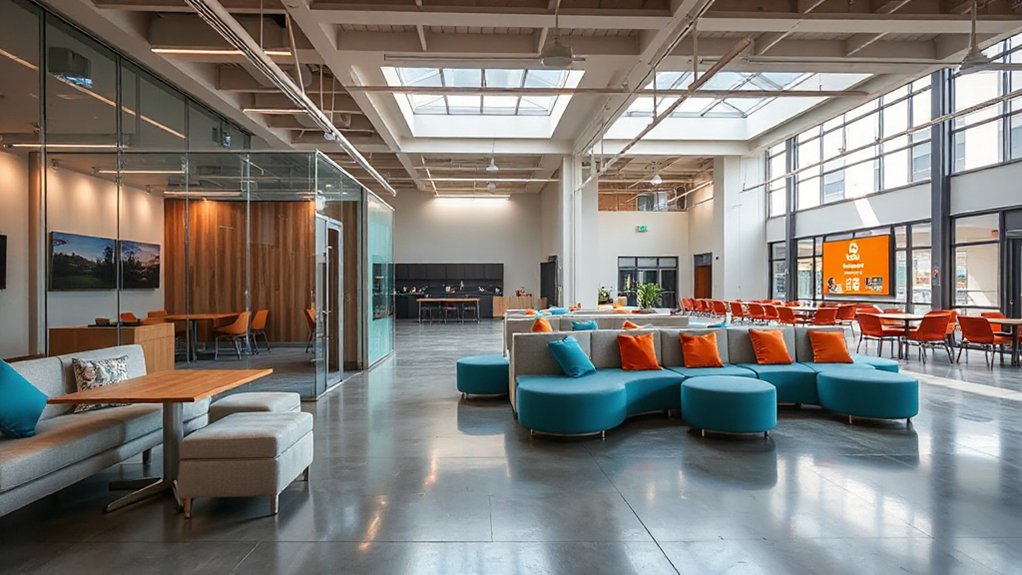
Flexible spaces are in high demand because students and researchers need adaptable areas that can host study sessions, group projects, seminars, and social events without outsourcing more space. You’ll benefit from flexible layouts that maximize occupancy and reuse over the academic year.
Prioritize soundproofing, movable furniture, and modular partitions to reconfigure rooms in minutes. Multipurpose rooms should support quiet study, collaborative work, and informal gatherings with independent power, robust Wi‑Fi, and accessible charging.
Consider a booking system that surfaces real-time availability and usage analytics to minimize underutilized hours. Build in durable surfaces and easy cleaning routines to support mixed use.
Invest in signage and wayfinding to help users locate spaces quickly and respect booking rules for consistent yields.
Parking and Bike Storage as Value-Adds
Parking and bike storage aren’t afterthought add-ons—they’re core value drivers for campus amenities. You’ll gain access to rental premium by showcasing secure, accessible parking amenities and sheltered, well-lit bike storage that’s easy to use.
Prioritize proximity to blocks and entrances, clear zoning, and robust access controls. Consider modular, weatherproof racks, CCTV coverage, and maintenance plans to minimize downtime and complaints.
Residents value predictability, so publish peak-hour availability and guidelines to reduce friction. Integrate charging points for e-bikes and e-scooters where feasible to broaden appeal.
Build flexible spaces that adapt to fluctuating demand, seasonal events, and visitor turnover.
- Site design and security protocols
- Accessibility and proximity optimization
- Maintenance, governance, and user education
Frequently Asked Questions
Which UK University Towns Yield the Highest Rental Returns Short-Term?
You’ll find UK university towns with the strongest short-term yields where student demand stays high and market fluctuations tighten pricing power, so you adjust rents quickly, monitor demand signals, and optimize listings to maximize returns efficiently.
How to Price Student Lets for Peak Occupancy and Rent Stability?
Price student lets by analyzing student preferences and expected rent fluctuation, then set dynamic pricing for peak occupancy while preserving stability; monitor demand trends, adjust offers promptly, and communicate updates clearly to tenants and stakeholders. Constantly refine strategy.
What Legal Limits Constrain Rental Upgrades in University Areas?
Did you know 1 in 4 university-area upgrades hit planning delays? Lease restrictions and planning permissions cap renovations; you’ll navigate compliance, avoid fines, and budget contingencies while upgrading smartly to boost yields.
Which Renovations Deliver Best ROI Within One Academic Year?
Within one academic year, you maximize ROI by upgrading kitchens and bathrooms, enhancing storage, and improving lighting; prioritize durable finishes. Property management will guide tenant turnover. Renovation budgeting stays tight, tracking costs, timelines, and expected occupancy gains.
Do Energy Labels Influence Tenant Demand and Rents?
Energy efficiency does influence tenant demand and rents, you’ll see higher interest from tenants who prioritize lower bills. Align upgrades with tenant preferences, quantify forecasted savings, and communicate them clearly to justify rent adjustments and boost occupancy.
Conclusion
Want a higher yield without overhauling your entire portfolio? Start with durable basics—modern kitchens/BAs, smart energy upgrades, and flexible, room‑level layouts that attract reliable tenants. Add soundproofed bedrooms, efficient insulation, and easy-care finishes to slash maintenance and bills. Turn underused spaces into en‑suite experiences and offer secure bike parking and convenient parking options. It’s practical, it’s scalable, and it’s proven. So, are you ready to upgrade smartly and maximize occupancy and income?