

You can create more natural light by choosing to install bi-fold doors in a bungalow. Like a doorway that hints at a bigger room, your bungalow’s bi-folds set the tone for cost and schedule. You’ll face variables from size and panel count to materials and finishing, plus site prep and potential structural work. Budget smarter with clear quotes and phased planning, because the price isn’t fixed until you lock in specs, hardware, glazing, and installation details. Keep this process tight and you’ll have a solid target before you commit to a number.
What a Bi-Fold Door Project Costs for a Bungalow

A bi-fold door project for a bungalow typically runs between $2,500 and $8,000, depending on door count, framing, and finishing details. You’ll see price variation driven by panel count, track length, and the level of finish you select.
Color options affect coating costs and may require specialty primers for adhesion on wood or metal substrates. Hardware choices influence installation time and door operation feel; upgraded hinges, pivot hardware, and soft-close mechanisms add to labor and parts costs.
Framing material choice, such as timber versus steel, shifts both material and finish expenses. If you’re duplicating existing openings, expect lower costs than full-width, custom cavities.
Budget for accurate trim, threshold details, and a precise alignment plan to guarantee airtight operation and consistent panel swing.
What’s Included in Door Price (and What Isn’t)
When you price a bi-fold door project, it’s essential to distinguish what’s included in the door price from what isn’t. You should expect core components: the door panels, tracks, rollers, hinges, handles, seals, and basic framing provisions.
Installation labor, temporary drainage or dust protection, and any required adjustments after fitting are typically separate line items.
Exclusions often cover structural modifications, electrical work for motors, glazing or tint upgrades, and extended warranties beyond standard coverage.
Consider interior design implications, such as finish consistency with surrounding trim and color matching.
Energy efficiency matters too: standard glazing, low-emissivity coatings, and weather seals may be included or billed separately depending on the package.
Clarify warranty terms, maintenance intervals, and any required site visits before signing.
Which Material Should You Choose for Your Bi-Fold Doors?
Your material choice affects both longevity and style, so you’ll want options that resist wear while matching your home’s look.
Consider how maintenance needs and upfront cost align with long-term performance for each material.
We’ll compare durability, maintenance, and visual impact to guide your selection.
Material Longevity And Style
Choosing the right material for bi-fold doors hinges on durability, maintenance, and aesthetic fit with your bungalow. Material longevity dictates long-term performance under sun, humidity, and temperature swings, so you’ll want materials with proven fatigue resistance and stable expansion rates.
Aluminum offers slim profiles, high structural strength, and low upkeep, maximizing long-term material durability and consistent operation.
uPVC provides good weather resistance and cost efficiency, though color and finish may show wear if exposed to harsh sun.
Timber delivers natural aesthetic appeal but requires moisture control and periodic sealing to prevent warping.
Composite options blend wood fibers with resin for balanced durability and appearance.
Align your choice with the bungalow’s architectural language to ensure cohesive aesthetic appeal and predictable, low-maintenance performance over time.
Maintenance And Cost Impact
Which material offers the best balance of maintenance effort and lifetime cost for your bungalow’s bi-fold doors? In practice, choose materials with low upkeep requirements and proven durability.
Aluminum frames resist corrosion and require minimal finishing, reducing yearly maintenance costs, but may conduct heat more readily unless thermally broken.
uPVC offers excellent energy efficiency and stable dimensions, with simple cleaning and long service life, though cosmetic repairs may be harder to source.
Timber delivers higher aesthetic appeal and natural warmth but demands regular sealing and staining to prevent moisture damage, increasing maintenance overhead.
For cost impact, consider long-term energy efficiency gains, warranty terms, and replacement cycles. Balance upfront price against ongoing care and performance to optimize total ownership value.
How Size, Style, and Layout Shape Your Budget
Your door size sets the base cost, since larger openings use more framing, hardware, and glass.
Style choices—from slim frames to full-glass panels—proportionally affect material and installation time.
Layout, like single vs. multi-panel configurations, directly shapes labor and transit needs, shaping the overall budget.
Size Driven Cost
Size drives the budget because door size, configuration, and the surrounding frame determine material needs, hardware, and labor. You’ll see costs shift with panel count, span, and whether a pocket or standard opening is used. Larger openings demand more aluminum or wood, heavier hardware, and longer installation time, plus potential structural work. To keep estimates consistent, size also drives delivery lead times and warranty considerations.
- Color options affect finish costs and coating compatibility with your framing
- Glass density and tints alter thermal performance and price
- Hardware weight rating influences hinge, track, and motor requirements
- Warranty coverage varies by size class and installation complexity
Keep these factors in mind when budgeting, and verify warranty terms cover sizing gaps or frame adaptations.
Style And Layout Influence
Style and layout don’t just shape aesthetics; they directly influence budget by dictating how many panels, their proportions, and the surrounding frame assembly will require. Your choice of style and layout determines glass area, mullion count, and hardware integration, all driving material and labor costs.
Historical styles may demand ornate profiles, thicker stiles, or custom Iron/wood accents, elevating fabrication time and precision tolerances. Conversely, minimalist configurations simplify framing and reduce waste, cutting both unit price and installation duration.
Consider door height and zero-gap thresholds, which affect sealing systems and hardware fitments. Color options influence finish costs, durability considerations, and warranty implications, especially with multi-coat or specialty finishes.
Plan for door operation type (bi-fold vs. pocketless) to avoid misalignment fees and ensure consistent performance within your bungalow’s geometry.
Labor and Installation Costs: What Affects the Bill
Labor and installation costs for bi-fold doors in a bungalow hinge on several concrete factors. You’ll see price variance from door type, hardware quality, and site conditions, plus labor rates in your area. Expect that longer lead times or custom sizing drives up both procurement and installation time. You’ll also influence the bill through finish, glazing, and prefinishing choices, which change handling and warranty scope. The goal is a reliable fit with minimal disruption to your interior.
- Door configuration and number of panels
- Frame type, insulation, and weather sealing
- Site preparation, removal of existing structure, and waste disposal
- Interior lighting and climate control impacts on electrical and HVAC integration
Bi-Fold Door Openings: Frames, Openings, and Reinforcements
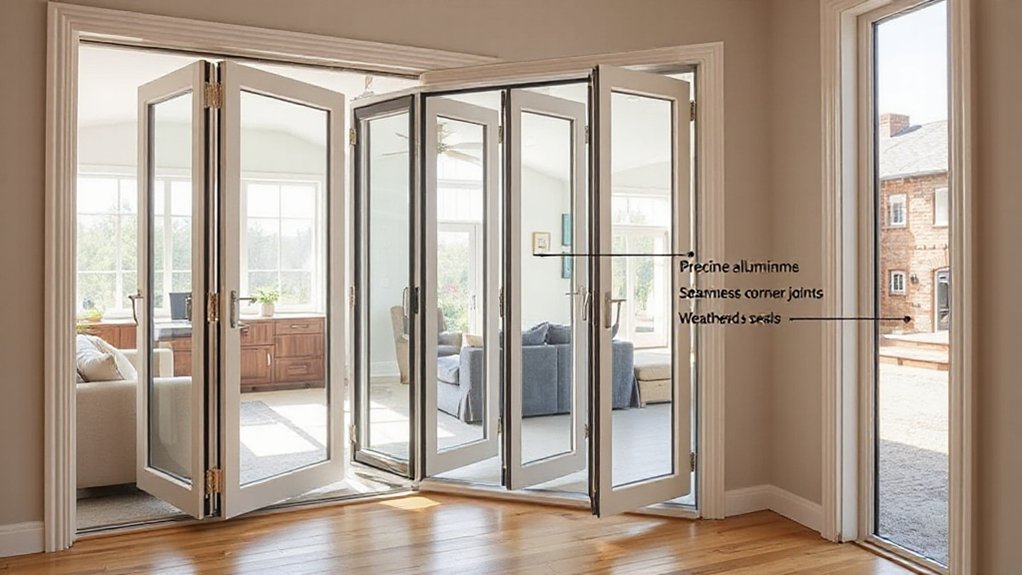
Bi-fold door openings require carefully engineered frames and reinforcements to perform reliably over time. You’ll specify precise openings, accounting for wall structure, lintels, and waterproofing to prevent flex and misalignment.
Frame materials influence vibration, thermal expansion, and the long-term seal; aluminum frames give rigidity with slim sightlines, while timber cores demand moisture control.
Confirm studs are squared and plumb, with level thresholds and proper shims, so the track remains true across operation cycles.
Reinforcements, including hinge plates, stile supports, and fastener configurations, transfer weight to the structure without sag.
Glass durability must be considered in the glazing pack, pocket depth, and seal geometry, minimizing edge stress.
Frame aesthetics matter visually; match finish, reveal, and hardware to maintain curb appeal while preserving performance.
Decking, Thresholds, and Glazing: Extras That Add Up
You’ll want to factor in decking costs, including material and labor, since this affects the overall threshold and alignment with the bifold system.
Thresholds and glazing add-ons can drive final pricing due to weather sealing, energy efficiency, and import/export considerations.
We’ll map how each element—decking, thresholds, and glazing—impacts install time, compatibility, and total project cost.
Decking Costs Overview
Decking costs aren’t just about boards. You’ll evaluate total spend by materials, labor, and site prep, then add subcategories that influence long-term value.
For bi-fold installations, consider frame options, deck height, and drainage strategy as these impact stability and usability. You’ll connect decking to garden landscaping goals while maintaining interior decor cohesion through finish and color choices.
Plan for safe thresholds, proper flashing, and moisture barriers to prevent leaks beneath doors. Expect costs to vary with timber versus composite, fastening systems, and required permits. Prepare for contingencies in groundwork and custom cuts.
- Material lifecycle and maintenance
- Substructure and drainage considerations
- Finishes, colors, and texture coordination
- Compatibility with garden landscaping and interior decor
Thresholds and Glazing Extras
Thresholds and glazing options add meaningful cost and performance flexibility to bi-fold door installs. You’ll choose thresholds to suit floor finishes and weather sealing, weighing aluminum, uPVC, and timber cores for base rigidity and transition comfort.
Glazing extras affect energy performance, noise reduction, and light transmission, so specify double or triple glazing, low-emissivity coatings, and spacer bars based on climate and occupancy.
Color options matter for matching frames with room decor and exterior siding, and they can influence finish durability and maintenance needs.
Security features—multi-point locking, internal beading, laminated glazing, and reinforced hinge hardware—add cost but considerably reduce breach risk.
Don’t neglect calibration of seals and drainage, which protect thresholds from moisture ingress and improve long-term performance.
Regional Price Variations and Timing
Regional pricing for bi-fold door installs varies by location, climate, and local labor costs, so expect meaningful differences between areas with high demand and tight labor markets versus more rural regions.
Timing influences cost as well; seasonal peaks can raise labor rates, while off-peak windows may yield personnel discounts or quicker scheduling. You’ll notice regional incentives or permitting costs that alter overall pricing, too.
Consider how interior design goals and energy efficiency requirements affect choices, since larger openings may demand more precise fitting and weather sealing. Planning ahead helps capture price stability and avoid rush-scheduling surcharges.
- Location-driven labor variance
- Seasonal rate fluctuations
- Permit and inspection impacts
- Design and efficiency alignment
How to Budget Smart: Hidden Fees and Saving Tips
When budgeting for bi-fold door installs, start by spotting hidden fees and maximizing savings right from the planning stage. You’ll itemize labor, permits, and delivery, then forecast contingency costs at 10–15%.
Compare quotes with a detailed scope to avoid scope creep, and insist on fixed-price or cap-based agreements. Consider color options early, since finish coats and coatings can affect volume and labor time.
Clarify glass types and associated coatings, as higher performance glass may cut long-term energy costs but raise upfront price. Verify warranty coverage, installation guarantees, and potential surcharge for irregular openings.
Schedule installations during off-peak periods to reduce labor rates. Document all decisions, keep a centralized budget ledger, and routinely reconcile invoices against the original estimate to preserve savings.
5-Step Budget Calculator to Decide and Save

A Step Budget Calculator keeps your bi-fold door project on track by translating estimates into a clear, actionable plan. You input quantities, energy specs, and color options, then the calculator projects line items, contingency, and total costs.
Use it to compare materials, identify savings, and fix decision milestones before ordering. The tool emphasizes energy efficiency and long-term value, so you can prioritize glazing, insulation, and seals that reduce operating costs.
It also streamlines stakeholder approvals by presenting a measured, auditable cost path. Update inputs as prices fluctuate to maintain accuracy.
You’ll finish with a documented budget you can defend during procurement and installation phases.
- Color options
- Energy efficiency
- Material grading
- Contingency planning
Frequently Asked Questions
Do Bi-Fold Doors Require Planning Permission in a Bungalow?
Yes, you generally don’t need planning permission for bi-fold doors in a bungalow, but building regulations and structural modifications still apply; consult your local authority to confirm, guarantee structural modifications comply, and verify safe installation under regulations.
How Long Does a Typical Bi-Fold Door Installation Take?
Ever wondered how long it takes? Typically, a bi-fold door installation spans 1–3 days, depending on site prep and hardware. You’ll compare Door material options and confirm installation timeline, ensuring precise framing, acclimation, and panel alignment throughout.
Can I Install Doors Myself or Need a Pro?
Yes, you can, but DIY challenges and installation tools abound; you’ll handle precise measurements, framing, and shimming. If uncertainty remains, hire a pro. You’ll save time, avoid mistakes, and guarantee proper alignment, weatherproofing, and compliance.
Do Energy Efficiency Ratings Affect Total Cost?
Like a sharp knife, energy efficiency clips costs. You’ll see Energy efficiency influence overall price; expect higher upfront with better ratings, but lower ongoing bills. Do a Cost comparison across options to pick your ideal, practical balance.
Are There Maintenance Costs After Installation?
Maintenance costs after installation vary by use and material; expect ongoing lubrication, seal checks, and occasional track cleaning. Consider material options and design styles to minimize upkeep while maintaining performance and aesthetics. Regular inspections keep your bi-folds reliable.
Conclusion
As you wrap the project, think of your budget as a compass. Each factor—material, size, labor, glazing—is a pin on the map guiding you toward value without overpaying. Track hidden costs like thresholds and site prep before they spike. The goal isn’t just a door, but a doorway that persists—steady as a hinge, steady as a plan. With smart budgeting, you arrive at a fit that feels inevitable, like sun through a well-sealed frame.