
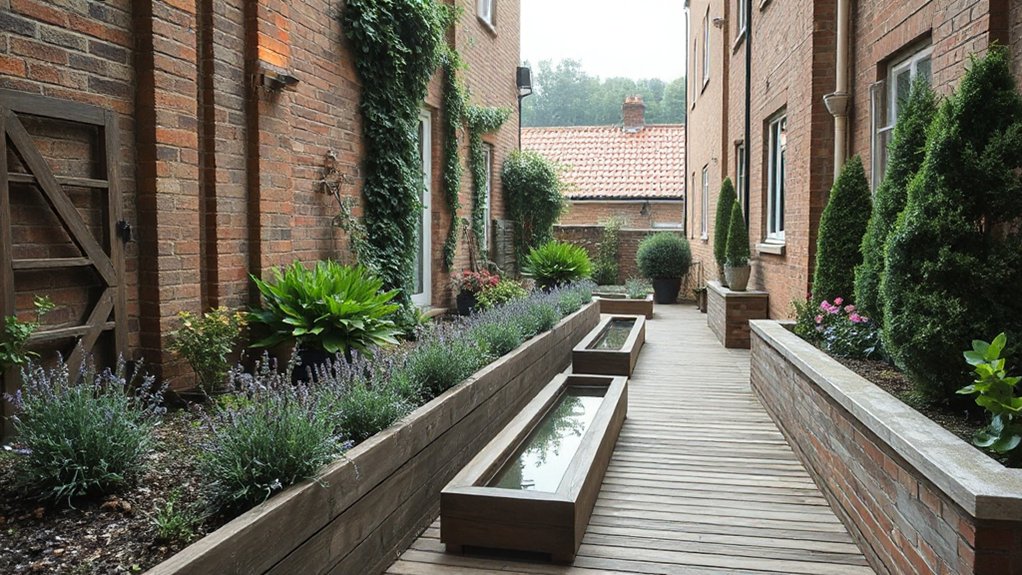

London’s narrow plots reward you with vertical strategy, compact planting, and multi-functional elements that stay practical yet stylish. You’ll balance wall-mounted planters, trellises, and slim containers to free ground space, while thoughtful paths, privacy screens, and integrated seating keep things usable. Materials should be durable and low-maintenance, with subtle lighting and seasonal plantings to maintain year-round appeal. The result is a livable, urban-natural look that invites you to push the limits—but you’ll want to plan the next tweak before you finish.
The Design Constraints of London’s Narrow Plots
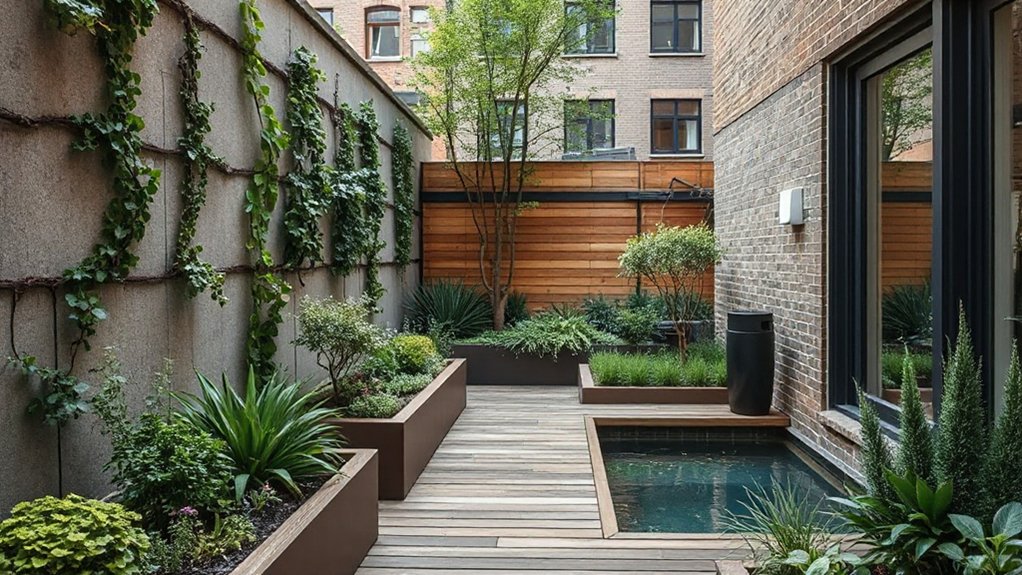
London’s narrow plots impose clear limits on width, depth, and access that shape every design choice. You’ll balance structural constraints with a practical plan, prioritizing circulation as a core function.
Width dictates module sizing: you’ll cluster plantings, seating, and storage into compact, repeatable units to minimize wasted space. Depth drives vertical layering—think trellises, wall-mounted planters, and overhead storage to keep paths clear while maximizing greenery.
Access limitations push you toward linear layouts, multipurpose zones, and fold-away furniture. You’ll assess urban microclimates, accounting for shade from neighboring facades and heat retention on sunlit walls.
Historical land use informs material palettes and alignment; you’ll favor durable, low-maintenance finishes. Couple precision budgeting with flexible systems to adapt to evolving needs without compromising flow or resilience.
Space-Saving Layouts for Tiny London Gardens
You’ll maximize a tiny London garden by stacking growth with compact verticals and tidy, accessible pathways. Start with Compact Vertical Growth to keep foliage upward and footprints small.
Then map Measured Pathways For Accessibility to guarantee you move confidently without crowding plantings. The approach stays pragmatic and trend-aware, balancing bold verticals with clear routes for a clean, functional space.
Compact Vertical Growth
Looking to maximize a tiny London garden? Compact vertical growth uses smart layers and clean lines to pack greenery into limited space.
Start with a frame of sturdy wall-mounted planters, then add modular shelves for herbs and small perennials.
Vertical gardening thrives on drip irrigation and lightweight pots to reduce weight on balconies or brickwork.
Choose narrow, deep containers for root crops and compact varieties that suit London light conditions.
Use trellises and arbors to guide climbing plants upward, freeing floor space for seating or a compact table.
For rooftop planting, install windbreaks and anti-slip surfaces, plus a watertight reservoir to minimize watering frequency.
Finish with color-blocked foliage and year-round evergreens to preserve structure.
Measured Pathways For Accessibility
Ever thought how to weave accessibility into a tiny London garden without sacrificing style or flow? Measured pathways guide movement without crowding spaces, creating clear routes that feel intentional. You’ll balance accessibility design with compact forms, using narrow, curving lines to direct sightlines and reduce trip hazards.
Choose permeable materials for drainage, and keep grade changes subtle to preserve wheel-chair maneuverability. Compact mats, tactile markers, and contrasting edges help orientation while staying discreet. Regular maintenance prevents uneven surfaces from becoming obstacles, so you’ll enjoy consistent, safe use year-round.
Measured pathways support accessible design without compromising aesthetic.
- Use consistent widths and gentle progressions between zones
- Select slip-resistant, permeable pavers in a cohesive color palette
- Implement subtle ramps and level changes with clear indicators
Planting for Urban Light: What Thrives in City Shadows and Sun
In urban gardens, light is your most reliable constraint, so start by mapping the sunniest and shadiest spots across the plot and choosing greens that tolerate those conditions. You’ll prioritize durable, compact choices that perform in narrow spaces.
For urban shade, select Low-growing ferns, hostas, and astilbes with tolerance for dappled light, ensuring they don’t crowd neighboring paths.
For sun, opt for sun-loving plants like echinacea, salvia, and rudbeckia that stay tidy and bloom repeatedly with minimal maintenance.
Use a staggered planting plan to maximize vertical interest—tall, architectural choices at the rear, compact fillers at the front.
Pair textures: glossy leaves with soft-blue grays, and keep seating-free edges clean and accessible.
This approach blends resilience with contemporary style.
Durable, Stylish Materials and Build Techniques for Narrow Plots
Narrow plots demand materials and building methods that endure daily use while keeping a clean, compact aesthetic. You’ll prioritize durable, low-maintenance surfaces that age gracefully and reflect contemporary London sensibilities.
Choose sustainable materials that minimize upkeep yet withstand weather and foot traffic.
Embrace modern build techniques—precision cutting, modular components, and careful drainage—to maximize space and stability without bulk.
Pair tactile textures with sharp lines to keep the narrow footprint visually expansive.
Prioritize hidden fasteners, sealed joints, and weatherproof finishes to reduce seasonal care.
- sustainable materials, carefully sourced and finished for longevity
- modern build techniques that optimize space, drainage, and alignment
- low-maintenance surfaces with seamless joints and weatherproof coatings
Privacy and Street-Chic Fencing for London Borders

You’ll start with privacy-first fence styles that balance screening with light and airflow. Choosing solid panels or lattice offsets can help suit narrow London plots.
Pair these fences with street-chic boundary aesthetics—think clean lines, urban textures, and subtle color palettes. These elements should read as a finished curbside when viewed from the street.
The goal is a pragmatic, durable border that hints at personality without sacrificing neighborly openness.
Privacy-First Fence Styles
For London borders, privacy-first fence styles blend solid screening with street-chic details that deter prying eyes while elevating curb appeal. You’ll balance height, opacity, and texture to create a discreet boundary that still reads as welcoming from the street, not fortress-like.
Choose materials that resist weathering, and pair them with smart gaps or vertical slats to soften lines without sacrificing privacy. Integrate garden art and water features nearby to reflect light and distract from passersby. Prioritize low-maintenance options and modular panels that adapt as your plot changes.
- Timber slat screens with metal accents
- Hedges or lattice panels paired with planters
- Metal screens with perforated patterns
Garden art, Water features
Street-Chic Boundary Aesthetics
Start with a low, tactile base—slatted timber, perforated metal, or pale brick—that hints at modernity while avoiding heavy *shifts*. Pair it with selective planting to soften edges and add seasonal texture.
Consider vertical privacy screens that don’t read enclosure, like slim hedges or lattice panels with climbing vines. Plan for lighting that accents critical features and enhances safety after dark.
Reflect historical influences in hardware and motifs, but reinterpret them with contemporary finishes. Acknowledge cultural symbolism in color and form to convey welcome and restraint, not alertness or aggression.
Real-World London Transformations: Courtyard to Balcony in Narrow Plots

From London’s tight lots to compact interiors, real-world transformations show how courtyards can be reimagined as functional balconies without sacrificing daylight or privacy. You’ll see clever shading, slim joists, and railings that blur the line between exterior and interior, keeping airflows and light steady. Materials balance durability with sleek, urban appeal, while planting selections emphasize seasonal planting for year-round interest.
Urban wildlife adapts around compact greens, drawing birds and pollinators to narrow spaces. You’ll measure sightlines carefully, ensuring privacy screens don’t block sun. The result is a balcony that feels like an extension of living space, not a compromise.
- Space-efficient layouts that maximize surface area
- Low-maintenance, weather-resistant materials
- Integrated planters for seasonal planting and wildlife welcome
Frequently Asked Questions
How Can I Maximize Planting Without Compromising Pathways in Tight London Plots?
You can maximize planting by embracing vertical gardening and container planting, keeping paths clear. Use slender planters, wall-mounted shelves, and trellises, rotate seasonal crops, choose compact varieties, and install smart irrigation to minimize foot traffic and water waste.
What Budget-Friendly Materials Suit Multiple Narrow Garden Styles?
You should choose eco friendly composting and recycled furniture options to keep costs low across styles. Prioritize durable, modular pieces, mid-price planters, and timber alternatives; blend low-maintenance materials with urban-friendly textures for a pragmatic, trend-aware setup.
Are There Legal Restrictions on Height or Fences for London Courtyards?
Short answer: yes, there are rules. You’ll need to check fence regulations and height restrictions for your specific London borough; many impose limits on garden walls and controllable fences. Plan accordingly and stay compliant—don’t bite off more than allowed.
Which Maintenance Routines Keep Small London Gardens Immaculate Year-Round?
You maintain small London gardens year-round by sizing up soil health, pruning regularly, and mixing mulch with compost. Use Garden furniture wisely, rotate Seasonal planting, water efficiently, tidy edges weekly, and inspect drainage after rain for immaculate conditions.
Can Alleys and Overlooked Spaces Be Transformed Into Usable Green Zones?
Yes, alleyway revitalization reshapes overlooked space transformation into usable greens, you can. You’ll install compact planters, verticals, drought-tolerant species, lighting, and seating, maintaining tidy paths while maximizing microclimates for year-round enjoyment.
Conclusion
In short, narrow plots in London can feel expansive with vertical layering, smart materials, and compact planting that works with rather than against space. Think multi-use seating, wall-mounted planters, and trellised greenery that folds into architecture. Case in point: a narrow courtyard transformed with a wall garden and tucked bench, or a balcony terrace wrapped in modular planters and silent lighting. The result is practical, stylish, and effortlessly season-ready—urban gardens that truly maximize every inch.