


A budget to modernise a bungalow can at times be a tightrope walk, balancing long-term value against upfront costs. You’ll need clear scope, fixed quotes, and a contingency to cover surprises. Start with planning, permits, materials, and labour, then weigh energy upgrades against immediate finishes. Don’t ignore hidden costs and resale impact. Keep your targets aligned with potential returns and future-proofing, so you’re not blindsided when the bids come in. Ready to map your framework and pin down numbers?
What a Bungalow Modernisation Entails

A bungalow modernisation typically blends expansion, layout redesign, and systems upgrades to improve function and efficiency while preserving exterior character. You assess the scope by mapping existing footprints, noting load paths, and prioritising airtight envelopes.
Structural checks confirm compatibility for add-ons, while MEP upgrades specify efficient heating, cooling, and electrical capacity. You plan daylighting, insulation, and moisture management to reduce long-term operating costs.
Garden landscaping is integrated to minimize disruption and preserve sight-lines, with grading, drainage, and drainage-evap methods aligned to the new plan.
Historic preservation considerations guide feature retention, material selection, and detailing to honour original character while meeting modern codes.
Document decisions, costs, and timelines to support procurement, risk management, and initiation of phased work.
Define Your Bungalow Budget With a Decision Framework
You start by defining a clear scope to prevent scope creep and set a solid budget baseline.
Next, you quantify hidden costs—permits, contingencies, and trades—and build them into your framework.
Finally, you rank must-haves against nice-to-haves to guide decisions when trade-offs arise.
Define Clear Scope
To define a clear scope, start with a precise project boundary: list what’s included (areas to remodel, systems to upgrade) and what isn’t (nonessential cosmetic work, unplanned expansions). You set measurable limits: square footage changes, load-bearing checks, electrical and plumbing upgrades, and ventilation targets.
Define deliverables for each zone, e.g., kitchen revamp, bathroom modernization, and living space reconfiguration, plus timing milestones. Assign responsibilities and required permits, then identify constraints and dependencies.
Clarify nonfunctional goals like energy efficiency, accessibility, and safety standards. Account for garden landscaping and interior decor as separate scopes to prevent overlap, ensuring logistics don’t derail core work.
Document acceptance criteria, change-control processes, and sign-off procedures. A disciplined scope reduces scope creep, aligns budget, and guides decision-making throughout the renovation.
Estimate Hidden Costs
Hidden costs often surprise projects that start with a clear scope, so build your budget around a decision framework that accounts for them up front. You map contingencies by category: material price volatility, labor rate shifts, permitting delays, and design iterations.
Use historical context to benchmark typical overruns for bungalow modernisations in your region, then set a contingency band aligned with your risk tolerance.
Cultural influences shape expectations for finishes, acoustics, and thermal performance, so quantify this impact in unit costs and time.
Build a decision log: when a supplier quotes, record potential hidden items and trigger points for scope refinement.
Regularly reforecast as bids firm up and site conditions reveal new constraints, ensuring you preserve cash flow without sacrificing essential quality.
Prioritize Must-Haves
Must-haves form the backbone of your bungalow budget, guiding where you allocate scarce dollars and where you accept trade-offs. Start by listing non-negotiables (structural safety, essential systems) and rate each item by impact on daily life.
Use a decision framework: assign a priority score, estimate reliable costs, and identify acceptable compromises. For each must-have, specify minimum performance, longevity, and maintenance expectations to prevent scope creep.
Allocate contingency only for unavoidable risks; remove discretionary items that don’t support core outcomes. When budgeting for Gardening tips or Interior decor, separate them from core renovations; treat them as optional enhancements influenced by remaining funds.
Track changes in unit costs and timelines monthly, adjusting priorities before commitments. Communicate decisions clearly with stakeholders to align expectations and avoid rework.
Break Down Cost by Scope: Structural, Services, and Finishes
Start by outlining the Structural Scope, Services Budget Insights, and Finishes Cost Guide to set your cost-tracking framework.
You’ll map each area to specific line items, estimate ranges, and identify dependencies that affect schedule and cash flow.
This triad anchors your decisions, clarifies trade-offs, and keeps you aligned with your overall budget strategy.
Structural Scope Breakdown
You’ll quantify member sizes, beam spans, and bearing conditions, then translate those into material and labor totals. Expect decisions around retrofit versus replacement, moisture management, and seismic or load-path adjustments to drive price bands.
Accurate drawings reduce change orders, so align structural plans with architectural intent early. Landscaping ideas and interior decor mustn’t drive structural choices; instead, they guide finish interfaces once the core shell is secure.
Track contingencies, inspection cycles, and supplier lead times to keep the budget tight and realistic.
Services Budget Insights
You’ll break the budget into three clear scopes—Structural, Services, and Finishes—so you can see how each area contributes to total cost and where to manage risk.
For Services, quantify mechanical, electrical, and plumbing work, plus controls and permits, with unit rates and contingency. Account for system upgrades that support garden landscaping and interior decor goals, such as lighting, climate control, and water-efficient fixtures.
Track installation sequencing to avoid delays that ripple into trades. Use performance specs and shop drawings to prevent scope creep, and verify compatibility with existing structure. Align service decisions with long-term energy use and maintenance needs.
- Prioritize trades with proper coordination timelines
- Align equipment with interior decor and garden landscaping plans
- Build in risk buffers for permits and inspections
Finishes Cost Guide
Finishes cost is the final piece of the budget puzzle, breaking out expenses by structural, services, and finishes to reveal where material choices and detailing drive total cost.
In this Finishes Cost Guide, you’ll map each scope to tangible line items: structural selections (frames, insulation, sheathing), services (electrical finish, plumbing trim, HVAC zoning), and finishes (flooring, wall coverings, ceilings).
You’ll quantify how finishes affect install complexity, on-site timing, and waste, then translate that into a cost per square metre or linear metre.
Consider how garden landscaping interfaces with access routes, drainage, and outdoor finishing touches, and how interior decor choices influence ceiling heights, joinery, and alcove detailing.
The aim is a precise, defensible budget that aligns design intent with measurable outcomes.
Prioritise Energy Upgrades for Long-Term Value

Prioritizing energy upgrades delivers long-term value by reducing operating costs, improving comfort, and increasing resale potential. You should tackle high-impact tasks first, focusing on measurable gains and payback periods.
Energy efficiency and insulation upgrades reduce heat loss, lower utility bills, and stabilize indoor temperatures, especially in older bungalow shells. Plan around airtightness, thermal bridging, and window performance to maximize return without overcapitalizing on cosmetic elements.
- Targeted insulation upgrades in walls and attic to minimize heat transfer
- Seal air leaks and improve attic ventilation to boost overall efficiency
- Upgrade to high-performance windows and doors where cost-effective
Hidden Costs to Expect in a Bungalow Project
Hidden costs can catch you off guard even with a solid plan, so prepare for overages in permits, design changes, and contractor coordination.
In a bungalow project, you’ll encounter Landscaping costs that aren’t obvious from line items alone; vegetation, grading, drainage, and site restoration can extend timelines and require additional materials.
Permitting fees vary by locality and scope, and delays push labor costs upward.
Expect contingencies for asbestos surveys, structural assessments, or unseen moisture issues that emerge once walls open.
Subcontractor coordination adds risk—each trade may need schedule shifts, access windows, and modest price increases.
Maintain a detailed change-log, track daily progress, and quantify impact on contingency.
Regular audits of budget vs. progress help you catch variances before they become overruns.
Budget Ranges by Project Size: Cosmetic, Mid, Full Rebuild
When planning a bungalow project, sizing the budget to project scope saves time and prevents overrun. Budget ranges vary by scale: cosmetic upgrades are quickest and cheapest, mid-range programs touch several systems, and full rebuilds reset structure and layout.
You’ll gauge costs with clear per-room targets, factoring trades, permits, and contingencies. Track phasing to avoid overlap and maximize value, aligning changes with desired interior decor while preserving essential layout.
Gardening tips can influence external work, drainage, and landscaping budgets without exploding costs. For accuracy, insist on fixed-fee quotes and unit rates, then add a 10–15% contingency for unknowns.
This disciplined approach helps you compare bids effectively and minimize surprises.
- Cosmetic: focused superficial changes with tight scopes and fast timelines
- Mid: multi-room updates, services, and finishes across spaces
- Full rebuild: structural, services, and reconfiguration with extensive planning
Materials That Balance Cost and Durability for Bungalows
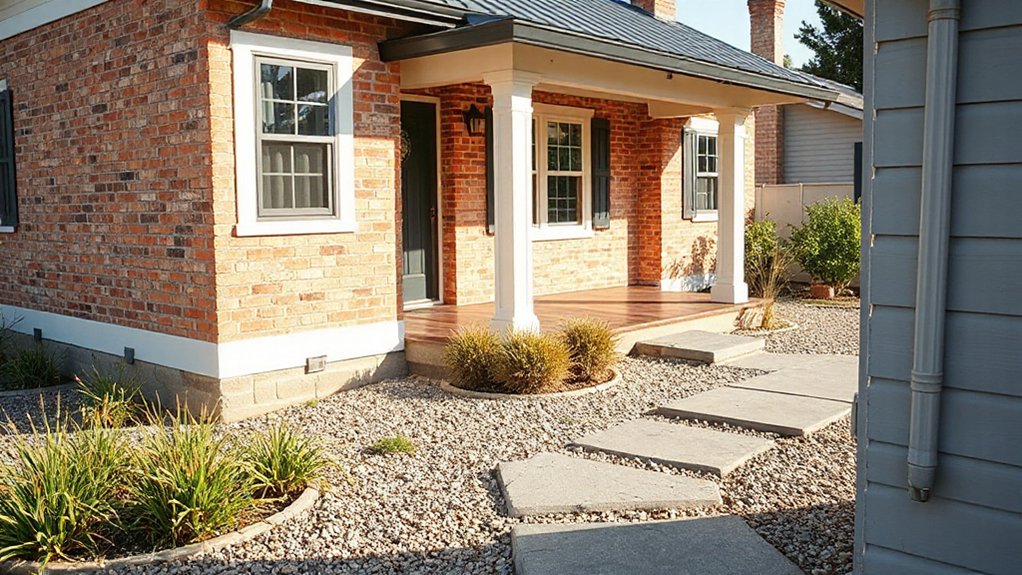
Selecting materials for a bungalow means balancing upfront cost with long-term performance: durable options that resist wear while keeping construction and maintenance affordable. You assess structural sheathing, framing, and cladding for weather resistance and lifecycle costs, prioritizing options with low maintenance and predictable repairs.
For exterior, choose fiber cement, engineered wood, or coated metal that withstands moisture and temperature swings, while meeting local code requirements.
For roofing, evaluate asphalt shingles versus metal or composition options based on expected maintenance intervals and energy performance.
Interior surfaces should favor resilient finishes—low-maintenance paints, vinyl or porcelain tiles, and sealed laminates—that tolerate foot traffic and humidity.
Consider landscaping ideas that reduce soil erosion and heat gain.
Integrate interior decorating choices that harmonize with durable materials without compromising accessibility or safety.
Where to Save and Where to Invest in a Bungalow Renovation
Balancing cost and value in a bungalow renovation means identifying where to cut and where to invest for long-term performance. You weigh structural reliability, energy efficiency, and lasting materials before cosmetic upgrades, so you don’t overpay for short-lived trends.
Prioritize savings on non-structural details while allocating funds to components that drive value, like insulation, windows, and foundational updates. Landscaping ideas and interior decor should complement performance upgrades without inflating costs.
Choose durable finishes that resist wear and moisture, and select scalable systems you can upgrade later.
- Invest in best-in-class insulation and air sealing to cut long-term energy bills.
- Save on decorative elements by repurposing or standardizing finishes across rooms.
- Plan landscaping ideas that reduce maintenance while enhancing drainage and microclimates.
Managing Timelines and Cash Flow to Avoid Overruns
You’ll establish timeline buffering practices to absorb delays without tanking milestones.
Track cash flow against clear milestone payments, and flag overruns before they compound.
Consider how change orders impact schedule and cost to keep projects on track.
Timeline Buffering Practices
Effective timeline buffering keeps your project on track and your cash flow steady by aligning milestones with realistic task durations and contingency reserves.
You manage buffers by pairing critical-path analysis with fixed-date commitments, then pad high-uncertainty tasks. You also reserve funds for unforeseen site conditions and permit delays, keeping the schedule resilient without inflating costs.
- Build in stage gates that trigger rebaselining when scope changes occur, not when delays pile up.
- Align interior lighting and Landscaping design milestones with contractor availability to minimize idle crews.
- Track progress weekly, adjusting for pace, weather, and material lead times to preserve cash flow.
This approach emphasizes disciplined forecasting, tight change control, and clear handoffs to avoid overruns and keep quality intact.
Cash Flow Milestone Tracking
Use a baseline schedule that links procurement, labor, and permit approvals to milestone dates, so deviations are detectable early.
Track actuals weekly, comparing labor hours, material costs, and subcontractor payments against planned values. Flag variances above a defined threshold and trigger corrective actions before overruns occur.
For garden landscaping and interior decor, create staged payments aligned with site readiness, material deliveries, and sign-offs from the designer or client.
Maintain an auditable ledger, document change-freeze points, and adjust forecasts promptly to preserve liquidity and project momentum.
Change Order Impact
Change orders can quickly disrupt timelines and cash flow if not managed with discipline. You’ll want a formal process to assess, approve, and absorb changes. Track cost implications, schedule shifts, and resource reallocations before committing.
Clearly define scope, substitutions, and escalation thresholds to prevent scope creep in garden landscaping and interior decor. Maintain a rolling forecast that updates with each change, so you can reassess budget buffers and contingency needs.
Communicate promptly with all trades and suppliers to avoid misaligned expectations. Use a change log to document impact, decisions, and revised milestones, then rebaseline the plan.
- Establish a change approval worksheet with cost and schedule impact
- Lock in fixed-price or time-and-materials approaches for larger shifts
- Schedule regular review points to catch pending changes early
Getting Accurate Quotes and Vetting Trades

Create a detailed brief: room-by-room specs, materials, finishes, permits, and potential changes.
Seek at least three qualified contractors with verifiable references and current licenses; verify insurance coverage and past project outcomes.
Compare apples to apples by standardizing scope, codes, and exclusions across bids.
Ask for a breakdown of labor, materials, contingency, and a clear payment schedule tied to milestones.
Vet trades for site safety practices and warranty terms; interview references about reliability and problem resolution.
When you’re pricing, factor in gardening tips and furniture selection implications for layout and access during renovations.
Financing Options and Their Impact on Your Budget
Financing costs directly affect your total project budget and cash flow, so you’ll want a clear plan for how interest, fees, and timing impact every milestone.
Different loan types and term lengths change monthly payments and total interest, making it essential to compare options against your project schedule and risk tolerance.
We’ll start by outlining the major loan categories, typical terms, and how each option aligns with a bungalow modernization timeline.
Financing Cost Impacts
What financing options fit within your budget, and how will each affect total cost over the project timeline? You’ll compare upfront payments, phased draws, and work-without-penalty plans to minimize carrying costs. Each choice shifts timing, interest accrual, and contingency needs, so map cash flow against milestones.
Prioritize scenarios that keep luxury upgrades achievable without delaying essential scopes, and assess how eco friendly materials influence unit costs, warranty, and long‑term savings.
Precision budgeting balances interest exposure with construction cadence, ensuring you aren’t overextending early. Document assumed rates, fees, and payback periods to prevent surprises. Your goal: a transparent, actionable plan that supports quality outcomes and predictable cash flow.
- Compare upfront, phased, and deferred options for clarity
- Factor luxury upgrades and eco friendly materials into cost vs. timeline
- Include rate, fee, and payback assumptions upfront
Loan Types And Terms
When selecting loan types, you’ll want to match terms to your project cadence and cash flow, not just the lowest rate. You’re choosing financing that aligns with partial draws and milestone costs for bungalow modernization.
Fixed-rate loans provide predictable budgets for long-running exterior and interior phases, while adjustable rates can reduce initial payments if your timeline shifts.
Shorter terms lower total interest but raise monthly burdens; longer terms ease payments at the cost of interest over time.
Consider construction or renovation lines of credit for flexibility during Garden landscaping and interior decor phases, then lock in a rate before stabilization.
Compare origination fees, prepayment penalties, and draw procedures to avoid cash-flow gaps.
Document milestones, contingency buffers, and tax implications to refine overall affordability and risk management.
Planning for Resale Value and Marketability
Considering resale value and marketability early helps prevent costly missteps later. You assess upgrades by their appeal to a broad buyer base, focusing on durable, low-maintenance choices and clear return on investment. Prioritize neutral palettes, efficient fixtures, and quality finishes that translate across styles.
For exterior impact, garden landscaping becomes a value lever when it’s low-maintenance and seasonally resilient. Inside, interior decor should balance contemporary touches with timeless elements to reduce turnover risk.
Document costs, warranties, and supplier reliability to support negotiation. Track market benchmarks for bungalow features, avoiding niche trends that limit buyers. Align upgrades with local demand, rental comparables, and resale timelines to preserve liquidity.
- garden landscaping that’s durable and low maintenance
- interior decor choices with broad appeal and timeless style
- documented costs and warranties to back resale negotiations
Designing an Efficient, Future-Proof Bungalow Layout
Prioritize single-story adjacency to reduce mechanical runs and support future accessibility. Plan for scalable services—plumbing, electrical, and data—via a centralized core, with discrete sleeves for upgrades.
Use zones that optimize daylight, ventilation, and heat exchange; position bedrooms away from noisy living areas. Integrate garden landscaping as an outdoor extension of living space, with direct access from common areas to reduce travel.
Choose interior color schemes that stay neutral yet adaptable, enabling easy refresh with evolving furniture. Draft modular layouts that accept future add-ons without structural changes.
Case Studies: Budgeting Breakdowns for Real Bungalow Projects

Case studies illuminate how budgets unfold in real bungalow projects, revealing typical costs, contingencies, and tradeoffs. You’ll see concrete line items, phased spending, and how decisions ripple through timelines and permits.
By comparing small, medium, and high-end renovations, you identify where to save and where investments matter, from structural fixes to finishes. Indoor plants and smart technology usually shift budget sliders modestly but meaningfully, adding value without excessive cost when scoped well.
Expect variance based on location, contractor bids, and project scope, yet patterns emerge: upfront design fees, material surcharges, and contingency buffers. You’ll use these lessons to calibrate your own target, avoiding overruns while preserving desired outcomes.
- Real-world cost breakdowns show where to trim or allocate
- Contingencies and permit fees commonly drive overruns
- Smart tech and indoor greenery influence value with careful budgeting
A Practical 5-Step Budgeting Framework You Can Apply
A practical 5-step budgeting framework helps you own the numbers from day one.
Step one is define scope: itemize tasks, materials, labor, and contingencies for garden landscaping and interior decor, so you know exact cash flows.
Step two, assign realistic unit costs and timeframes, using current market data to avoid drift.
Step three, create a phased plan with monthly targets, linking each phase to milestones and spend caps.
Step four, build a risk buffer of 10–15% for unknowns, and document triggers to reallocate funds quickly.
Step five, implement monitoring: track variances daily, generate dashboards, and lock changes through a formal approval process.
This framework keeps you precise, minimizes waste, and preserves control over both garden landscaping and interior decor budgets.
Frequently Asked Questions
How Long Does a Bungalow Modernisation Typically Take?
Typically 4–12 weeks, depending on scope and trades, with phased inspections. You’ll guarantee interior aesthetics stay aligned with structural stability, coordinating carpentry, plumbing, and electrical. You’ll schedule milestones, handle permits, and mitigate delays through proactive project management.
What Financing Options Best Suit Bungalow Projects?
You should consider personal loans, home equity lines, and renovation-specific finance; choose based on rate, terms, and cash flow. Prioritize Interior upgrades first, then Landscaping improvements, ensuring monthly payments stay within your budget.
Which Trades Deliver the Best Value for Money?
Trades delivering best value: interior design, carpentry, electrical, plumbing, insulation, and plaster. You prioritize trades that boost energy efficiency and practical layouts, ensuring precise material choices, standard installations, and coordinated timing for minimized rework and predictable costs.
How Can I Avoid Common Bungalow Renovation Overruns?
A parallelism echoes: you avoid overruns by meticulous planning. Specifically, you implement clear milestones and approvals; monitor budgets daily. Prioritize interior lighting efficiency and landscaping ideas to prevent scope creep and keep contingencies intact.
What Are the Hidden Permit or Regulatory Costs to Expect?
Permit fees vary by project scope and locality; expect Regulatory compliance costs to add 5–15% of the renovation budget. You’ll pay permit review, inspections, and possible impact fees, so budget for documentation, fees, and administrative delays.
Conclusion
You’ve got a clear framework to base your bungalow budget on, from scope and permits to contingencies. Think of it like piecing a roof: you cover basics first, then layer in insulation, services, and finishes for lasting value. A 10–15% contingency cushions surprises, and fixed quotes keep you honest. Anecdote: a client saved thousands by front-loading energy upgrades before cosmetic tweaks, proving long-term value beats quick wins. Plan, price, protect—and budget for resale as a smart finish.