
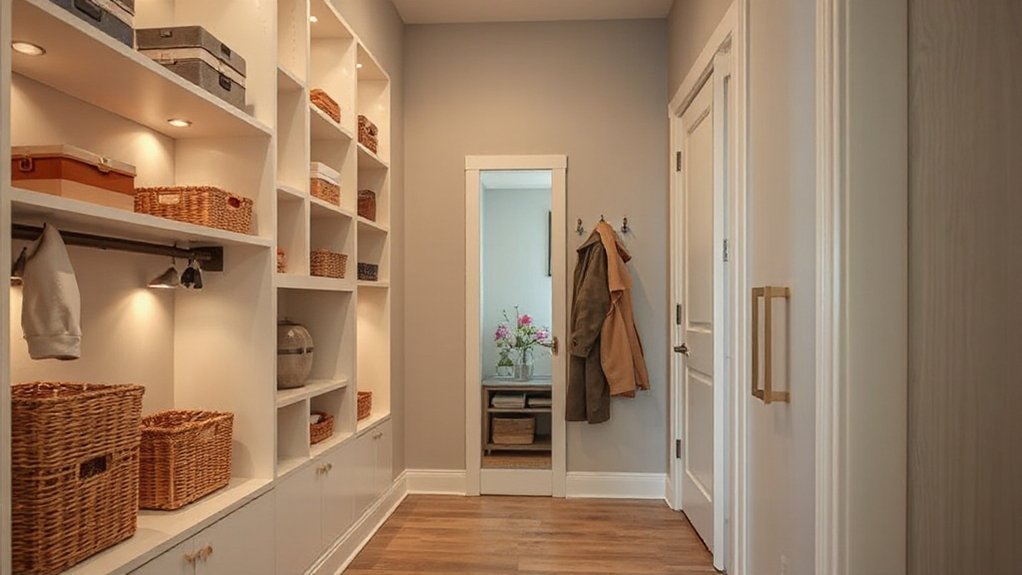

A narrow hallway is a spine with room for growth, if you treat every inch as potential. You’ll want vertical real estate first, then slim, unobtrusive storage that keeps foot traffic smooth. Think wall niches, floating shelves, and hidden benches that pull double duty. If it looks crowded, it probably is—so plan with scale, lighting, and cohesive hardware in mind. There’s more to optimize than you might expect, and a few smart tweaks can transform the space. Curious how to start?
Assess Your Hallway Layout and Storage Goals
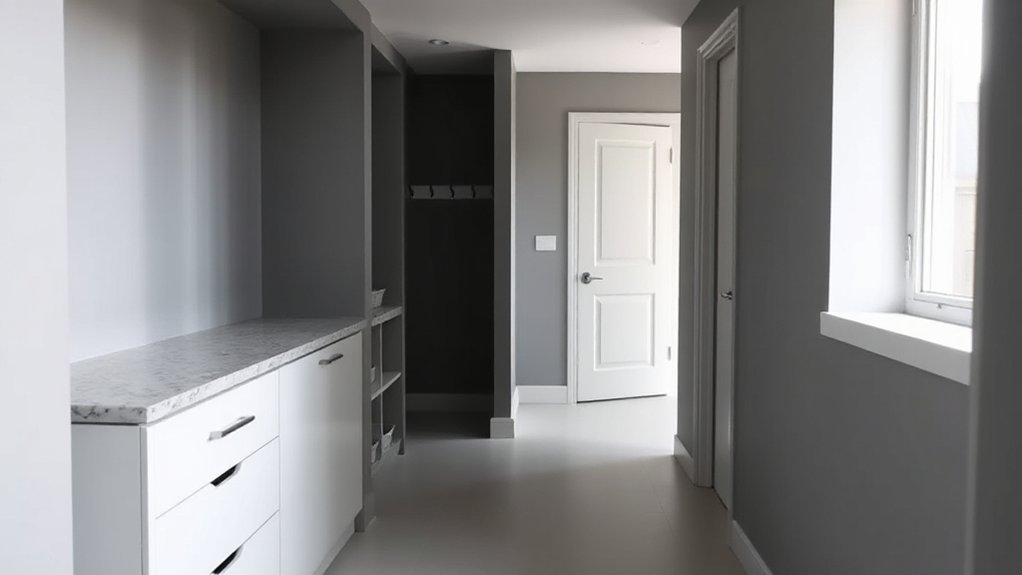
Start by mapping the space you have and the storage you need. You’ll assess floor plan shape, door swings, and traffic flow to prevent bottlenecks. Note alcoves, corners, and wall lengths that invite solutions without crowding the walking path.
Define storage goals: daily items, seasonal gear, and seasonal décor. Consider access frequency and weight, so you pick durable, easy-to-reach options.
Think about multitasking surfaces and lighting needs; hallway lighting influences how you view clutter and space. Visualize finishes that align with your style, then identify decorative accents that won’t overwhelm narrow dimensions.
Prioritize adjustable or modular pieces for future changes. Finally, sketch a rough layout, marking preferred locations for hooks, slim cabinets, and slim shelves to balance function with aesthetics.
Prioritize Vertical Real Estate With Wall Niches
Expanding your storage upward makes the most of limited width, so start by treating vertical space as a primary cabinet line. You’ll gain efficiency with wall niches that tuck away essentials without crowding the floor.
Choose decorative wall niches to add personality while concealing cords, keys, and small devices. Install a mix of shallow and deep niches to accommodate everyday items and seasonal decor, keeping frequently used tools within arm’s reach.
Align niches with door frames or crown molding for a cohesive look that feels intentional rather than cluttered. Pair niches with vertical storage solutions like slim cabinets or pull-out organizers to maintain a clean rhythm along the wall.
This approach delivers practical storage and a refined, uncluttered hallway aesthetic.
Slim Floating Shelves for Narrow Halls
Slim floating shelves tuck into narrow walls with clean, unobtrusive lines. You’ll get space-saving organization without crowding, thanks to slim shelf aesthetics and precise wall mounting.
Keep items light and arranged by height to maintain balance in a tight hall.
Slim Shelf Aesthetics
Yes—slim floating shelves can transform a narrow hallway by adding storage without crowding the space. You choose slim profiles that visually recede, keeping traffic flow unimpeded. Favor clean lines and hidden brackets to preserve a focus on form over hardware.
Color contrast matters: a lighter shelf against a dark wall brightens the corridor, while a darker shelf on a pale wall adds depth. You’ll balance function with style by selecting shelf materials that resist dent and moisture, such as treated wood, veneer, or powder-coated metal.
Keep the display minimal—one or two decorative items per shelf prevents clutter. Install at eye level for quick access, and stagger heights for a subtle rhythm that enhances the hallway’s scale.
Narrow Wall Mounting
Choose wall mounted decor that sits just above baseboard height to avoid toe-kicks and to keep cords hidden. A clean, uninterrupted wall helps narrow hallways feel calmer and more more expansive.
Use lightweight materials for easy mounting and precise alignment, then stagger shelves for subtle rhythm without crowding the space. Integrate narrow hallway lighting above or beside shelves to illuminate artwork and items without harsh glare.
Guarantee brackets or hidden hardware support the weight you plan to display, and leave margins for cleaning. The result is practical, airy storage that enhances style.
Space-Saving Organization
Floating shelves are your quickest win for a cluttered hall, letting you store essentials without sacrificing floor space. Slim floating shelves keep sightlines clean while maximizing vertical storage, perfect for narrow entrances. Choose a slim depth to avoid crowding doors and to preserve easy passage.
Install brackets level and evenly spaced; use the wall’s length rather than height alone to guide spacing. Group small baskets or labeled boxes for loose items, so you can grab what’s needed without rummaging.
To elevate practicality, pair shelves with unobtrusive door decor that complements your color scheme and lighting fixtures near the shelves to brighten work zones. Keep cords hidden and mounts minimal, maintaining a sleek, cohesive look that feels airy and organized.
Corner Solutions: Underside Cubbies and Nooks
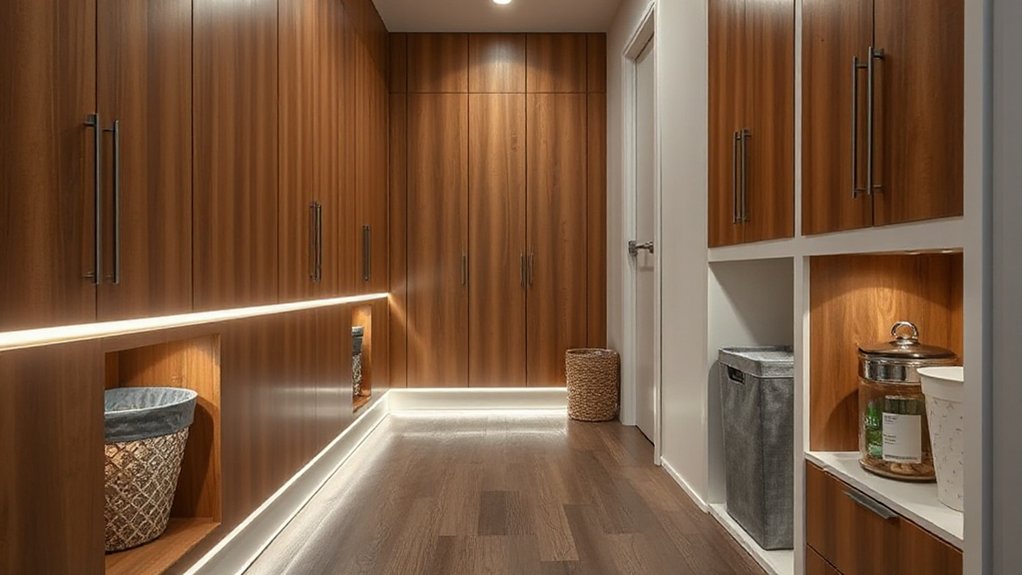
Corner solutions transform underutilized corner spots into efficient storage. You’ll tuck Corner nooks and Underside cubbies into slim gaps along a narrow hallway, turning dead space into practical shelves.
Start high on the wall with shallow open cubbies to stow keys, mail, and small chargers, keeping surfaces clear.
Lower, angled shelves fit between door frames, so you don’t block traffic flow. Use uniform finishes for a cohesive look that reads tidy rather than cluttered.
Consider a slim, continuous rail to hang lightweight items, or a magnetic strip for metals and tools.
Label bins or add color-coded lids to quick-find essentials.
The goal is accessible, organized storage that feels integrated, not added-on, preserving airiness while boosting function.
Hidden Storage Benches for Seating and Stowage
Hidden storage benches pair seating with discreet stowage, so you get a comfortable place to sit and a practical spot to stash items without adding bulk to the hall. You’ll find options that blend with your décor, from streamlined ottomans to cushioned benches with lift-up lids.
Choose depths that fit your corridor without narrowing passageways, and look for solid hinges and reinforced frames for lasting use. When you open the lid, you reveal a roomy compartment for shoes, umbrellas, or mail, keeping clutter out of sight yet easy to reach.
Pair seating and stowage with a slim profile, and you’ll preserve flow while gaining functional, aesthetically pleasing storage. Hidden storage benches support both seating and stowage.
Quick-Access Storage: Wall Hooks and Peg Systems
Quick-Access Storage with wall hooks and peg systems adds a practical layer to any narrow hallway without crowding the space. You’ll keep daily essentials within reach, creating a tidy rhythm as you move through the doorway.
- Use doorway baskets to corral mail, keys, and receipts, freeing floor space for traffic.
- Choose decorative hooks that match your décor, turning hooks into tiny accents rather than eyesores.
- Install a slim peg rail at shoulder height to hang coats, bags, or umbrellas, preserving sightlines.
Keep items near the door so you grab what you need on the way out. This setup feels intentional, organized, and unobtrusive, transforming a narrow passage into a functional encore.
Multi-Functional Consoles With Hidden Cubby Storage
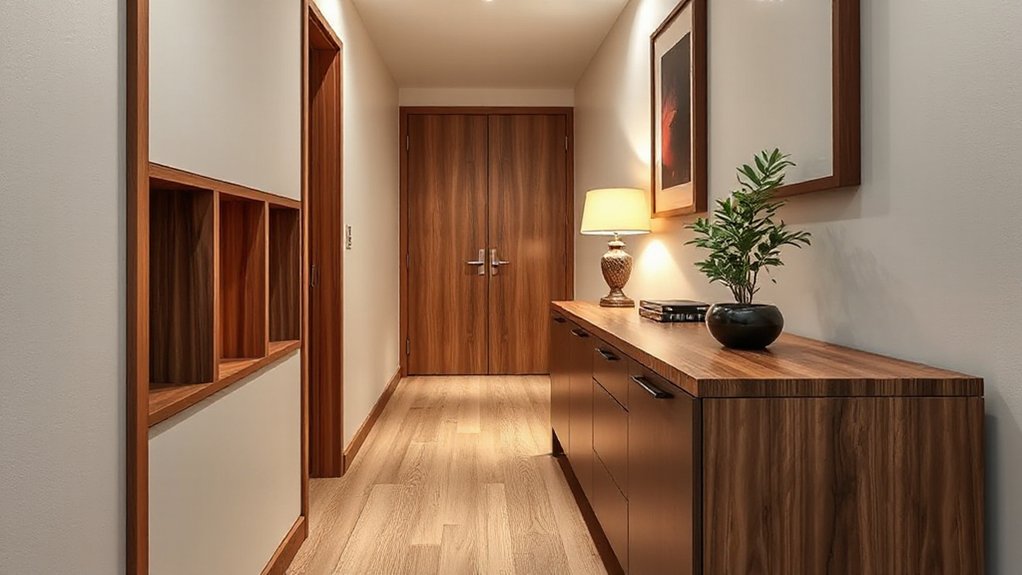
A multi-functional console with hidden cubby storage blends practicality with a clean, seamless look in a narrow hallway. You’ll gain surface space for daily essentials without widening the path.
The hidden compartments keep clutter out of sight while still within reach. Choose a console with shallow drawers or pull-out cubbies to store keys, mail, and small chargers, so everything has a dedicated home.
Opt for a matte or low-gloss finish to minimize reflections and maximize perceived width. Multipurpose furniture excels here: use the top for a lamp, a vase, or a decorative tray, and rely on hidden storage to maintain order.
Hidden compartments convert narrow hallways into organized passageway zones, promoting calm and efficient everyday movement.
Built-In Slim Cabinets for Narrow Widths
Built-in slim cabinets make the most of narrow widths by pairing slim profiles with concealed storage. You’ll want integrated door storage that keeps essentials out of sight yet easy to reach.
Choose clean lines and soft-close hinges to maintain a practical, aesthetic flow along your hallway.
Slim Cabinet Widths
Consider these options to maximize impact:
1) Slim pull-out organizers inside each unit to reclaim odd gaps
2) Recessed toe kicks that keep floor lines uninterrupted
3) Vertical dividers for category zones, so items are easy to grab
Keep finishes matte to reduce glare and maintain a calm feel. Install lighting along the ceiling or under shelves to highlight stored items and preserve a spacious vibe.
Integrated Door Storage
You’ll want a shallow depth and a door style that minimizes protrusion, so traffic stays unobstructed. Plan hinge placement carefully; concealed hinges or narrow pivot hinges keep lines clean and allow doors to swing without colliding with nearby fixtures.
Choose a height that aligns with typical reach ranges, placing shelves at accessible intervals. Use integrated hardware recesses for door handles to maintain a flat surface.
Lighting inside the cabinet or above it enhances visibility in tight spaces. This approach reduces clutter, elevates aesthetics, and preserves the hall’s open feel.
Sliding or Fold-Down Furniture to Save Swing Space
Sliding or fold-down furniture is a smart way to gain floor space in a narrow hallway. When you choose folding furniture, you reduce clutter while keeping essentials within reach. Space saving designs like wall-mounted desks, drop-down Shaker tables, or folding shelves let you stroll through without bumping into furniture.
Focus on mechanisms that feel smooth and sturdy, so you trust the move every time.
- Install a wall-mounted, fold-down desk that locks when stored.
- Use a slim, sliding cabinet with pull-out shelves for quick access.
- Opt for a tabletop that folds flat against the wall to reveal clear floor space.
This approach blends practicality with aesthetic appeal, delivering efficient, unobtrusive storage.
Mirror-Enhanced Storage to Make Hallways Feel Wider
Mirrors do more than reflect; they multiply light and visually extend your hallway, making narrow spaces feel instantly wider. You’ll gain storage by choosing wall-to-wall reflected surfaces that double as cabinets or shallow shelves with backing.
Use mirrored panels on shallow depth units to minimize bulk while maximizing surface area. Position mirrors opposite decorative lighting to bounce illumination and reduce perceived depth, which enhances sense of space.
Opt for frames in neutral tones to avoid visual weight; consider frameless options for a seamless look. Integrate storage with color accentuation—painted backing or small color pops along the hardware palette—to create depth without clutter.
This approach keeps traffic clear, elevates aesthetics, and delivers practical, accessible storage in a narrow corridor.
Lighting and Color Tricks to Soften Narrow Halls
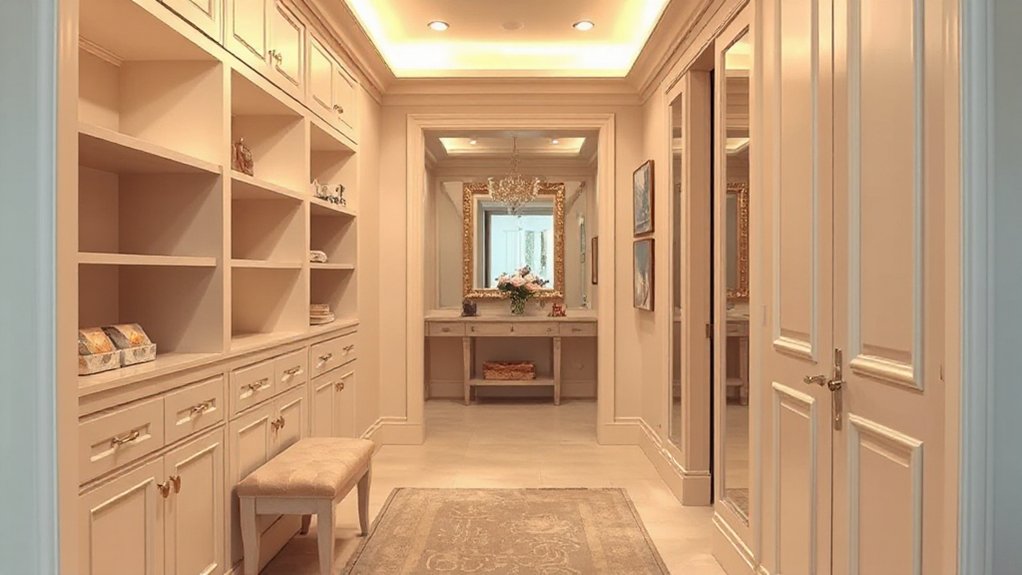
Layer your lighting in layers, from ceiling fixtures to wall sconces and under-shelf LEDs, so the hallway reads as expansive rather than boxed in.
Pair soft, warm color palettes with gentle, diffuse illumination to create a calm, inviting glow that visually widens the space.
Use understated hues and consistent light temperatures to avoid harsh contrasts and keep the hall feeling open.
Lighting Layers For Hallways
Use multiple lighting layers to make a narrow hallway feel wider and more inviting. You’ll blend ambient layering with targeted task illumination to sculpt depth and function without crowding walls. Start with a soft overhead wash, then add wall sconces or recessed LEDs to carve vertical space, and finish with a bright, narrow strip along the baseboard for safety and atmosphere.
- Ambient layering sets the mood without glare.
- Task illumination highlights artwork, shelves, or map routes.
- Accents create rhythm and guide your eye toward storage niches.
Keep fixtures slim, warm (2700–3000K), and dimmable for flexibility. Avoid harsh contrasts; maintain even light distribution to prevent shadows.
This approach makes the corridor feel more expansive, purposeful, and inviting while supporting practical storage zones.
Soft Color Palettes Tricks
Soft color palettes soften a narrow hallway by weaving lightness into every surface and ensuring visual calm. You apply soft palettes to walls, ceilings, and trim, keeping tones cohesive to avoid visual noise. Choose light, warm neutrals or subtle pastels that reflect ambient lighting, not fight it.
Color psychology guides you: lighter hues feel expansive; muted saturations reduce glare and fatigue. Use one dominant color and a 10–20% accent for depth, like a blush pillow or a sage rug. Matte finishes minimize reflections, while a satin ceiling subtly lifts the space.
Pair colors with storage fronts in the same family to create a seamless line. This approach supports perceived width, calmness, and function without compromising storage potential.
Tidy Tech: Cable Management in Hallways
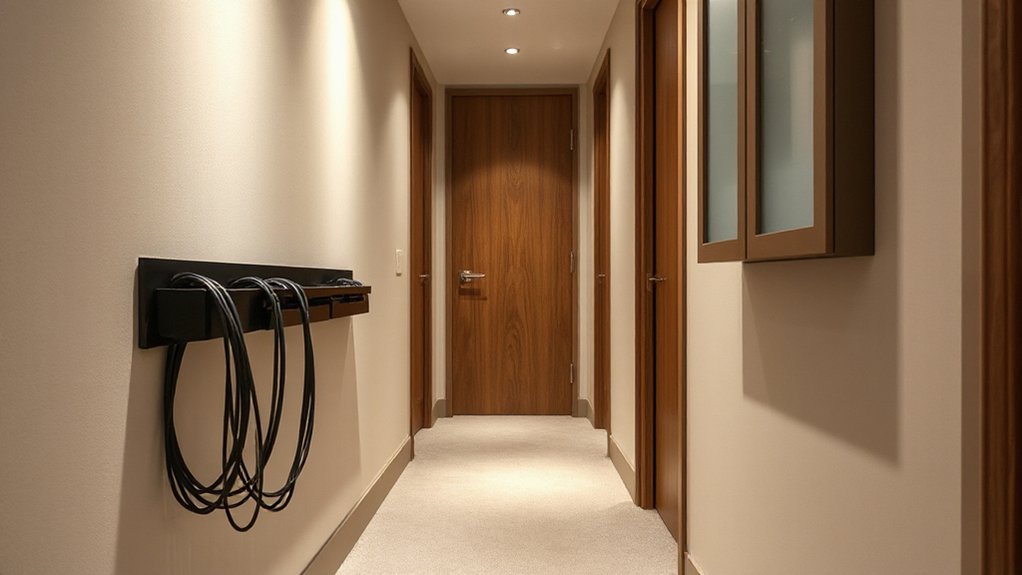
Ever wondered how to keep a narrow hallway both neat and functional? You can tame cables without crowding space. Start with wall-mounted channels to hide cords, then add adhesive clips to keep routes clean. Prioritize low-profile options that blend with your decor, not your clutter.
- Use cable concealment sleeves along baseboards for a seamless look.
- Mount slim raceways or troughs along the wall to hide multiple cords.
- Choose wireless tech gadgets where possible to reduce cable quantity and complexity.
Keep power strips off the floor and label each line for quick troubleshooting. Install a small surge protector behind a picture rail or inside a cabinet to maintain a tidy, accessible edge. The result is calm, functional, and stylish hallway tech.
Materials and Finishes That Read as Spacious
Think through lighter color palettes, since airy tones can visually expand a narrow hall.
Pair minimalist hardware with clean lines to keep sightlines uncluttered and the space feeling open.
Add reflective surface details to bounce light and enhance the sense of depth.
Lighter Color Palettes
- Use off-white, light gray, or soft beige as base tones to maintain depth without heaviness.
- Carry the palette through accents—trim, doors, and storage fronts—for cohesive lightness.
- Add reflective surfaces or a satin finish to amplify brightness without glare.
This strategy prioritizes mood enhancement and practical clarity, guiding your eye toward functional storage rather than obstruction.
Minimalist Hardware Finishes
Choose hardware in matte nickel, satin brass, or powder-coated black to maintain cohesion without drawing attention. Avoid ornate adornments and high-contrast metals that fracture the visual flow.
A consistent hardware set across doors, drawers, and cabinets reinforces a unified, roomier feel. Keep profiles slim and recessed where possible, so edges stay uninterrupted by hardware jutting into walking space.
If you mix materials, do so within the same tonal range to preserve calm minimalism. Hardware finishes matter; they underpin minimalist aesthetics and help your hallway read as larger and more intentional.
Reflective Surface Details
Reflective surfaces instantly widen a narrow hallway by bouncing light and creating a sense of depth. You’ll notice how the right materials and finishes read spacious without expanding the footprint. Choose surfaces that reflect but don’t glare, balancing practicality with beauty.
Mirror accents, when used thoughtfully, multiply light and add architectural interest. Here are clean, purposeful options:
- Mirror accents on doors or wall panels to distribute brightness.
- High-gloss cabinets or tiles that bounce daylight toward darker corners.
- Glass or acrylic fronts on slim storage units to keep sightlines open.
Pair these with cool, neutral tones and unseen edge lighting for an airy vibe. Keep trims and hardware minimal to preserve the reflective effect, and avoid busy patterns that fight the light. Reflective surfaces reward restraint and intention.
Budget-Friendly Storage Hacks That Work
If you want to stretch a narrow hallway without clutter, start with budget-friendly hacks that deliver real storage gains. You’ll find creative storage solutions that don’t break the bank, from slim shoe shelves to wall-mounted cubbies that tuck above baseboard level.
Opt for modular bins in neutral tones to corral keys, mail, and small accessories without visual noise. Choose over-the-door organizers on closet doors or the back of the entryway, converting wasted space into tidy pockets.
Use magnetic strips for tools and spices, keeping essentials within reach and off flat surfaces. Prioritize durable materials and simple installations, so you can swap items as needs shift.
These budget friendly ideas prove functionality and style can coexist in a tight corridor.
Weekend-Worthy DIY Wall-Mounted Organizers

Turn a plain wall into organized storage this weekend with simple, sturdy builds you can finish in a day. Weekend-Worthy DIY Wall-Mounted Organizers blend vintage decor charm with modern practicality, using eco friendly materials that respect your space and the planet. You’ll enjoy a quick, satisfying project that adds storage without bulk.
- Simple shelves that hold keys, mail, and small tools
- Slim pockets or bins for chargers, cables, and accessories
- A magnetic strip and hooks for metals, utensils, and lightweight gadgets
Pick a finish that suits your hallway’s vibe—aged wood or matte paint, not overstyled. Install at a convenient height, measure for reach, and vibe-check the balance of form and function.
The result: tidy, accessible storage you actually use.
Maintain Your Hallway: Traffic Flow and Reconfiguration
Keep traffic flowing by keeping your hallway clear of bulky items and sightlines open for easy navigation. Consider reconfiguring storage so doors, handles, and corners don’t impede movement.
Group frequently used items within arm’s reach. Start with a simple layout test: map traffic patterns, then refine with slim organizers and strategic placements.
Traffic Flow Maintenance
Ever wondered how to keep a narrow hallway welcoming and easy to navigate at the same time? You’ll protect flow by thoughtful layout and mindful pacing. You’ll balance function and mood, so movement feels effortless rather than cramped. Focus on clear sightlines, predictable paths, and accessible zones that don’t crowd you.
- Prioritize crowd control by keeping traffic segments short and well-lit, guiding foot traffic with subtle cues.
- Optimize furniture placement to avoid bottlenecks; low-profile pieces help maintain openness while offering storage.
- Create intentional pause points—tiny landings or seating nooks—that invite, rather than trap, mobility.
With these tweaks, your hallway stays inviting, organized, and easy to navigate every day.
Hallway Reconfiguration Tips
To reconfigure a narrow hallway effectively, start with a clear plan that preserves flow while expanding usability. You’ll prioritize vertical storage, recessed shelves, and slim consoles that don’t crowd the path. Choose wall-mounted units to keep the floor uncluttered and maintain sightlines.
Align furniture with traffic patterns to avoid bottlenecks, and use consistent detailing to create a cohesive feel. Decorative lighting should illuminate without glare, using layered options like sconces and under-cill lighting to guide movement and highlight features.
Apply color psychology by choosing calming neutrals with a single, intentional accent to energize the space without overwhelming it. Keep Switch-free zones near doors, and test routes during your redesign to guarantee accessibility, brightness, and ease of cleaning remain intact.
Cohesive Hardware and Details for a Polished Look
When you pull the look together, cohesive hardware and thoughtful details tie the space together with quiet confidence. You’ll choose finishes that harmonize with existing fixtures, avoiding mixed metals to maintain polish.
Subtle hardware shapes—sleek pulls, minimal knobs, and flush handles—create a cohesive rhythm along every surface. Polished details like magnet catches, soft-close doors, and beveled edges add refinement without clutter.
- Select compatible finishes and consistent knob styles for all storage pieces.
- Prefer soft-close mechanisms and clean-edged hardware for a quiet, refined vibe.
- Add refined trim, eased corners, and matching hinge plates to unify lines.
Cohesive hardware and polished details elevate the hallway’s storage solution, elevating function with style.
When to Reassess: Updates, Reconfigurations, and Long-Term Care
Evaluating your hallway storage over time helps you stay practical and polished; regular updates prevent clutter from creeping back. You’ll know it’s time to reassess when traffic, usage, or devices shift, or when clutter starts to feel habitual rather than incidental.
Schedule a quarterly 20-minute walk-through to spot underused surfaces and evolving needs, then reallocate space accordingly. Embrace reconfigurations that preserve flow—think vertical shelves, shallow drawers, and magnetic strips for small items.
Long term planning matters: anticipate shifts in family size, mobility, or tech guts, and plan for adaptable modules. Consider home automation hinges, lighting, or sensor-activated organizers to simplify maintenance.
Document changes briefly, then revisit your plan annually to stay organized, efficient, and visually calm.
Frequently Asked Questions
How Do I Measure Hallway Depth for Storage Fit?
To measure hallway depth for storage fit, you’ll stand at the entrance, run a tape along the baseboard, and note the deepest clear path. Consider decorative wall mounted shelves and slim furniture options for unobtrusive storage.
Can I Install Storage Without Damaging Walls?
Yes, you can, by using decorative wall hooks and hidden storage compartments that don’t require wall damage. Attach shelving with removable brackets, install over-the-door organizers, and choose slim furniture to keep your narrow hallway open and stylish.
What Are Kid-Friendly Storage Options in Narrow Halls?
You’ll love kid-friendly options like toy storage benches and wall-mounted cubbies; keep art display low and accessible. Choose adjustable shelves, bins, and labels, so you stay organized, practical, and stylish in a narrow hall without clutter.
Which Lighting Helps Storage Feel Larger at Night?
Ambient lighting with a cool color temperature helps storage feel larger at night. You’ll notice brighter, evenly distributed light that minimizes shadows, making walls seem farther apart. Use warm accents sparingly to keep the space practical and aesthetically balanced.
How to Choose Materials That Resist Hallway Wear?
Choose durable materials with high wear resistance, prioritizing scratch- and impact-proof options. Durability considerations guide you to sealed laminates, metal, or solid surfaces; guarantee easy material maintenance with washable finishes and simple repairs for long hallway use.
Conclusion
So you’ve mapped out smart, slim storage that doesn’t block traffic or glare — you’re nearly there. With vertical niches, slim shelves, hidden benches, and DIY wall organizers, your hallway becomes a calm, cohesive gallery of function. Keep it light, reflective, and uncluttered, and recheck traffic flow after any change. Ready to reimagine every inch, or will you stall on that last, perfect detail? Your hall, your haven, in reach and style.