
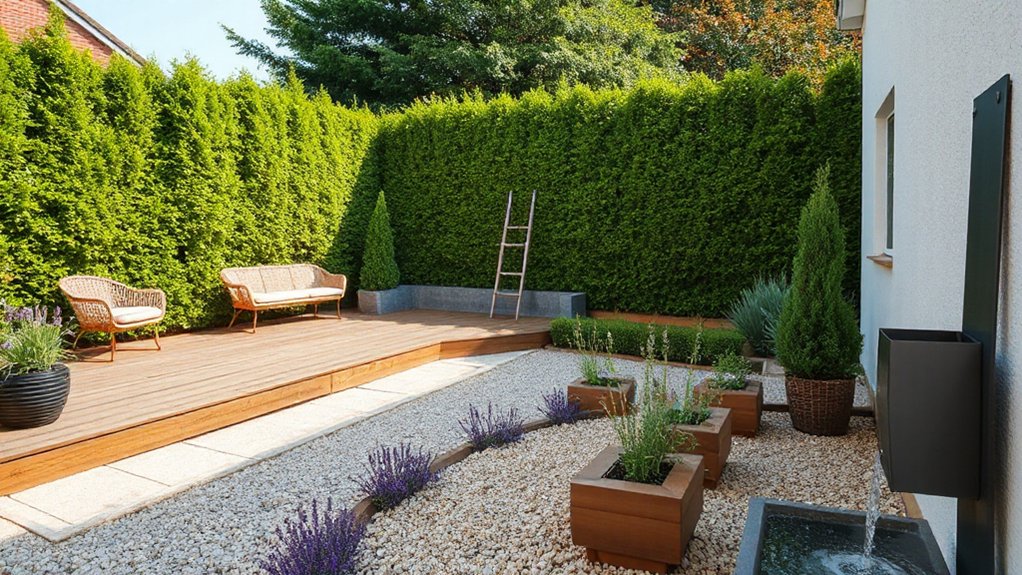

You’re optimizing a compact UK garden, so think vertical first: trellises, climbing plants, and smart borders that free ground for seating and a compact table. Plan for flow with clear zones, choose multi-functional furniture, and hide storage in benches or under planters. Use light hues and reflective surfaces to lift the space, then add seasonal texture with quick-change planting. Get ready to see how small tweaks can reveal big potential, then compare notes on what to tackle next.
Define Your Small Garden Goals: Privacy, Seating, and Access
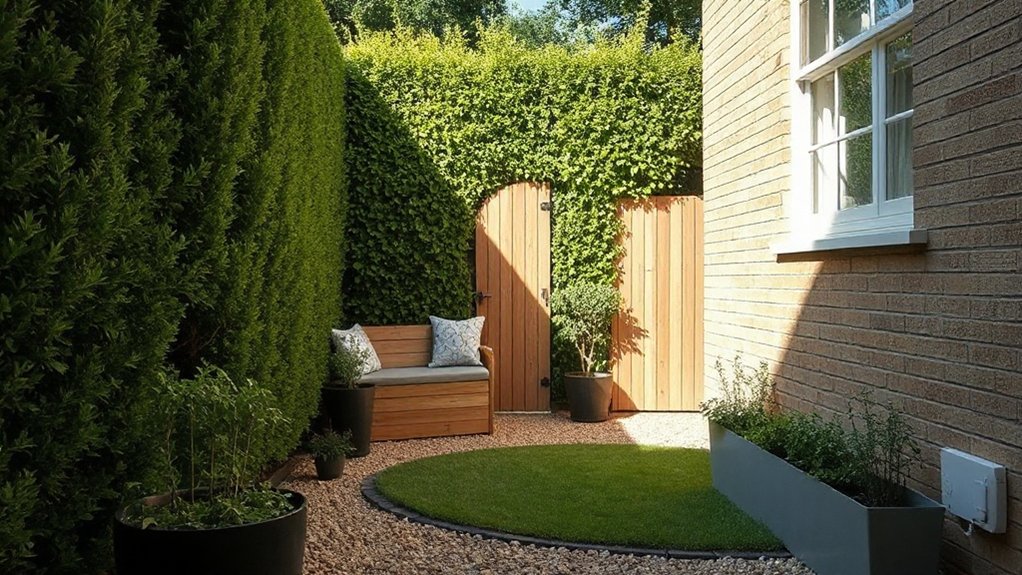
To define your small garden goals, start with privacy, seating, and access as core priorities. You’ll map each element before you lift a shovel, so your plan stays tight and actionable.
Visualize privacy screens that create intimate corners without visually closing off the space; lightweight screens or lattices let light pass while softening sightlines.
For seating, choose compact, multi-use options—a fold-down bench or a corner settee that doubles as storage—so you gain comfort without crowding the plot.
Access pathways should be clear and durable, guiding you from gate to seating with minimal effort.
Prioritise sightlines and flow, aligning plant scale with hardscape to avoid visual clutter.
Your goals shape a cohesive, usable garden that feels larger and more inviting.
Space-Savvy Layout: Plan for Flow and Focus Points
Start by mapping a clear path through the space that guides the eye and feet from gate to seating. Then place your focal points where they’ll be most admired—eye-catching at entry, cozy at the core.
You’ll plan a simple, logical flow: traffic moves along a defined route, then settles where you want people to linger. Use sightlines to frame rewards—a focal plant, a sculptural pot, or a quiet corner.
Balance is key: open spaces for movement, compact pockets for seating, and a clear center axis to unify the garden’s rhythm. Choose plant selection that emphasizes seasons and texture, not crowding.
Keep garden aesthetics cohesive with color repetition and material continuity. This approach guarantees space feels larger, welcoming, and orderly.
Vertical Magic: Climbing Plants and Trellises for More Space
Vertical space is your ally, so start by training climbing plants and mounting slim trellises along walls, fences, or fencing panels to gain garden square footage without widening lanes. You’ll create instant vertical drama while keeping paths clear.
Choose compact climbers with strong grip and quick cover, like Clematis, clematis viticella, or sweet peas, to add color without crowding ground space.
Plan trellis design to match sun exposure and airflow; stagger supports for even growth and easy pruning. Attach vertical wires or mesh panels to support dense foliage without protruding.
Regularly trim to prevent shading of nearby beds, and train shoots along the frame for a clean, layered effect. The result is a taller, brighter garden with added usable area and cohesion.
Multi-Functional Furniture for Tiny Gardens
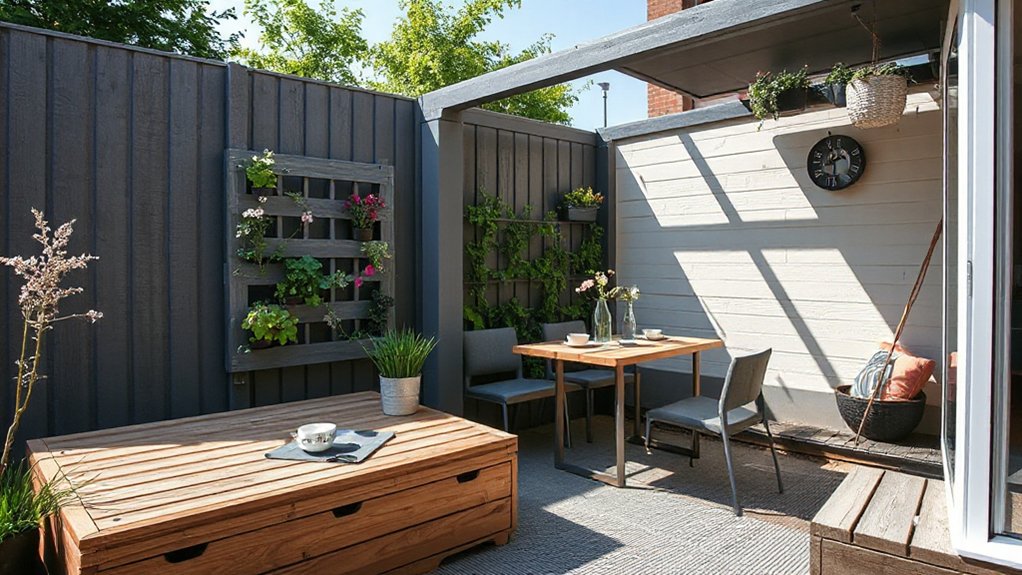
When space is at a premium, choose multi-functional furniture that blends seating, storage, and surface area in one compact piece. In a tiny garden, a bench with hidden storage becomes a seat, a table, and a tidy spot for tools.
Opt modular units you can rearrange for gatherings or solo sunbathing, then nest a pair of stools under a coffee table for extra seating without crowding.
Materials should be durable, weather-resistant, and lightweight enough to move, yet stable in wind. Plan surfaces with built-in planters to curb clutter and invite wildlife habitat while deterring garden pests.
Elevate corners with slim shelving for pots and accessories, not eyesores. Finally, choose pieces with clean lines to preserve open sightlines and visual rhythm.
Clever Storage Solutions That Save Ground Space
Smart, space-saving storage can transform a small garden from cluttered to usable in minutes. You’ll prioritize verticals: wall-mounted shelves, hanging baskets, and hooks keep ground level open for movement.
Opt for benches with built-in storage to hide cushions, planters, and tools, so seating still invites conversation without the mess. Choose dual-purpose pieces—garden furniture that doubles as a storage unit keeps essentials at hand and out of sight.
Use slim, stackable containers for plant containers and potting gear, stacking vertically beside walls or railings. Pocket-solution systems, like slim corner caddies and magnetic tool strips, maximize every inch without crowding pathways.
Label bins for quick retrieval, and guarantee drainage and drainage-safe materials. The result is tidy, accessible, and visually cohesive with your garden’s compact footprint.
Color Schemes to Make Tiny Spaces Feel Bigger
Color can do the heavy lifting in a tiny garden. You’ll use light hues on walls and fences to bounce daylight, then push accents forward with bold, selective color. Choose wall colors that reflect warmth and sky tones to create instant depth without clutter.
Color psychology guides you: cooler blues and greens calm small spaces, while warm yellows and whites read as larger. Apply paint techniques that elongate sightlines—paint fences and trellises in the same light shade to unify boundaries.
Use diluted shades for larger surfaces and reserve saturated tones for focal points, such as a seating area or planter strip. Test colors in natural light, then commit to a cohesive palette. Pair paint with monochrome cushions and planters for visual continuity and spacious feel.
Zone Differentiation Without Walls: Create Distinct Areas
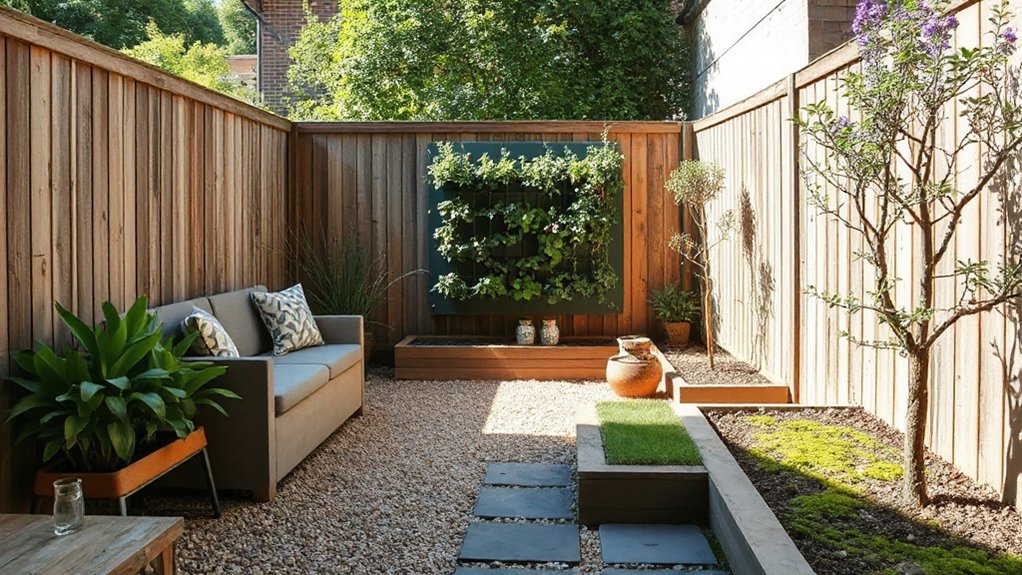
Soft barriers create clear zones without walls, guiding your eye and flow. Use defined areas with careful spacing, textures, and plant choices to signal distinct functions.
Pathways tie these spaces together, so a single, cohesive rhythm emerges.
Soft Barriers, Defined Zones
To define distinct garden zones without walls, you can use soft barriers that guide movement and create visual separation. You’re aiming for clearly defined zones built with texture, color, and height differences.
Start with low, dense hedging or ornamental grasses to frame seating, leaving sightlines open. Use raised beds or planters as portable room dividers, then vary materials—stone, timber, or gravel—to signal different uses.
Repeat a limited palette to unify the space while letting each zone feel distinct. For soft barriers, consider trellis screens with climbing plants or bamboo screens that soften edges without closing them off.
Define zones by light: brighter areas for dining, shaded corners for reading. The result is a cohesive, navigable garden where soft barriers foster defined zones.
Pathways Tie Areas Together
Pathways don’t just connect spaces—they lead the eye and tie zones together. In a compact garden, a single route can establish rhythm, guiding you from seating to planting beds without abrupt shifts. Use consistent width and material to mark zones subtly, then vary texture and color to signal changes—gravel near the patio, stepping stones by the borders, or a narrow mulched strip between a herb bed and the lawn.
Keep sightlines clear so you can preview the next area, enhancing cohesion. Introduce garden art at focal points along routes to reward progress and invite exploration, while careful plant choices soften edges and prevent crowding. A well-planned path also supports a wildlife habitat, offering covert shelter and foraging routes for beneficial visitors.
Light and Shadow: Using Light to Expand Perceived Space

Natural light is your best tool for widening a garden’s feel, so position seating and paths to catch early morning or late afternoon sun.
Use shadow play tricks—slim borders, lattice screens, and light mulch—to carve rhythm and depth without crowding the space.
Visualize space perception techniques, like mirrored surfaces or pale tones, to bounce light and make narrow plots read as open.
Natural Light Tactics
Sunlight can transform a small garden, so you should place light where it will bounce and fill every corner. You’ll map the sun’s path and position mirrors, pale decking, and pale surfaces where they reflect daylight deeper into the plot.
Choose outdoor furniture with reflective legs or glass tops to amplify brightness without clutter. Favor vertical planting to reduce shadowed areas and keep sightlines open.
Prioritize natural light by keeping fences and walls unobstructed, trimming overhanging branches, and using light-coloured, low-maintenance hardscaping for daylight reflection.
Implement daylight optimization with skylights or light tubes for adjacent indoor spaces if possible. Use sheer, light fabrics on screens rather than heavy panels to let radiance permeate while maintaining privacy.
Natural light; horizon-wide perception, calmer atmosphere, brighter usability.
Shadow Play Tricks
Place narrow, directional lights at ground level to create upward shadows that elongate plant beds and seating areas. Employ light manipulation to highlight textures—succulents, gravel, and timber—so surfaces read larger than they appear.
Choose cool-toned LEDs for pathways and warm accents for focal points to control mood and perceived depth. Avoid harsh glare by diffusing sources with simple shields or lampshades.
Align light angles with plant height, so shadows fall softly, guiding the eye toward open space and creating a cleaner, airy garden feel.
Space Perception Techniques
Space perception with light hinges on smart contrasts and carefully placed brightness, so you can make a compact garden feel airy without adding square footage. You’ll manipulate light to define depth, bounce brightness, and guide the eye toward focal points. Focus on clean, practical choices that read as expansive from the doorway.
- Use light-colored walls or fencing as backdrops to amplify openness and reflect daylight.
- Choose reflective surfaces, like polished planters or gloss pots, to scatter light across seating and paths.
- Align plant and decor accents with sightlines to elongate space while maintaining cohesion and contrast for depth.
Garden decor and plant selection work together: bright foliage, pale blooms, and strategic shadows expand perceived size without clutter.
Balcony Solutions: Railings That Double as Storage and Seating
Balcony railings that double as storage and seating turn tight spaces into functional rooms. You design with purpose: built-in shelves or slim drawers tucked into balustrades, spill trays for herbs, and fold-down seats that stay flush against the railing.
Choose materials that resist weather, then pair with cushions in tight, rugged tones to keep a tidy look. When you plan railing aesthetics, factor hidden hinges and discreet latches so lines stay clean.
Add vertical planters to soften metal edges without crowding floor space, boosting balcony privacy without bulk. Use perforated panels or slim screens to control sun and sightlines, especially for shared blocks.
Keep storage modular, making it easy to reconfigure as seasons or needs change.
Courtyard Corners: Nooks With High Impact
Turn your courtyard corners into high-impact nooks with smart layouts that maximize every inch. Use vertical planting tricks to add foliage without crowding floor space, and position seating to create a natural flow that invites lingering.
Think compact, dramatic choices—color, texture, and height—to make each nook feel larger and more inviting.
Clever Nook Layouts
Clever nooks in a courtyard corner can transform a small outdoor space into a high-impact retreat, where smart planting, seating, and vertical accents draw the eye and make every inch feel intentional. You’ll optimize the area by choosing compact furniture and tight layouts that invite dwell time without crowding. Focus on function, then form, so each element earns its place.
1) Garden furniture placement: tuck seating along a wall, create a focal point, and leave a clear path for circulation.
2) Plant selection: layer height with low groundcovers, mid-height shrubs, and a narrow tree or tall grasses for depth.
3) Accessorize sparingly: incorporate lighting, a slim table, and a single bold texture to unify the nook.
Vertical Planting Tricks
Vertical planting is where courtyards shed their flat look and start shouting bold. You’ll exploit walls, fences, and railings with stacked planters, trellises, and hanging pots to create multi-tiered greenscapes.
Choose compact, upright varieties to maximize spine-like verticality, and mix textures—soft ferns above glossy herbs—to keep the eye moving. Use cascading or climbing species to soften harsh angles, and install lightweight supports for easy rearrangement.
Plan for maintenance paths so you can prune without disturbing beds. Consider wildlife-friendly options: native climbers invite urban wildlife, while dense foliage provides shelter.
Integrate reflective surfaces and cladding to amplify light, boosting garden acoustics and perceived space. Label plants clearly for quick swaps, ensuring a cohesive yet dynamic vertical mosaic that feels larger than it is.
Smart Planting: Plants Suited for Scale, Sun, and Wind
Smart planting starts with scale, sun, and wind in mind: choose compact, sturdy varieties that fit your space and resist gusty exposures. You’ll want plants that become focal points without crowding, and that pair cleanly with surrounding textures. Consider root depth, so you don’t crowd roots or topple light-shaded borders.
- Plant pairing: mix upright grasses with low, drought-tolerant perennials to create vertical interest and seasonal color.
- Sun-loving, wind-ready specimens: select compact daisies, lavender, or salvias that tolerate gusts and heat.
- Soil-conscious choices: group shallow-rooted with deeper-rooted varieties to optimize space and reduce competition.
Tip: map mature sizes before planting, ensuring a balanced, stable display.
Water-Wise Design: Drought-Tolerant and Low-Maintenance Choices
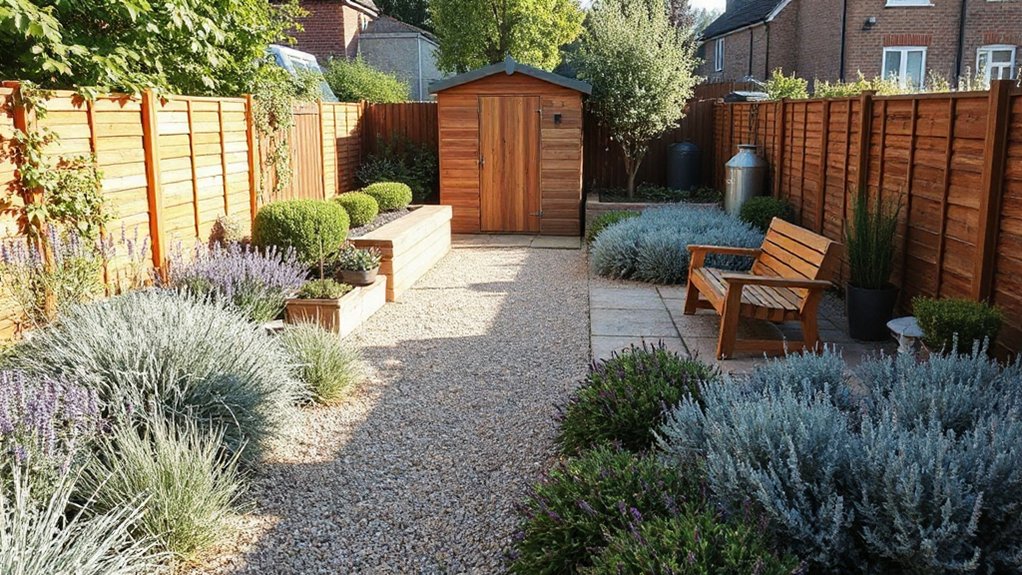
When drought is a real constraint, prioritize plants that drink little and reward you with low maintenance, so your garden stays lush with minimal effort.
In a compact UK space, choose drought resistant plants that thrive on scarce water and bright, dry soil. Group them by sun exposure and install efficient mulch to suppress weeds and conserve moisture.
Implement rainwater harvesting with a simple barrel setup to feed containers and shallow beds, reducing mains-tap dependence.
Opt for gravel paths and permeable mulches that spot-light texture without adding irrigation needs.
Select foliage with year-round interest to enhance structure, color, and scent while staying low maintenance.
Keep irrigation targeted, brief, and infrequent, and observe how your garden remains vibrant through drier spells.
Rainwater harvesting, drought resistant plants.
Budget-Friendly Makeovers: High Impact, Low Cost
If you’re aiming for a high-impact makeover without breaking the bank, start by focusing on a few strong, affordable moves that transform the space fast. You’ll gain punch with simple, visible choices that don’t demand specialist skills.
- Refresh walls and fencing with a fresh coat of paint and neat edging to sharpen lines and define zones.
- Add modular planting—compact perennials and grasses—plus a bold container display to create immediate focal points.
- Introduce low-cost, wildlife-friendly features like a mini compost area, a water source, and nectar-rich blooms to boost wildlife attraction.
Tip: keep paths clear and lighting warm to deter garden pests and extend late-day usability.
DIY Projects: Simple Builds for Instant Space Gain
Think of simple raised beds and particle mulch paths as quick upgrades you can see from the first step to the last. You’ll outline a tight plan: dimensions, materials, and placement that boosts growing area and walkable space at once.
Start with clean lines and clear edges so your new beds and paths read as intentional, usable space.
Simple Raised Beds
Ever wondered how to add instant growing space without digging? Simple raised beds give you quick, tidy structure and visible growth. Build sturdy frames from timber or recycled pallets, then line with landscape fabric to deter weeds. Fill with a rich mix: topsoil, compost, and a little grit for drainage.
You’ll create a neat, elevated bed that drains well, reduces soil compaction, and makes planting accessible from a standing position.
- Choose dimensions that fit your path and sun pattern.
- Use durable corner joints and exterior sealant for longevity.
- Add a drip irrigation line for water efficiency and steady moisture.
This approach doubles as Garden art and a Wildlife habitat, inviting pollinators with layered planting and edge refuges.
Particle Mulch Paths
Start with a clear edging: timber, brick, or metal edging holds mulch neatly, preventing spillover. Lay a weed barrier, then dump coarse mulch chips, bark, or gravelly chips in a 2–4 cm layer.
Tamping keeps a flat, walkable surface and reduces gaps that invite weeds. Periodically refresh the top layer to maintain color and compactness, especially after rain.
Not only do you gain a practical route, you strengthen the garden aesthetic, as mulch tones harmonize with planting palettes. This approach preserves soil moisture and enhances soil life, delivering instant, visible space gains.
Seasonal Transitions: Keeping a Tiny Garden Year-Round
Seasonal shifts don’t have to mean a blank winter or a scorched summer; with a tiny garden, you can keep color, texture, and interest year-round. To maximize impact, plan in stages and pick compact, multi-season performers. Focus on visual anchors—evergreen structure, bright seasonal accents, and a tray of containers for rapid changes.
1) seasonal planting: swap annuals as needed, layer textures, and rotate color palettes to suit each season.
2) wildlife attraction: include nectar-rich blooms, a shallow water feature, and native grasses to invite birds and pollinators.
3) micro-sculptures: use reflective surfaces, shadows, and verticals to create dimension without crowding.
With tight beds, you’ll see continuous changes, not downtime.
Maintenance Mindset: Cherish, Don’t Let Clutter Return
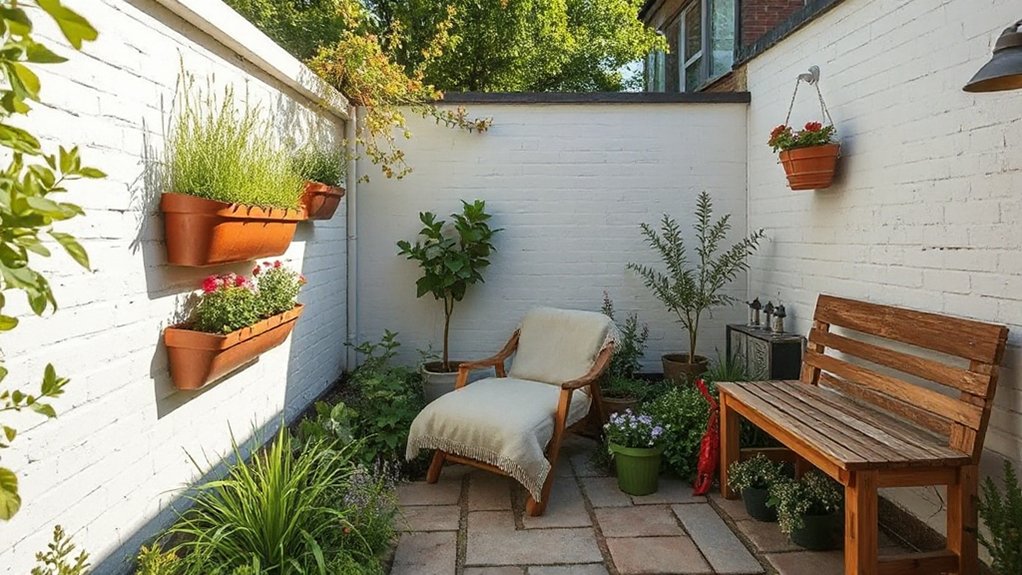
Maintenance isn’t a one-and-done task; it’s a mindset you keep lively to stop clutter from creeping back. You cultivate order by daily checks, not marathon cleanups.
Start with a simple wall-mounted tray for tools, rain gear, and seed packs; it visually anchors the space and prevents scatter.
Build short maintenance routines: a five-minute dusk tidy, a weekly plant pass, and monthly bin audits.
Choose compact, purpose-built containers so even small corners stay clear.
Label items, rotate tools, and return them after use to reinforce habit.
Document quick notes on what’s reusable, what’s worn, what needs replacing.
This proactive approach reduces decision fatigue and keeps pathways open, sunshine reaching shelves, and glare off glass.
Clutter control becomes routine, not a battle.
Before-and-After Roadmap: Visualising Your Small Garden Makeover
A visual roadmap makes your small garden makeover tangible from day one: start with a simple “before” shot, then map out a sequence of clear, achievable steps and expected outcomes. You’ll see how tiny tweaks compound into space-saving gains, with visuals guiding every decision. Use a framing plan to keep focus on Garden art and Wildlife habitats as core anchors.
- Sketch a grid: lay out zones (seating, planting, art) on your map, noting scale and sightlines.
- Schedule milestones: assign dates for cleanups, plant swaps, and installation of features.
- Review and refine: compare live results to the plan, adjust paths, textures, and color palettes.
This approach keeps design tactile, precise, and visually driven.
Frequently Asked Questions
How Can I Measure Tiny Garden Space Accurately?
To measure tiny garden space accurately, you’ll use a tape measure and laser distance tools to map every edge. Create a garden layout on paper, note irregularities, and confirm with measurement tools before marking boundaries and pathways.
What Budget Tips Maximize Small Garden Impact?
Maximize impact by budgeting smartly: prioritize space-saving garden furniture, opt for compact water features, and reuse containers. Invest in multi-functional pieces, shop off-season, and mix vertical planting to visually enlarge the area while staying practical.
Which Plants Thrive in Shade and Wind?
Shade-tolerant plants and wind-resistant greenery thrive here. You’ll master microclimates with bold, compact foliage, dramatic texture, and resilient roots, handling gusts like a pro while keeping color punch. Your shaded, windy spot becomes a lush victory.
How to Protect Privacy Without Walls?
You protect privacy by adding privacy screens and garden fencing. Choose tall, slim options and staggered plants for visual depth. Position screens where seating ends, use wind-friendly materials, and visually anchor with climbing vines for a natural, cohesive look.
What Safety Checks for DIY Garden Builds?
You should run safety checks like planning permissions, sturdy foundations, and tool maintenance; 60% of DIY projects fail due to overlooked hazards. Inspect garden furniture for stability and splinters, and make certain pest control measures don’t harm people or pets.
Conclusion
You’ve mapped a garden that works as hard as you do. With vertical greens, clever benches, and tucked-away storage, you’ll travel a path that feels bigger every day. Picture planters, light hues, and reflective surfaces brightening every corner—even in winter. It’s a compact oasis that breathes, zones well, and invites you to linger. Think of it as a well-kept seed, growing into space you can actually use—your own light-draped retreat, a garden that learns to fit you. A beacon, really.