

Looking At Different Concrete Finish Types
With concrete, you might think the mix does all the heavy lifting, but your real game changer is the finish, because that’s what controls how your slab looks, how slippery it feels underfoot, how long it lasts and even how much cleaning it needs. In this guide you’ll walk through the main concrete finish types – smooth, textured, exposed, decorative and high-performance – so you can confidently match the right types of concrete finishes to your driveway, patio, warehouse floor or pool area when you’re choosing a concrete finish for any project.
So, What’s the Deal with Concrete Finishes?
Picture two driveways poured from the exact same truck, but one looks like a polished gallery floor while the other grips your shoes after rain – that difference is all in the concrete finish types you choose. By mixing smooth concrete finishes, textured concrete finishes, exposed aggregate and decorative systems, you can dial in slip resistance, maintenance, and style so your slab actually suits how you use the space day to day.
Smooth Finishes – The Sleek Look for Inside Spaces
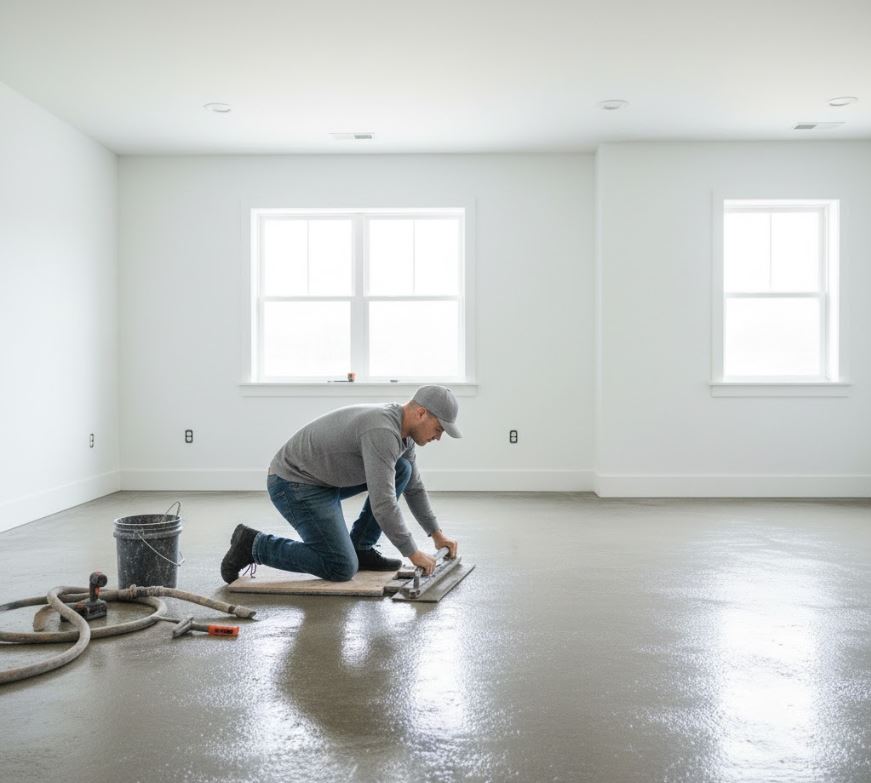
In living areas, showrooms or clean warehouses, you’ll usually lean on trowel finish concrete or a float finish concrete to get that sleek, easy-mop surface. A power trowel floor can hit a dense, almost reflective look, while a burnished concrete finish adds subtle variation so the slab doesn’t feel too clinical, giving you a modern vibe without needing tiles or vinyl everywhere.
Textured Finishes – Keeping It Safe and Slip-Resistant Outside
On driveways, paths and pool surrounds, textured concrete finishes like broom finish concrete, shot blasted slabs or even a salt finish concrete pool deck give you the grip you need when things get wet. You get a non slip concrete finish that still looks sharp, with enough texture for car tyres, bare feet and prams without turning the whole area into a rough, hard-to-clean surface.
When you dig into textured concrete, you realise you’ve got a full toolkit to play with: a simple broom finish concrete patio can be done in one pass as the surface sets, while a shot blasted concrete finish on precast pavers or an exposed aggregate driveway might be created days later using specialist equipment.
You can tune it too – a light broom or fine aggregate for paths where people go barefoot, heavier broom strokes or coarser exposed aggregate on sloped driveways where cars need extra bite. Even around pools, salt finish concrete creates tiny pits that break up film water, cutting slip risk without the harsh feel of heavy texture, so you end up balancing comfort, drainage and safety in a very deliberate way.
My Favorite Smooth Finishes and When to Use ‘Em
Some smooth concrete finishes just punch way above their weight, giving you that clean, modern look without turning every surface into an ice rink. When you dial in the right finish for the right space – steel trowel in a garage, float finish in a workshop, burnished in a living room – you get floors that actually match how you live and work. You’re not just picking a texture, you’re choosing how that slab will feel underfoot for the next 20-plus years.
Steel Trowel Finish – For That Ultra-Smooth Vibe
When you want that tight, almost glassy look, a steel trowel concrete finish is your go-to. You’ll see it in garages, warehouses and retail floors because it’s dense, hard wearing and easy to mop, even with forklifts or trolleys running over it all day. Just keep it to interiors or covered areas, since rain plus an ultra-smooth surface is a slip risk you really don’t need on driveways or patios.
Float Finish – The Perfect Middle Ground
For most everyday slabs, a float finish concrete surface hits the sweet spot between slick and grippy. You get a subtle texture from a wood or magnesium float, so it’s friendlier under work boots and wet shoes than a full steel trowel finish. It’s ideal when you want a practical workshop floor, internal slab under tiles, or a utility area that still needs decent slip resistance without looking too rough.
With float finish, you’re basically tuning the surface with one simple tool choice. Use a wood float if you want slightly more tooth for, say, a home workshop or storage area, or go magnesium if you need smoother under tile adhesive or vinyl. Contractors I work with regularly specify float finish for large house slabs because it hides minor imperfections better than a burnished surface, cures more forgivingly across big pours, and still gives you enough profile for toppings, adhesives and coatings to bite into properly.
Textured Finishes That Actually Work Wonders
People often think textured concrete finishes are just rough, ugly safety fixes, but you can actually use them to dial in serious style and performance at the same time. You get higher slip resistance exactly where you need it, plus you can steer how water drains, how light hits the slab, even how hot it feels under bare feet. When you mix in options like broom finish concrete, salt finish concrete pool decks, or shot blasted paths, you suddenly have way more control over how your outdoor spaces behave day to day.
Broom Finish – It’s Not Just for Cleaning Up!
A lot of folks assume broom finish concrete is the “cheap driveway option”, yet it’s still the workhorse for driveways, paths and patios because it quietly solves problems. You get a reliable non slip concrete finish just by dragging a broom over the slab while it’s still plastic, and that simple step massively cuts slip risk when surfaces are wet. By running the broom perpendicular to slopes, you improve traction on ramps and steep driveways, and with different broom textures you can go from fairly smooth to seriously grippy.
Salt Finish – Making a Splash Around Pools
Most people think salt finish concrete is purely decorative, but it’s really a clever way to get subtle texture plus great performance around water. You broadcast rock salt onto fresh concrete, let it embed, then wash it out to leave tiny pits that boost grip without shredding bare feet. This is why you see salt finish concrete pool decks used in resorts and high end homes alike, especially in warm climates where wet surfaces and sunscreen drips are daily realities.
Because you’re creating only shallow indentations, a salt finish pool deck still feels comfortable enough for kids to run on, but those little craters help break surface tension so water doesn’t form slick films. You’ll usually see this paired with light integral colour to reduce heat build up, so the slab stays cooler under your feet compared with darker stamped concrete or tiles.
On a practical level, installers typically apply 1 to 1.5 kg of salt per square metre, then pressure wash it off after initial set, which means you get a repeatable, consistent texture across big pool surrounds or patios. And if you seal it with a breathable, non film forming sealer every few years, you keep stains from chlorine, leaves and sunscreen from soaking deep into the concrete.
Exposed Aggregate – Why It’s All the Rage Today
More than 60% of new decorative driveways in some suburbs are exposed aggregate because you get texture, color and grip in one hit. You can pair charcoal cement with light quartz, or warm off-white with river pebbles, so your driveway or path actually matches your façade instead of fighting it. And unlike a plain broom finish, this type of concrete finish still looks interesting when it’s a bit dusty or wet, which is exactly what you want on a busy driveway or front entry.
The Process – Getting Those Stones to Shine
On a typical exposed aggregate driveway, your concreter places a mix loaded with decorative stone, sprays a surface retarder, then washes the top 1-3 mm off the next day to reveal the aggregate. You can also have them broadcast extra pebbles on top (surface-seeded) if you want more control over color or stone density. Finally, they acid wash and seal the slab so the stones pop and you lock in that textured, non slip concrete finish for years.
Looks and Benefits – Seriously, You’ll Love It!
Because you’ve got 10-20 mm stones doing the heavy lifting visually, exposed aggregate gives you a high-end, almost architectural look without needing pavers. You get serious slip resistance, a finish that hides dirt and tyre marks way better than plain grey, and with a decent penetrating sealer you’ll usually only recoat every 3-5 years on a driveway. It works just as well on paths, pool edges and public spaces, so you can keep a consistent theme across your whole site.
What really makes this exposed aggregate concrete finish so handy is how forgiving it is in the real world. You can choose rounded river pebbles around a pool so you’re not shredding bare feet, or go for crushed granite on a steep exposed aggregate driveway where you need extra bite under tyres in the wet. Oil spots and leaf stains don’t jump out at you like they do on smooth concrete, and even when the sealer slowly wears, the underlying texture still performs. If you’re trying to balance safety, style and long-term maintenance on outdoor areas, it’s usually in the top two options when you’re choosing a concrete finish.
Let’s Talk Decorative Finishes – What’s the Buzz?
Decorative concrete finishes often cost 20-40% less than natural stone or pavers, yet you still get patterns, colour, and serious curb appeal. You can push your driveway to look like slate, your patio like limestone, and your interior slab like boutique polished flooring. With the right combo of stamping, staining, and sealing, you dial in slip resistance, UV stability, and maintenance intervals so your slab actually works as hard as it looks.
Stamped and Stenciled – Who Doesn’t Love a Good Pattern?
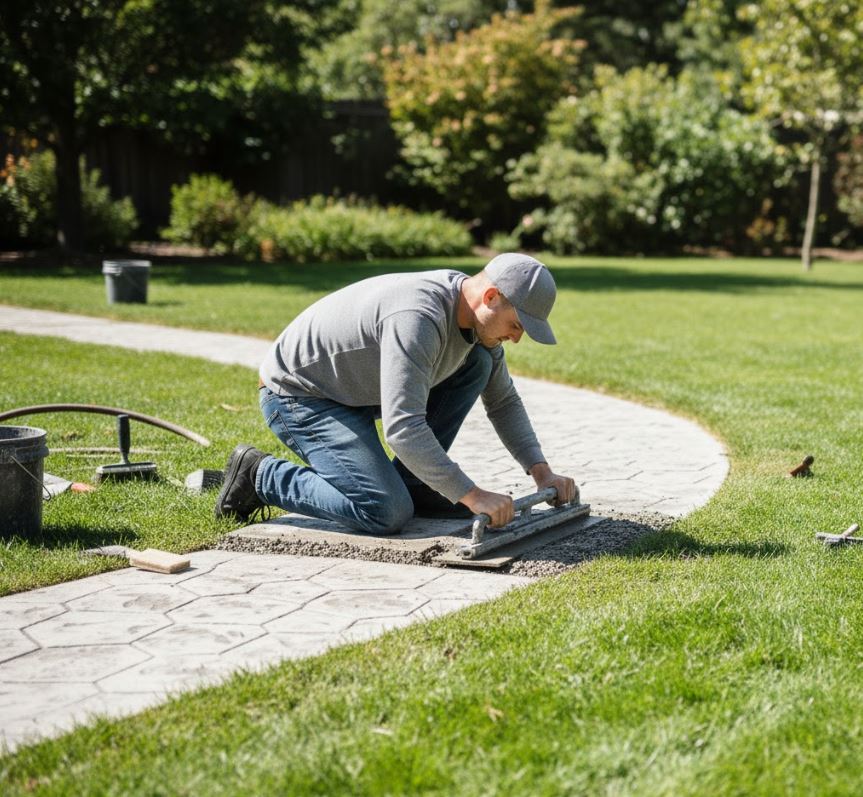
Patterned concrete lets you cheat the system a bit – you get the look of brick, cobblestone, or ashlar slate without 1,000 individual units to crack or sink. With stamping, your installer presses rubber mats into fresh concrete; with stenciled finishes, they lay paper or plastic stencils and spray a contrasting colour hardener. You control joint layout, color variation, and texture so your path or driveway reads “custom” at a glance.
Color and Stain Options – Wow, The Choices!
Colouring concrete isn’t just picking “grey or charcoal” anymore, you can choose integral pigments, dry-shake hardeners, acid stains, or water-based stains and dyes. Interior floors often use translucent stains to mimic stone, while driveways lean on integral colour for through-body consistency and better scratch disguise. With a decent sealer schedule, many decorative systems hold colour for 10+ years in normal residential use.
When you start digging into colour and stain systems, you realise how much control you actually have over the final look. Integral colour runs through the whole slab, so if you chip it, the colour stays fairly consistent – that’s why a lot of commercial projects and council paths use it for long-term wear. Surface treatments like dry-shake colour hardeners add both pigment and extra abrasion resistance, which is handy on garages or restaurant floors where tyres and chairs constantly grind the surface.
Choosing the Best Concrete Finish for Your Project – Need Help?
Most people think you just pick the finish that looks nicest in photos, but you know by now it’s way more about how you’ll actually use the space. You’re juggling slip resistance, cleaning time, budget, and how forgiving the finish is when it starts aging at year 5, 10, 15. If you’re stuck between, say, a broom finish driveway and exposed aggregate, or can’t decide if polished concrete beats epoxy in your workshop, this is exactly where you narrow it down and get specific about your site.
Location, Location, Location!
Too many slabs fail early simply because the finish didn’t suit the environment – not the concrete mix. In a driveway that sees 20 car movements a day, a dense trowel finish will polish up and get slippery, while a simple broom finish or exposed aggregate handles traffic and rain far better. Around pools, salt finish or shot-blasted wins, but in living rooms you’ll favour polished, honed, or burnished concrete that’s easy to mop and nicer under bare feet.
Style vs. Function – What’s More Important?
It’s tempting to chase that magazine-ready polished floor everywhere, but your feet, tyres, and mop are going to judge the finish far more than your Instagram feed. If you prioritise safety and grip, you’ll lean towards broom, exposed aggregate, or shot-blasted finishes, especially outdoors. If you care more about sleek style and light reflection, you’ll gravitate to burnished, honed, polished, or epoxy systems – just accept you’ll trade some texture for that cleaner, sharper look.
Style vs function isn’t really a simple either/or, it’s more like a sliding scale you’re constantly nudging. In a retail store, you might pick a polished concrete floor finish with a satin sheen, then add anti-slip treatments in high traffic entries so you’re not sacrificing safety for that clean, reflective look. For a driveway, you could mix form and function by using exposed aggregate on slopes, and a coloured broom finish where you park so you get both grip and curb appeal.
Even in warehouses, you’ll see a power trowel floor with clear sealer in aisles for forklifts, but a slightly rougher float finish in loading bays for extra traction when it’s wet or dusty. The trick is to decide where you’re willing to compromise: tiny surface imperfections and more texture in exchange for long-term safety, or slightly higher maintenance and resealing in exchange for a showpiece floor you actually enjoy looking at every day.
To Wrap Up About Concrete Finish Types
Drawing together all these concrete finish types, you might still feel like you’re supposed to pick the fanciest option for every slab, but you’re not – you’re picking what fits your space and how you actually live. When you match finish to function (broom for driveways, exposed around pools, polished inside, coatings where you need heavy-duty performance), your concrete quietly does its job for years. So use what you’ve learned here to narrow your options, quiz your contractor properly, and lock in the finish that makes your project look sharp and behave itself long term.