
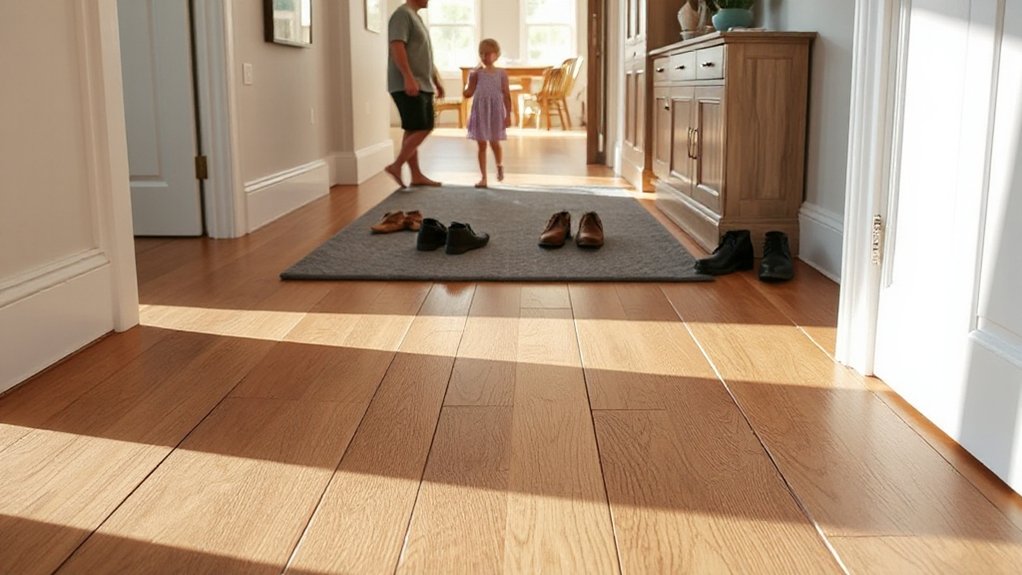

When you’re choosing flooring for a busy family home, focus on durability, maintenance, and real-world performance. Look for scratch and stain resistance, easy cleaning, and long wear from tiles, engineered wood with high durability ratings, and cushioned vinyl or tile options that handle spills and traffic. Consider layout and subfloor prep to prevent future issues. Ready to compare specific materials, costs, and installation realities that fit your daily life and future plans?
How to Choose Durable Flooring for a Busy Family Home

Choosing durable flooring starts with evaluating your family’s real-world needs. You’ll map higher-traffic zones, spills, and pets, then prioritize surfaces that tolerate wear without showy scratches. Look for hard-wearing materials with low maintenance, such as matte finishes that don’t glare.
Color coordination matters: pick neutral bases plus accent tones that hide scuffs and coordinate with existing decor. Consider texture alongside color to disguise dirt and footprints.
For Budget planning, set a realistic ceiling for materials and installation, then reserve for underlayment, progression, and warranties. Compare performance ratings, warranty terms, and return policies from multiple brands.
Document expected life cycles and stain resistance for kitchens, entryways, and halls. Finally, align your choice with easy cleaning routines you can sustain long-term.
Hard-Surface Options That Hold Up to High-Traffic Families
You’ll want hard-surface options that survive busy feet, pets, and drop-offs without showing wear quickly. Look for materials with high scratch resistance, strong impact durability, and proven lifespans.
Then weigh maintenance needs like cleaning frequency and sealing intervals. We’ll compare durability across traffic, maintenance needs, and overall longevity to help you choose confidently.
Durability Across Traffic
Hard-surface options that stand up to busy households balance hardness with dent resistance, easy maintenance, and skid resistance. In high-traffic areas, you’ll want materials that resist gouges, soaking, and wear patterns while staying level with subfloor tolerances.
Concrete-look and porcelain options excel for long-term durability under foot traffic, yet some composites offer improved scratch resistance without sacrificing cleanable surfaces. You’ll assess wear ratings (PEI/AC ratings), impact performance, and the likelihood of staining from common spills.
Consider edge and seam robustness in real-world use, since frequent foot traffic compounds vulnerability at shifts. Color options matter for hiding micro-scratches, while installation costs influence total value.
Choose warranties that reflect practical outcomes, not marketing claims, and document the expected maintenance window to preserve performance.
Maintenance and Longevity
When you’re selecting hard-surface options for a busy family home, maintenance and longevity hinge on a material’s resistance to scratches, stains, and moisture, plus how easily you can restore appearance after wear.
In practice, choose surfaces with low porosity and dense compositions, like porcelain or vitrified tile, which resist moisture intrusion and fading.
Real-world wear favors hard-wearing finishes and uniform surfaces that hide micro-scratches.
Consider periodic refinishing or sealing schedules appropriate to the material, and verify warranty coverage for impact damage and UV exposure.
For luxury aesthetics, prioritize colorfast, uniform tiles or slabs, avoiding high-gloss that shows marks.
Eco-friendly options include recycled-content or rapidly renewable materials.
Balance cost, maintenance frequency, and lifecycle impact to maximize longevity without sacrificing style.
Soft-Flooring Ideas That Are Kid-Friendly and Comfortable
Soft-flooring can soften daily living for kids while staying practical for busy homes. You’ll want materials that cushion falls, resist stains, and wear well under high traffic.
Consider carpet tiles with dense fibers and good stain resistance, which allow targeted replacements rather than whole rooms. For a safer surface, choose low-pile options over plush when kids are crawling or learning to walk; pair with a cushioned underlayment for added shock absorption.
Cork and linoleum offer soft textures plus durable performance, and they’re easier to clean than traditional carpet. Look for antimicrobial treatments and color-fast dyes to minimize hygiene concerns.
Prioritize underfoot comfort, noise reduction, and ease of maintenance, ensuring Kids safety without sacrificing practicality or style in active family zones.
Pet- and Spill-Proof Care for Busy Households
You’ll want a clear plan for pet-proof cleaning, stain-resistant flooring care, and a spill-ready maintenance schedule that fits busy days.
Start with proven techniques for quick spot cleans, selecting materials and products that resist staining and odors, and a routine that minimizes buildup.
We’ll discuss practical checklists and evidence-based expectations to keep high-traffic areas looking cleaner longer.
Pet-Proof Cleaning Techniques
Pet-proof cleaning starts with a routine that minimizes mess before it happens, then responds quickly when spills occur. You’ll adopt a daily sweep and a weekly deep-clean to prevent buildup, using a microfibre cloth for dust and fur.
Start with pet hair removal on high-traffic zones: run a rubber glove or a lint roller over upholstery and floors, then vacuum with a HEPA filter to capture fine particles.
Use a damp microfiber mop for hard surfaces to avoid streaks and reduce slip risk.
For spills, blot—don’t rub—to prevent embedding.
Odor control hinges on prompt action and ventilation: open windows when possible, neutralize with a pet-safe enzyme remover on organic stains, and wash bowls, beds, and mats weekly.
Maintain routine, document issues, adjust products to each surface.
Stain-Resistant Floor Care
Stain-resistant floors save time and headaches when spills happen, so choose surfaces and treatments that tolerate moisture, traffic, and pet mishaps. You’ll benefit from proactive stain prevention and disciplined cleaning routines that keep pores sealed and finishes intact.
- Choose finishes with built-in stain resistance and easy-touchup options to minimize disruption.
- Implement a daily cleaning routine that targets high-traffic zones with a microfiber pad and pH-balanced cleaner.
- Seal porous surfaces appropriately and reapply as recommended to sustain barrier effectiveness.
- Use mats and quick-dry towels for rapid spill containment, reducing absorption and long-term damage.
Spill-Ready Maintenance Plan
When spills happen, a quick, deliberate response keeps messes from becoming damage. You’ll implement a spill-ready routine: immediate blot, not rub, with a clean microfiber cloth; work from the edge toward the center to prevent spreading.
Keep an absorbent mat at entryways and designate a washable timer for routine wipe-downs after meals. Use a mild, pH-balanced cleaner on sealed surfaces and test on a hidden area first.
For stain prevention, apply a quick-dry barrier or reapply manufacturer-recommended sealant as needed, especially in high-traffic zones.
For accidental liquids, have a dedicated kit: microfiber towels, disposable gloves, enzyme cleaner, and a soft brush.
This plan emphasizes spill mitigation and practical maintenance, reducing wear and extending flooring life.
How to Compare Flooring Materials and Plan Installation

When comparing flooring materials and planning installation, start by aligning options with your home’s high-traffic realities: anticipated wear patterns, moisture exposure, and your budget.
- Assess wear tolerance and scratch resistance for each material, matching it to rooms with the most activity.
- Compare moisture resistance and sealing needs, especially in kitchens and baths, to curb staining and warping.
- Evaluate installation costs, including subfloor prep, underlayment, and contractor fees, against long-term durability.
- Check color options and finish consistency across samples to ensure cohesive aesthetics and minimal touch-ups.
Choose materials with proven performance data, request samples, and verify warranties.
Plan timelines, delivery, and contingency budgets to avoid delays and unexpected expenses.
Quick-Start Checklist: What to Know Before You Buy
Before you buy, set clear priorities by listing your highest-traffic zones, moisture exposure, and budget, then translate those into material targets, durability ratings, and installation implications.
Use this quick-start checklist to anchor decisions: assess subfloor condition and levelness, confirm moisture barriers for concrete or plywood, and match wear ratings to expected foot traffic.
Consider flooring aesthetics alongside practical performance—color, texture, and maintenance ease should align with lifestyle.
Measure room dimensions precisely and plan for expansion gaps, transition strips, and waste.
Compare budget considerations across materials, including installation costs, underlayment needs, and potential long-term upkeep.
Document warranty terms, return policies, and sample wear tests.
Pick options with proven stability, low maintenance, and scalable aesthetics.
Frequently Asked Questions
Which Flooring Hides Wear and Scratches Best Over Time?
You’ll want durable, scratch‑resistant options like porcelain, vinyl, or treated hardwood; these hide wear best, especially with consistent maintenance. Choose decorative patterns and color variations to disguise imperfections while maintaining practical, evidence-based, long‑term performance in high‑traffic areas.
How Long Does Flooring Typically Last in Active Households?
You start with a sturdy foundation, lasting 15–25 years for many active homes. You’ll find color options and eco friendly materials extend life; regular maintenance and wear-resistant finishes push durability, guiding how long your flooring actually stays dependable.
Are There Budget-Friendly Options With Low Maintenance?
Yes. Budget friendly alternatives exist with low maintenance flooring options. You’ll save upfront and upkeep time, choosing ceramic tile, vinyl plank, laminate, or engineered hardwood with protective finishes and proper sealing for high-traffic resilience.
Which Floors Resist Moisture From Spills and Accidents?
Water-resistant surfaces resist moisture from spills and accidents, and mold resistant flooring stays durable in damp areas. You should choose engineered hardwood alternatives or ceramic tile with proper sealing for moisture-prone zones.
Do Installation Methods Affect Long-Term Durability and Performance?
Yes, installation techniques and proper surface preparation matter. You’ll gain durability when you follow precise methods, yet overlook them and risk failures. You balance meticulous prep with exact installation to maximize performance and longevity, despite everyday wear.
Conclusion
In sum, you’ll get durable, easy-care floors that stand up to kids, pets, and busy days, without sacrificing style. Porcelain or vitrified tiles and engineered hardwood with strong finishes resist scratches, while resilient vinyl and carpet tiles soften footsteps and nav errors. If you worry about cost or install, plan in stages and choose materials with long warranties and proven stain resistance. Start with a practical, room-by-room approach and you’ll avoid regrets later.