


Did you know that homes with a cohesive budget-luxe look can feel 30% more polished with just a few strategic changes? You’ll focus on timeless silhouettes, cohesive color palettes, and layered textures, using quality basics like cotton throws, brushed brass, and solid wood furniture. It’s practical, not fancy, aiming to minimize clutter while maximizing impact with lighting, statement rugs, and curated accessories. A few smart tweaks can reveal where to start and what to prioritize next.
What Budget-Luxe Decor Looks Like
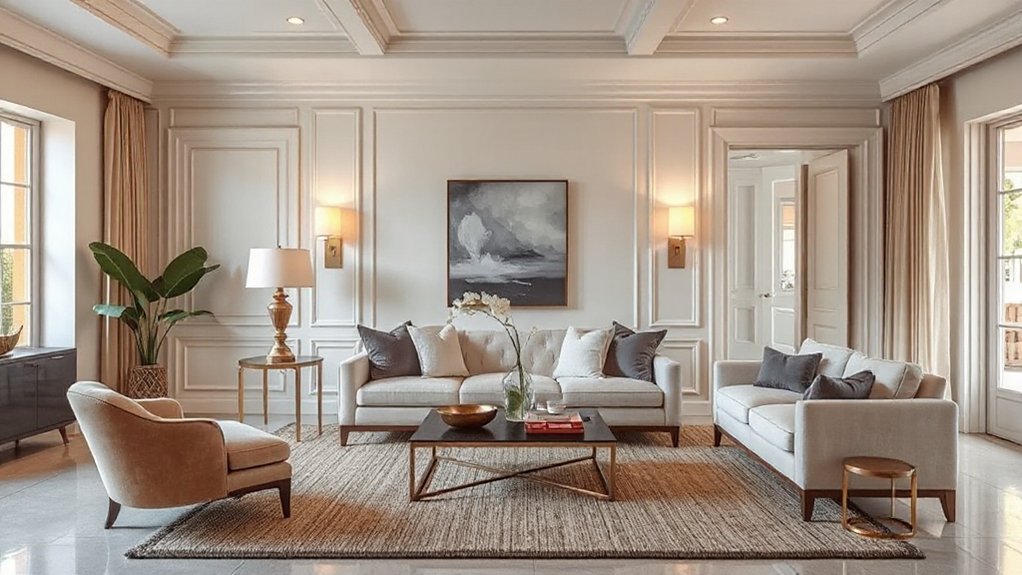
Budget-luxe decor proves you don’t need a big budget to achieve a polished, high-end feel. You start with clean lines and a restrained color palette, then layer texture for depth. Think statement lighting, refined hardware, and clean silhouettes that read expensive without shouting.
Choose luxury materials like a glass tabletop with a subtle metal edge, or a marble-esque surface that isn’t flashy. You pair it with elegant accessories that feel deliberate—metallic vases, a velvet cushion, and a framed neutral art piece.
Source quality basics that endure: cotton throws, brushed brass accents, and solid wood frames. Keep clutter minimal and scale mindful, so each piece earns its keep.
Your goal: cohesion, not showmanship, with a coordinated, effortless vibe.
How to Elevate Textures on a Budget
Texture is what makes a space feel lived-in rather than staged, and you can elevate it on a budget by layering surfaces with thoughtful contrasts. Start with a solid base: a neutral backdrop, then add a tactile centerpiece—say, a tufted sofa or a jute rug.
Use textural contrast between fabrics, leathers, and woods to create depth without clutter. Edges matter: pair a matte wall finish with glossy accessories, or mix brushed metals with satin ceramics for subtle shine.
Introduce tactile layering through textiles: throw blankets, woven cushions, and a chunky knit throw. Swap heavy drapes for lighter, linen options to reveal more texture beneath natural light.
Finally, emphasize scale: vary pillow sizes and rug textures to guide the eye and keep the room cohesive.
Build a Cohesive Color Palette on a Budget
Start by establishing your Palette Foundations: pick a base color you love and two accents that complement it, then map where each will appear in a room.
Apply Cohesive Color Rules: limit to three main tones, add texture with light/dark contrasts, and repeat hues in small doses for balance.
Use budget-friendly swaps—fabric swatches, curtains, pillows, and DIY paint—so repeatable colors anchor the space without overspending.
Palette Foundations
So, how do you build a cohesive color palette on a tight budget without sacrificing style? Begin with a neutral base—soft whites, warm beiges, or cool grays—that anchors furniture and big pieces.
Pick three accent shades that recur in textiles, art, and accents to reinforce color harmony: one bold, one muted, one tonal. Collect fabric swatches, paint chips, and tile samples rather than committing to full purchases; test under different lighting to confirm mood shifts.
Use a simple 60-30-10 rule: 60% base, 30% secondary, 10% pop. Prioritize materials that wear well and show depth—linen, cotton, matte finishes.
Pair warmth with contrast through textures, not loud colors, for lasting mood enhancement and cohesive style.
Cohesive Color Rules
Master a cohesive color palette on a budget by pairing three repeat-ready accents with a dependable base. Start with a versatile base shade for walls and larger furniture, then introduce two complementary secondary hues. Choose one accent color that recurs in textiles, accessories, and art to anchor the room.
Use a third repeat-ready accent in smaller doses to punctuate patterns without overpowering the scheme. When selecting Vintage accents, guarantee they echo the base or the accent colors to reinforce unity.
For Pattern mixing, keep scale varied and limit the number of distinct prints to two or three; repeat a common color within each pattern to avoid visual chaos. Keep finishes cohesive—matte or satin—to maintain a calm, high-end feel on a budget.
Statement Pieces That Don’t Break the Bank
You don’t need to break the bank to create a standout room: a few well-chosen statement pieces can anchor the space and express your style.
- A bold area rug or tapestry that ties colors from your palette together
- A sculptural floor lamp or metallic table lamp to add height and glow
- One oversized wall art or mirror as a focal point with contrasting framing
- A single, unique coffee table book or ceramic vase with texture
- A striking throw or cushion in a saturated hue for instant depth
These budget friendly accessories draw the eye, set the tone, and blend with your existing pieces. Choose items with durable materials and clear lines to maximize impact without clutter. Prioritize quality where it matters most.
Budget DIY Touches That Look Luxe

Transform that budget-friendly momentum from your statement pieces into DIY touches that feel luxe without the price tag. You can start with simple upgrades: swap hardware on a dated dresser, paint it in a rich matte charcoal, and seal with a satin finish.
Create focal points using vintage accents—think a handmade mirror frame or repurposed thrift-town items—and let them repeat in small doses across rooms.
Layer textures with botanical prints in cushions, wallpaper panels, or framed fabric art to add depth without shouting wallpaper costs.
For lighting, craft a soft glow by clustering affordable glass pendants or using dimmable bulbs in a classic shade.
Keep edges clean, align metals, and hide cords behind furniture to maintain a polished, cohesive look.
Affordable Furnishings for Clutter Control
When clutter threatens to overwhelm a room, affordable furnishings that double as storage can keep surfaces clean without breaking the bank. You’ll choose pieces that hide belongings while adding style, prioritizing compact, multiuse design.
Look for modular storage with doors and shallow drawers to preserve floor space, and opt for hidden compartments in coffee tables or ottomans. Integrate vintage accents and sturdy finishes to amplify perceived value without extra cost.
Pair these with durable fabrics and neutral bases to keep rooms cohesive. Your goal is tidy surfaces, easy access, and a coordinated look you can maintain.
- Storage benches with lift-top access
- Nested end tables with concealed drawers
- Low-profile ottomans with hidden storage
- Wall-mounted shelves with bins
- Vintage-tinged trunks as coffee tables
Vintage accents, statement rugs.
Lighting Tricks That Transform a Room on a Budget
Layered lighting lets you change the room’s mood without redraws or big costs, using a mix of ceiling, task, and accent lights.
Pair warm bulb aromas with soft, dimmable schemes to keep the space inviting and adaptable for different activities.
I’ll show practical setups that combine these elements to maximize impact on a budget.
Layered Lighting Techniques
Layered lighting isn’t just about brightening a space; it’s about using multiple light sources at different levels to shape mood, function, and atmosphere on a budget. You’ll blend ambient glow with task and accent light, creating depth without buying flashy fixtures.
Start with a ceiling/central light, then add floor or table lamps at varied heights for layered illumination that never feels flat.
- Use dimmers to softly modulate your main light and highlight focal areas.
- Pair an overhead fixture with a floor lamp for flexible ambient and task zones.
- Add under-shelf or toe-kick lighting to emphasize architecture.
- Place task lights at eye level for reading and work without glare.
- Choose warm, cohesive finishes to unify the look while staying budget-conscious.
Warm Bulb Aromas
Start with Scented candles in a safe, heat-vented spot; choose neutral, clean fragrances to avoid overpowering the space. Light a single candle during gatherings or evenings to soften edges without glare.
For ongoing freshness, place Essential oils in a diffuser with a low-setting fan or a ceramic warmer. Rotate scents seasonally to keep the room feeling fresh.
Position warm bulbs that cast amber tones, avoiding harsh whites. Keep cords hidden and bulbs at eye level to prevent glare.
Refresh fragrance every few days, and balance candle scent with diffuser output for a cohesive, inviting vibe.
Dimmable Light Schemes
Want to transform a room on a budget? Dimmable light schemes give you control without buying new fixtures. Start with a versatile 3-way switch or smart bulbs that dim smoothly from bright task lighting to cozy ambience.
Layer lighting: use ambient glow from ceiling or wall sconces, task light at desks, and a subtle accent light behind artwork. Avoid harsh glare by diffusing bulbs with frosted covers or lampshades.
Set scenes for different moods—read, relax, entertain—with quick button presets. Tune color temperature to match activity: cooler for focus, warmer for unwinding.
- Dimmed ceiling wash for even ambient glow
- Low-watt task lamp at desks or countertops
- Backlit art or shelves for depth
- Warm bulbs in living zones for mood lighting
- Smart controls for ease and consistency
Curating Artwork and Accessories Without Overspending

To curate artwork and accessories without overspending, start with a clear plan: determine your style, color palette, and the rooms that will get the most use. Then set a realistic budget and a few non-negotiables.
Focus on deliberate choices over quantity to maximize impact. Prioritize art placement by selecting one focal wall per room and layering pieces at varying heights for depth. Look for affordable frames in a uniform finish to unify disparate prints.
Build an accessory grouping with a few cohesive elements rather than scattered decor. Rotate pieces seasonally, so you refresh the look without buying more.
Opt for high-contrast color pops against neutral backdrops to appear curated. Shop secondhand markets and DIY framing to stretch your dollars while preserving a luxe feel.
Small Space Layouts: Big Impact on a Budget
Small spaces don’t have to feel cramped; with smart layout decisions, you can maximize function and style without blowing your budget. In this approach, you optimize flow, pick multifunctional pieces, and lean on eco-friendly materials to keep costs down and sustainability up.
Use vertical storage, pair light colors with reflective surfaces, and place mirrors to visually expand rooms. Integrate vintage accent pieces for character without overspending, keeping lines clean and cohesive.
Plan zones carefully so every square foot earns its keep, and select compact furniture that fits your true needs rather than trends. You’ll save by shopping smart, measuring twice, and avoiding bulky items that clutter sightlines.
Eco choices and thoughtful placement create a high-end feel on a budget.
- Measure, plan, and map traffic flow for each room
- Choose multifunction furniture to reduce clutter
- Use light tones and strategic mirrors to expand space
- Add vintage accent pieces for character without overspending
- Prioritize eco-friendly materials in finishes and textiles
How to Evaluate and Maintain Luxe-Looking Decor
When you’re aiming for luxe-looking decor, start with a clear benchmark: how do materials, finishes, and construction feel in person? Evaluate textures, seam lines, and weight in the items you consider. Check fabric quality by inspecting grain, nap, and any pilling indicators for luxury textiles.
Test finishes under lighting; brushed metals, lacquer, or matte surfaces should feel even and substantial, not flimsy. For maintenance, note care requirements and stain-resistance claims, and prefer pieces with replaceable components or washable covers.
Prioritize timeless silhouettes over trends, and pair premium accents with budget-friendly foundations to avoid overinvestment. Document care steps and schedules to sustain look and function.
Implement a rotation plan for sophisticated accents, and make sure lighting, hardware, and textiles harmonize to keep the space coherent.
Frequently Asked Questions
How Can I Spot Counterfeit Luxe Finishes on a Budget?
You spot counterfeit luxe finishes by inspecting weight, texture, and seams, using a loupe if needed. Compare to genuine samples, note pores or grain, and test finishes for wear. Use luxury finishes, counterfeit detection hacks, and stay skeptical.
What Small Changes Yield the Biggest Perceived Value?
You’ll notice big value from small tweaks: add luxury lighting and select statement accessories, then swap soft textures and align metals. You avoid over-spending by prioritizing focal pieces—trust quality, not size, for instant, practical elevation.
How Do I Mix High- and Low-Cost Decor Seamlessly?
You mix high- and low-cost decor by balancing a few anchor pieces—like a bold art gallery print and statement lighting—with complementary textures, scales, and finishes, ensuring cohesive spacing, subtle repeats, and intentional contrast across the room.
Which Fabrics Read as Premium at Low Cost?
You’ll notice luxury textiles read premium even when affordable; opt for tight weaves, subtle sheen, and durable finishes. For affordable upholstery, choose microfiber or performance blends, and insist on good backing, padding, and colorfast dyes for lasting, luxe perception.
What Are Quick Decluttering Tricks for a Luxe Look?
Declutter fast by grouping items into color-coordinated zones, maintaining symmetry balance. Stow extras, reveal about three focal pieces, and streamline surfaces. You’ll achieve luxe feels by simple color coordination, balanced placement, and deliberate, practical, high-impact edits.
Conclusion
You can achieve luxe looks without blowing your budget by prioritizing timeless silhouettes, cohesive color, and layered textures. Start with solid basics, then sprinkle in character with DIY touches and vintage finds. A single statement rug or brass accent can transform a room, while thoughtful lighting ties everything together. Fun fact: homes with a deliberate, curated color palette report 40% higher perceived value in photos. Stay practical: plan, execute, and refresh strategically for lasting impact.