


Yorkshire’s weather demands exterior toughness, energy efficiency, and curb appeal, so you should plan around durable cladding, solid roofing, and smart water management. Think fibre cement or metal panels, weatherproof doors and windows, and well-kept gutters to handle wind and rain. Pair these with efficient insulation and tasteful color choices that suit local character. Start with a realistic budget, then weigh upgrades that blend protection with style, so your home stays comfortable and inviting as seasons shift.
Assessing Yorkshire Weather: What Your Exterior Must Do

Yorkshire’s weather can be unpredictable, so your exterior should be ready for wet winters, windy seasons, and quick temperature shifts. You evaluate exposure, drainage, and maintenance needs to protect your home year-round.
Prioritize materials with low water absorbency and high wind resistance, such as composite cladding, treated timber, or masonry brick that tolerates freeze-thaw cycles.
Confirm roof lines shed water quickly and gutters stay clear to prevent damp issues. Plan for robust sealing around doors and windows, plus damp-proof barriers where needed.
Garden landscaping should guide water away from foundations, using terraces, gravel, and permeable surfaces to manage runoff.
Interior color schemes influence exterior confidence; choose finishes that resist fading and time, matching accents to natural light.
Apply practical, durable strategies for lasting curb appeal.
Budgeting Your Exterior Upgrade: Low, Mid, and High-Budget Paths
You’ll explore options that fit different budgets, starting with Low-Budget Material Choices that maximize impact with affordable staples.
Next, Midrange Upgrade Strategies balance cost and effect, prioritizing durable finishes and smart sequencing to stretch every pound.
Finally, High-End Investment Tactics focus on premium materials and long-term value, guiding you to plan for lasting curb appeal without overspending on unneeded extras.
Low-Budget Material Choices
If you’re upgrading your home’s exterior on a tight budget, start by prioritizing cost-effective materials that still endure harsh weather and wear. Choose durable, low-cost options like fiber cement siding, composite decking, or weatherproof laminates that resist rain, wind, and UV exposure without breaking the bank.
For roofing, consider asphalt shingles with a proper underlayment and reflective coatings to reduce long-term maintenance.
Ground surfaces benefit from economical pavers or stamped concrete that simulates stone, offering longevity at lower costs. Save further by selecting neutral tones that don’t require frequent repainting.
Plan landscaping essentials to complement the material palette, and guarantee outdoor furniture remains practical against Yorkshire’s seasons.
Maintainability matters, so pick products with simple, routine upkeep to maximize value.
Midrange Upgrade Strategies
Midrange upgrades balance cost with performance, offering sturdier materials and longer-lasting features without pushing you into premium prices. In this tier, you’ll optimize value by selecting durable yet affordable options that stand up to Yorkshire weather.
Prioritize exterior elements that deliver noticeable impact without overloading your budget. For landscape lighting, choose weatherproof fixtures with efficient LEDs and simple schedules to reduce energy use while boosting curb appeal and safety.
Garden pathways should combine slip resistance with manageable maintenance; concrete pavers or compact aggregates offer longevity and easy repair. Consider a cohesive palette across materials and colors to minimize upkeep and simplify installation.
Plan in phases to align with seasonal discounts, and document costs to compare against potential resale value and overall protection for your home.
High-End Investment Tactics
Plan for bespoke fixtures—custom lighting, water features, and furniture that echo your home’s character—so the result feels cohesive and exceptionally durable. When selecting finishes, choose timeless tones and textures that won’t quickly date, reducing future refresh costs.
Factor in professional installation, site prep, and drainage improvements to protect investments against Yorkshire’s variable climate. Consider phased execution: start with structural and energy-efficient upgrades, then layer in luxury landscape elements and tailored details.
A clear, itemized budget keeps high-end goals reachable without surprise costs.
Weather-Resistant Cladding Options for Yorkshire Homes
When you choose weatherproof cladding, you’ll want options that stand up to Yorkshire’s wet winters and windy springs.
We’ll compare rain resistance, maintenance needs, and life expectancy across common materials, so you can pick something that stays tight, looks good, and lasts.
We’ll also cover routine upkeep and what to expect for long-term protection and costs.
Weatherproof Cladding Types
What weatherproof cladding options best protect Yorkshire homes, and how do you choose among them? You weigh durability, maintenance, and cost, from fibre cement to vinyl and zinc, each with pros for damp, windy climates.
Fibre cement delivers hard-wearing boards that resist rot and insects, with low upkeep and paint-friendly surfaces you can refresh via exterior painting.
Vinyl cladding offers quick installation and excellent moisture resistance, though color options vary and accents can fade over time.
Metal panels, like zinc, provide a modern look and high longevity but need careful sealing and correct substrate support.
For traditional timber looks, engineered wood offers stability with reduced warp.
Align your pick with garden landscaping and future repainting plans, ensuring compatibility with roof drainage and insulation.
Maintenance For Yorkshire Cladding
Choose appropriate cleaning methods—mild soap, soft brushes, and avoid pressure washing on delicate profiles to prevent damage. Track weather impact after heavy rains or freezing cycles, watching for cracking, swelling, or delamination.
For timber cladding, reseal or re-stain every 2–4 years to preserve moisture resistance and colour. For composite or metal options, wipe down with a damp cloth and address loose fixings promptly.
Regular cladding maintenance reduces moisture intrusion, extends life, and sustains curb appeal between more significant renovations.
Roofing and Soffits: Durability, Insulation, and Visual Integration
Roofing and soffits are your first line of defense against the elements, so choose durable materials that hold up in Yorkshire’s wet climate and install proper ventilation to prevent moisture buildup. You’ll want a coherent look that blends with your exterior while delivering solid performance.
Prioritize roof tiles or slates with proven weather resistance and consider underlayment that resists dampness. Confirm soffit ventilation to exhaust humidity and reduce condensation, and incorporate gable vents where appropriate for cross-flow.
Keep insulation in mind to minimize heat loss around edges. Match colors and textures to your cladding for visual integration.
- Durable roofing material selection and compatibility
- Proper underlayment and moisture barriers
- Effective soffit ventilation design
- Gable vents placement for airflow
- Seamless aesthetic coordination with cladding
Energy-Efficient Front Doors and Windows for Yorkshire Homes
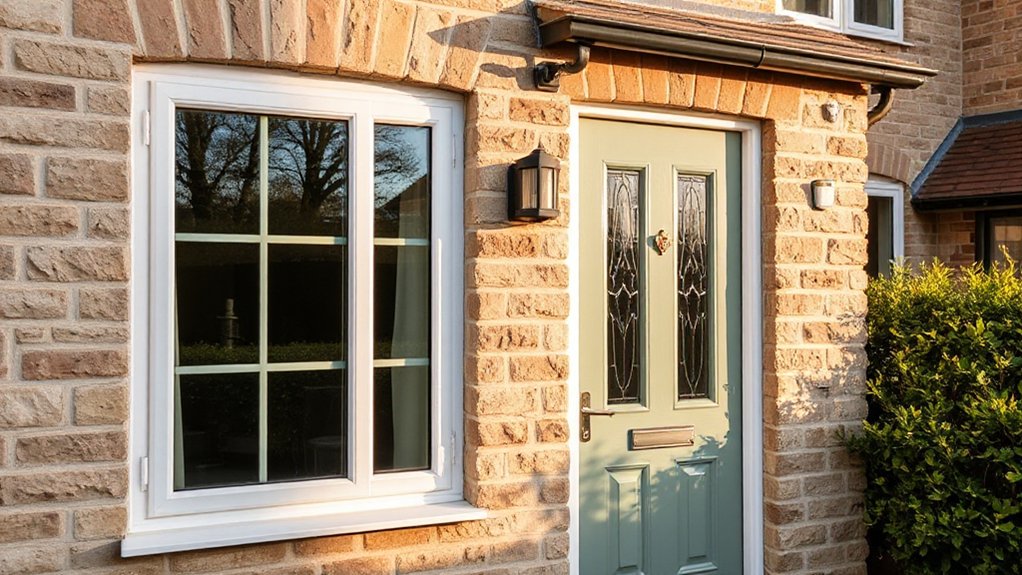
Are your doors and windows helping or hindering your home’s energy performance in Yorkshire’s damp climate? You’re aiming for tight seals, low U-values, and minimal drafts.
Start with frames: uPVC or timber with weatherstripping in good condition, plus reinforced glazing to reduce heat loss. Consider double or triple glazing with low-emissivity coatings and inert gas fills, and guarantee proper spacer bars to prevent condensation.
Install external door thresholds and door bottoms that shed water while sealing gaps. For convenience and efficiency, add smart sensors that alert you to drafts.
Pair upgrades with well-sealed, breathable insulation practices.
Include landscape lighting and garden pathways to boost curb appeal without compromising efficiency, guaranteeing lighting is low-energy and timed, and doors remain accessible yet secure.
Lighting, Driveways, and Curb Appeal: Small Details With Big Impact
Lighting, driveways, and curb appeal may seem cosmetic, but they’re practical levers for energy use, safety, and first impressions in Yorkshire homes. When you control outdoor lighting, surface materials, and landscaping thoughtfully, you reduce glare, improve navigation at night, and boost property value with minimal ongoing effort.
- Optimize landscape lighting with warm, low-glare LEDs and solar backups for dusk-to-dawn coverage.
- Select driveway materials that balance durability, heat, and drainage for Yorkshire winters.
- Use path lighting to guide guests and improve safety on steps and ramps.
- Install contrast borders to define zones and enhance curb appeal.
- Maintain clean, simple lines to complement architecture and resist weathering.
Color and Style That Fit Yorkshire Character and Value
Prioritize color harmony by pairing earthy tones with muted accents—think warm terracotta, stone gray, and deep blue-green trims—that reflect local landscapes.
Maintain stylistic consistency across facade elements, doors, windows, and roofing to avoid visual clutter. Opt for modest detailing that suits rural townscapes and modern updates alike, ensuring proportionate massing and rooflines.
Test paint and render in daylight, considering aging patterns and sun exposure.
Finally, align hardware, gutters, and fencing to the same palette, reinforcing coherence and value over time.
Frequently Asked Questions
How Do Climate Shifts in Yorkshire Affect Exterior Paint Longevity?
Climate shifts in Yorkshire shorten paint longevity due to more frequent damp and freeze-thaw cycles. You’ll improve durability by choosing breathable, flexible paints, applying under ideal temps, and incorporating regular maintenance. Paint weathering and climate resilience hinge on proactive care.
Which Maintenance Schedule Extends Cladding Warranties Longest?
A maintenance schedule that maximizes warranty extension typically includes annual visual inspections, moisture checks, and prompt repairs. You’ll protect cladding material integrity, document findings, and follow manufacturer guidelines to keep the warranty extension valid and your system durable.
What Are Cost-Effective Ways to Boost Curb Appeal Year-Round?
Ripple with purpose, you choose budget-friendly curb-appeal: tidy garden landscaping and smart driveway improvements. You’ll boost first impressions year-round, add plant color, improve drainage, and create defined motifs that guide visitors without breaking the bank or daily use.
How Do Local Regulations Impact Exterior Upgrade Approvals?
Planning permits, and heritage restrictions shape what you can changes you can make; you’ll need approvals, schedule reviews, and comply with setback, materials, and style guidelines before starting exterior upgrades. It helps to consult local planning authorities early.
Which Eco-Friendly Materials Balance Durability and Heritage Value?
Sustainable timber balances durability and heritage, while recycled bricks offer proven longevity. About 70% of homeowners report higher curb appeal when both are used thoughtfully; you’ll gain resilience, authentic character, and lower embodied carbon with careful sourcing.
Conclusion
You’ve got the tools to protect and elevate your Yorkshire home. By choosing weather-resistant materials, smart insulation, and efficient doors and windows, you’ll cut future maintenance, save on energy, and boost curb appeal. Pair durable roofing with thoughtful lighting and planting for lasting value. Think of your upgrades as a shield and a beacon: a yard-wide metaphorical lighthouse guiding you through wetter winters while inviting admiration year after year. Stay proactive, practical, and purposeful.