

A window swap can dramatically cut energy bills, but the price tag varies by size, material, and installation complexity. You’ll pay roughly $300 to $1,000 per window, with vinyl quarrying the lowest ends and fiberglass or wood pushing higher for custom or larger openings. Local labor rates and project scope matter as much as the frames themselves, so you’ll want to weigh essential features like weather sealing and efficiency against pre-fab options to keep costs in check—and there’s more to factor before you decide.
How to Decide Window Replacement on a Budget
When you’re deciding whether to replace windows on a budget, start by distinguishing essential needs from nice-to-haves. You’ll assess frame material, glazing, and installation constraints, then map these to energy efficiency goals and aesthetic appeal.
Prioritize basics: you need reliable weather sealing, sound attenuation, and operability. Choose a standard U-factor target and SHGC range that fit your climate, avoiding premium coatings unless they reduce long-term costs.
Opt for mid-range vinyl or fiberglass frames that deliver durability at a reasonable price, and select double- or triple-pane configurations only if energy savings justify the upfront difference.
Consider willful compromises, like pre-fab inserts or standard sizes, to minimize labor. Document performance metrics, then compare quotes for testable energy savings and visual impact.
Key Cost Drivers for Townhouse Windows
Material and frame choices set the baseline price, with vinyl offering lower cost and fiberglass or wood adding long-term value and upkeep.
Window size variations drive both material use and installation complexity, so larger or oddly shaped units can spike a project’s labor and trim costs.
Expect labor and install costs to scale with accessibility, local labor rates, and any required flashing or moistureproofing work.
Material And Frames
What you choose for window material and frames drives both upfront costs and long-term performance. In this section, you’ll compare materials like vinyl, aluminum, wood, and composites, focusing on durability, maintenance, and energy efficiency.
Frames influence insulation: tighter joints, fewer thermal gaps, and compatible glazing reduce heat transfer and drafts. Vinyl frames offer low maintenance and cost efficiency, while wood provides aesthetic value and potential for higher resale, at higher upkeep.
Aluminum frames excel in slim profiles but can conduct heat unless paired with inserts. Composite frames balance strength and stability with moderate upkeep.
Consider interior design goals and how window accessories—grilles, sashes, and compatible finishes—impact integration and operation. Choose a frame that supports seal integrity, ease of repair, and long-term value.
Window Size Variations
You’ll see price signals tied to exact openings, frame compatibility, and sash counts, not just glass area.
Larger or oddly shaped panes often require custom fabrication, heavier hardware, and related reinforcement, pushing material and unit costs higher.
Window security and noise reduction influence size choices too; thicker laminated glass or multi-point locking systems may be specified to meet safety and comfort targets, adding to the overall price.
Consider also sightlines and egress requirements, which can constrain usable area and force alternative sizes.
In practice, plan for scalable replacements that balance performance, security, and acoustic goals without inflating scope.
Labor And Install Costs
Expect rates to reflect crew size, equipment use, and travel between units. Material handling adds a baseline, but installation speed matters; skilled installers reduce wasted cuts and rework.
Window tinting, when chosen, adds a modest per-unit charge but can improve comfort and glare control without delaying schedule.
Energy efficiency goals influence both products and labor: higher‑R values or specialized frames may require careful sealing, insulating, and test checks.
Coordination with building codes, permits, and punch lists can extend timelines and costs.
Plan contingencies for weather, access limitations, and site constraints to maintain accuracy.
Compare Window Types: Pros, Cons, and Costs
Choosing the right window type is essential for cost, energy use, and maintenance, so it’s worth narrowing options by their core tradeoffs. You’ll compare prices, energy performance, durability, and installation complexity across common options.
Double-hung, casement, sliding, and project-in replacement styles each trade off air leakage, airflow control, and ease of operation. Insulation matters: look for U-factor and Solar Heat Gain Coefficient values, then consider durability and glass type for decorative glass or coated options.
Noise reduction and security features influence total cost, especially for townhouses with close neighbor proximity. For practical budgeting, tally initial price, labor, and potential inflation in replacement cycles.
Balance window security with ventilation needs, ensure proper flashing, and verify warranty terms to avoid surprises.
Frame Materials: Upfront Price vs. Long-Term Savings
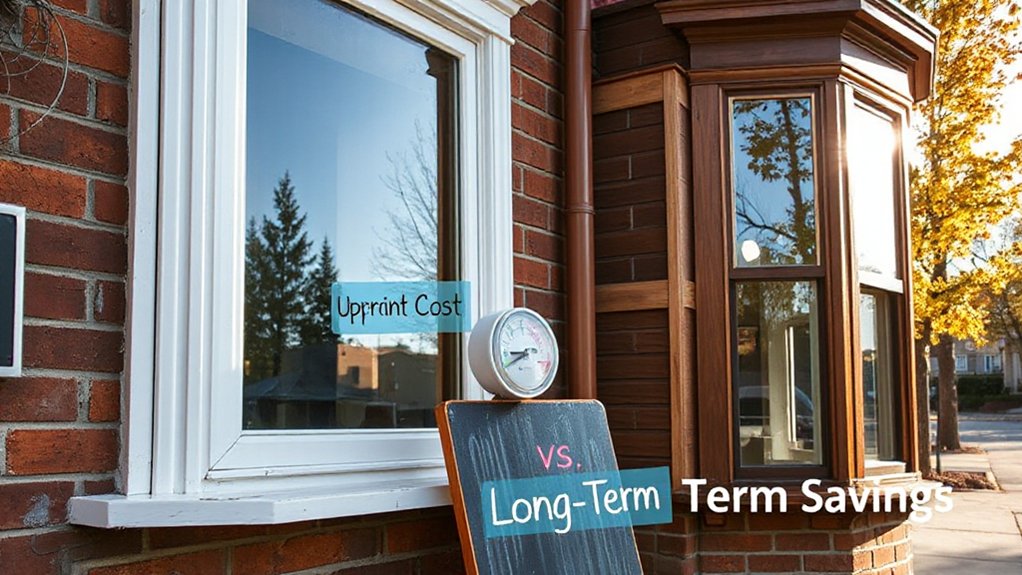
Frame materials drive a big chunk of both upfront expense and long-term value. You’ll weigh cost per unit against durability, maintenance, and energy impact.
Aluminum frames offer low initial cost and slim profiles but can transfer heat, reducing energy efficiency unless coated or thermally broken.
Vinyl frames excel in insulation and price stability, with low maintenance, but limited color and texture options may affect historical styling.
Wood frames deliver authentic appearance and high long-term value if properly finished, yet require ongoing upkeep and higher upfront costs.
Fiberglass blends durability with good energy performance and moderate maintenance, often matching midrange budgets.
Consider historical styles and energy efficiency together: choose materials that respect the townhouse’s character while minimizing heating and cooling losses over decades.
Size, Openings, and Installation Complexity Explained
Size and openings drive both cost and performance, and installation complexity stacks on top of that. You’ll assess window size, sash type, and frame depth to predict material needs and labor.
Larger openings demand longer installation times, more precise flashing, and potentially heavier handling, which raises both price and risk.
Number of openings affects weatherproofing steps, trim work, and sealant cycles, so plan for extra steps beyond a single unit.
You’ll factor notes like window tinting and decorative glass early, since these options alter glass thickness, weight, and handling.
If your townhouse has nonstandard heights or pocket configurations, expect additional masonry cuts or jamb refinishing.
Practical constraints matter most: accessibility, utility routing, and proper drainage determine install complexity and long-term performance.
Local Labor Rates and Scheduling for Best Value
Local labor rates set the steady baseline for total replacement costs, so you should compare prices for the same scope across nearby contractors rather than chasing the lowest quote.
In practice, request detailed bids that itemize labor hours, crew size, permit handling, and site access.
Schedule work to minimize downtime and weather risk, and confirm you’ll receive precise start and completion dates, along with contingency allowances.
For best value, align scheduling with product delivery windows to avoid rushed installations that compromise performance.
Focus on installers with proven energy efficiency expertise and recognition for consistent workmanship, since quality labor directly affects energy performance and long-term maintenance.
Also weigh aesthetic appeal in trim, flashing, and glazing details, which influence curb appeal and resale value.
Frequently Asked Questions
How Long Does a Townhouse Window Replacement Typically Take?
A townhouse window replacement typically takes 1–2 days, depending on scope and crew size. You’ll notice energy efficiency gains as you complete the installation process, with precise measurements, trim work, and sealant applications ensuring ideal performance and durability.
What Grants or Incentives Are Available for Replacements?
What grants or incentives exist? You can access financial assistance through government programs that subsidize energy-efficient window replacements. Have you checked local, state, or national portals for rebates, tax credits, and utility-sponsored incentives to reduce costs?
How Do Warranties Differ Between Brands and Installers?
Warranty coverage varies by Brand comparison and installer, so you’ll want to verify what’s included (glass, frames, labor), duration, and transferability. Compare performance terms, exclusions, and service response times before committing to any warranty.
Can You Replace Only Defective Panes or Entire Units?
Definitely, you can replace only defective panes or entire units. For pane repair, you’ll swap the glass while keeping the frame; for unit replacement, you replace the whole sash. This practical approach minimizes disruption and preserves insulation.
What Maintenance Reduces Future Replacement Frequency?
Regular maintenance lowers replacement frequency: inspect seals, clean tracks, and address moisture promptly. Choose stable window frames and durable glass; you’ll improve Glass durability and minimize stress on the Window frame, extending overall performance between replacements.
Conclusion
In conclusion, plan around budgets, prioritize essentials, and compare clearly. Define needs, determine sizes, and select standard options first. Compare materials for upfront costs and long-term savings. Factor in labor rates, installation complexity, and local market conditions. Choose energy-efficient, well-sealed windows, and pre-fab options when possible. Weigh frequent maintenance against cost, and time purchases to seasonal slowdowns. Prioritize getting quotes, verify warranties, and schedule ahead for best value, best performance, and best return.