
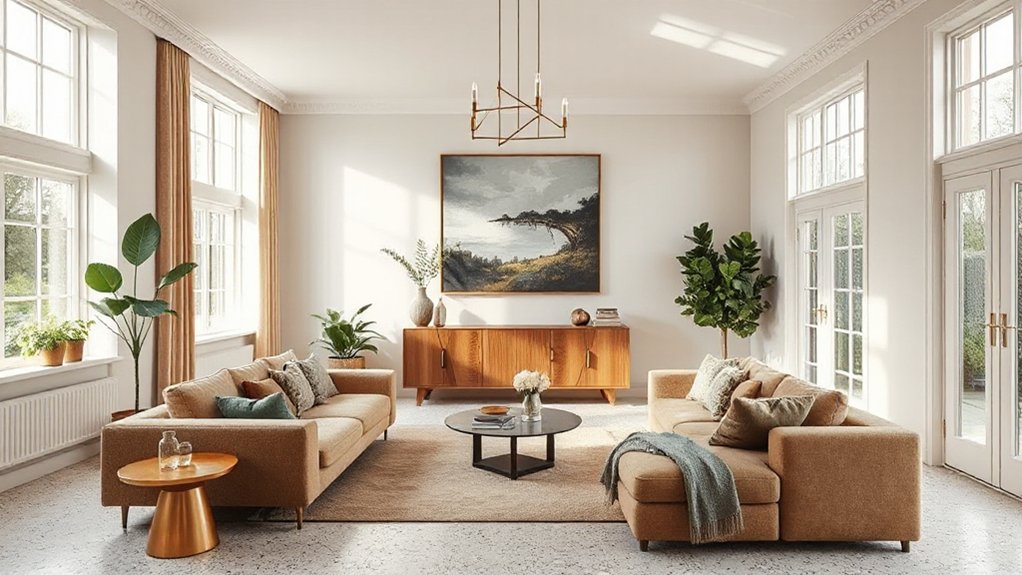

If trends are a map, 2025 points you toward calmer, smarter spaces that work as hard as they look. You’ll lean into sustainable materials, flexible layouts, and warm, earthy palettes that suit Britain’s light and climate, with texture from linen, wool, and velvet. Expect smart lighting and multifunction furniture that stretch small rooms, plus indoor-outdoor flows designed for changing seasons. Ready to plan a practical, future-proof refresh that balance style with value? Let’s start with the essentials.
Redefining UK Home Comfort in 2025
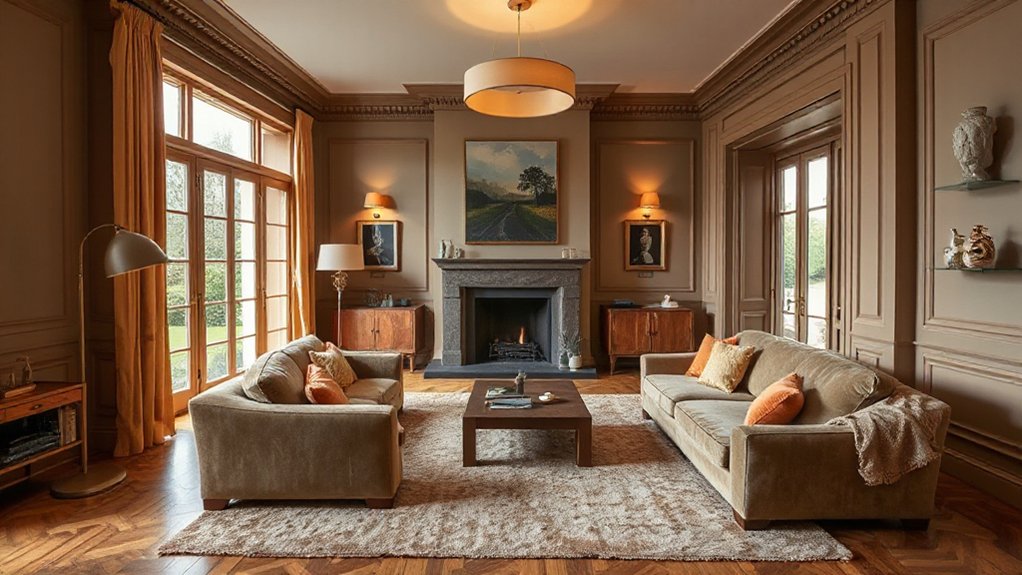
Insulation advances let you keep warmth without bulky radiators, while smart controls tailor heating, lighting, and acoustics to real-time usage. Choose textures that feel premium yet withstand weekly cleaning, and pair them with finishes that hide wear while remaining inviting.
In practice, you’ll layer lighting to sculpt ambience, so spaces feel larger without energy waste. Cozy corners become where you unwind after busy days, and ambient aromas complement the atmosphere, enriching comfort without adding complexity or cost.
Sustainable Materials That Feel Like Home
Biodegradable plastics can replace single-use alternatives in soft furnishings, packaging, and storage while maintaining durability and color retention. Reclaimed wood offers character and structural integrity without driving new timber demand, and it pairs beautifully with metal, glass, or stone accents.
Prioritize suppliers who disclose lifecycle data, source locally where possible, and provide clear maintenance guidance. Implementing these options minimizes waste, supports circular systems, and helps you achieve a cohesive, lived-in aesthetic.
Warm, Earthy Palettes for Britain’s Light
You’ll balance brighter yet earthy tones with light-filtering materials to keep spaces feeling open without sacrificing warmth.
Maximize natural light through reflective surfaces and thoughtful placement, then layer textures to add depth and comfort.
Use tactile finishes—linen, wool, and brushed wood—to translate a sunny British light into cozy, durable interiors.
Brighter Yet Earthy Tones
Use sustainable furniture with clean silhouettes to reinforce longevity and reduce waste, ensuring your scheme endures seasonal shifts. Earth toned wallpapers anchored by mineral textures add depth without muting daylight, while matte finishes resist glare and highlight subtle undertones.
For kitchens and living rooms, introduce warm wood veneers and fabric swatches that pick up incidental light from windows. In bedrooms, layer lighting with dimmable lamps to modulate warmth as days lengthen.
This approach stays pragmatic: stylish, versatile, and aligned with UK market demand for durable, eco-aware interiors.
Natural Light Maximization
Ever wondered how to coax more daylight into a British home while keeping warmth at the core? You’ll prioritize design moves that maximize natural light without washing out the warm, earthy palette you’re cultivating.
Start with layout adjustments: align seating to reflectors and mirrors, boosting perceived brightness in living spaces. Choose light-penetrating textiles and understated finishes that invite sun in rather than absorb it.
Sunlight diffusion matters—opt for frosted glass, skylights, or translucent panels where privacy isn’t sacrificed.
When selecting paint, favor warm neutrals with soft, earthy undertones to maintain depth as daylight shifts.
Window treatments should be functional, not decorative alone—layer blinds with sheer curtains for flexible control.
Finally, coordinate window seating and plants to frame light, enhancing mood and perceived room size.
Textures For Warmth
Textured warmth underpins a cosy, earthy palette that still feels bright in Britain’s lighter mood. You’ll balance wool, linen, and stone with painted timber to create inviting surfaces that reflect daylight.
Start with a neutral base and layer with warm accent tones—terracotta, ochre, moss—to enhance depth without overcrowding.
Prioritise textural contrast: combine smooth plaster walls with woven rugs and ribbed fabrics, so each touchpoint reads rich and deliberate.
Introduce tactile comfort through upholstered seating in soft bouclé or suede, paired with sturdy chairs in brass or ash.
Use natural textures for durability in high-traffic zones, and seal timber to sustain luster.
Guarantee consistent lighting—warm LEDs at 2700K—so the earthy palette remains vibrant.
Monitor material sourcing to maintain value, longevity, and a cohesive, market-ready feel.
Texture-Driven Interiors: Velvet to Rattan
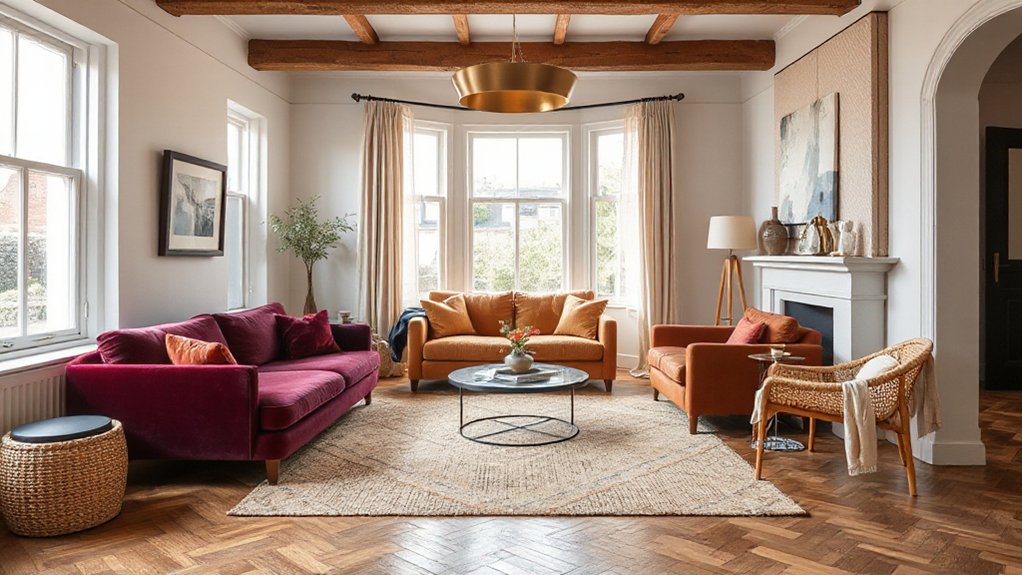
Velvet textures bring a luxe touch that’s instantly cozy, while woven rattan adds warmth and tactility to everyday spaces.
By prioritizing depth with velvet and contrast with lightweight rattan, you’ll create surfaces that feel inviting and easy to live with.
Consider how these materials translate across seating, furnishings, and accessories to meet both style and durability goals.
Velvet Textures Matter
Soft textures like velvet instantly elevate a room, adding depth and a tactile focal point that even small spaces can leverage. Velvet textures matter because they translate luxury into everyday living without overwhelming the footprint.
You should prioritize a restrained palette—rich jewel tones or muted neutrals—then layer with strategic lighting to prevent flatness. Choose pieces in plush upholstery and mix with matte finishes to avoid sheen overload.
Practicality matters: opt for high-performance velvet that’s stain-resistant and easy to clean, essential for UK homes with children or pets. Scale matters too; a single oversized sofa or two compact armchairs can anchor a seating zone while leaving room for flow.
Accessories should echo the textile’s softness—throw blankets, cushions, and a velvet ottoman—to reinforce cohesion and comfort. Luxury textiles remain the headline, elevating daily living.
Woven Rattan Accents
Pair with neutral bases—stone, oatmeal, and taupe—so the weave reads as a natural texture, not a focal clash. For boho chic vibes, mix in woven baskets and soft textiles, but hold back on busy patterns to preserve calm.
Coastal accents work beautifully when rattan borders are light and matte, avoiding reflectivity. Budget smartly by prioritising one statement piece and balancing with practical storage.
You’ll gain versatility, durability, and a timeless, breathable aesthetic.
Flexible Layouts for Small UK Spaces
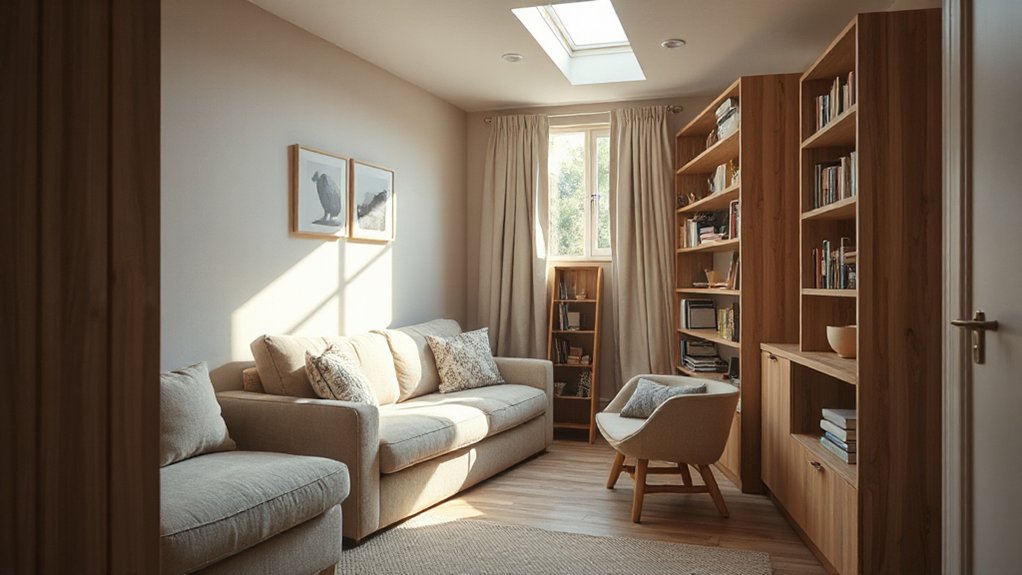
Are you making the most of every square foot in a UK home? In tight spaces, you’ll thrive with flexible layouts that maximize flow and function.
Start by choosing multi functional furniture that covers several needs—sofa beds, ottomans with hidden storage, extendable dining tables, and floating desks—so you can shift from living to working in minutes.
Prioritize adaptable room configurations, using furniture on legs to create openness and easy cleaning. Install rail systems or modular walls to reconfigure zones without heavy remodeling.
Use consistent color palettes and integrated lighting to unite areas. Think zones rather than walls: a compact lounge, a learning nook, and a dining corner can share a single footprint.
Embrace decluttered surfaces and hidden storage to preserve flexibility.
Built-In Storage That Hides in Plain Sight
- Hidden compartments with discreet access
- Seamless cabinetry that merges with walls
- Thoughtful spatial zoning for daily essentials
Lighting for Short Winter Days and Long Summers
As the days shorten in winter, you’ll layer lighting to balance task needs with cozy ambience, starting with brighter task light and softer ambient options.
In summer, you’ll swap towards cooler, glare-controlled illumination and use dimmers to keep rooms comfortable without waste.
Lighting Layering Techniques
Lighting layering is essential for UK homes, especially to counter short winter days and the sun-drenched moments of long summers. You’ll combine ambient glow, task lighting, and accent cues to shape every room’s mood and function.
Start with a warm base, then add task lamps near desks or vanities, and finish with subtle accents to highlight art or textures. Dimmer switches give you instant control, while color temperatures switch from cozy 2700K in evenings to brighter 3000–3500K for active daytime tasks.
Use ceiling rails to rotate focal points, and place mirrors to bounce light without glare.
- Choose warm base lamps and dimmers for flexibility
- Layer task lighting near work zones and vanity areas
- Add adjustable accents to sculpt walls and art cues
Seasonal Ambience Adjustments
When winter days shrink and naturally dimmer light arrives, tailor your illumination to maintain warmth and function: boost ambient glow with higher-output warm LEDs, layer in task lighting for desks and kitchens, and use accent spots to counteract shadows.
Seasonal lighting shifts as days lengthen: deploy cooler, higher-CRI fixtures for workspaces while keeping living areas mellow with warm tones, dimmers, and smart controls that adjust by time or activity.
In summer, maximize ambient daylight with reflective surfaces and sheer window treatments, then switch to softer, indirect lighting after sundown.
Pair lighting with scent layering to enhance mood—gentle essential oils or diffusers complement the room’s colour and texture.
This approach aligns with market demand for flexible, energy-efficient schemes and cohesive seasonal ambience adjustments.
Living, Kitchen, and Bedroom: Color Stories by Room
In living rooms, kitchens, and bedrooms, color stories should align with how you actually use each space. You’ll optimize mood and function by pairing color psychology with practical paint finishes that withstand daily life while preserving atmosphere.
In high-traffic areas, choose matte or satin sheens to minimize glare but still feel inviting. In kitchens, consider washable eggshell or satin for easy wipe-downs. Bedrooms benefit from deeper, serene tones with low-sheen finishes to reduce reflection.
Use accent walls to cue purpose—calm blues for relaxation, energizing greens for activity zones, and warm neutrals for cohesion.
- Create room-specific palettes that echo light and use
- Build contrast with trim to sharpen architectural features
- Test swatches under real daylight before committing
Durable Fabrics for Busy British Homes

Durable fabrics matter more in British homes than casual aesthetics alone. You’re balancing family life with style, so choose textiles that perform. Look for luxury textiles that resist everyday wear without downgrading feel or drape.
Prioritize stain resistant upholstery in sofas and chairs to cut cleaning time after spills or pets. Opt for tightly woven weaves, including twill or canvas blends, and consider performance fabrics with high Martindale rub counts for longevity.
For curtains and cushions, select fabrics with moisture-wicking or anti-stain finishes that can be spot-cleaned easily. Color can stay vibrant longer if you pick mid-tones or textured neutrals rather than pale hues.
Finally, assess care instructions; prefer machine-cleanable options where feasible to maintain a tidy, ready-to-use living space.
Accessorising With Personal British Charm
- Vintage trinkets
- British memorabilia
- Thoughtful display ideas
Kitchen Islands and Clever Surfaces for Everyday Life
You’ll love how integrated prep surfaces keep meals moving without clutter, letting you chop, roll, and whisk right where you cook.
Hidden appliance storage frees up dorsal counter space, so you get a clean, streamlined look even in compact UK kitchens.
A multi-function island handles quick breakfasts, homework, and prep, making every surface work smarter for everyday life.
Integrated Prep Surfaces
- Smart surfaces with integrated power and drainage
- Prep station layouts that minimize steps
- Hidden charging and utensil storage within reach
Hidden Appliance Storage
Appliance concealment choices include push-to-open drawers, retractable panels, and magnetic latch doors that glide shut with a soft close. Practical layouts place coffee makers, toasters, and mixers in dedicated zones, reducing countertop clutter without sacrificing speed.
Materials matter: moisture-resistant laminates, composite stone, and matte lacquers withstand daily use and wipe clean easily. Custom storage solutions tailor depth, fit, and ventilation to your appliances, enhancing performance and longevity.
Multi-Function Islands
Multi-function kitchen islands amp up everyday life by combining prep, dining, and work zones into a single, efficient hub. You’ll find that smart layouts maximise flow, reduce trips, and make cleanup easier.
Prioritize durable, wipe-clean surfaces and integrated power so appliances, charging, and task lighting stay within reach. Choose modular elements— drop-in sinks, induction zones, and hidden storage—so your island adapts to cooking, homework, or entertaining.
Think seating that doubles as a work zone, with under-counter drawers for utensils and ingredients. Keep the footprint proportional to your kitchen and consider ventilation, glare control, and seating comfort.
- Integrated power and charging
- Hidden storage and smart zoning
- Durable, versatile surfaces for daily use
multi function islands, versatile kitchen solutions
Maximise Daylight: Windows and Light Management
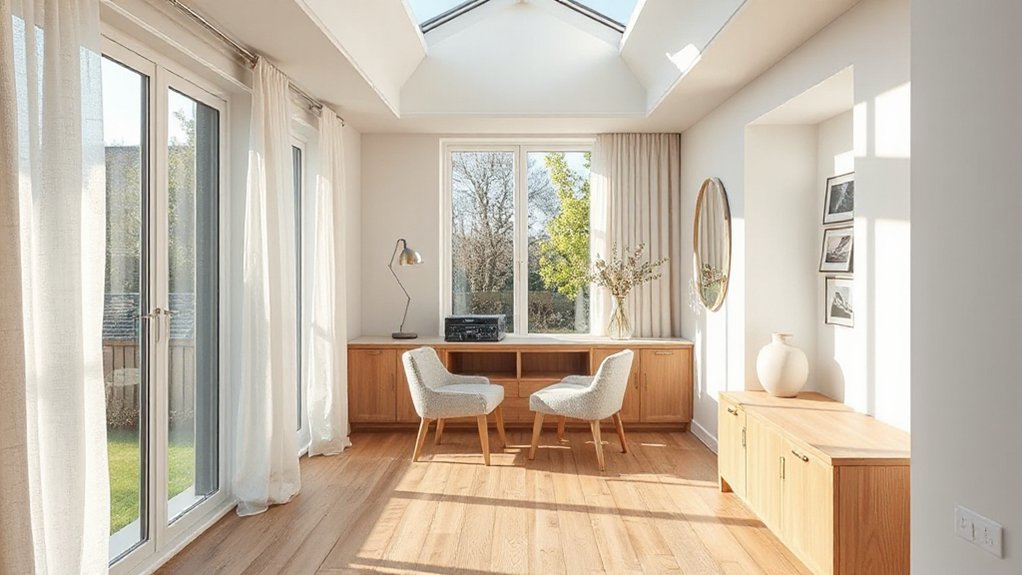
Maximising daylight starts with smart window selection and placement. You optimise room brightness by pairing window size, shape, and orientation with your wall layout, so natural light travels without glare.
Choose double or triple glazing with low-emissivity coatings to sustain warmth in winter and prevent overheating in peak sun.
For living zones, prioritize larger openings and unobstructed sightlines to boost perceived space. In kitchens and studios, use transoms or slender sidelights to maintain daylight without sacrificing privacy.
Use light shelves and interior reflectance to bounce illumination deeper into rooms.
Consider window placement that aligns with daily sun paths, and install automated blinds or dimmable skylights for light control.
Combine these choices with consistent trim, framing, and exterior shading to balance energy and aesthetics.
Outdoor-Indoor Hybrids for UK Climates
Outdoor-indoor hybrids suit UK climates by blending shelter with openness, so you gain usable outdoor spaces year-round without sacrificing indoor comfort. You’ll design progressions that feel seamless, using durable, weather resistant materials and smart shading to control heat and glare.
Prioritize garden integration with built-in seating, planters, and accessible access between rooms, so outdoor spaces read as extended living areas. Consider retractable glazing or large bi-fold doors to maximize airflow on mild days.
Build in weatherproof finishes and easy-to-clean surfaces to reduce maintenance.
- garden integration with seamless thresholds and integrated seating
- weather resistant materials for longevity and low upkeep
- flexible shading and glazing to adapt to seasons
This approach emphasizes practicality, cost-efficiency, and real-world usability in UK conditions.
Budget-Smart Refreshes That Move the Needle
If you’re extending the logic from outdoor-indoor hybrids, start with small, high-impact changes that boost daily comfort and perceived quality without breaking the bank.
Budget-smart refreshes focus on quick updates that feel intentional rather than sweeping, so you get meaningful lift with minimal disruption. Choose cost-effective investments like hardware, lighting, and textiles that transform mood and function without major remodels.
Prioritize small-scale changes that maximize perception of space, such as layered lighting, tonal palettes, and practical storage solutions. Opt for budget-friendly swaps, not full overhauls, to keep projects manageable and cash flow steady.
Track impact, iterate, and deploy additional quick updates as value shows.
Plan Your 2025 UK-First Interior Refresh: A Practical Guide
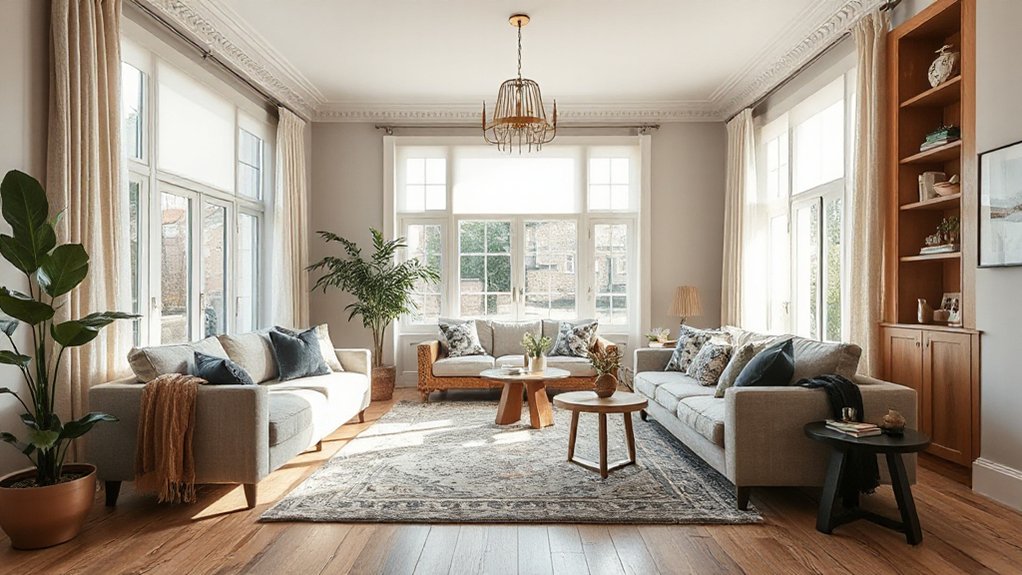
With 2025 on the horizon, you can plan a UK-first interior refresh that’s both realistic and transformative. To start, map rooms by function, prioritise daylight, and lock a flexible layout that suits work-from-home needs while keeping flow intact.
Focus on a cohesive palette and durable finishes that withstand UK weather and wear. A minimalist decor approach reduces clutter, boosts perception of space, and pairs well with smart storage to keep essentials hidden yet accessible.
Budget-smart decisions include prioritising one high-impact upgrade per room and using layered lighting to adapt moods.
- Create a dedicated home office zone with strong cable management and sound control
- Choose timeless, neutral surfaces and a restrained accent color for longevity
- Integrate hidden storage and multifunction furniture for clean, calm spaces
Frequently Asked Questions
What Are 2025 Uk-Specific Interior Design Trends by Room?
You’ll find 2025 UK interior trends by room favor eco friendly fabrics and vintage accents, with practical, market-aware details: in living rooms, layered textiles; kitchens, sustainable cabinetry; bedrooms, calming palettes; bathrooms, low-flow fixtures, tactile surfaces.
Which Materials Optimize Energy Efficiency in UK Homes?
Satire aside, you optimize energy efficiency by choosing sustainable insulation and recycled materials, prioritizing high R-values, airtight seals, and thermal bridges. You’ll install double-glazed windows, draft-proof doors, and efficient heating, reducing costs and boosting future-proof comfort.
How Can I Balance Bold Color With Resale Value?
To balance bold color with resale value, pick a confident accent and keep larger areas neutral; use color contrast sparingly and test samples. Prioritize paint durability, matte finishes for walls, and durable trims to maintain broad appeal.
What Lighting Strategies Suit Britain’s Seasonal Changes?
Embracing gentle caveats, you’ll optimize Natural illumination with layered Mood lighting for Britain’s seasons, balancing brightness and warmth. You’ll use dimmers, warm LEDs, and task lights to adapt rooms, staying practical, market-aware, and consistently comfortable throughout changing weather.
Which Smart Home Tech Enhances Comfort Without Clutter?
Smart thermostats and voice assistants enhance comfort without clutter by automating climate and routines. You’ll enjoy seamless control, energy savings, and quick feedback, using room-aware adjustments and hands-free commands to centralize comfort across your home.
Conclusion
As you plan your 2025 refresh, focus on sustainable materials, flexible layouts, and calming palettes to future-proof your UK home. Expect better daylight planning, smart lighting, and indoor-outdoor hybrids that work with Britain’s climate. An interesting stat: homes with multifunctional furniture gain up to 20% more usable space in small rooms, making every square metre count. Start with a budget-smart refresh, then layer texture with linen and wool, and finish with weather-ready outdoor zones for year-round comfort.