
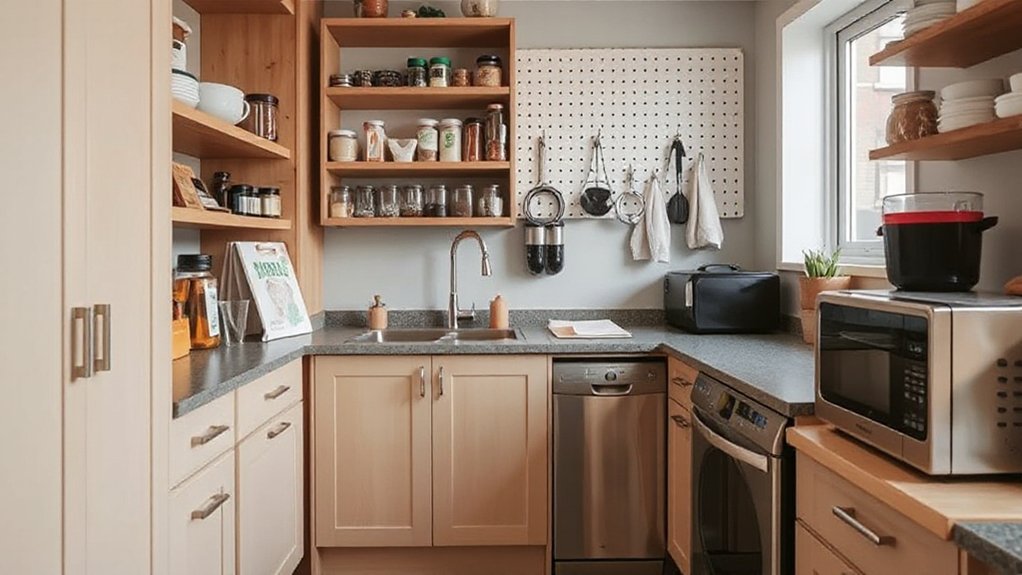

If you live in a compact kitchen, storage should be quiet, smart, and scalable. Think ceiling-high shelves, wall rails, and shallow pull-out pantries that don’t steal floor space. Use adjustable dividers and divided drawers to tame odds and ends, plus corner solutions like lazy Susans. Small appliances stay out of the way with modular organizers and magnetic strips. Ready to transform chaos into flow, you’ll want a plan that’s simple to tweak as you cook.
Vertical Kitchen Storage Solutions
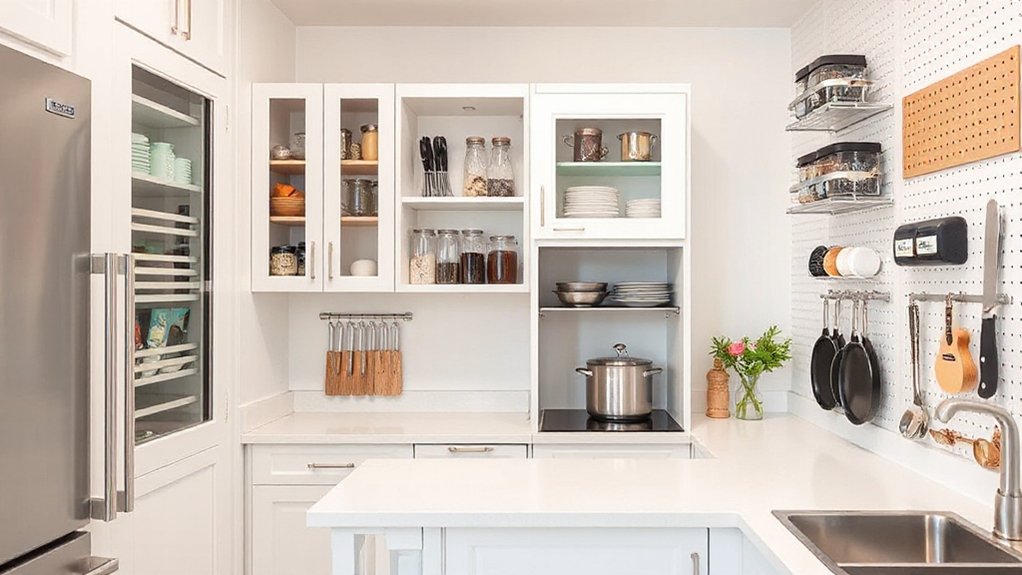
Vertical storage isn’t just a space saver—it’s the backbone of a functional compact kitchen. You’ll optimize every inch by embracing vertical gardening and smart wall-mounted racks.
Install shelving up to the ceiling to create dedicated zones for spices, jars, and utensils, freeing counter real estate for prep work. Use slim, high-contrast containers to keep items visible at a glance, reducing rummaging time.
Pair wall-mounted racks with hooks for frequent tools, so you never slow down mid-recipe. Consider adjustable racks to adapt as you add new gadgets or grow herbs indoors.
Keep plants within reach but not in the way; vertical gardening adds life without crowding. Finally, label shelves for quick restocking, ensuring consistent organization anyone can maintain.
Overhead Shelving and Rail Systems
Choose sturdy materials—powder-coated steel, solid wood, or laminated composites—that resist humidity and heat. Install rail systems along walls to hang mugs, pans, and tools, keeping countertops clear during meal prep.
Use labeled bins or open baskets for small items, so you can see what you’ve got at a glance. For safety, secure shelves to studs and use anti-tip supports.
Consider adjustable heights to accommodate seasonal changes in cookware. Prioritize symmetrical spacing and a clean, minimal appearance to maintain a modern, uncluttered feel.
Overhead storage should complement, not complicate, everyday workflows.
Slim Pull-Out Pantry Options
Prioritize narrow shelving units that expose items at a glance, reducing rummaging time. Opt for adjustable dividers and pull-out baskets to customize for cans, spices, and snacks without crowding.
Choose steel or sturdy polymer slides rated for daily use, and look for near-full extension to maximize every inch. Install shallow, tall units in alcoves or between appliances to avoid door interference.
Consider a two-column setup for baked goods and pantry staples, pairing with labeled, uniform containers to maintain order.
Slim designs deliver accessibility, efficiency, and a streamlined kitchen aesthetic.
Flexible Cabinet Dividers and Divided Drawers
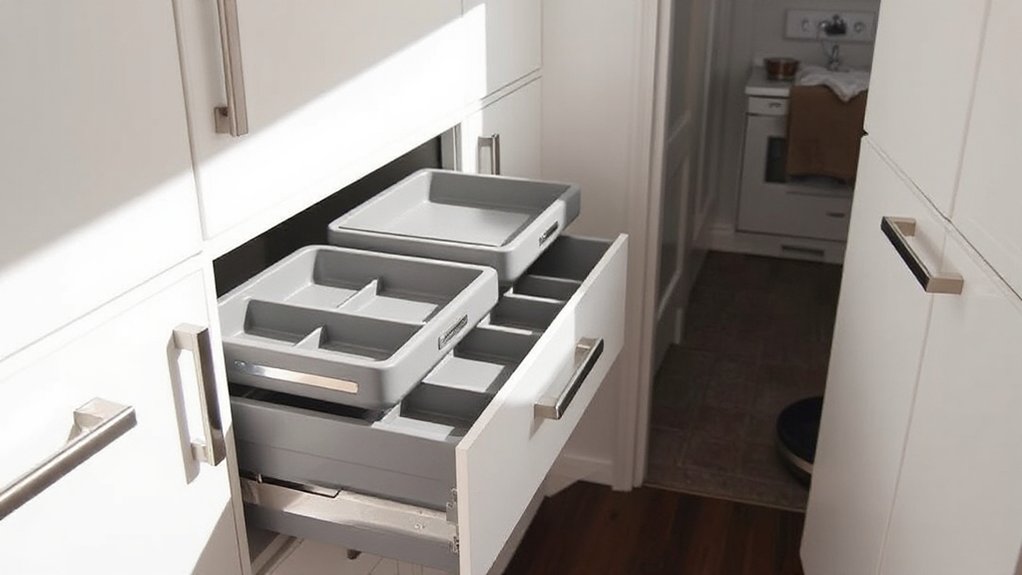
Flexible dividers adapt to varying heights, widths, and odd shapes, keeping lids, measuring cups, and spices upright and accessible. Divided drawers create defined compartments for utensils, lids, and small tools, preventing loose rummaging.
Choose modular, adjustable systems that install quickly and can be reconfigured as needs shift. Use non-slip liners to maintain order and protect contents.
Pair flexible dividers with divided drawers in routinely used zones—under sinks, near prep areas, and in tall pantry cabinets—to maximize efficiency without crowding. This approach supports a neat, fast, kitchen workflow.
Magnetic Strips and Pegboard Organization
Magnetic storage ideas and pegboard layouts let you reclaim counter space by keeping tools and spices within arm’s reach.
You can maximize pegboard space with modular hooks and labeled zones, so every utensil has a home. This approach keeps kitchen accessories organized, visible, and easy to grab during quick, on-the-go meals.
Magnetic Storage Ideas
Looking to reclaim counter space? Magnetic storage ideas let you free up surfaces without sacrificing access. Start with magnetic strips for spices, labeling each section so you can grab a “Magnetic spice” while you cook. Place strips along a wall or inside a cabinet door at eye level for quick visibility.
Pair them with a small magnetic tray to keep metal lids and tiny ingredients tidy.
Next, use a pegboard approach that keeps frequently used tools within reach. Mount a slim pegboard near the prep area and arrange a few hooks for metal utensil storage, plus a shallow shelf for measuring spoons.
Choose a layout that enables you to swap items as recipes change, staying practical, precise, and on-trend.
Pegboard Space Maximizers
Use pegboard panels in a neutral finish, then add hooks, bins, and magnetic rails for quick grabs. Arrange frequently used items at eye level for speed, and stash infrequently used tools above or below to balance weight and depth.
Incorporate decorative storage elements—colorful bins, labeled jars, and subtle wall art—to keep the area inviting rather than industrial.
Create creative displays by layering vertical space: small baskets near the sink, magnets holding lightweight tools, and a grid of hooks for utensils. This approach minimizes clutter while maintaining a functional, stylish kitchen edge.
Kitchen Accessory Organization
Pegboard and magnetic strips offer a streamlined path to tidy, near-spot lighting for everyday kitchen accessories. You’ll gain immediate access to frequently used tools, freeing counter space and reducing rummaging time.
Use pegboard for vertical zoning: utensils, small gadgets, and spice tins in labeled sections, with color-coded hooks to reinforce color coordination.
Magnetic strips keep knives, scissors, and metal measuring spoons secure and visible, boosting safety and speed during meal prep.
Plan appliance integration by mounting essential tools alongside compatible devices, so cords stay out of the way and surfaces stay clear.
Choose a cohesive color palette for hardware and containers to create a polished, intentional look.
Limit rows to sightlines you actually use, revisiting layout every season for most efficient performance.
Dual-Purpose Furniture for Tiny Kitchens
Dual-purpose furniture is your smartest move for tiny kitchens, offering hidden compact storage and convertible seating without sacrificing floor space. Think benches with lift-off lids or tables that fold into walls, keeping counters clear while delivering extra layers of organization.
Start by choosing pieces that prioritize built-in storage and multi-use surfaces to maximize every square foot.
Hidden Compact Storage
Look for dual-purpose pieces that pair seating or work surfaces with discreet storage bays, eliminating clutter while keeping essentials within reach. Focus on hidden compartments integrated into counters, appliance bays, or toe-kick spaces, so you don’t sacrifice footprint for capacity.
Secret drawers, shallow pull-outs, and flip-top panels transform slim gaps into organized nooks, ideal for spices, tools, or utensils. Choose hardware with low-profile pulls and matte finishes to preserve clean lines.
Prioritize modular components that adapt as your needs shift, preserving flow and accessibility in tight layouts.
Convertible Seating Solutions
Choose multipurpose benches with built-in shelves or drawers to tuck away utensils, napkins, or small appliances out of sight. Look for seating that doubles as a prep surface with a durable, easy-clean top and a secure, latchable lid.
Convertible seating often features adjustable heights or reversible seats to optimize traffic flow and accessibility. Prioritize modular designs that let you reconfigure for guests or daily routines without tools.
For style, favor neutral tones and hidden hardware to maintain a tidy, timeless look. Convertible seating, multipurpose benches—smart, space-efficient choices.
Hidden Storage Behind Doors and Panels
Can you reclaim wasted space by tucking storage behind doors and panels? In small kitchens, doors and panels conceal practical solutions. You’ll hide small appliances, spices, and cleaning supplies within reach without visual clutter.
Opt for shallow pull-out trays behind cabinet doors to store lids, measuring cups, or snack packs. Use magnetic strips or slim door organizers to corral knives, spices, or mail, keeping counters clear and cohesive.
Consider panel-mounted storage for uniform fronts that blend with cabinetry while adding depth. Hidden compartments behind decorative panels can hold linens or backups in a pinch.
Prioritize accessible layouts and weight limits to maintain functionality. Keep doors smooth and unimpeded by labeling, so you can locate essentials quickly.
Corner Cabinets and Practical Lazy Susans

Ever wonder how to make every inch of a corner count? Corner cabinets maximize awkward spaces with smart geometry and adjustable shelves. Install pull-out organizers or stacked trays to turn dead corners into accessible storage, reducing rummaging time.
Lazy Susans inside these cabinets keep items within reach and visible, so you don’t forget dairy shelves or baking tins. Measure door swing, cabinet depth, and interior height before buying inserts to guarantee a smooth pull or rotate action.
Choose corner cabinets with hinged doors or bi-fold options to minimize clearance issues in tight kitchens. Use labeled bins, transparent bins, and color coding for quick finds.
Prioritize durability and easy-clean materials, since corners trap dust and spills. Aim for modular, removable components that simplify reorganization as needs evolve.
Under-Cabinet and In-Cabinet Lighting for Storage
Under-cabinet and in-cabinet lighting makes your organized storage easy to use the moment you need it. You’ll illuminate task zones without glare, so you can spot labels, spices, and containers at a glance.
Choose under cabinet lighting with a clean, low-profile rail or tape that stays hidden when you open cabinets. For in-cabinet lighting, opt for motion-activated LEDs that switch on as you pull out drawers or open shelves, reducing energy waste.
Color temperature matters: 3,000–4,000K reads as crisp and natural, aiding accuracy when you’re measuring or sorting. Dimmable options let you tailor brightness for ambiance or detail work.
Confirm compatible drivers and simple, tool-free installation, so upgrades don’t disrupt your storage layout. Under cabinet lighting, In cabinet lighting.
Smart Appliance Placement and Compact Models
Smart appliance placement in a compact kitchen isn’t just about fitting gear; it’s about workflow—placing the most-used devices where you naturally reach. You optimize position by grouping tasks: prep near the fridge, cook near the range, and clean-up within arm’s reach.
Prioritize vertical space with compact appliance models that fit standard counters without crowding. Choose models designed for small footprints, compatible door swings, and accessible controls. Consider multi-function units to reduce clutter while preserving capacity.
Align outlets and ventilation so you don’t block movement or storage. Use smart planners to map traffic patterns and ensure quick access to frequently used features.
Smart appliance placement supports efficiency; it also supports a cleaner, streamlined look with cohesive, compact appliance models throughout the kitchen.
Drawer and Shelf Modifications to Free Space

Consider how you can reclaim every inch with drawer and shelf tweaks that actually transform usability: start by evaluating every pull, push, and slide for grip, clearance, and access. You’ll design spaces that move with you, not against you.
Install adjustable dividers to separate utensils and lids, and add slim pull-out trays to corral spices or cans without intruding on counter space. Use thin, high-glide rails for deep drawers so items don’t tip or get buried.
In cabinets, swap rigid shelves for modular organizers that maximize height and allow easy reconfiguration.
Emphasize counter clutter control by assigning dedicated zones, and optimize appliance placement to free everyday workflows.
These tweaks create instant order, faster access, and a cleaner, more efficient kitchen.
Budget-Friendly Upgrades With Big Impact
Look for smart storage hacks that fit your layout, like retractable pullouts and vertical organizers, to add capacity without crowding counters.
Couple these with budget-friendly cabinet makeovers—think fresh paint, new hardware, and inexpensive organizers—to transform function and vibe.
This combo sets the stage for practical, trend-aware upgrades you can implement this weekend.
Smart Storage Hacks
Gain more cabinet space with budget-friendly upgrades that deliver big returns. You’ll implement smart storage hacks that maximize every inch without a full remodel.
Start with vertical dividers for pans and lids to free shelf space, then use stackable can organizers to fit more groceries in the same depth. Consider pull-out organizers for spices, and add a slim, sliding tray inside cabinets to access hard-to-reach items.
Use adhesive rack solutions on doors for cutting boards and lids, reducing clutter on countertops. Integrate under-shelf baskets to create instant micro-areas for snacks and snacks’ packaging.
For small tools, choose magnetic strips and labeled bins to keep essentials visible. These space-saving tips promote efficiency, keeping your compact kitchen tidy and ready for daily use.
Budget-Friendly Cabinet Makeovers
A budget-friendly cabinet makeover can transform your kitchen without a full remodel. You’ll maximize storage with simple updates that feel premium.
Start by swapping dated hardware for modern, slim pulls or glass-front accents to add depth without bulk. Refresh cabinet fronts with a lightweight paint or stain in a classic color scheme—think warm whites, soft grays, or muted blues—to brighten the space and reflect light.
If full replacement isn’t needed, apply removable wallpaper or veneer for texture and character. Introduce vintage accents—drawer liners, labeled storage bins, or a small brass hinge detail—to create a cohesive, chic look.
Prioritize durable finishes and easy-to-clean surfaces, ensuring spills wipe away. End with organized interior helpers: shelf risers, pull-out trays, and clear bins for every item.
Quick 15-Minute Organization Fixes
If you’re short on time, these quick 15-minute fixes will immediately free up cabinet space, reduce clutter, and make everyday tasks simpler.
Start by pairing like items with color coordination in transparent bins, so you see everything at a glance and avoid double-stacking. Use slim, stackable organizers to fit odd gaps without overhauling shelves.
Mount lightweight hooks inside doors for frequently used tools, keeping counters clear. Invest in a compact knife block and matching utensil tray to consolidate tools that tend to wander.
Add decorative accents sparingly to cue zones—a coordinated color theme signals where things belong. Label shelves or bins with short, legible text to reinforce habits.
These small, targeted tweaks streamline access and create a calmer, more efficient workflow.
Maintenance Habits for Clutter-Free Kitchens
Good habits keep clutter from creeping back; start by carving out a 5-minute daily reset to clear surfaces, return items to their homes, and wipe down high-traffic zones.
Maintenance habits matter in compact kitchens, so you keep momentum with simple, repeatable routines. Establish Cleaning routines that fit your day: quick wipe-downs after cooking, a weekly sweep of cabinet exteriors, and a midweek audit of pantry items.
Use labeled bins and drawer dividers to reinforce clutter control, making it easy to put things away. Schedule a monthly declutter check, focusing on duplicates and seasonal gear.
Lean into vertical storage and accessible spots to minimize rummaging. This disciplined approach sustains efficiency, reduces decision fatigue, and preserves your kitchen’s streamlined, ready-to-use feel.
Frequently Asked Questions
How to Measure Kitchen Gaps Accurately for New Storage?
You measure kitchen gaps accurately by using Measuring techniques for width, height, and depth, plus a quick gap assessment with a caliper or tape. You compare tolerances, note obstacles, and document irregularities to guarantee precise, adaptable storage solutions.
What Tools Are Essential for Quick Pantry Sorting?
Pocketful of practical pantry organization, you’ll need: labels, clear bins, a magnetic ruler, a sharpie, a timer, and a compact clipboard for quick sorting. You’ll sort swiftly, simplify shelving, and streamline pantry organization with consistent, clever categorization.
Can You Height-Adjust Existing Cabinets Safely?
Yes, you can height adjust existing cabinets safely by following cabinet safety guidelines, using proper leveling shims, and securing supports. Make certain hardware remains aligned; test stability thoroughly. Keep height adjustment precise, deliberate, and aware of weight distribution and safety.
Which Materials Resist Humidity in Small Kitchens?
Lightbulb moment: you can choose moisture resistant materials that handle humid kitchens. Opt for humidity proof surfaces like vinyl, stainless, epoxy, and sealed laminates, and avoid porous wood. These resist moisture, shrinkage, and warping in tight spaces.
How Often Should Storage Systems Be Reassessed?
You should reassess storage systems every 6 to 12 months, adjusting for changes in your space and routines. Prioritize storage organization and kitchen decluttering, leveraging vertical shelving and modular units to keep counters clear and items easy to reach.
Conclusion
You can prove a simple theory: small kitchens get big gains when you work vertically and modularly. By adding overhead shelves, slim pull-out pantries, and flexible dividers, you turn wasted nooks into usable space. Stay trend-aware with magnetic strips, pegboards, and budget-friendly upgrades that compound quickly. Commit to quick, 15-minute fixes and steady maintenance—your fridge and counters will thank you. If you doubt it, try one organizer tonight; the rest will follow.