
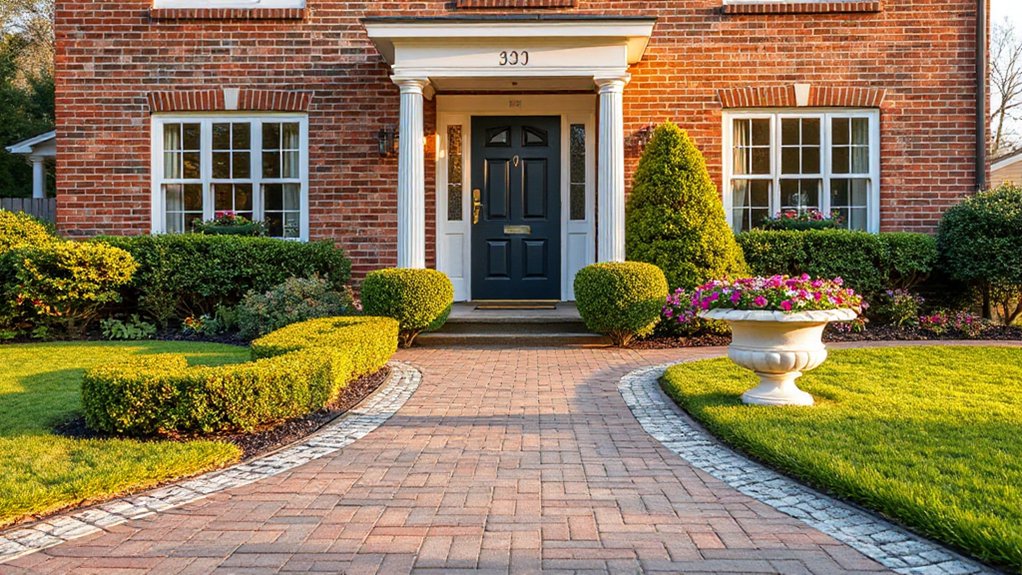

Boosting kerb appeal on your detached home starts with a clear plan: a cohesive color palette, a refreshed front door, and lighting that blends safety with charm. Add durable pathways, tidy landscaping, and practical storage that still looks polished. Don’t skip drainage and maintenance; small upgrades now can pay off later. You’ll want a practical rollout that balances quick wins with longer-term investments—but there’s a core setup you should lock in before the next step.
Why Kerb Appeal Boosts a Detached Home’s Value
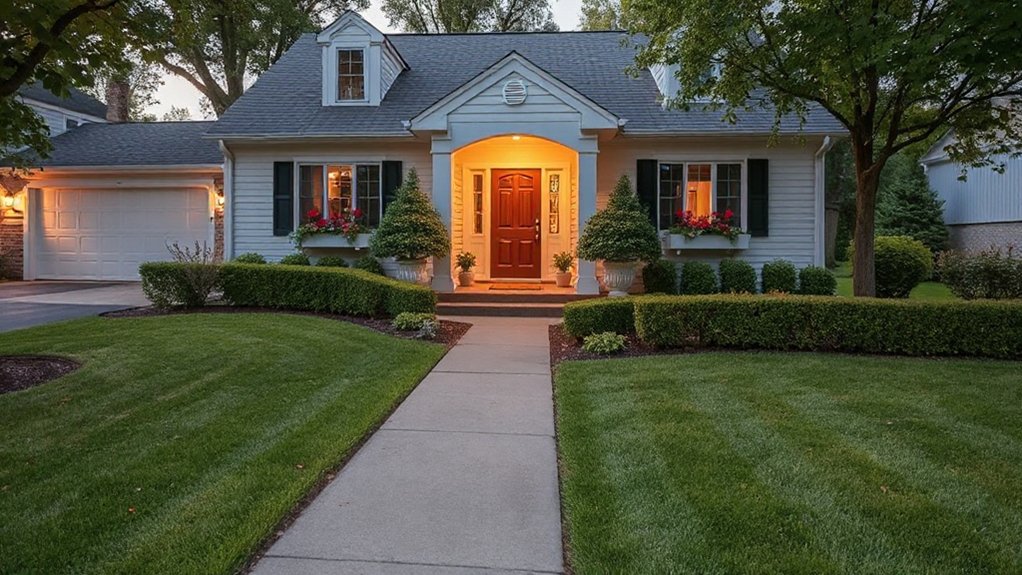
A strong kerb appeal instantly signals to buyers that a detached home is well cared for, which can lift perceived value before a single room is toured. You’ll notice buyers form first impressions based on curb details, and a tidy exterior reduces perceived risk.
By investing in clean lines, well-defined garden spaces, and durable materials, you create a sense of longevity and low maintenance. Focus on low-cost, high-impact upgrades: fresh porch lighting, a tidy driveway, and clear sightlines to the entry.
Garden pathways should be even, edged, and clutter-free to guide the eye toward the entrance. Outdoor furniture arranged in a purposeful vignette highlights usable outdoor space without overpowering the façade.
The result is a confident, value-driven presentation that supports stronger offers and faster interest.
How to Pick a Cohesive Color Palette for the Façade
Start with color harmony by choosing a dominant hue and two supporting tones that sit on the same color wheel family.
Keep palette proportions practical: about 60% primary, 30% secondary, 10% accent, so the façade reads cohesive from curb to door.
Use swatches, test patches, and a real-world check (natural light, neighboring homes) to confirm the balance before painting.
Color Harmony Principles
Color harmony starts with a clear, practical framework you can apply to any detached home facade. You’ll align base tones, accent colors, and materials so the house reads as one cohesive unit. Focus on balance, contrast, and mood to prevent clash with surrounding scenery.
- Choose a dominant color grounded in the neighborhood vibe, then add accents using complementary schemes to create pop without overpowering the facade.
- Use color psychology to match curb appeal goals (calm whites and grays for a timeless look; warmer earth tones for inviting charm).
- Test swatches on a small area at different times of day, ensuring nearby elements (roof, trim, door) harmonize rather than compete.
This approach keeps your palette practical, purposeful, and visually stable.
Palette Proportion Tips
With a cohesive palette, proportion is what keeps a detached façade looking deliberate rather than disjointed. Start by choosing a primary color for the main body, then select 1–2 complementary hues for accents like trim, doors, and shutters.
Use color blocking to delineate architectural elements—eaves, columns, and porch posts—so each feature reads clearly without shouting. Test swatches at different times of day on large sample boards, not chips, to gauge how hues interact in real light.
Consider paint texture; satin or eggshell on walls reduces glare, while a semi-gloss on doors adds distinction. Balance the saturation: reserve bold color for focal points, soften surroundings with neutrals.
Keep thresholds and pathways cohesive by echoing the main hue in railings or masonry joints.
Refresh the Front Door: Color, Hardware, and Personality
Give your front door a quick refresh by selecting a color that complements your facade and door frame. Then add hardware that matches the house’s style.
Keep the hardware cohesive—door knocker, handle, and hinges should share a metal finish and a clean, purposeful look.
Add personality with a subtle seasonal detail or a weatherproof mat that cues visitors to your home’s vibe.
Freshen Front Door Look
Revamping your front door can dramatically boost curb appeal without a full paint job. You can refresh its look with small, meaningful changes that respect the home’s character and your budget.
Start by evaluating color influence: a fresh coat on the door or a bold accent can define the entry without overwhelming the facade.
Swap out dated hardware for stainless or matte black in a modern style, and guarantee hinges and strike plates match for a seamless finish.
Add personality with seasonally appropriate accents—consider a seasonal wreath, a simple welcome mat, and tasteful outdoor lighting to highlight architectural details.
Garden sculptures and outdoor furniture placed nearby can echo the door’s color and texture, tying the front together.
- Create a cohesive color story with the door, trim, and nearby elements
- Upgrade hardware to a durable, contemporary finish
- Introduce subtle accents (lighting, mats, wreath) to frame the entry
Match Door Hardware Style
Choosing the right hardware finish ties your door’s color to the rest of the house and creates a cohesive look. Match door hardware style by pairing finishes with your exterior palette and architectural details. Start with door hardware, then consider the surrounding trim, lighting, and mailbox finish to avoid clashes.
If your home leans traditional, stick to polished brass or oil-rubbed bronze for warmth. For modern facades, brushed nickel or matte black adds clean contrast.
Assess hardware styles—knobs, handlesets, and hinges—so they read as a single family rather than a mix. Proportions matter: choose a lever or handleset scale that fits the door width, and ensure screws align with decorative elements.
Finally, test a small sample on a protected area before full installation to confirm long-term compatibility.
Lighting for Safety and Curb Charm
Lighting isn’t just about looks; it’s your first line of defense after dark. For safety and curb charm, pick a layered approach: ambient, task, and accent lighting that covers walkways, entry doors, and steps.
Use full-cutoff fixtures to minimize glare and protect neighbors from excess light. Install dusk-to-dawn sensors on high-traffic zones to save energy while guaranteeing visibility.
Position lights to highlight architectural features and garden lighting, like shrubs or trees, without creating harsh shadows. Check bulbs for consistent color temperature (2700–3000K) to feel welcoming.
Guarantee cables and fixtures are weather-rated and easy to access for maintenance. Regularly trim overhanging branches that cast shadowy areas, keeping pathways clear and inviting.
- Garden lighting
- Pathway illumination
- Sensor-enabled safety lighting
Quick Landscaping Tweaks for Instant Impact
You can start with fresh mulch edges to create clean, defined borders that immediately frame your planting beds.
Add seasonal color pops with a few hardy, low-maintenance annuals or perennials to carry visual interest through the year.
Keep your lawn mowing precise and consistent, trimming edges for a crisp backdrop that makes every plant stand out.
Fresh Mulch Edges
- Create a defined border with a sharp edge and fresh mulch
- Regularly top up mulch to maintain height and color
- Highlight focal pieces like garden sculptures with tidy edges
Seasonal Color Pops
Begin with Seasonal accents in pots near the entry: choose one bold hue and mix with two complementary tones for depth. Use color blocking on primary planters or garden beds—group plants in 2–3 blocks of the same color family to read from the street.
Keep foliage healthy to maximize impact; prune back overgrowth, feed lightly, and mulch for moisture retention, so colors stay vivid.
Opt for annuals for quick changes, replacing them as seasons shift. Choose sturdy containers, ensure drainage, and rotate accents yearly to preserve freshness without overhauling the layout.
This approach delivers strong, instant impact with minimal disruption to existing beds.
Lawn Mowing Precision
A crisp, well-mowed lawn anchors curb appeal and makes everything else read cleaner from the street. You’ll want clean edges along walkways and drive, using a sharp mower blade and a steady, even pattern to avoid patchy strips.
Cut at the right height for your grass type, typically not below 1.5 inches, and bag or mulch clippings to prevent buildup. Align mowing lines to the property frontage, then recheck high-traffic zones for compacted spots and reseed as needed.
Integrate garden sculptures and outdoor furniture as focal points off the mower path, not in the line of sight during cutting.
- Set edging after mowing for crisp boundaries
- Alternate mowing direction weekly to prevent soil compaction
- Use mulch and grooming around features to maintain polish
Create a Welcoming Entry With a Paved Path and Details
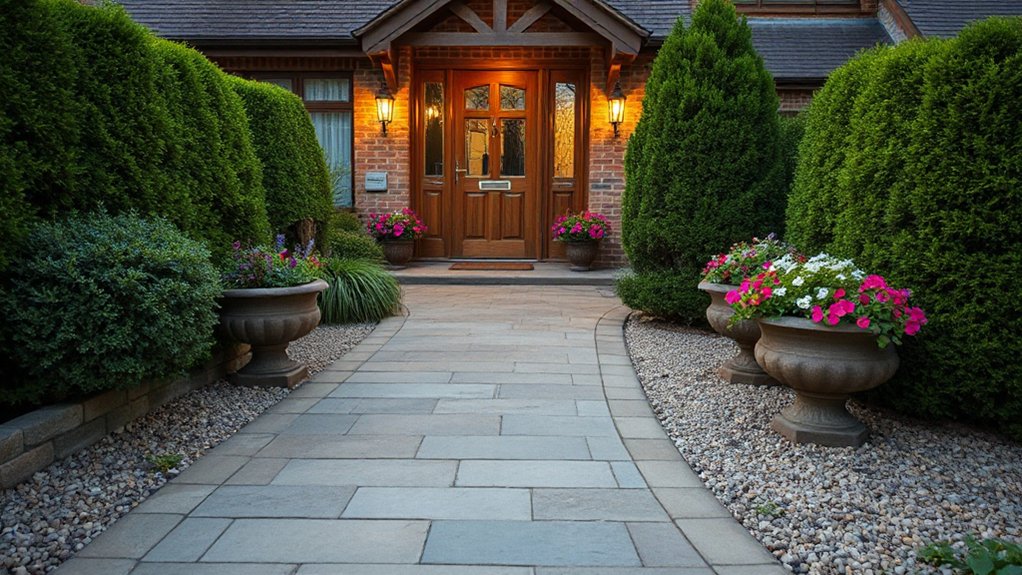
A welcoming entry starts with a clear, well-paved path that invites guests right to your door. Lay a smooth, non-slip surface that’s easy to maintain and matches your home’s style. Choose a width that accommodates two-way foot traffic and adds gentle curvature to guide visitors naturally.
Use consistent edging to keep gravel and soil in place, and incorporate practical lighting to highlight the path after dark. Integrate garden pathways and decorative borders along the sides to define the route without clutter.
Keep plants low and tidy near the path to preserve sightlines. Add a durable, weathered gate or arbor as a focal point, and assure the entry surfaces are level for accessibility.
Finish with seasonal, low-maintenance mulch or gravel for a polished, inviting approach.
Year-Round, Durable Plant Choices That Still Look Good
Year-round, durable plants give you continuous curb appeal without constant upkeep. You’ll choose varieties that tolerate drought, heat, and cold while maintaining structure, color, and texture across seasons. Pair evergreens with seasonal accents so your borders stay polished, even in frost.
Think low-maintenance shrubs, ornamental grasses, and hardy perennials that regenerate year after year. When you plan, map sun exposure and soil type to minimize replacements and maximize flowering windows. Integrate seasonal flower arrangements at focal points and entry pockets to refresh appeal without replanting.
Keep clutter at bay with simple, repeatable palettes and smart placement. Outdoor furniture selection should complement plant scale, ensuring seating near evergreen screens for year-round appeal.
- Durable configurations that endure weather and still look cohesive
- Seasonal flower arrangements baked into focal points for color
- Outdoor furniture selection aligned with plant heights and rhythms
Smart Outdoor Storage That Hides Clutter
Smart outdoor storage makes your tidy curb appeal last, even when you’re juggling tools, hoses, and seasonal decor. You keep clutter out of sight with weatherproof cabinets that fit tight gaps along the side yard and under eaves.
Choose low-maintenance materials like resin or powder-coated metal to resist fading, rust, and mold. Install wall-mounted hooks and magnetic strips inside doors for quick access to garden tools, cables, and hose reels, so you don’t spill onto driveways.
Use dual-purpose units—benches or planters with hidden compartments—to conceal garden furniture and seasonal decor when not in use. Label storage zones, rotate contents seasonally, and keep a compact shovel, trowel, and gloves close at hand for fast, tidy routine checks.
Façade Trims and Window Accents That Lift the Look

Façade trims and window accents are small details that make a big impact, so start by choosing materials and colors that complement your home’s base tones. You’ll create cohesion by picking trims that echo your siding, roof, and stonework, then test finishes in natural light.
Use faux finishes to mimic stone or metal without overdoing it, and opt for decorative corbels under sills or at entryways to add dimension. Keep contrast purposeful—slightly lighter or darker hues can highlight features without clashing.
Install window crowns or slim, angular casings to frame panes, choosing durable finishes rated for exterior exposure. Prioritize clean lines, proper caulking, and hidden fasteners for longevity.
- Material, color, and finish harmony with your base tones
- Faux finishes and decorative corbels for texture and depth
- Clean installation and durable, low-maintenance detailing
Focal Points to Draw the Eye and Increase Curb Presence
To instantly draw the eye and boost curb presence, start with a clear focal point that guides the gaze from street to entry and beyond. Position it where it’s naturally encountered—near the curb, at the walkway juncture, or along a crisp axis from the driveway.
Choose a single, high-impact element that anchors the composition: a garden sculpture, a dramatic tree, or a bold front door color as a secondary anchor.
Use symmetry or deliberate rhythm to reinforce attention, but avoid clutter. Integrate garden sculptures to create depth and scale, ensuring they’re proportionate to the house and landscape.
For driveways, select complementary driveway materials that subtly frame the path, enhancing the focal point without overpowering the façade.
Maintain clean sightlines and minimal interruptions to preserve focus.
Boundaries That Feel Premium: Fences, Gates, and Edges
Could a premium boundary transform curb appeal before you even step inside? Absolutely. Start with materials that echo your home’s character—wood that’s smooth and well-sealed, or metal with clean lines. Gates should glide quietly, Patrick-star smooth, and posts aligned for a cohesive frame.
Edges bordered by low-maintenance edging stones create crisp, intentional lines that visually elevate the lot. Integrate garden art at strategic points to draw the eye without clutter, and place outdoor furniture in a way that signals welcoming zones rather than barriers.
Prioritize symmetry on approach, and guarantee height levels offer privacy without feeling boxed in. Choose colors that harmonize with the facade and surrounding landscape for a unified, premium feel.
- Choose materials, colors, and lines that echo the home’s architecture.
- Position garden art and outdoor furniture to guide arrival.
- Guarantee gates, fences, and edges read as a cohesive, premium set.
Drainage and Maintenance Planning to Protect the Exterior

Drainage and maintenance planning isn’t optional once the yard looks tidy—it’s the backbone of exterior longevity. You assess where water pools and how run-off travels toward foundations, paths, and pavements.
Start with grading checks: guarantee soil slopes away from the house at a minimum of 2 percent; adjust as needed. Create a seasonal schedule for gutter maintenance, clearing debris before heavy rains and inspecting for leaks after storms.
Address drainage options like downspout extensions, swales, or splash blocks to prevent erosion and damp pockets. Pair this with exterior cleaning routines that deter mold and staining, targeting fascia boards, siding, and brickwork.
Document findings, deadlines, and repairs to preserve value and curb appeal long after the next project begins.
Quick Wins vs. Long-Term Investments: A Practical Rollout Timeline
On the heels of mapping drainage and maintenance, you can start delivering quick wins that brighten curb appeal now while laying the groundwork for bigger, lasting changes. To balance effort and impact, prioritize tasks you can complete within days while planning longer-term investments that pay off over seasons.
Focus on items you can see from the sidewalk and gate, then scale up. Use a simple rollout timeline: implement fast fixes this month, pilot garden lighting and outdoor furniture next quarter, and schedule major upgrades in the following season. Track costs, expected impact, and maintenance needs to avoid scope creep. This approach keeps momentum high and reduces disruption.
- Quick wins: garden lighting to highlight features, fresh mulch, refreshed house numbers
- Next phase: select durable outdoor furniture and a cohesive color palette
- Long-term: structural upgrades and continuous landscape refinement
Frequently Asked Questions
How Often Should Exterior Paint Be Refreshed for Curb Appeal?
You should refresh exterior paint every 5 to 7 years, depending on climate and wear. Choose Color choices wisely, and match Paint finish to regional conditions, ensuring durability, ease of cleaning, and curb appeal maintenance. Inspect annually for peeling and touch-ups.
What Budget Ranges Are Typical for a Facelift Project?
On average, facelift budgets range from £10,000 to £40,000, depending on scope. You’ll benefit from a cost analysis and solid renovation planning, detailing materials, labor, and contingencies to avoid overruns. Pack your plan with precise line items.
Which Materials Boost Longevity With Minimal Maintenance?
Material durability varies, but you should choose fiber cement, brick, and aluminum siding for longevity. These materials minimize maintenance requirements, resist weathering, and stay looking sharp. You’ll reduce upkeep while enjoying durable, low-fuss curb appeal improvements.
Can Landscaping Alter Perceived Home Value Quickly?
Yes, landscaping can dramatically lift perceived value quickly. You’ll improve curb appeal with garden lighting and smart driveway design, creating depth and warmth that buyers notice instantly—like a value-boosting spark, not just fluff. Focus on practical, durable details.
How to Choose a Contractor for Exterior Upgrades?
To choose a contractor for exterior upgrades, compare credentials, warranties, and past projects, then interview candidates and request detailed timelines. Focus on Interior redesign and roofing solutions, verify references, and insist on written scope, costs, and milestone payments.
Conclusion
You can boost curb appeal by planning, refining, and maintaining with purpose. Start with a cohesive color palette, then refresh the front door and add layered lighting. Tidy up landscaping, create inviting pathways, and install weather-resistant furniture. Prioritize focal points, premium boundaries, and sound drainage. Balance quick wins with long-term investments, schedule regular upkeep, and track progress. Execute strategically, measure results, and adjust as needed. Your detached home will look welcoming, cohesive, and valued.