
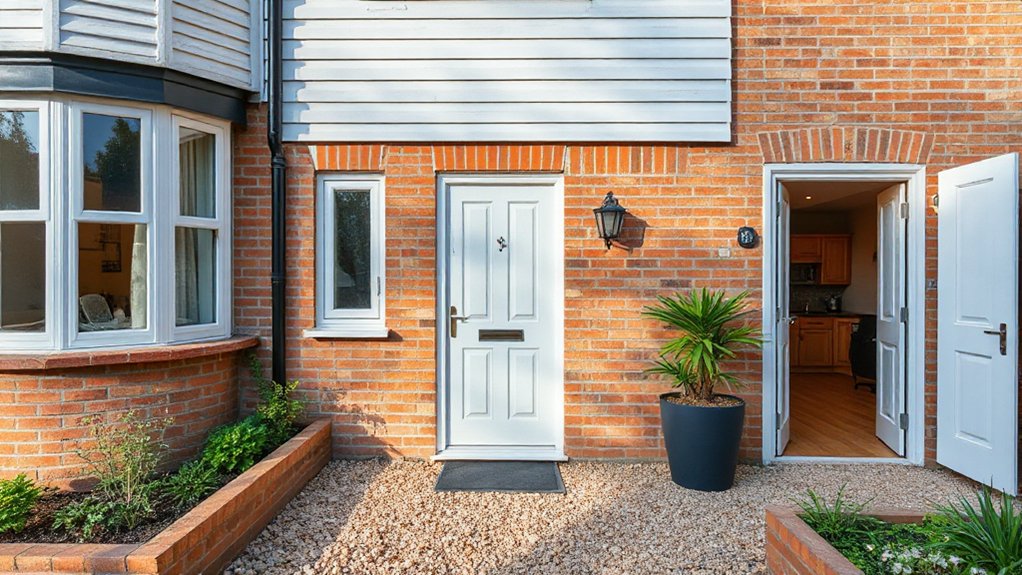

Imagine you’re peeling back a 1980s shell and finding a solid frame underneath—careful upgrades keep that core while you breathe in new efficiency. You’ll want a realistic budget, flexible layouts, period-appropriate finishes, and discreet tech that doesn’t shout, plus better insulation and windows for comfort and savings. Think through each room, balance charm with modern needs, and document every change so the house ages gracefully with you. The best approach hinges on thoughtful choices that set up future adaptability. Ready to start?
Set a Realistic Budget for an 1980s UK Home

Setting a realistic budget for an 1980s UK home starts with an honest appraisal of what you own and what needs updating. You’ll map every room’s priorities, from plumbing fixes to new lighting, then separate must-daves from nice-to-haves.
This is where Budget planning becomes your compass: you set ceilings for each area and keep contingency funds visible. Start with a rough Cost estimation for structural work, then refine as quotes come in.
Track existing fixtures to avoid over-spending on cosmetic upgrades that don’t add value. Consider only essential improvements first, then phase optional upgrades if funds allow.
Document every assumption, update as costs shift, and compare against your total budget regularly. A disciplined approach prevents scope creep and keeps your renovation on track.
Budget planning, Cost estimation.
Open Up the Layout: Space-Maximising Tweaks for an 1980s Floorplan
Open up the layout by prioritising flow over wall-chasing: start by identifying the rooms that most benefit from connection—think kitchen, dining, and living spaces—and then remove non-structural barriers or reconfigure partitions to create an airy, interconnected feel.
You’ll gain flexibility by swapping chunky doors for wide, pocket or sliding variants, and by treating circulation as part of the design—not an afterthought. Consider removing redundant partitions to reveal sightlines that unite zones, with load-bearing decisions handled by a pro.
Use partial walls or glass to preserve light while delineating functions. Embrace vintage charm through warm timber tones, soft paints, and retro aesthetics like curved edges or terrazzo accents, ensuring the space reads cohesive rather than cluttered.
Your layout should flow, function, and feel inviting.
Update Kitchens and Bathrooms With Period-Appropriate Finishes
If you want a kitchen and bath that nods to the era without feeling dated, start by pinpointing period-appropriate finishes that age gracefully with use. Choose durable materials and classic silhouettes: matte chrome or brass hardware, mid-century silhouettes, and ceramic tiles in subdued whites, creams, or sage.
For cabinets, opt for shaker or beaded-board doors painted in a soft, warm tone; complement with contrasting wood countertops where possible. In bathrooms, install retro-inspired fixtures with modern reliability—porcelain basins, pedestal sinks, and a shower tiling scheme that echoes 1980s palettes without shouting.
Wear-and-tear friendly options matter: quartz countertops, enamel bathtubs, and slip-resistant floor tiles. Prioritize period authenticity while ensuring ease of maintenance, so your spaces gain vintage charm that remains practical for daily use.
Improve Insulation and Windows for Comfort and Energy Savings
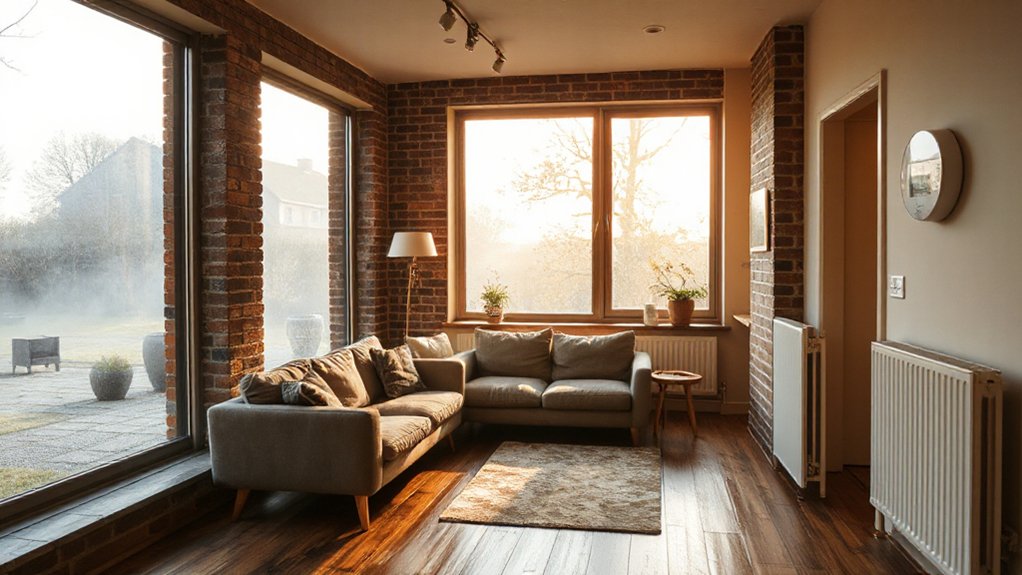
Want to feel warmer and cut energy bills this winter? Start with solid insulation and sensible windows.
Begin with an energy audit to identify gaps in loft, wall, and floor insulation, then prioritise airtight seals around doors and windows.
For thermal upgrades, choose high-performance insulation batts or sprayed foam in accessible cavities, and upgrade loft insulation to meet current guidance.
When it comes to windows, plan window replacements that balance cost and retrofit practicality, opting for double or triple glazing with low-emissivity coatings and warm edge spacers.
Guarantee frames are well-sealed and compatible with existing wall reveals.
Add draft-proofing, curtain lining, and secondary glazing where full replacement isn’t feasible.
These steps yield noticeable comfort and ongoing savings.
Light Wisely: Era-Faithful Lighting With Modern Efficiency
Era-faithful lighting meets modern efficiency by weaving classic fixtures and modern tech into a single, practical plan. You’ll blend warm-toned LEDs with period-style fittings, preserving vintage charm while trimming bills.
Choose dimmable options to shift mood from breakfast to late-night reading, without sacrificing ambiance. Use task lighting in kitchens and workspaces that mirrors 1980s layouts, but opt for energy-saving bulbs and smart switches for precise control.
- Recessed LED bulbs in plaster-sconce shapes
- Brass or nickel finishes that echo era hardware
- Timers and dimmers to reduce standby glow
- Warm white tones for authentic, inviting spaces
This approach balances vintage charm with modern efficiency, delivering brighter rooms and calmer electricity use.
Add Smart Tech That Respects the 1980s Character
Smart tech can fit the 1980s vibe without shouting retro. You’ll choose discreet hubs, hidden cables, and controls tucked into vintage decor corners so tech fades into the background. Prioritize reliability over bells and whistles; a single smart thermostat can learn routines without dramatic interfaces, keeping rooms comfortable without noise.
For kitchens, integrate retro appliances with smart compatibility—think a classic-style fridge or oven that connects to Wi‑Fi and schedules energy use to off-peak hours.
Lighting should stay warm and familiar; use wall switches that sync with smart scenes rather than bright, neon scenes.
Security cameras and sensors blend with chrome fixtures, avoiding bulky housings. Aim for consistent finishes and subtle interfaces that respect the era while boosting convenience and energy efficiency.
Choose Finishes That Honour the Era (Surfaces, Tiles, and Timber)
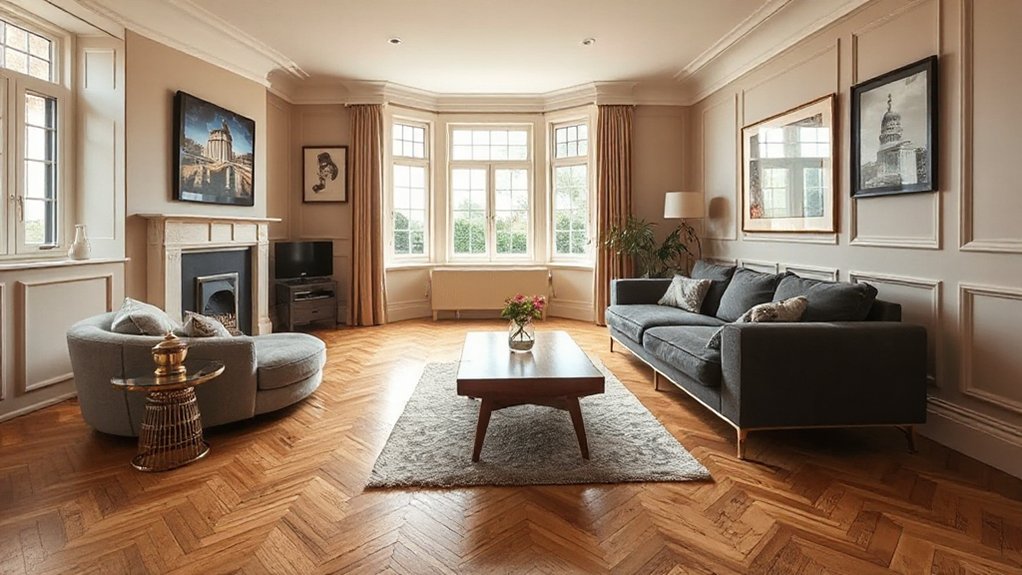
You’ll choose finishes that nod to the era without shouting it, focusing on surfaces that glow with authenticity. Think warm timber, period-appropriate tiles, and materials that age gracefully, so textures speak of the 80s yet perform like today.
Pair surfaces and tile patterns to create a coherent rhythm—timber warmth against crisp whites or muted brights with subtle grain.
Surfaces That Hum Our Past
If you’re modernising a 1980s UK home, the surfaces you choose should nod to the era while meeting today’s durability and ease-of-maintenance standards. Lean into tactile finishes that echo vintage acoustics and nostalgic textures, so spaces feel both familiar and fresh.
Prioritize practical materials with timeless charm, like ceramic tiles, vinyls with retro patterns, and low-maintenance laminates that mimic wood or stone without upkeep headaches.
- Choose tiles with soft gloss or matte glazes that hide wear while recalling terrazzo or geometric patterns
- Opt for vinyl or laminate flooring that emulates oak or slate, with easy-clean surfaces
- Pair muted palettes with accent walls or tiles that celebrate period colourways
- Use fabrics and wallpapers that nod to 80s textures without overwhelming the room
These choices keep the soul intact while modern life stays simple.
Timber And Tile Harmony
Timber and tile form a resonant duo for a 1980s UK home, balancing warmth with practicality. You’ll want timber accents that read as authentic, not nostalgic costume. Choose lightweight boards in medium oak or pine with visible grain, finished with matte varnish to preserve character and ease cleaning.
Pair them with tile patterns that echo the era’s geometry: bold squares, slim greys, or terracotta infill to create rhythm without heaviness. For joints, use wide grout in a neutral tone to emphasize lines rather than seams.
In kitchens and bathrooms, run timber along splash-prone walls but shield it with durable, water-resistant coatings. Keep progressions deliberate—tile underfoot in high-traffic areas, timber where you relax—so harmony remains practical, not precious.
Balance, clarity, and subtle contrast drive timeless appeal.
Design Flexible, Future-Proof Spaces for Long-Term Livability

Think about flexible living layouts that can morph as your needs change—from open-plan hubs to adaptable nooks that can become workspaces or guest rooms with clever partitions.
Plan adaptable future spaces with modular storage, removable walls, and wiring that anticipates changing tech and appliances.
Guarantee your tech-ready infrastructure is in place now—robust wiring, power drops, and network hubs that keep pace with smart devices and future upgrades.
Flexible Living Layouts
- Seamless room shifts that invite spontaneous use
- Hidden storage keeping clutters out of sight
- Drop-down desks or screens for flexible work zones
- Stackable, modular furniture for instant reconfiguration
Adaptable Future Spaces
Build in modular storage and sliding partitions so you can resize areas without major renovation. Plan mechanicals behind removable panels for future upgrades, not gut jobs.
Preserve Historical preservation and Architectural authenticity by selecting period-appropriate fixtures, materials, and palettes that age gracefully.
Use movable daylight controls, like adjustable shutters and skylight blinds, to balance energy use.
Document changes with clear drawings to simplify future adaptations and maintain a cohesive, enduring home character.
Tech-Ready Infrastructure
- Thoughtful cable channels that minimize disruption now and later
- Centralized data hubs powering seamless app ecosystems
- Flexible circuits and smart wiring for future upgrades
- Quiet, resilient energy storage and climate control integration
Frequently Asked Questions
How Much Budget for Essential Upgrades in a 1980S UK Home?
Expect to budget about £15,000–£40,000 for essential upgrades, depending on scope and location. Prioritize structural, electrical, and plumbing first, then fittings. Balance Historical authenticity with Architectural preservation, planning contingencies, and phased improvements to protect character.
Can an 1980S Layout Be Opened Without Structural Changes?
Yes, you can achieve an open plan transformation with careful, non-load-bearing planning. Focus on non-structural options like removing partial partitions, shifting services, and clever zoning. Use structural alterations only where necessary, consulting a pro early.
Which Period-Appropriate Finishes Suit Modern Kitchens and Baths?
You want period-appropriate finishes that feel timeless: choose vintage fixtures and subtle trim, with retro color schemes in muted teals, olive, and warm neutrals. You’ll pair stainless accents, ceramic textures, and durable surfaces for modern practicality.
What Insulation and Window Upgrades Balance Cost and Comfort?
You balance cost and comfort by upgrading insulation and windows, prioritising historic preservation while boosting energy efficiency; choose double or triple glazing with tight seals, add roof and wall insulation, and use draft-proofing to maximize comfort and savings.
How to Integrate Smart Tech Without Eroding 1980S Character?
Answering now: you’ll weave smart tech subtly, preserving Retro decor and Vintage fixtures, so you stay connected without shouting modernization. You’ll pilot discreet hubs, hidden wires, programmable lighting, and tactile controls, maintaining character while enhancing comfort and practicality. Suspensefully, you’re gold.
Conclusion
You’ve laid a solid path: honest assessment, flexible layouts, period-true finishes, and efficient systems. As you wrap it, picture the home as a well-tuned instrument—every string adjusted for balance, every beat deliberate. Keep documenting changes to protect its character, and let smart tech disappear into the background. With patience and care, your 1980s UK gem becomes a timeless, livable space—quietly resilient, like a well-kept vintage car that’s always road-ready.