
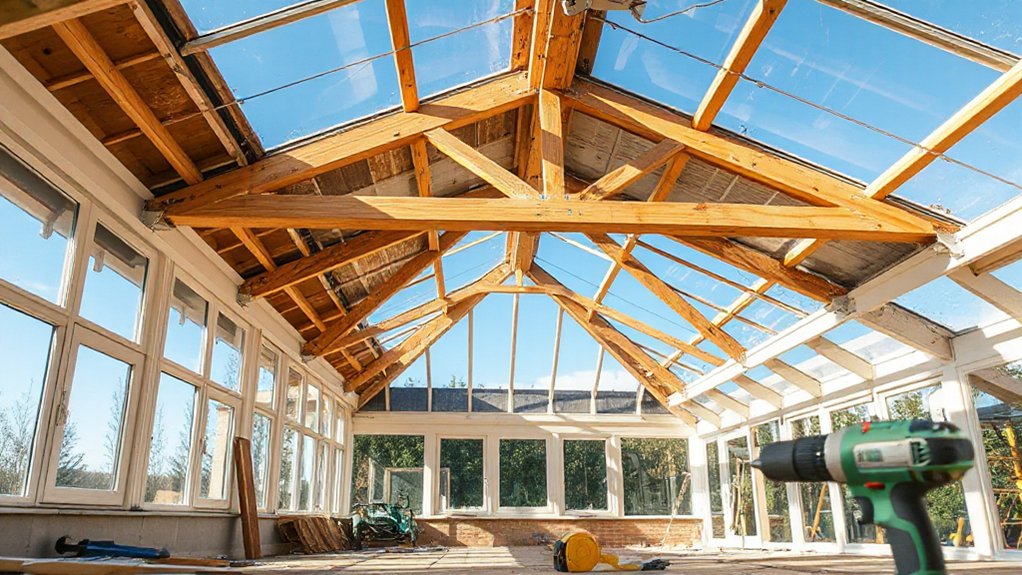

Consider a Victorian-era conservatory where you’re replacing a leaky glass roof with insulated panels to cut heat loss by 40%. You’ll weigh glass, polycarbonate, and solid panels for durability, weight, and UV performance, while checking structural limits and permits. The process then hinges on budgets, downtime, and selecting a contractor with solid warranties. Start with feasibility, then compare options, because the right choice balances comfort, cost, and long-term reliability—and you’ll want to know what comes next.
Assess Your Space and Goals for Conservatory Roof Replacement
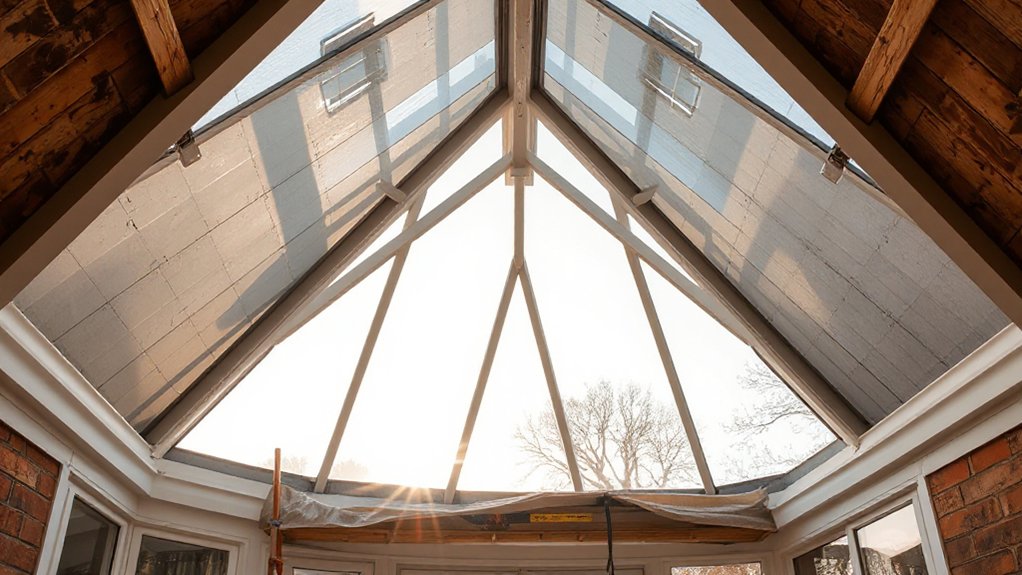
Assess your space and goals by evaluating how a new roof will affect light, temperature, acoustics, and overall usability. You’ll map how visible daylight shifts with roof style, consider seasonal heat gain, and assess noise transmission from weather events.
Measure current interior function: seating, work zones, and circulation; identify target outcomes for comfort, privacy, and usable hours.
Determine alignment with building codes, warranty terms, and future upgrades.
Prioritize interior aesthetics by selecting profiles that complement trim, ceiling heights, and existing décor, ensuring the roof contributes to a cohesive look.
Evaluate material durability under local climate, maintenance expectations, and long-term performance.
Document critical constraints, such as ventilation, shading, and potential energy savings, so your decision supports reliability and sustained value.
Compare Conservatory Roof Types: Glass, Polycarbonate, and Solid Panels
When choosing a conservatory roof, the material dictates how you’ll experience daylight, heat, and noise, so weighing glass, polycarbonate, and solid panels against your goals is essential.
Glass delivers clarity and natural light but adds weight and solar gain; you’ll need robust framing and efficiency-minded glass coatings.
Polycarbonate offers impact resistance and cost savings, with lighter load but higher long-term light diffusion concerns and potential yellowness.
Solid panels provide maximum insulation and reduced glare, yet limit daylight and venting flexibility.
Compare roof insulation performance, thermal breaks, and integrated shading.
Ventilation options vary: operable skylights or vents suit hot days, while sealed configurations require mechanical relief.
Match insulation and ventilation to climate, usage, and budget to optimize comfort and energy efficiency.
Can Your Structure Handle a Replacement? Assessing Feasibility
Before you replace your conservatory roof, verify that the structure can support the new load and installation method. Start with a structural appraisal to confirm framing, foundations, and connections meet the anticipated demands.
Assess structural integrity by checking beam sizes, joints, and existing fasteners against the proposed system’s shear, deflection, and live-load requirements.
Material compatibility matters: guarantee the new roof’s weight, dynamic loads, and thermal expansion align with current materials and fixtures.
Consider attachment methods, span limitations, and door/window tolerances that could be affected by added inertia.
Look for signs of past damage, rot, or corrosion that would undermine feasibility.
Document deviations and seek professional sign-off if limits are approached or exceeded.
Only then proceed with a replacement plan that preserves safety and performance.
Planning, Permissions, and Downtime: What to Expect
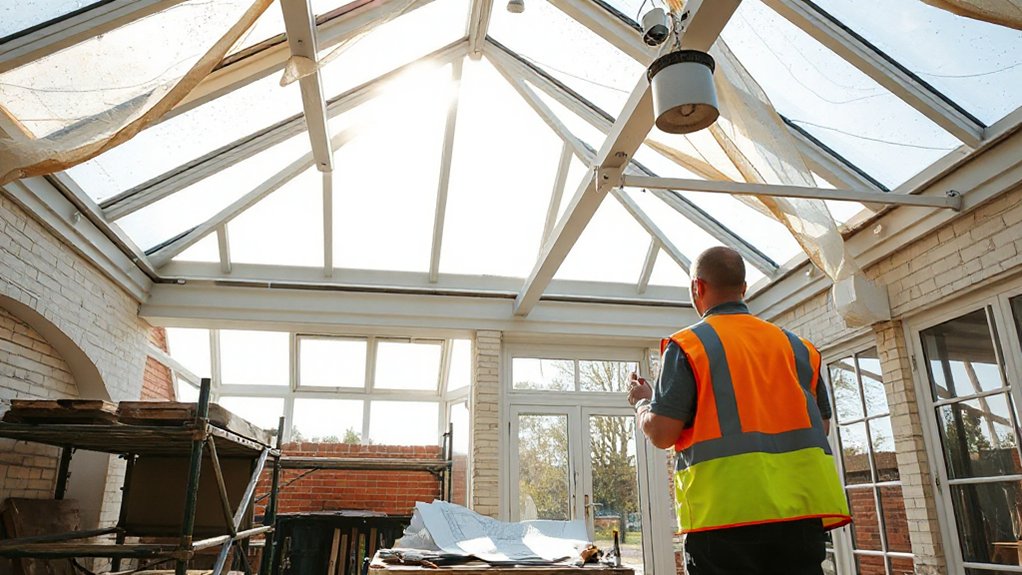
Planning your conservatory roof replacement starts with a clear timeline, approvals, and a realistic downtime window. You’ll navigate the permissions and approvals process early to reduce delays.
While coordinating the contractor’s schedule to minimize total disruption. Expect specific downtime impacts on access, utilities, and daily use, with milestones aligned to permit issuances and weather contingencies.
Planning Timeline Expectations
Planning a conservatory roof replacement requires careful scheduling and clear expectations. You’ll align project milestones with supplier lead times, weather windows, and contractor availability to minimize downtime. Establish a fixed start date, plus a contingency buffer for delays, and communicate it to all parties.
During planning, assess material durability and compatibility with your existing structure to prevent backtracking. Create a sequence: demolition, framing checks, insulation, waterproofing, and final finishes.
Coordinate scaffold access and interior protection to maintain safety and reduce cleanup. Confirm delivery times for roofing panels, sealants, and underlayment, noting any storage constraints.
Track progress daily and update stakeholders to avoid cascading delays. By anticipating interruptions and focusing on material durability and aesthetic appeal, you’ll maintain schedule integrity without compromising quality.
Permissions and Approvals Process
Securing the necessary permissions and approvals is essential to keep a conservatory roof replacement on schedule and within code. You assess applicable building regulations early, identifying required authorities and submission steps.
Begin with a preliminary plan that outlines materials, load calculations, and anchorage details, then prepare documentation for permit applications. You’ll typically submit plans, structural notes, and compliance statements to local planning or building control authorities.
Expect a technical review period where requests for clarifications may arise; respond promptly to avoid delays. Confirm any conditions, such as energy performance or fire safety requirements, and document compliant workmanship standards.
Track statuses methodically, maintaining a repository of approvals, issued consent, and amendment records. Maintain liaison with inspectors to verify ongoing compliance during progress.
Downtime and Scheduling Impacts
- Align milestones with permit approvals and material lead times
- Establish daily and weekly check-ins to track progress
- Define access restrictions and safety zones for workers
- Schedule deliveries to reduce site congestion and storage needs
- Document changes and update the scope promptly to avoid cost overruns
Budget Reality Check: Costs, Payments, and Hidden Fees
Budget reality checks start with a clear list of all costs, payments, and hidden fees you’re likely to encounter in conservatory roof replacements. You’ll itemize project costs, materials, labor, disposal, scaffolding, permits, and contingency.
Budget planning should include a realistic 10–20% contingency for unknowns, delivery delays, and weather-related overruns.
Payment structure matters: expect deposits, progress payments, and final settlement once milestones are met.
Hidden fees can appear as site access charges, disposal surcharges, engineering stamped drawings, and VAT adjustments.
Confirm quotes specify excluded items to avoid later surprises.
Compare fixed-price bids versus time-and-materials estimates, and confirm warranty coverage, aftercare, and maintenance costs.
Document changes in writing, track approvals, and maintain a transparent audit trail to minimize financial risk.
Regularly review against milestones to keep the budget on track.
Light, Energy, and Climate: How Each Roof Type Performs
You’ll compare light transmission, energy use, and climate impact across roof types to identify practical trade-offs.
We’ll quantify how skylight-rich or opaque designs affect daylighting, heat gain, and insulation, translating findings into actionable guidance.
Expect concise benchmarks on transmission, efficiency, and seasonal performance to inform material and configuration choices.
Light Transmission Insights
Light transmission is a critical factor in choosing a conservatory roof, as it directly influences interior brightness, perceived spatial openness, and thermal comfort. You assess how different roof types balance natural light with UV transmission, affecting glare, fading, and comfort levels throughout the year.
- Natural light availability across seasons and times of day
- UV transmission control to protect furnishings and skin
- Diffusion quality to reduce harsh shadows
- Transmission stability under varying roof angles and materials
- Maintenance impact on light performance over time
Understanding these metrics helps you compare polycarbonate, glass, and hybrid options. You’ll prefer configurations that sustain even brightness, minimize glare, and limit UV exposure while preserving a welcoming, open atmosphere inside your conservatory.
Prioritize data-driven specs, not marketing claims, for ideal long-term satisfaction.
Energy Efficiency Impact
Energy efficiency in conservatory roofs hinges on how well each material manages heat and lighting without relying on heavy conditioning. You’ll assess thermal performance by comparing U-values, solar gains, and thermal mass, then match those metrics to your climate.
Lighter glazing can reduce cooling loads but increases daytime glare unless paired with solar shading strategies. Cooler frames help stabilize interior temperatures but may trade off structural insulation.
Solid, insulated overcladding improves heat retention in winter and moderates summer peaks, yet may require ventilation adjustments.
Roof membranes with reflective coatings lower radiant heat, while integrated shading systems can maintain comfortable levels without AC.
Plan for aesthetic enhancement alongside energy targets to preserve daylight quality and occupant comfort.
Climate Performance Variations
How do different roof types respond to light, energy use, and climate conditions across environments? You compare performance by material and design, focusing on light transmission, thermal mass, and air leakage.
Metal roofs reflect heat yet may conduct it inward without proper insulation, while polycarbonate allows daylight but can amplify heat gain without shading. Glass dominates solar gain but requires control strategies; timber frames offer insulation potential but risk thermal bridging.
Climate adaptation hinges on surface emissivity, ventilation, and insulation strategies that curb energy use year-round. Use seasonal shading, insulated glazing, and roof vents to stabilize interior conditions.
Material choice affects condensation risk and humidity. Climate demands drive installation details and performance targets.
- Climate adaptation
- Insulation strategies
- Light transmission control
- Thermal bridging mitigation
- Ventilation and shading strategies
Choosing a Contractor: Questions to Ask and Red Flags to Watch
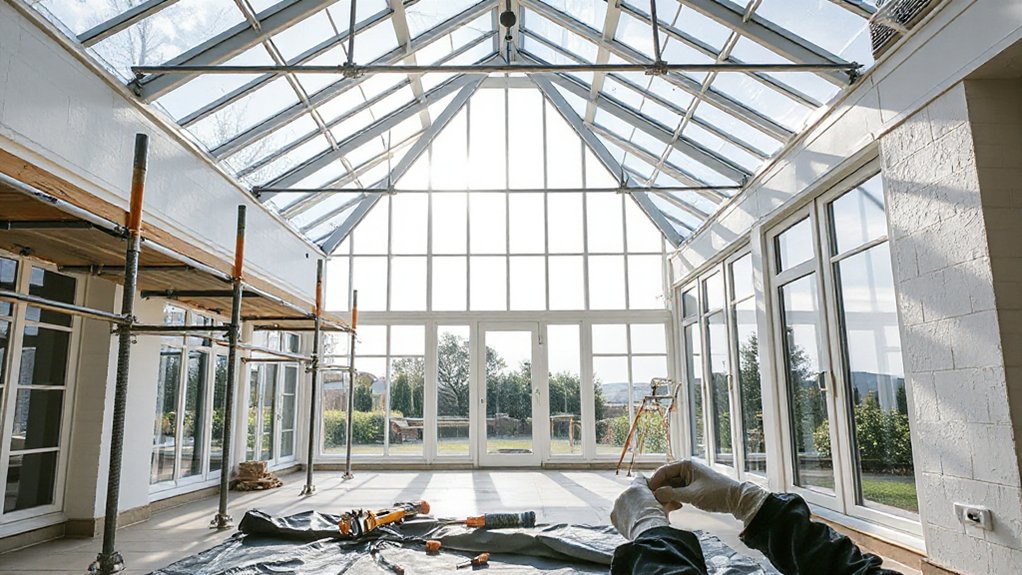
When selecting a contractor for conservatory roof replacements, start with a clear checklist: verify licensing and insurance, confirm experience with similar projects, and obtain written estimates with itemized costs.
You should ask about contractor credentials, including trade qualifications and manufacturer certifications, to guarantee capable installation.
Check references and inspect past work, focusing on roof integration, weatherproofing, and drainage details.
During discussions, explicitly request Insurance requirements, including liability and workers’ compensation, and verify coverage dates and limits.
Confirm project scope, timeline, and payment milestones, avoiding upfront sums beyond staged work.
Seek candid answers on material compatibility, warranty terms, and subcontractor use.
Watch for vague promises, pressure tactics, or reluctance to provide written documentation.
Document decisions, maintain a single point of contact, and require a formal written contract before work begins.
From Assessment to a Durable, Weather-Tight Roof: Next Steps
Once you’ve completed the assessment, translate findings into a concrete plan for a durable, weather-tight roof by prioritizing critical decision points, defining performance criteria, and establishing a schedule with milestones.
You’ll align material choices, flashing details, and ventilation with project goals, while preserving decorative accents and supporting historical preservation.
Define success metrics, inspection points, and tolerances for water ingress, thermal performance, and load.
Schedule phasing: permits, ordering, removal, installation, and QA.
Clarify warranty terms and maintenance expectations to avoid gaps.
Communicate risks, contingency allowances, and contractor coordination needs to prevent delays.
- Prioritize moisture management and sealing details
- Specify performance criteria and inspection milestones
- Plan material compatibility with decorative accents
- Establish milestones for permits, delivery, and install
- Confirm alignment with historical preservation requirements
Frequently Asked Questions
How Long Does a Conservatory Roof Replacement Typically Take?
A conservatory roof replacement typically takes 1–2 days, depending on scope. You’ll choose color options and assess material durability, ensuring precise installation. You’ll coordinate weather windows, permits, and curing times, minimizing disruption while maintaining structural integrity and performance.
Will a New Roof Affect Existing Insulation or Ventilation?
A new roof can affect insulation and ventilation if compatibility isn’t addressed. Make certain insulation compatibility with existing walls and vents, and check for ventilation impact to prevent condensation, mold, or heat buildup; plan with a qualified installer.
Can a Replacement Enhance Soundproofing and Reduce Noise?
Yes, a replacement can enhance soundproofing and reduce noise. You’ll gain improved soundproofing benefits from denser panels and sealing. Utilize noise reduction techniques like mass-loaded vinyl, acoustic plasterboard, and careful joint detailing for best results.
What Warranties Cover Roof Materials and Workmanship?
Warranty coverage varies by installer and product; typically, workmanship is covered for 5–10 years, materials for 10–25. You’ll want clear terms, including exclusions. Warranty coverage and material durability determine your long-term performance and future costs.
Are There Financing Options or Grants for Replacements?
You can access financing options and government grants for replacements, depending on eligibility. Compare interest rates and terms, verify grant criteria, and apply early; some programs require energy improvements or homeowner status, and vendors may assist with documentation and approvals.
Conclusion
Conservatory roof replacements deliver long-term performance when you plan meticulously and vet thoroughly. You’ll compare materials, confirm structural feasibility, and secure permits before breaking ground. Track budgets with contingencies and timelines, then monitor ventilation, insulation, and weather-tightness during install. Think of it like building a precision bridge—every detail supports durability and comfort. By choosing the right contractor and materials, you’ll achieve a reliable, energy-efficient roof that stands up to climate and time.