


Did you know that curb appeal can add up to 7% to a detached home’s value before you even step inside? You’ll want a practical plan: sharp landscaping, updated lighting, and a welcoming front door set the tone, while flexible outdoor spaces and a modernized interior keep buyers envisioning themselves there. The right renovations balance aesthetic appeal with cost control—keep it tight, purposeful, and staged for impact to release true ROI as you move toward an offer.
Make Your Curb Appeal Sell From First Glance

First impressions start at the curb, so invest in simple, high-impact updates that draw the eye and set the tone for what’s inside. You’ll start with clean lines: trim bushes, edge beds, and refresh mulch for contrast.
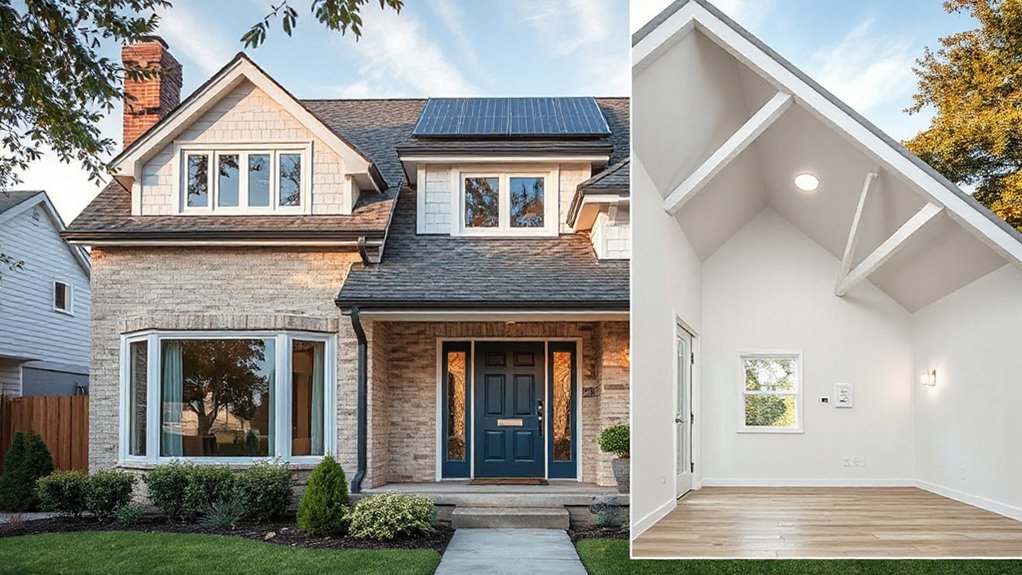
Garden landscaping should feel deliberate, not cluttered, so choose a cohesive palette that mirrors your interior color schemes to create flow as buyers move closer. A sturdy, tasteful front door in a neutral, warm tone anchors the exterior and signals durability.
Add lighting that highlights architectural features and safe pathways. Keep house numbers visible and hardware coordinated for a polished touch.
Maintain eye-catching curb appeal year-round with low-maintenance plants and seasonal accents. Remember: restraint amplifies value, so focus on a few well-executed details that align with interior color schemes.
Create Flexible Spaces That Max Out Your Lot
Think about how flexible room configurations can transform your footprint, letting you reconfigure spaces for work, guests, or hobbies without sacrificing style.
Explore extendable outdoor areas that seamlessly blend indoors and out, expanding livable square footage when you need it and folding away when you don’t.
With practical layouts and clean lines, you create adaptable zones that maximize your lot while maintaining an eye for detail and aesthetics.
Flexible Room Configurations
Focus on movable partitions, pocket doors, and architectural alcoves to define intents without crowding flow. Multi-purpose areas benefit from built-in storage, neutral palettes, and flexible furniture that scales with occupancy.
Prioritize quiet zones adjacent to activity hubs, so noise doesn’t derail function. Use durable finishes and smart tech to automate lighting, climate, and privacy.
The result: a sorted, aesthetically cohesive home that appeals to buyers seeking adaptable, low-maintenance luxury.
Extendable Outdoor Areas
Prioritize durable, low-maintenance compounds for decks, screens, and doors. Then pair them with a compact outdoor kitchen or seating zone to maximize usable space without crowding the footprint.
Plan sightlines and storage to preserve outdoor privacy while inviting natural light. Integrate landscape lighting at key edges and steps to extend usability after dark and highlight textures.
Select operable soft coverings or panels to modulate sun risk, wind, and glare, keeping the space tidy and cohesive.
Modernize the Kitchen for Real ROI
Upgrading your kitchen pays off in both daily use and resale value, so start with practical, high-ROI changes that blend style and durability. Focus on durability-first materials like quartz countertops, shaker cabinets, and matte-finish fixtures that resist fingerprints.
Improve layout with better lighting, intuitive workflow, and accessible storage to cut clutter. Integrate smart appliances for efficiency without looking gimmicky, and choose energy-star models that lower operating costs.
Elevate aesthetics with a cohesive color palette and metal accents that resist wear. Consider a dedicated work zone for meal prep and cleanup, aided by deep drawers and pull-out organizers.
Highlight features that appeal in showings: Kitchen islands for social spaces and extra prep surface. Avoid oversized, dated elements; aim for timeless, flexible updates.
Update Bathrooms for Maximum Value
Updating bathrooms for maximum value means balancing durability, efficiency, and timeless style from the start. You’ll prioritize solid materials, moisture resistance, and easy-clean surfaces to minimize future upkeep.
Begin with a clean layout: optimize space, guarantee ample counter and storage, and reduce clutter with recessed or wall-mounted vanity storage.
Choose finishes that resist wear and quickly outdate trends, then pair them with high-contrast, natural tones for a contemporary feel.
When evaluating bathroom fixtures, favor water-efficient options that don’t compromise pressure or warmth, and verify proper ventilation to prevent mold.
For vanity upgrades, select a sturdy base with soft-close drawers, a durable countertop, and a timeless faucet finish.
Invest in quality fittings now to avoid frequent replacements later.
Boost Efficiency With Smart Energy Upgrades
Smart thermostats tailor comfort while trimming daily energy use, letting you program heating and cooling around your routine with easy, intuitive controls.
Pair that with efficient insulation upgrades to stop drafts and keep a stable indoor temperature, so your systems work smarter, not harder.
When you factor in the aesthetic of clean lines and subtle materials, these upgrades feel as refined as they’re practical, quietly boosting value without fuss.
Smart Thermostats Savings
Smart thermostats save money and simplify climate control by learning your routines and adjusting heating and cooling automatically. You’ll see quick returns with lower energy bills and reduced HVAC wear, especially during shoulder seasons when mis-timed heating spikes cost you.
Pick a model that supports adaptive schedules and remote access, so you can tweak temperatures from your phone as plans change. When evaluating options, prioritize strong energy efficiency ratings, responsive performance, and clear data dashboards that highlight usage patterns.
This is a practical upgrade that keeps aesthetics in mind: slim, unobtrusive hardware and a clean interface blend with modern interiors. Remember to pair the device with compatible thermostat technology, and use consistent settings to maximize long-term savings.
Efficient Insulation Upgrades
Even if your walls and attic are solid, upgrading insulation is a practical, aesthetic upgrade that measurably cuts energy use. You’ll boost comfort by sealing thermal pathways with targeted insulation upgrades, then pair them with smart energy habits.
Focus on high-performance insulation materials that resist heat transfer year-round, reducing drafts and extending HVAC life. Choose open- or closed-cell foams, mineral wool, or blown-in cellulose based on cavity size and moisture risk, ensuring proper installation to avoid gaps.
Incorporate thermal barriers at critical junctions—walls, rooflines, and around ductwork—to maximize efficiency. Pair material choices with air-sealing tactics and smart zoning to optimize heat retention without oversizing equipment.
The result is quieter rooms, steadier temperatures, and a more attractive, energy-smart home for buyers.
Refresh Exterior Details: Siding, Roof, and Look

Revitalizing exterior details can dramatically boost curb appeal and value, starting with your siding, roof, and overall look. You’ll inspect siding for fresh color, clean seams, and uniform texture, opting for durable, low-maintenance materials if replacement is needed.
Roof integrity matters more than color; address sagging shingles, flashing gaps, and clean gutters to prevent water intrusion and staining.
Choose a cohesive palette that complements landscape and architectural style, then add subtle architectural accents like updated trim, porch lighting, and appropriate siding profiles.
Garden landscaping should frame the home, guiding the eye toward its strongest features.
Inside, plan interior lighting that reflects exterior moments, creating inviting glow from windows.
Refresh exterior hardware and doors for a polished, cohesive impression without overdoing it.
Align Living Spaces With Your Lot’s Shape and Flow
Your living spaces should mirror your lot’s shape, so circulation feels natural and intentional.
Tweak room layouts to flow toward exterior boundaries, creating seamless crossings between indoors and outdoors.
Prioritize clear sightlines and intuitive paths to key areas, ensuring each space guides movement with purpose.
Align Spaces With Lot
To align living spaces with your lot’s shape and flow, start by surveying sightlines, traffic patterns, and natural focal points from the main entry. Map how rooms relate to exterior boundaries, then reconfigure furniture and partitions to reinforce intuitive pathways and balanced massing.
Center spaces on key vistas, using sightlines to guide seating, work zones, and dining flow, so movement feels natural rather than forced. Prioritize proportional room sizes that respect the lot’s geometry, avoiding awkward nooks or wasted corners.
Implement landscaping enhancements to frame rooms and soften progressions, and use fencing improvements to define privacy belts without breaking openness. Choose durable, complementary materials for shared surfaces, and align colors with exterior tones to unify the composition.
Streamlined layouts reduce clutter and boost perceived value, appealing to buyers seeking thoughtful, cohesive interiors.
Flow To Exterior Boundaries
Better flow to exterior boundaries starts with framing interior rooms to extend toward outdoor edges, not apart from them. You align living spaces with the lot’s shape by extending sightlines, circulation, and function outward.
Prioritize open connections between rooms and decks or patios, so the exterior feels like an extension, not a separate zone. Consider landscaping design that echoes interior scales: low hedges near windows, taller trees framing views, and stepping-stone paths that guide movement without abrupt shifts.
Material choices should continue outside—color, texture, and pattern—to unify spaces. Exterior lighting highlights architectural cues, softens edges after dusk, and creates a cohesive mood from interior thresholds.
Ensure entrances read as invitations, with pauses in soft landscape drama that invite outdoor activities and curb appeal that sells.
Optimize Path Readability
Smooth the path through your home by aligning circulation with your lot’s shape, so primary routes feel natural and intentional rather than forced. You optimize path readability by coordinating furniture placement, doorways, and scales with the exterior flow. Map sightlines from entry to core living zones to minimize detours and dead ends. Use consistent ceiling heights and aligned thresholds to guide movement without friction.
Landscaping enhancements frame approach angles, helping exterior-to-interior progression feel cohesive. In interior spaces, layer lighting to reinforce wayfinding—bright zones near kitchens and baths, softer reads in living nooks. Choose area rugs and furniture clusters that reinforce intended routes, and avoid abrupt shifts in style that disrupt rhythm.
Finally, document changes for sellers, highlighting improved flow, lighting, and curb-to-core connectivity.
Improve Comfort: Insulation, HVAC, and Air Quality
Improved comfort starts with a tight envelope and clean air: start by sealing leaks around doors and windows, then upgrade insulation in attic, walls, and ducts to reduce heat loss and drafts. You’ll feel steadier temperatures, fewer cold spots, and lower energy bills.
Target indoor air quality by selecting high-efficiency filtration and balanced ventilation that preserves comfort without wasting conditioned air. When evaluating HVAC systems, prioritize proper sizing, zoning, and intelligent thermostats to match occupancy patterns.
Insulated ducts minimize losses and improve overall performance, while air-sealing upgrades reduce humidity swings and mold risk. Finish with a visually cohesive, quiet system that blends with your home’s interior.
The result is improved comfort, reduced fatigue from temperature shifts, and a buyer-friendly, well-regulated living environment.
Upgrade Finishes Without Overcapitalizing

You’ve got the comfort basics in place, and now you can elevate your home’s feel without blowing the budget by upgrading finishes thoughtfully. Start with color and material consistency across rooms to build design coherence. Choose a restrained palette and repeat one or two key materials—think wood tones, matte metals, or stone accents—to create luxury accents without overcapitalizing.
Focus on durable, mid-range options that still look premium, such as engineered wood flooring, quartz countertops, and soft-close cabinetry. Pay attention to hardware details: matching pulls, hinges, and faucet finishes reinforce design consistency. Elevate with upgraded trim, baseboards, and alignment of outlets and switches so transitions feel intentional.
Avoid trendy novelty; aim for timeless quality that enhances appeal while preserving value.
Small, Smart Upgrades That Pay Off Fast
Want fast, meaningful value from small changes? You’ll focus on high-impact upgrades that read as premium yet require minimal disruption.
Start with Smart lighting: replace dated switches with dimmable LEDs, install layered lighting—ambient, task, accent—and program scenes for evening curb appeal. You’ll notice faster on/off, better mood, and lower bills.
Next, refine Creative landscaping: tidy borders, drought-tolerant plantings, and a focal element like a sculptural planters or a small tree. Pressurized attention to texture, color, and rhythm makes your exterior feel bespoke without a full renovation.
Pair these tweaks with crisp fascia, fresh mailbox, and clean sidewalks for instant polish. These updates feel intentional, affordable, and visually cohesive, delivering perceived value that resonates with buyers.
Budgeting and Scheduling to Maximize ROI
Budgeting and scheduling aren’t afterthoughts—they’re the plan. You’ll map costs against a clear scope, prioritizing high-ROI updates that elevate curb appeal and interior livability.
Begin with Budget planning that accounts for materials, permits, labor, and contingency, then align purchases to progress milestones to avoid waste.
Break the project into logical phases: demolition, core updates, finish work, and staging.
Use scheduling strategies that minimize downtime and protect craftsmanship, such as buffering for delivery delays and parallel tasks where possible.
Track spend weekly and adjust priorities if bids shift.
Choose durable, visually cohesive finishes to reduce future touchups.
Document decisions, timestamps, and costs to support resale negotiations.
A disciplined rhythm, paired with refined aesthetics, sustains momentum and maximizes ROI.
Frequently Asked Questions
How Soon Will Renovations Impact My Home’s Sale Price?
Home staging and curb appeal can lift prices quickly, often within days to weeks after listing. You’ll attract buyers faster, so stage thoughtfully, refresh exteriors, and highlight spaces, because polished visuals accelerate interest and potential offers.
Which Upgrades Offer the Best ROI for Detached Homes?
Landscaping enhancements, energy efficiency, landscaping enhancements, energy efficiency—these upgrades offer the best ROI for detached homes. You’ll attract buyers, save costs, and boost curb appeal while you upgrade insulation, windows, and efficient appliances with practical, aesthetic detail.
How to Prioritize Projects Within a Tight Timeline?
Prioritize high-impact, fast-turnaround projects first, then allocate a strict timeline and buffer. Do budget planning upfront, then compare contractor selection on pace, quality, and reliability; you’ll stay on track while preserving aesthetics. You’ll maximize value with disciplined decisions.
Do Renovations Affect Appraisal Values Differently Than Listing Prices?
Yes, renovations can shift appraisal values differently than listing prices, influenced by market trends and appraisal methods; you’ll see stricter adherence to objective comps, while listings reflect buyer perception and aesthetics, making careful upgrades practical and visually appealing.
Should I Hire a Single Contractor or Multiple Specialists?
Go with a single contractor if you value seamless scheduling and cohesive design; otherwise, hire specialists for specific tasks. Contractor selection matters, but specialist coordination can elevate aesthetics and practicality, though it risks delays—plan buffers and clear communication.
Conclusion
You’re almost there. Imagine buyers pulling up, eyes locking on a curb that gleams with fresh landscaping and a welcoming door. Inside, a kitchen that whispers durability and style, baths that feel spa-clean, and air that moves like a sigh of ease. Every smart upgrade tightens the thrill of the tour, every space flexes to fit a growing family. Now, keep the plan tight, the budget sane, and the story irresistible—your detached home, sold at its true worth. suspense fulfilled.