


Like a key turning in a quiet lock, planning permission hinges on size, height, and location. You’ll need clear limits and rules before you start, and a few thresholds can mean the difference between a simple build and a formal approval. If your garden room fits under specific dimensions or sits away from boundaries, you might skip the lengthy process; otherwise, delays, enforcement, or redesigns loom. Ready to map the specifics that apply to your plot?
Is Garden-Room Planning Permission Required? A Quick Decision Guide
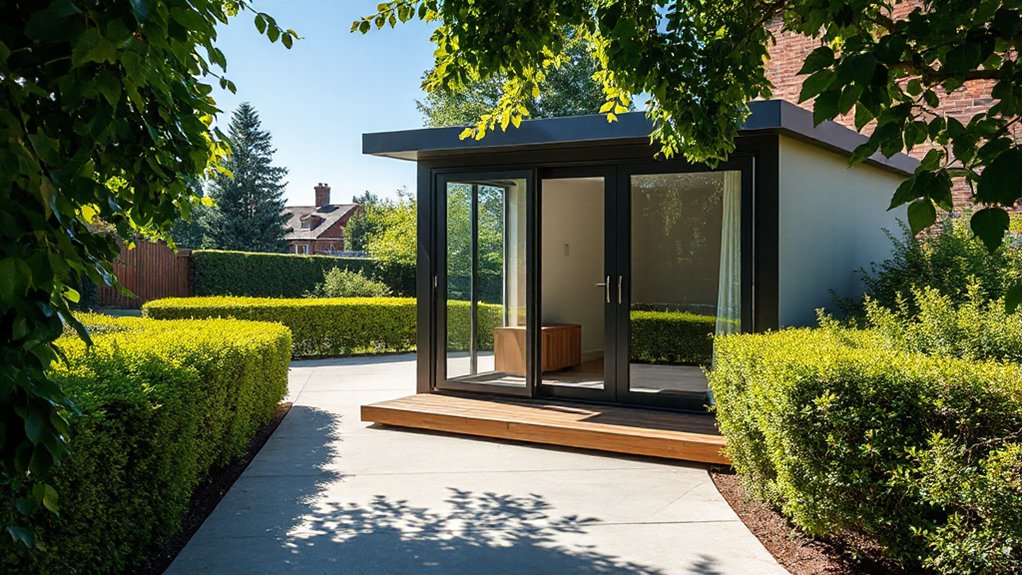
Is garden-room planning permission required? You’ll assess quickly whether you need consent by checking local rules and your garden’s size, use, and location. Start with permitted development limits, then consider land-use categories and any recent changes to planning guidance.
If your structure stays within height, footprint, and distance from boundaries, you may proceed without formal permission; otherwise, you’ll likely need a full or outline application. Document your existing boundaries, materials, and intended use to support the decision.
Landscaping options can influence approvals by framing the structure within the site, while budget considerations drive material choices and compliance costs. If in doubt, consult the planning authority or a qualified planner before drafting plans to avoid costly revisions.
When Planning Permission Is Unavoidable
When planning permission becomes unavoidable, you must act promptly to avoid delays and penalties. First, confirm the exact requirements for your property type and location with your local planning authority, since rules differ by council and rural/urban status.
Gather key details: site boundaries, purpose of the garden room, overall footprint, and how it fits within any permitted development allowances.
Prepare a concise schematic showing garden design integration, access points, and how the structure interacts with boundary treatments.
Expect potential conditions related to materials, design harmony, and associated works like drainage or landscaping.
Plan for outdoor lighting that aligns with safety guidelines and avoids light pollution, ensuring compliance with any restrictions.
Maintain a clear record of submissions, responses, and revised plans throughout the process.
How Big Can a Garden Room Be? Size and Height Limits
You’ll need to check the size thresholds and height limits for garden rooms in your area, since these govern what’s allowed without planning permission.
Your next step is to confirm the maximum floor area and any restrictions on eaves height or overall height, plus how these rules apply to rear or side extensions.
Understanding the exact thresholds now helps you plan compliant designs and avoid delays.
Size Thresholds
What’s the practical ceiling for a garden room? Size thresholds determine whether you need planning permission, so you’ll want precise figures.
In many areas, a single-story structure under 15 square meters may sit within permitted development, provided it’s not attached and remains a distance from boundaries.
If you’re in a semi-urban or restricted zone, the limit can drop to 10–12 square meters, or require setbacks and height caps.
Height often matters more than footprint: a maximum of around 2.5 meters to the eaves and 4 meters to the peak for an affixed structure may apply, with variations by local rules.
Plan for garden maintenance access and ensure any planting won’t breach boundaries.
Choose plant selection and materials that minimize future permit risks.
Height Limits
Height is often the deciding factor after footprint in planning considerations. In this section, you’ll assess limits that affect size without triggering extra permissions. Check local baselines for eaves and ridge heights, plus any maximum overall height, especially in conservation areas or on listed sites.
Buildings closer to boundaries may face stricter controls, and shed-like structures can be treated differently than habitable spaces. If your garden room exceeds permitted height, you’ll likely need planning permission or a planning condition.
Consider practical design tweaks, such as lowering the ridge, using a pitched roof, or splitting volume across two sections. Landscaping options and outdoor lighting should be planned to integrate the height features safely and legally.
Where in the Garden You Can Build: Location Rules
You’ll need to check where you can place a garden room relative to boundaries, terraces, and footpaths, since location rules set minimum distances and sightline limits.
Consider the build footprint, ensuring it fits within the permitted area and avoids restricted zones like setbacks and protected spots.
We’ll examine practical reminders and regulatory basics to start deciding where in your garden it belongs.
Garden Location Limits
Garden location rules govern where you may position a garden room on your plot, taking into account boundaries, setbacks, and access. You’ll need to assess garden shape, boundary lines, and proximity to neighbours, plus how access paths affect compliance and maintenance.
Consider daylight, screening, and sightlines as you plan.
- Guarantee compliant setbacks from property boundaries and structures
- Locate away from/near the boundary for privacy and light
- Preserve access routes for maintenance and emergency egress
- Plan for future expansions or changes in use
- Align placement with garden aesthetics and outdoor lighting
Build Footprint Rules
Check setback distances from fences, trees, and neighbouring structures, ensuring you leave clear access routes for maintenance and emergency egress. Consider the footprint’s relationship to existing paths, drainage swales, and sunlight to prevent shading issues.
Regulations may cap total footprint or require a primary structure separation from principal living space. Plan for creative landscaping to integrate the build with the garden while preserving views and ventilation.
And think about outdoor lighting placement to avoid glare and comply with light pollution rules.
Listed Buildings and Protected Land: What Changes Your Plans
Listed buildings and protected land impose clear constraints that can shape every stage of planning a garden room. You’ll need to assess listing status, conservation area rules, and any required consents before drawing up plans. Even small changes can trigger permissions, so you should confirm with your local planning authority early.
Focus on how constraints influence design, materials, and site layout. You’ll need to balance garden aesthetics with preservation requirements and guarantee that planting choices respect boundary features and visibility from the street.
- Check listing details and get pre-application advice
- Choose non-invasive materials compatible with surroundings
- Plan height, massing, and window placement to minimise impact
- Factor access, drainage, and boundary protections
- Align aesthetics with planning conditions and long-term maintenance
How Use Affects Planning: Acceptable Uses and Restrictions

When planning a garden room, how you’ll use the structure drives what counts as an acceptable project and what kinds of restrictions may apply. You’ll need to map intended use against local planning rules, as different functions trigger different limits on size, location, and occupancy.
Acceptable uses typically include home offices, studios, or guest rooms, provided on-site land, access, and safety standards are met. Restrictions may apply to change of use, noise, parking, and alterations to curtilage.
Check listed-building or conservation-area considerations if relevant. Landscaping ideas around the unit can influence perceived impact, while budget considerations help gauge compliance costs, survey needs, and professional fees.
Stay precise with property boundaries and planning portals to avoid unnecessary amendments or refusals.
Design and Materials: Appearance and Planning Implications
Design and materials directly affect planning viability: the appearance, scale, and finish of a garden room must harmonize with your property and local guidelines. You’ll evaluate how design choices influence perceived use, massing, and approvals, ensuring material selections align with planning expectations.
Focus on durability, maintenance, and weather resilience to reduce future alterations. Consider the overall silhouette, roofline, and boundary footprint to stay within set thresholds.
Your decisions should anticipate visibility from streets and neighboring properties, and how finishes weather over time.
- Garden design choices that blend with your home
- Material durability and long-term upkeep
- Scale, massing, and roofline considerations
- Boundary and boundary-treatment compatibility
- Compliance with local guidelines and potential constraints
Extensions vs. Outbuildings: The 2.5m and 4m Limits
When you’re weighing extensions against outbuildings, the 2.5m and 4m height and depth thresholds drive what counts as permitted development versus a planning application.
You’ll need to assess building height limits, garden room classifications, and how the thresholds affect whether you stay within PD or require consent.
This discussion sets the framework for how each factor—height, thresholds, and classification—shapes your project options.
Building Height Limits
For extensions and outbuildings, height limits matter because they determine what needs planning permission and what counts as permitted development. You’ll want to measure peak height, not just wall height, and consider eaves, roof pitch, and any sloping boundaries.
In practice, the 2.5m and 4m thresholds affect whether you can build without consent, or require a variation, while nearby properties influence compliance. Plan around alignment with existing structures, access, and drainage.
You should also consider landscape design and material durability when choosing roofing and wall finishes to maintain appearance and longevity.
- Confirm height is measured from ground level to highest point
- Check boundary impact and overshadowing rules
- Align with existing rooflines for cohesion
- Factor drainage and water flow into the plan
- Assess long‑term durability and maintenance needs
Permitted Development Thresholds
Practically, you’ll respect height, yard proximity, and building footprint rules to stay inside those thresholds. For single-storey structures, the 2.5m height cap often applies where the development is within a certain distance of boundaries; beyond that, you may still be under the 4m overall limit, depending on site specifics.
Extensions must avoid glazing or design that “increase the overall size” beyond permitted dimensions.
Landscaping regulations matter for how close you can place structures to trees and boundaries.
Insurance considerations come into play if you’re near limits, as some policies require compliance proof before coverage.
Garden Room Classifications
Garden rooms fall into two main classifications: extensions and outbuildings, and the 2.5m and 4m limits apply differently to each. You’ll evaluate height, footprint, and placement to determine whether limits trigger planning permission changes or permitted developments.
Extensions typically face stricter controls due to their impact on neighbors and property envelope, while outbuildings enjoy greater flexibility if set back and limited in height.
- Consider use and purpose: workspace, gym, or guest annex
- Check height caps and eave/prop height rules
- Note proximity to boundaries and policy on garden-only developments
- Plan for practical needs like garden decor integration and pest control access
- Verify any local amendments before finalizing location and design
This approach keeps you compliant, precise, and ready for the next steps.
Neighbours, Notices, and Planning Rights

In practice, you’ll assess potential neighbour disputes early, documenting boundaries, existing structures, and anticipated impacts on light, views, or privacy. Where a planning authority requires notices, you must respect deadlines, signposting, and publication details; failure to respond can complicate approvals.
Understand notice exemptions for modest-sized outbuildings, or when planning rights are considered; these exemptions vary by jurisdiction and development type.
Keep records of correspondence, responses, and any agreed amendments to your plans. Proactive, factual communication reduces delays and strengthens your position during the decision process.
How to Use the Planning Portal: Apply or Check Status
To use the Planning Portal, start by creating or logging into your account, then select your project type and location to begin an application or check its status. You’ll navigate forms, upload plans, and reference guidance notes to ensure compliance with garden design and outdoor lighting requirements.
Track progress in real time, and set alerts for messages from planning officers.
- Prepare a concise site plan and elevations for accuracy
- Attach a current garden design outline and lighting plan
- Use the portal’s validation checks to catch errors early
- Review associated fees, deadlines, and decision targets
- Save drafts and monitor messages to stay aligned with policy
Keep records, verify addresses, and note any conditions, so your submission stays on track.
Alternatives to Planning Permission: Building Regs and Permits
Planning permission isn’t your only route to a garden room; you can pursue Building Regulations compliance and local permits as alternatives that may streamline development.
You’ll verify whether the structure qualifies as a permitted development or a stand-alone building needing checks for structural safety, insulation, fire safety, and ventilation.
Building Regs can cover wall thickness, glazing, electrical wiring, and drainage, reducing the risk of later retrofits.
Local authorities may issue straightforward permits for minor alterations or sheds within set limits, saving time if you align with size, footprint, and usage constraints.
Plan for garden aesthetics early—driveway access, lighting, and drainage impact landscaping tips and future maintenance.
Keep precise measurements, document materials, and retain compliance evidence to support quick approvals and smooth occupancy.
Common Pitfalls That Delay Approvals

Even small missteps can stall your project, so start by double-checking you’ve met all regulatory requirements before submission. You’ll tighten timelines by foreseeing common delays and addressing them upfront.
Don’t overlook documentation gaps, scale inconsistencies, or ambiguous plans that trigger back-and-forth with planners. Paying attention to details saves you revisits and rework.
- Incomplete site plans and wrong dimensions that force revision rounds
- Missing ownership proofs or access rights delaying validation
- Ambiguity in materials, finishes, and boundary treatments
- Misalignment with local design guidance and landscaping conditions
- Overlooked landscaping ideas or garden furniture options that impact visuals and compliance
Quick-Start Checklist to Confirm Your Garden-Room Plan
Start with a clear, organized plan by running through this quick-start checklist before you submit. You’ll map your garden-room intent, confirm permitted footprint, height, and proximity rules, and identify any party-wall or boundary considerations.
Check site conditions, drainage, and access routes to prevent later design changes. Confirm cost considerations upfront—budgets for foundations, insulation, electrical, and expected maintenance.
Verify design flexibility by prioritizing modular or expandable elements, so you can adapt if planning guidance shifts. Review materials for compliance with building regs, fire safety, and energy performance certificates.
Prepare sketches showing dimensions, setbacks, and window orientation. Finally, document approvals or permits already secured, and build a concise decision log to avoid scope creep.
Frequently Asked Questions
Do I Need Permission for a Garden Room if Small?
Yes, you often don’t need planning permission for a small garden room if it meets limits; check height, footprint, and proximity. Plan landscape design and electrical wiring carefully to comply with regs and avoid future issues.
Can I Place a Garden Room on a Party Wall?
You can’t place a garden room on a party wall because it risks cracking and preserving structural integrity; you’d need agreements, compliance checks, and professional design to protect the party wall and overall structural integrity.
Do External Materials Affect Planning Permission Needs?
External materials can affect planning permission needs, but decisions hinge on design aesthetics and material durability. You should assess local regs, guarantee appropriate finishes, weather resistance, and long-term maintenance, while documenting compliance to support any regulatory review.
Are Loft Conversions Counted as Garden Rooms?
A loft conversion isn’t a garden room; it often falls under different rules. You’ll need to check roof alterations and permitted development rights, plus potential planning permission. You handle compliance, documents, and timelines for loft conversions and roof alterations.
Will a Garden Room Require Building Regulations Only?
A garden room may require building regulations approval, not just planning; you’ll need to guarantee Landscape integration and Energy efficiency. You should verify boundaries, thresholds, insulation, ventilation, and fire safety to satisfy regulatory requirements and code compliance.
Conclusion
So, before you lift a spade or pour concrete, check size, height, and boundaries against local rules—permitted development isn’t a guarantee. Will your garden room slip through as a quick, quiet build, or will you need permission, plans, and timelines? Use the planning portal, confirm any restrictions, and document your design. If in doubt, consult your local planning authority early. Plan, verify, and proceed with confidence rather than repair work and delays later.