
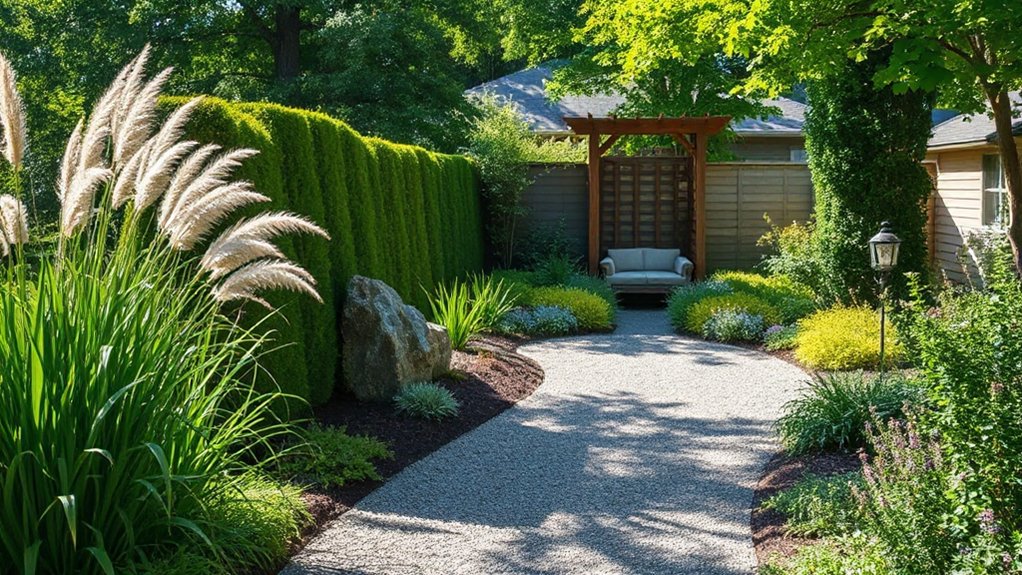

Like a blank canvas waiting for a painting, your backyard invites you to map zones, choose plants, and plan textures with intention. You’ll assess sun, slope, and drainage, set a practical budget, and design flow that invites relaxations, dining, and gardening. Start with low-maintenance selections and durable materials, then layer color and texture for year-round interest. A simple plan keeps tasks manageable and spaces flexible, with storage and seating ready to adapt as seasons change.
Define Your Backyard Design Goals and Priorities

To define your backyard design goals and priorities, start with what you want the space to do for you. Clarify functions first: relaxation, entertaining, play, or productivity like container gardening. Rank priorities so you allocate budget and time efficiently.
Consider how you’ll use seasonal cues, weather resilience, and maintenance needs, keeping expectations realistic. Identify core zones: seating, planting, and movement paths, then map where these areas fit visually and physically.
Decide on focal points and repeatable design elements to create coherence, such as garden art or natural textures. Plan for a wildlife habitat by selecting noninvasive species and seasonal blooms that support pollinators.
Finally, document measurements, budget caps, and a timeline, then review quarterly to stay aligned with your evolving goals.
Assess Your Site: Sun, Shade, Slope, and Drainage
Evaluating your site is the next practical step after defining goals. You’ll map sun, shade, slope, and drainage to inform plant choice and layout.
Start by observing sun paths at different times of day and seasons, noting persistent dry or wet spots.
Assess soil quality with quick checks and plan for soil testing if results indicate issues.
Observe drainage: do puddles form after rain, or does water flow away quickly?
Consider slope for water runoff and accessibility.
Use this data to prioritize zones and paths, not oversized beds.
Keep pest control implications in mind; some plants attract fewer pests when paired strategically.
Use a simple plan to guide selections and placement, then refine as you test and observe.
- Sun and shade mapping
- Drainage and slope notes
- Soil testing trigger points
- Pest control considerations
Create a Simple Master Plan and Realistic Budget
Laying out a simple master plan and a realistic budget helps you move from ideas to action without getting overwhelmed. Begin with a rough site map: mark zones for seating, planting, and pathways, then estimate costs for each area.
Prioritize essential elements first—watering, lighting, and sturdy borders—and defer specialty features until later. Set a clear budget ceiling and track every spend, updating as plans firm up.
Choose scalable plants and modular structures to keep costs predictable. Incorporate practical logistics: delivery times, soil amendments, and mulch requirements, plus a realistic timeline that fits your season.
Consider Bird attractants and composting methods as low-cost, high-value components that boost garden performance without inflating the plan. Review, adjust, and finalize before purchasing.
Zone Your Outdoor Living Areas for Function and Flow

Begin by mapping zones for living, dining, and relaxing so traffic flows naturally from entry points to seating areas. You’ll create clear edges and intuitive paths, guiding guests without clutter. Zone boundaries can be subtle: low hedges, paving patterns, or differing ground covers.
Place Garden sculptures and Water features to anchor focal points within each zone, not overpower the path. Keep sightlines open to a cohesive yard feel while preserving privacy where needed.
- Mark primary circulation routes first, then assign each zone a distinct material or color for quick recognition.
- Position seating in sheltered, sun-and-wind-appropriate spots to extend usage.
- Use vertical elements to define spaces without enclosing them.
- Integrate water features and sculptures as calm, unifying accents.
Choose Low-Maintenance Plants for Your Climate
Start by choosing native plants that fit your climate to boost resilience and reduce care. Look for drought-tolerant selections that still provide color and texture.
Pair them with a simple seasonal maintenance plan to prevent overgrowth. Keep reminders handy for regular pruning, mulching, and soil checks to maintain low-effort, high-impact results.
Native Adaptation Tips
Choosing low-maintenance native plants makes your garden easier to care for while thriving in your climate. You’ll focus on native planting spots, seasonal bloom, and soil compatibility to minimize upkeep. Use adaptation strategies that suit your site, not generic rules.
- Assess microclimates: sun, shade, wind, and drainage to pick suitable natives.
- Match soil and moisture: select species that tolerate your soil’s pH and water rhythm.
- Group by function: mix pollinator attractors with erosion controls for efficiency.
- Observe and adjust: monitor growth, prune lightly, and adjust plantings over seasons.
Drought-Tolerant Selections
As you shift from native adaptation to drought-tolerant selections, focus on plants that thrive with less water and minimal maintenance. Choose species proven to perform in your climate, emphasizing deep roots, low fertilizer needs, and resistance to common local pests.
Group drought-tolerant varieties in decorative, functional beds to reduce irrigation zones and simplify upkeep. Use mulch to conserve moisture and suppress weeds, and select adaptable perennials over annuals for steadier year-round structure.
Favor native or well-adapted natives, complementing them with limited ornamental grasses and succulents for texture. Integrate composting tips into your routine by layering kitchen scraps and yard waste to enrich soil slowly, boosting drought resilience.
For appeal, combine evergreen foliage with seasonal bloom accents and practical garden art ideas that stay low-maintenance.
Seasonal Maintenance Reminders
Do you want a low-maintenance garden that stays vibrant year-round? Seasonal maintenance reminds you to tailor care to your climate. Choose low-maintenance plants, then plan simple steps you’ll repeat each season to keep color, structure, and health high with minimal effort.
- Inspect soil and mulch yearly; refresh composting basics to improve nutrients without overwatering.
- Set irrigation to match seasonal needs, preventing waste and root rot while keeping pest control manageable.
- Prune selectively after blooming, removing dead growth and promoting strong development.
- Monitor for pests and diseases, intervene early with targeted, environmentally friendly solutions to protect resilience.
Pick Hardscaping That Weathers the Seasons
Hardwearing hardscaping keeps your yard functional year-round, so pick materials that handle sun, freeze-thaw cycles, and moisture without showing wear. You want surfaces that resist cracking and color fading, yet stay welcoming. Favor dense concrete, stone pavers, and sealed composites that stabilize with foot traffic and weather shifts.
Favor non-slip textures in high-traffic zones and consider thermal mass to regulate microclimates. Plan for proper slopes and drainage so moisture drains away from foundations and blueprints.
Integrate hardscape with living elements—think Wildflower meadows near borders and Vertical gardens on sturdy walls—to soften edges without sacrificing durability. Keep joints and sealants maintained, and choose colors that mask weathering.
Regular cleaning and targeted repairs extend life while preserving usable space year after year.
Create Pathways: Materials, Width, and Navigation

Create pathways that guide movement and define zones with purpose. You’ll choose materials, set a practical width, and plan navigation that feels effortless. Use durable surfaces and smooth progressions to minimize trip hazards, and keep edges tidy to discourage overgrowth.
Consider scale: a 36-inch wide main path and 24-inch side routes work for most backyards. Preferences differ, but consistency matters for flow. Integrate pathway lighting to extend usability after dark, and place lights at key turns for safety.
For texture, combine materials like compacted gravel, flagstone, and stepping stones where you want visual anchors. Guarantee subgrade drainage prevents puddles. Use stepping stones to create a playful crossing? fine. Keep roots undisturbed near trees.
- Plan clear main and secondary routes
- Select durable, slip‑resistant materials
- Use stepping stones as focal points
- Integrate pathway lighting for safety
Design Privacy With Screens, Fences, and Plants
Privacy in your yard starts with a thoughtful mix of screens, fences, and plants that work together to block views and define space. To design effective privacy, assess sightlines from key viewpoints and choose elements that interrupt them without overwhelming the area.
Start with sturdy fences or solid panels at lower heights for baseline seclusion, then layer with privacy screens to target persistent sightlines. Plant barriers add softness and seasonal variation, while allowing airflow.
Select adaptable, low-maintenance options like evergreen shrubs for year-round coverage and tall grasses or bamboo-screen panels for quick fills. Position screens where you sit, dine, and play, ensuring gaps don’t invite peekers.
Maintain by trimming, grounding through proper root containment, and inspecting for wear after storms. Plant barriers and screens harmonize function with form.
Add Shade: Trees, Pergolas, and Outdoor Structures
Trees, pergolas, and other outdoor structures add shade that shapes how you use the yard. You’ll gain comfort, extend seating, and protect plants from afternoon heat. Choose structures that fit your space, budget, and climate, prioritizing durability and low maintenance. Consider scale, materials, and drainage to prevent issues. Plan placement to maximize cooling breezes and wall or fence shade for late-day comfort. Use shade structures to define zones, not block views. Maintenance should be simple: clear debris, inspect joints, and treat surfaces as needed. Choose color and texture to complement your home’s exterior.
- Assess sun patterns and select appropriate shade structures
- Pair trees with pergolas for layered shade
- Use outdoor pergolas to support seating and climbing plants
- Guarantee proper anchoring and drainage for longevity
Boost Curb Appeal With an Inviting Entryway

Your entryway sets the first impression, so prioritize a welcoming front door and clear, inviting paths.
Use a front door color that complements your house and add clean pathways that guide guests right to the door.
Keep the approach tidy and cohesive, letting Welcoming Front Door Appeal and Pathways To Front Graces work together to invite visitors in.
Welcoming Front Door Appeal
A welcoming front door sets the tone for your home, so start with a clean, inviting entryway that frames the door and guides guests inside. You’ll create immediate appeal by focusing on scale, symmetry, and purposeful details that invite touch and ease of use.
Combines practical updates with sustainable choices, like low-maintenance plants and mindful materials.
- Choose a weathered-finish door or housing that contrasts with surrounding surfaces for visual impact.
- Add targeted lighting and a seasonal accent, keeping power and maintenance minimal.
- Incorporate bird friendly plants nearby to enrich the scene and support wildlife.
- Pair with composting tips in a compact, accessible container to reduce waste and odors while keeping the area tidy.
Pathways To Front Graces
Pathways to the front door set the tone for curb appeal, guiding guests with a clear, inviting route. You’ll create a practical, low-maintenance path that complements your facade and landscaping.
Choose durable materials: pavers, crushed stone, or a concrete slab with a gentle rise and slip-resistant texture. Make certain clear edges, proper drainage, and a width that accommodates two people side by side.
Integrate seasonal interest with evergreen borders and bird-friendly plants that attract minimal pests while offering year-round structure. Add lighting along the route for safety and ambiance, and place a small seating area near the entry for convenience.
Incorporate composting tips nearby to reduce waste, and keep the area tidy with tidy mulch and mulch-free zones to minimize debris.
Extend Your Use With Outdoor Lighting

Outdoor lighting extends your usable space after dark, letting you enjoy patios, paths, and garden features without stepping into darkness. You’ll create a practical glow that guides movement, highlights focal plants, and improves security without glare.
- Plan layered lighting with ambient, task, and accent layers for flexible use.
- Use warm color temperatures to enhance backyard ambiance while staying comfortable.
- Choose energy-efficient LEDs and smart controls for easy scheduling and dimming.
- Position lights to illuminate stairs, edges, and seating without creating harsh shadows.
Apply subtle paths of light along walkways, deck perimeters, and trellises. Keep fixtures low-profile and weather-rated. Maintain balance so outdoor lighting complements, not overwhelms, the landscape, preserving natural night tones while extending your evenings outside.
Outdoor Cooking and Dining Zones That Work
Think about how your outdoor kitchen fits your cooking flow with efficient layouts and accessible prep areas. Consider where you’ll place the dining zone so guests can chat while you cook.
Group related tasks together for smooth service. We’ll explore practical kitchen layouts and smart dining-zone zoning to keep the yard functional and inviting.
Outdoor Kitchen Layouts
Curious about optimizing space and flow, you can design outdoor kitchens that function as true extensions of your home. In this subtopic, you’ll balance workflow, storage, and shade, so cooking feels seamless from prep to plate.
Position the grill near prep zones, keep a cold storage area close, and plan a durable, easy-clean counter. Use weatherproof cabinets and a small sink to speed cleanup, and include a targeted seating area for guests without crowding the work triangle.
Consider the outdoor pizza setup as a focal feature and integrate a backyard bar for drinks and service. Thoughtful lighting keeps meals safe and inviting after dark.
- Define zones: grill, prep, dining, wash
- Choose durable materials and weatherproof storage
- Include a compact fridge and sink
- Add seating that doesn’t impede flow
Dining Zone Zoning
So, how can you optimize flow between cooking, dining, and cleanup in your outdoor space? Dining zone zoning centers seating near service counters, with a clear path to the grill and prep area. Define zones using sightlines, furniture footprints, and subtle barriers like low hedges or planters to guide movement without crowding.
Place dining for elevation: high-traffic clearance, shade options, and easy access to trash/recycling. Keep bird-friendly planting nearby to attract pollinators, while preserving views from cooking zones.
Integrate wildlife habitats with native perennials and sheltered corners that won’t obstruct airflow or sightlines. Install weather-ready surfaces, slip-resistant floors, and a compact utensil station.
Prioritize accessibility, maintainable materials, and a logical cleanup route.
Water-Wise Features: Drought-Tolerant Options
Water-wise landscaping focuses on drought-tolerant options that keep your yard vibrant with less water. You’ll prioritize resilient plants, smart spacing, and efficient irrigation so you conserve resources without sacrificing curb appeal. Implementing practical strategies now saves effort later and supports healthier soil.
- Choose drought-tolerant plants and group by water needs to reduce irrigation cycles.
- Use mulch, native species, and soil amendments to improve moisture retention and reduce weeds.
- Install a smart drip system with zones aligned to sun exposure and plant type for precise watering.
- Integrate rainwater harvesting and xeriscaping techniques to minimize municipal water use while maintaining color and texture.
Fire Features and Cozy Gathering Spots
A fire feature instantly enlarges your outdoor living room, so plan it as a focal point that supports comfortable conversation and year‑round use. Place a fire pit where you can see seating from multiple angles, and guarantee wind and smoke drift won’t bother guests.
Build a defined circle or square of cozy seating around the flame, using durable, weather‑resistant materials. Keep paths clear for easy access and add nearby surfaces for drinks, plates, and blankets.
Use temperature‑controlled, safety‑mencing features like spark guards and proper clearance from vegetation. Choose lighting that stays softer near gathering zones to maintain ambiance without glare.
Consider modular furniture so you can reconfigure for events. Prioritize quick cleanup and maintenance to preserve the fire feature’s inviting appeal.
Plant Lists: Perennials, Grasses, and Groundcovers
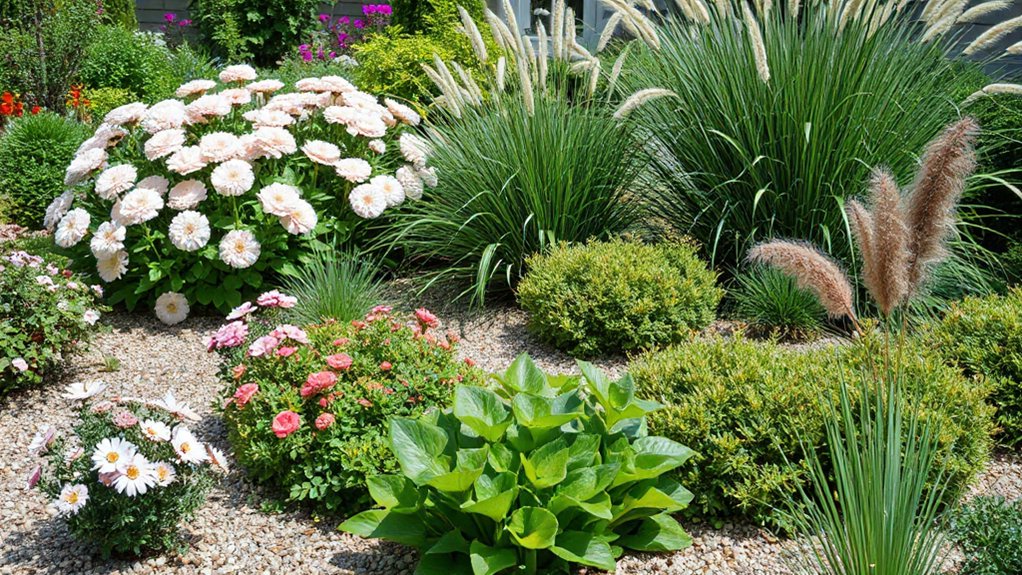
Perennials, grasses, and groundcovers form the backbone of a low-maintenance, year-round garden. You’ll select reliable performers that complement sun exposure, soil type, and irrigation.
Focus on combinations that repeat—creating rhythm from season to season—while keeping maintenance minimal. Plan for staggered bloom times, textured foliage, and subtle contrasts.
When you design with plant combinations in mind, you’ll reduce gaps and fines, and maintain structure even through dormancy. Pair robust grasses with low runners to add movement and year-round interest.
Install Garden lighting to emphasize leaf texture and vertical structure at night. Use lighting sparsely but purposefully to highlight focal plants and pathways.
- Group perennials by sun exposure to simplify care
- Mix grasses for height, movement, and resilience
- Pair groundcovers with edging for clean borders
- Test plant combinations in containers before bed planting
Color and Texture: Pairing Plants and Materials
Color harmony shows how plant tones interact with material colors, guiding you to pair foliage with mulch, stone, or wood for cohesive looks.
Texture comes from both leaves and surfaces, so mix glossy, matte, and ribbed finishes to add depth without clutter.
Start with pattern and contrast by repeating shapes and hues at different scales to create rhythm across borders and focal points.
Color Harmony in Plants
Color harmony in plantings comes from pairing hues that either complement or contrast the surrounding materials, so you can guide the eye and create a cohesive yard mood.
- Color schemes: choose foundational tones (cool, warm, or neutral) and repeat them across borders, containers, and focal plants.
- Plant combinations: mix varying bloom times so there’s ongoing color without gaps.
- Texture and foliage: balance glossy, matte, and silvery leaves to add depth while maintaining cohesion.
- Contrast with materials: align mulch, stone, and fencing colors with your chosen palette to reinforce mood and flow.
Apply these principles with intention, and your garden reads as a single, intentional composition rather than a random assortment.
Texture Through Materials
Start with hardscape: choose gravel, pavers, or concrete that echoes your garden’s mood, then layer soft textures via mulches, grasses, and ground-cover. Vary scale and sheen to emphasize focal points without clutter.
Introduce Garden sculpture and Water features as anchors, aligning their material language with surrounding surfaces for unity. Consider durability and maintenance—select weathered stone for longevity, timber for warmth, metal for contrast.
Test paths and shifts to avoid jarring shifts. Finally, guarantee seating areas invite touch, grounding the design in tactile harmony.
Pattern and Contrast Pairing
Pattern and contrast come alive when you deliberately pair plant textures with material surfaces. You’ll align bold foliage with subtle textures to emphasize form, color, and rhythm across paths, walls, and seating.
Use pattern pairing to repeat a motif—slender leaves against smooth stone—to create coherence. Then contrast pairing to highlight a feature by pairing rough timber with glossy ceramic.
Consider scale: large-leaf specimens on flat, light stucco; fine-textured grasses next to dark, textured pavers. Maintain balance by varying brightness and temperature to avoid clashing.
Keep maintenance simple by grouping plants with similar upkeep.
4 practical ideas follow:
1) Pair Varied Textural Leaves With Neutral Stone
2) Combine Soft Fabrics With Ribbed Wood
3) Use Glossy Ceramic To Accent Rough Concrete
4) Repeat A Common Pattern For Continuity
Storage and Flexible Furniture for Small Spaces
Maximize small-yard practicality with smart storage and flexible furniture that can do double duty. In tight spaces, you’ll want pieces that pull double duty without crowding the view.
Choose benches and seating with built‑in storage to keep cushions, games, and tools out of sight yet easy to reach. Use elevated platforms or narrow shelving along walls to store pots, hoses, and gloves, freeing ground space for movement.
Opt for modular tables and stackable chairs that adapt to parties or daily tasks, reducing clutter when not in use. Select weather‑resistant materials to minimize maintenance and extend life.
Prioritize compact, efficient solutions and label storage so you can locate items quickly, keeping the yard tidy and ready for everyday use. storage solutions, flexible furniture.
Seasonal Transitions: Year-Round Interest
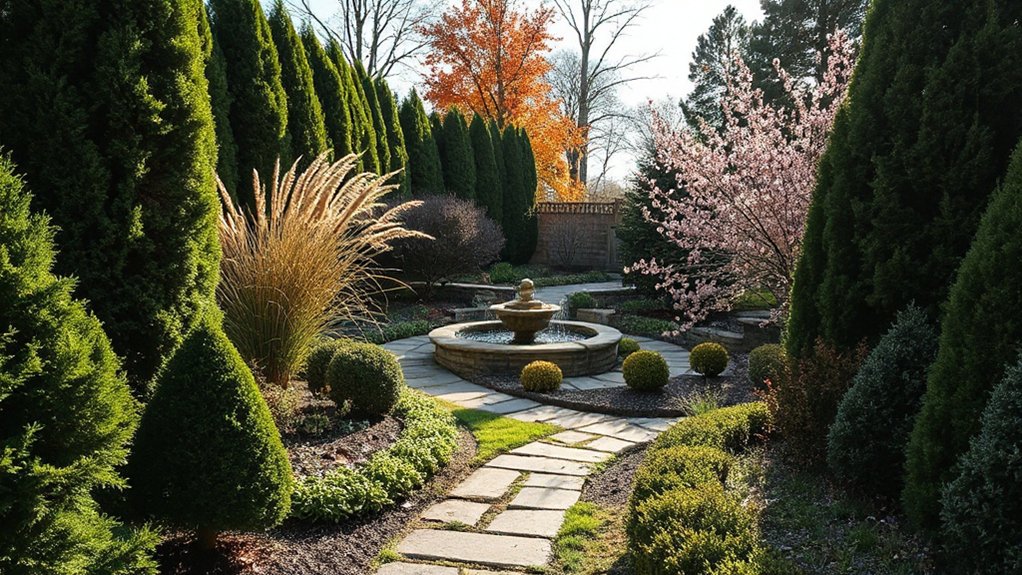
As you plan year-round interest, focus on how seasonal color shifts can carry the garden from one edge of color to the next. Start with plants that show strong winter, spring, and fall progressions, so you get visual changes without replanting.
Consider winter-to-spring shift ideas like evergreens with bright stems or early-flowering bulbs to extend the palette into the shoulder seasons.
Seasonal Color Shifts
- Choose a core palette of complementary hues for seamless shifts
- Integrate tall-backdrop plants with lower, spreading groundcovers
- Plant nectar sources that bloom across seasons
- Zone for rain garden efficiency and seasonal texture variety
Winter-Spring Transition Ideas
Winter to spring is a critical shift for year-round interest: as the garden sheds its winter austerity, you can stage a gradual, eye-catching change by pairing evergreens with early bloomers and textural contrasts that carry through the cold-to-warm swing.
Start with a diagonal of evergreen structure—thuja, boxwood, or small conifers—to anchor beds.
Introduce hardy perennials and winter-early bloomers, like hellebores and crocuses, in staggered heights for depth.
Add texture with grasses, silver foliage, and barky stems.
Plan for ongoing color with late-wrosting shrubs and flowering bulbs that emerge as temperatures rise.
Consider Wildflower meadows in sunny pockets to sustain interest, and install vertical gardens on fences or walls for vertical color and microclimate benefits.
Keep irrigation efficient and soil mulched.
Maintenance Plan to Keep Your Backyard Beautiful

A solid maintenance plan keeps your backyard looking good with minimal effort. You’ll keep features thriving by steady, targeted actions that fit a busy schedule. Prioritize simple routines, durable materials, and smart systems for lasting beauty. Focus on planting health, pruning when needed, and efficient water use through rainwater harvesting.
Track tasks seasonally to prevent overgrowth or neglect, and adjust based on weather and yard activity. A clear plan helps you enjoy wildlife habitat benefits while minimizing upkeep.
- Set a monthly pruning and weeding schedule to maintain plant health.
- Check irrigation efficiency and reuse rainwater when possible.
- Mulch beds to conserve moisture and reduce weeds.
- Inspect trees, fences, and edging for quick repairs and safety.
Frequently Asked Questions
How Long Will My Garden Design Take to Implement?
Implementation time varies, but expect 2–6 weeks for planning and setup, depending on scope. You’ll confirm garden layout early, install water features third, and complete planting in stages as you keep monitoring progress daily.
What Is the True Total Cost Beyond Materials?
Your true total cost beyond materials hinges on labor, permits, and contingencies, so plan for surprises. Use cost estimation as your guide and practice strict budget planning, including timelines, contractor fees, and contingency. Stay proactive, track every dollar.
How Do I Select Plants for Extreme Weather?
Start by choosing native plants and drought tolerant species suited to your climate, soil, and extreme weather patterns; you’ll reduce maintenance, conserve water, and boost resilience while you enjoy reliable color and structure year round.
How Often Should I Prune and Maintain Features?
Prune when growth slows or inches push new buds; your pruning frequency depends on species, but aim quarterly for shrubs and annually for trees. Stick to a maintenance schedule, and you’ll savor balanced, vigorous, well-tuned landscape throughout.
Can I Implement in Stages to Fit Budget?
Yes, you can implement it in stages to fit budget. Start with essential garden layout and outdoor lighting, then expand gradually as funds allow; prioritize low-cost, high-impact elements and schedule improvements to maximize visual impact.
Conclusion
So, with a clear plan, you’ll shape a backyard that works for you—today and tomorrow. Start small, zone thoughtfully, and choose hardy, low-maintenance plants for your climate. Use simple paths, a cozy seating nook, and smart storage to keep clutter at bay. Keep a realistic budget and a light maintenance routine, season by season. The result? A functional, beautiful oasis that ages gracefully, inviting you to linger, experiment, and enjoy the yard you designed.