
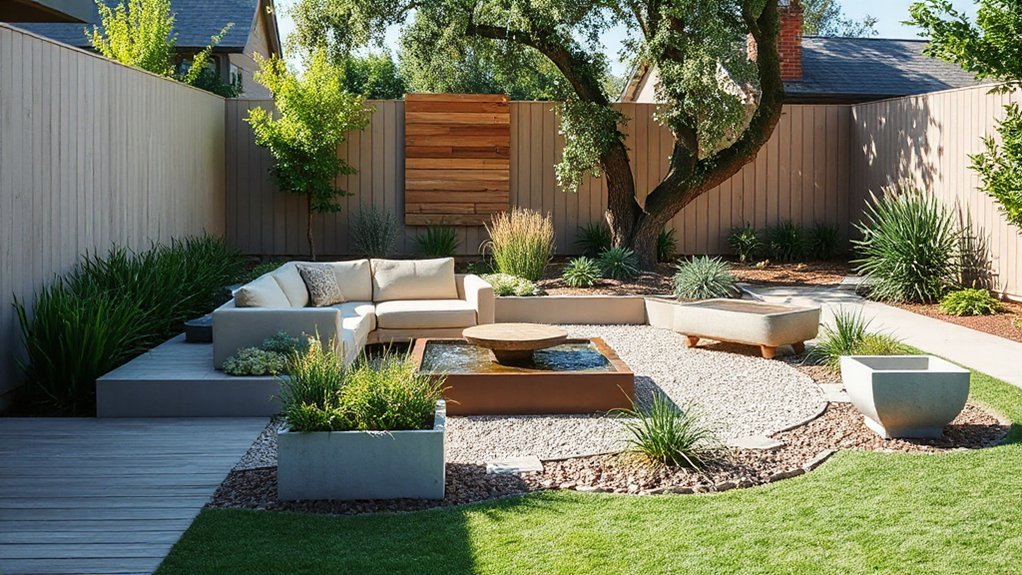

You want a garden that’s low-maintenance yet striking to modern buyers. Start with drought-tolerant plantings and clean lines, add durable, permeable hardscapes, and layer in smart irrigation for efficiency. Create outdoor living zones that work year-round with weather-ready furniture and subtle lighting. Keep edges neat with mulch and cohesive color palettes, then add focal points like sculptures or tall perennials for visual pull. It’s practical now, but the payoff could redefine curb appeal—so you’ll want to see how it all fits together.
What Modern Buyers Want in a Low-Muss Garden Makeover
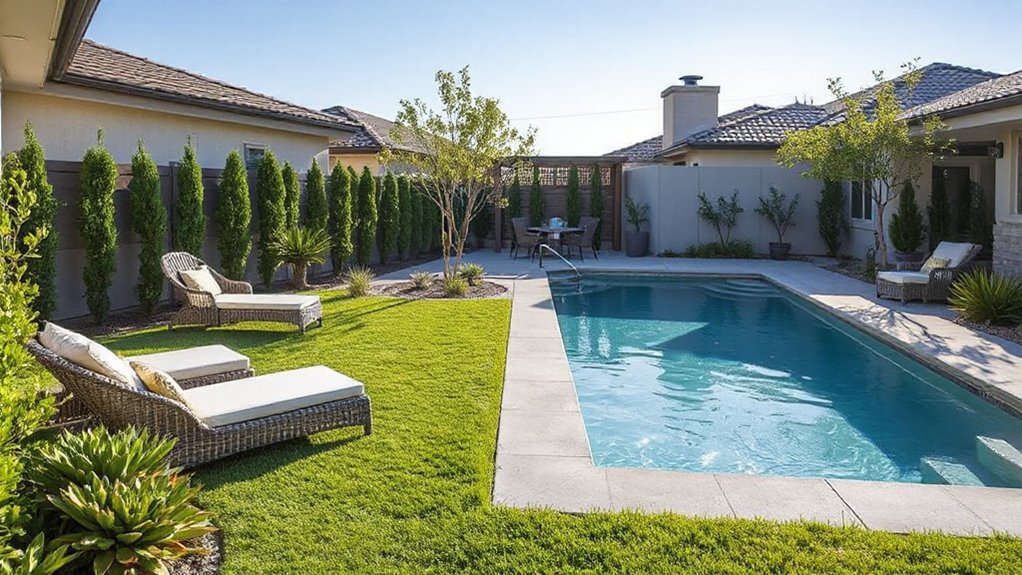
Modern buyers want a low-muss garden makeover that delivers impact with minimal upkeep. You design with intent: clean lines, durable materials, and smart irrigation. Focus on curb appeal that lasts, using native plants for resilience and fewer inputs.
When addressing garden pests, choose integrated pest strategies—monitor, encourage beneficials, and select pest-resistant varieties to minimize sprays.
For soil enrichment, start with a compact, well-structured bed, amending with compost and aged mulch to improve fertility and moisture retention.
Use permeable pathways to reduce maintenance and improve drainage.
Install a compact irrigation system with zones, timers, and rain sensors to curb water use.
Keep planting schemes simple: a few focal specimens, plus seasonal color that’s easy to replace.
Prioritize accessibility, safety, and a timeless, adaptable aesthetic.
Start With Drought-Tolerant Plantings for Easy Care
Drought-tolerant plantings form the backbone of an easy-care garden, delivering visual impact with minimal water and maintenance. You’ll set the tone by choosing species aligned with xeriscape principles—plants adapted to local conditions, requiring less irrigation and fewer inputs. Prioritize textures, foliage, and color that survive dry spells without constant care.
Native plant benefits shine here: established roots support local pollinators, reduce watering, and resist regional pests. Planters and borders should mix low-water perennials with short-lived annuals for seasonal interest, rotating selections to maintain appeal.
Group plants by sun exposure and water needs to simplify maintenance. Mulch heavily to conserve moisture and suppress weeds. Install smart irrigation or drip lines, calibrated to your climate, and run seasonal checks.
This approach balances practicality with contemporary garden aesthetics.
Build Year-Round Structure With Low-Maintenance Perennials
You’ll set a year-round framework by choosing low-maintenance perennials that deliver steady coverage.
Prioritize plants that stay put, resist wear, and reduce pruning while still giving you seasonal interest.
Start with a smart mix for continuous foliage and easy upkeep to keep your garden looking sharp through every season.
Year-Round Perennial Coverage
A year-round perennial coverage plan starts with selecting low-maintenance, reliable perennials that provide consistent structure through all seasons, so your garden stays cohesive even as conditions change. You’ll build a backbone with sturdy grasses, evergreen shrubs, and clump-forming perennials that resist heavy weather and still offer color.
Choose proven performers for seasonal planting windows, ensuring bloom and foliage overlap for continuous interest. Pair textures and heights to create distinct tiers that read well from multiple viewpoints.
Include native or well-adapted varieties to boost resilience and reduce care needs. Plan for wildlife habitat by incorporating nectar sources and shelter, while keeping maintenance minimal with mulching and selective pruning.
This approach yields a cohesive, modern, low-effort composition that remains appealing throughout the year.
Low-Maintenance Plant Selection
When building a year-round structure with low-maintenance perennials, start by selecting reliable players that perform well across seasons. You’ll prioritize species with strong shade tolerance and drought resilience, reducing upkeep while preserving color and texture.
Focus on a compact, layered palette: groundcovers, mid-height perennials, and occasional focal accents that don’t require daily attention. Choose varieties suited to container gardening for versatile display and easy relocation with the seasons.
Favor hummingbird- and pollinator-friendly options that bloom in staggered windows, extending interest without extra work. Use native or well-adapted cultivars to minimize pests and disease pressure.
Plan for soil, sun, and drainage needs upfront, then group by water needs to simplify irrigation. Finally, document care tasks and seasonal tweaks to maintain consistency year after year.
Design Practical, Appealing Hardscapes
Designing practical, appealing hardscapes starts with purpose: what’ll you actually use the space for, and how can materials and layout support that use? You’ll map traffic flow, define focal points, and select durable surfaces that resist weather while feeling inviting.
Favor clean lines, permeable pavers, and subtle color to hide dirt and wear. Plan changes between hard and soft elements so you don’t trip over errant edges. Incorporate garden furniture that doubles as seating and utility, and choose decorative accents that reveal your style without clutter.
Prioritize maintenance ease: integrated lighting, hidden fasteners, and level thresholds. Use textures to create depth, not distraction, and guarantee accessibility. With thoughtful scale and retreat-worthy nooks, your yard reads as polished, modern, and truly livable.
Create Functional Outdoor Living Zones for Every Season
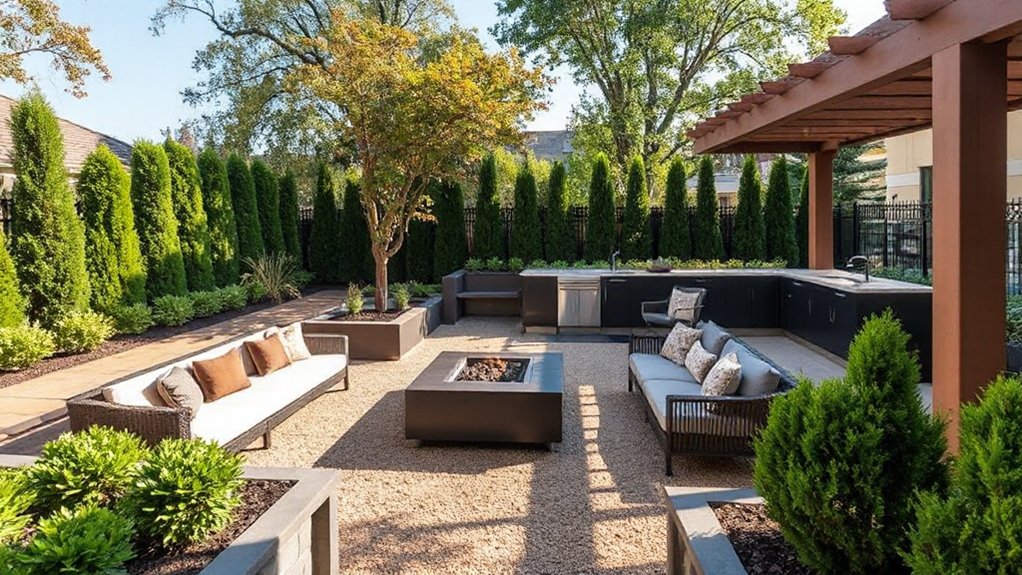
Ever thought about breaking your yard into zones that work year-round? You can design three defined spaces: a sunny lounge, a sheltered dining area, and a low-maintenance contemplation corner.
Start with a simple traffic flow so paths guide guests without crossing activities. Choose durable Garden furniture that suits each season—expect fade resistance for summer, warm cushions for cool months, and easy-clean materials.
For year-round comfort, layer with controlled Outdoor lighting: warm sconces along walkways, a string-light canopy for evenings, and task lighting near grills. Integrate weather-ready planters and adaptable shade—awnings or pergolas—to extend use beyond peak season.
Prioritize privacy with trellises or evergreens between zones, and guarantee storage is nearby. With cohesive styling and practical gear, every season feels intentional, not incidental.
Add Subtle Tech That Enhances, Not Distracts
Tech should feel seamless, not flashy: integrate smart tweaks that simplify tasks and elevate comfort without pulling focus from the garden itself. You set up a simple layer of smart lighting along paths and seating, controlled by schedules or voice prompts, so evenings feel inviting without shouting for attention.
Opt for subtle color temps and movement sensors that brighten only when you approach, preserving ambience. Place hidden speakers discreetly, delivering ambient sound or weather updates without dominating the space.
Choose wireless, weatherproof options that blend with décor—think near walls, under eaves, or in planters. Prioritize reliability and privacy; avoid cluttered grids or loud alarms.
Test configurations during low-traffic times, then refine for a calm, integrated tech vibe.
Optimize Irrigation and Water-Saving Strategies
To optimize irrigation and cut water use, start with a smart, zone-by-zone approach that targets only what your landscape needs. Map zones by sun exposure, soil type, and plant needs, then assign irrigation runs accordingly.
Install smart controllers that adjust schedules based on weather data and soil moisture, reducing unnecessary watering.
Use Rainwater harvesting where feasible to supplement supply, and pair it with a scalable Drip irrigation system for precise delivery at the root zone.
Keep emitters clean and pressure-balanced to avoid runoff and misting.
Schedule deep, infrequent watering to encourage deep roots and drought resilience.
Pause irrigation during rain events and leverage mulch to minimize evaporation.
Regularly audit for leaks, clogs, and overspray, refining zones as plants mature.
Bring Color, Texture, and Fragrance on a Budget

You’ll mix colorful plant pairings for instant impact, using contrasting blooms to stretch your palette without splurging.
Add fragrance and texture with low-cost options like herbs, ornamental grasses, and compact perennials that repeat along borders.
Target easy-to-find, long-blooming varieties to keep interest high all season while staying budget-smart.
Colorful Plant Pairings
Pairing bright annuals with dependable perennials boosts color in every season without breaking the bank. You’ll create dynamic beds by pairing sun-loving flora with complementary textures, keeping maintenance low and impact high.
Choose a cohesive palette—three to five hues—that repeats along borders for rhythm and perceived abundance. Mix tall vertical accents with low groundcovers to add depth and reduce weeding time; a vertical garden can showcase bright hues without crowding roots.
Use bloom succession to sustain interest: early-summer daisies, mid-season cosmos, late-season salvia. Incorporate fragrant, drought-tolerant options to minimize water use while maximizing scent and movement.
Keep costs down with sturdy containers and smart spacing, swapping annuals in yearly rotations. This approach delivers vibrant, low-effort curb appeal that resonates with modern buyers.
Fragrant, Low-Cost Additions
Could you spot the value in scent without overspending? You can boost curb appeal with fragrant, low-cost additions that feel premium without a premium price. Focus on practical plant picks that deliver noticeable aroma and texture.
Scented herbs, like rosemary and basil, layer scent as you brush past or trim, while saving on potting and maintenance. Pair them with budget friendly blooms such as zinnias, calendulas, and sweet alyssum for continuous color and fragrance from spring through fall.
Use compact varieties for borders, containers, or edging, maximizing impact in small spaces. Place herbs near doorways or seating to capture scent on entry and pass-by moments.
Finish with mulch or gravel to reduce upkeep and keep pathways inviting.
Maintain Edges and Mulch for Neat Boundaries

Maintaining crisp edges and fresh mulch instantly sharpens a garden’s look and helps reduce weed pressure. You’ll create clean boundaries that frame planting beds and sidewalks, boosting curb appeal for modern buyers. Focus on practical steps, and pick mulch types that suit your climate and aesthetic.
- Edging techniques: use a sharp half-moon edger or a taut poly wire to define borders, then reseal with a fast-setting soil edge for lasting depth.
- Mulch types: choose organic mulch for soil life or decorative mulch for color; apply 2–3 inches and refresh annually.
- Maintenance cadence: inspect edges monthly, pull weeds by hand at the edge line, and top mulch as needed to keep a neat, uniform look.
The One-Plate Layout: A Simple Visual Anchor and Flow
The one-plate layout gives you a clear visual anchor and smooth flow across the garden using a single, dominant element. You plant around that anchor to guide eye movement and create rhythm, then echo it with complementary shapes and textures.
Choose a sturdy focal point—like a sculptural garden art piece or a tall specimen plant—and bracket it with low-growing groundcovers to emphasize scale. Use decorative containers at key sightlines to reinforce continuity without clutter, rotating seasonal blooms to maintain interest.
Maintain balance by pairing massed positives with negative space, ensuring pathways invite exploration rather than overwhelm. Keep color restrained and cohesive, so the anchor remains legible from multiple angles.
This approach delivers modern, buyer-friendly coherence without sacrificing personality.
Quick Wins to Boost Curb Appeal Before Listing
You can boost curb appeal fast by revitalizing frontage visuals and making instant curb improvements that buyers notice first. Start with clean lines: trim shrubs, repaint the mailbox, and guarantee lighting is bright and inviting.
Small tweaks like a fresh seed-free lawn edge and a new house-number sign set a practical, trend-aware tone for listing photos.
Refresh Frontage Appeal
Curious how a few quick upgrades can transform curb appeal? You can refresh frontage with practical, high-impact moves that look contemporary and affordable. Focus on a clean, inviting first impression that buyers notice from the sidewalk.
- Update the entry with a bold door color, fresh hardware, and a modern light fixture for instant warmth.
- Add garden art and layered planters to frame the path, creating focal interest without clutter.
- Support a wildlife habitat by installing native plantings and a simple water feature or bird-friendly elements near the doorstep.
Keep textures varied but cohesive, choose drought-tolerant species, and guarantee the path is level and well-lit. Small, purposeful tweaks yield big, sale-ready impact.
Instant Curb Improvements
Instant curb appeal starts with quick, noticeable wins that don’t require a full remodel. You can transform the approach with small, strategic updates that readers notice from the street.
Focus on clean lines, high-contrast foliage, and tidy edges to project a modern, maintained vibe.
Prioritize Garden aesthetics by selecting a cohesive color palette and invoking seasonal freshness—think planters, mulch, and minimalist hardscape accents.
Improve entry presence with a fresh doormat, updated lighting, and a sturdy mailbox.
Tackle Pest control proactively for a pristine exterior: trim vegetation away from the house, seal gaps, and address standing water to deter pests before listing.
Maintain curb durability with weatherproof finishes and visible, low-maintenance plantings that read as deliberate, not accidental.
Frequently Asked Questions
What Budget Ranges Suit Modern Buyers for a Garden Makeover?
Aiming for modern buyers, budget ranges: you can start at $5,000–$10,000 for noticeable upgrades, $15,000–$30,000 for substantial transformations, and $50,000+ for premium garden design with outdoor lighting that truly elevates curb appeal and usability.
How Long Does a Typical Low-Muss Garden Makeover Take?
A quick garden makeover typically takes a few days to a couple weeks, depending on scope. You’ll see progress as you plan garden design and plant selection, moving methodically, staying practical, precise, and trend-aware in every step.
Which Plants Perform Best in Extreme Heat and Drought?
Drought resistant plants thrive in extreme heat landscaping, so choose succulents, perennials, and lullaby grasses. You’ll conserve water, reduce maintenance, and keep color year-round, even under scorching sun and dry spells, while staying stylish and budget-conscious.
Can Smart Irrigation Be Installed After Listing Photos?
Yes, you can install smart irrigation after listing photos. You’ll save water and time, but check garden installation regulations first, then coordinate with the contractor to integrate smart irrigation systems seamlessly with the current landscape.
Are There Legal Restrictions on Home Garden Measurements?
Yes, you’ll want to check garden size regulations and zoning restrictions where you live; they vary. You’ll likely need permits for outbuildings or fences, and adherence guarantees your landscape remains compliant and smoothly enhances your home’s curb appeal.
Conclusion
Ready to transform your yard into a buyer-friendly retreat? Start with drought-tolerant plantings and low-maintenance perennials for year-round appeal. Use durable, permeable hardscapes and smart irrigation to cut upkeep. Create defined outdoor zones for lounging, dining, and play, then add color, fragrance, and cohesive containers on a budget. Maintain neat borders and mulch for instant curb appeal. Quick wins before listing can swing decisions—some experts say a single well-placed focal point can dramatically boost perceived value. Your garden, wow.