
Think of your project like laying a solid foundation before you build. You’ll start by clearly stating your goals, set a realistic budget, and prioritize tasks by impact and feasibility. Vet pros, establish clear processes, and map a phased timeline to keep momentum without burning out. Stay flexible to adapt to surprises and avoid common missteps. If you want dependable progress and a rewarding upgrade, you’ll want the details that keep you on track.
Define Your Home-Improvement Goals
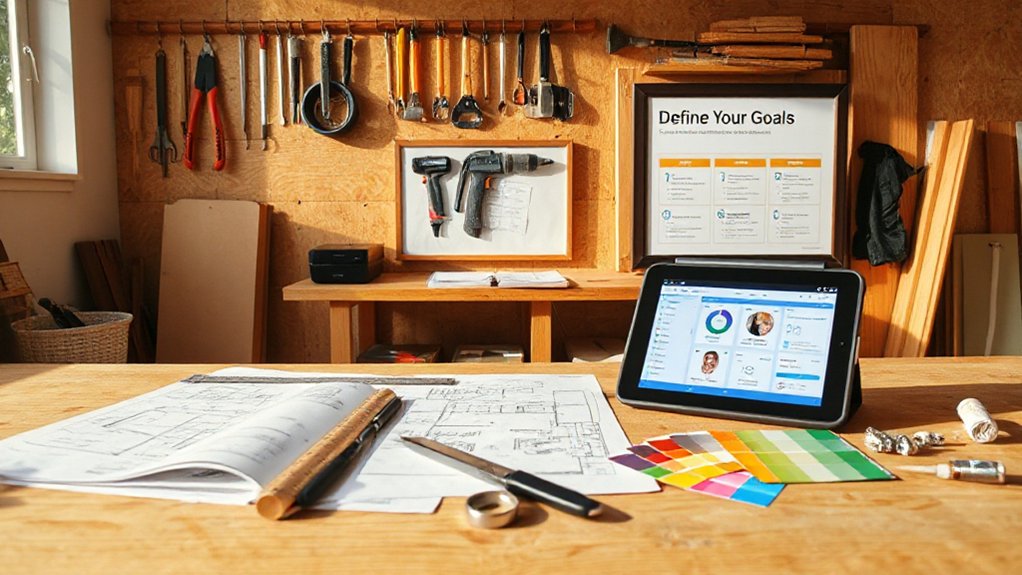
Defining your home-improvement goals starts with a clear picture of what you want to achieve and why it matters. You’ll identify priorities, whether you want better flow, increased storage, or a brighter workspace.
Start by listing outcomes that matter most to daily life, then translate them into measurable targets. Consider how a refreshed Home aesthetic can transform perception and comfort, while energy efficiency reduces long-term costs and environmental impact.
Break goals into actionable steps with concrete deadlines and milestones. Assess current conditions, tag critical weaknesses, and define success criteria for each item.
Prioritize projects that align with your lifestyle and budget, ensuring feasibility. Document your goals plainly to guide decisions, vendor selection, and progress tracking, keeping focus on tangible results rather than vague intentions.
Set a Realistic Budget for Planning
Set a realistic budget by setting clear limits on what you’ll spend and what you’ll save for surprises.
Build contingency funds to cover unexpected costs without derailing the plan.
Keep these targets in writing and review them as you progress.
Set Clear Limits
How much can you spend before the project stalls? You set clear limits to keep planning focused and avoid scope creep. A defined ceiling guides decisions on design aesthetics and material selection, preventing overruns later. Commit to a practical budget that reflects real quotes, not wishful thinking. Approach your numbers with discipline, then adjust only when needed by proven value.
- Define hard caps for each category (materials, labor, permits, contingencies)
- Prioritize must-haves over nice-to-haves to protect the core plan
- Compare multiple bids and document divergences transparently
- Set a review cadence to reaffirm limits as plans evolve
This structure keeps you on track, enabling precise trade-offs and timely decisions without surprises.
Build Contingency Funds
After you’ve pinned down hard budget caps, you should add a contingency fund to cover the unexpected. Build contingency funds by sizing a dedicated line item at 10–15% of total project costs, or at least a fixed minimum that suits the scope.
Use it for unexpected expenses that arise from material delays, code changes, or hidden repairs. Keep the fund separate from daily operating costs to avoid dilution. Track each dollar, updating forecasts monthly as plans evolve.
Prioritize emergency savings first, so the contingency remains intact if other costs spike. Reassess mid‑project and adjust allocations when bids come in lower or higher than anticipated.
This disciplined approach reduces stress, preserves scope, and guarantees you finish on time and within a realistic budget.
Prioritize Projects by Impact and Feasibility
Start by evaluating impact vs. effort to spot high-value wins, and map them to your available time and budget.
Prioritize high-return projects first, so you gain the most benefit with the least risk.
Check feasibility and timeline for each item to guarantee realistic scheduling and clear milestones.
Assess Impact vs. Effort
Are you unsure which home-improvement projects to tackle first? You’ll assess impact versus effort by measuring outcomes against the required work. Use a simple scoring approach, then act on high-value, low-effort wins first. Visualize each project through creative visualization to confirm its emotional impact and practical benefits.
- Define goals and expected changes for each project
- Estimate time, cost, and disruption level
- Score impact and effort on a consistent scale
- Prioritize high impact with manageable effort
This method keeps you deterministic, not reactive, and it grounds decisions in tangible results.
Prioritize High-Return Projects
To prioritize high-return projects, map each option by its impact and feasibility, then rank only those that deliver meaningful results with manageable effort. You’ll focus on practical gains, not prestige metrics.
Start with quick-win upgrades that improve daily use or resale value, then filter out options that require excessive time or cost for marginal benefit. Assess design trends and material choices for each candidate, choosing elements that age well, resist wear, and align with your home’s core style.
Prioritize projects that facilitate multiple benefits—energy savings, comfort, or layout improvements—while staying within budget. Document expected outcomes, rough costs, and a realistic timeline for the top tiers.
This disciplined approach keeps you moving efficiently toward measurable, high-impact results.
Feasibility and Timeline Check
Feasibility and timeline determine which high-impact ideas move forward. You’ll assess constraints, costs, and scheduling before committing to a plan. Focus on practical sequencing, staffing needs, and disruption minimization to protect daily life.
Consider structural considerations and how they affect scope, budget, and safety. You’ll balance ambition with realism, then set a clear milestone map to track progress. Decision points should be data-driven, not feelings.
- Assess structural considerations early to avoid costly pivots
- Estimate budgets with contingency for material selection and labor
- Schedule dependencies to minimize overlap and downtime
- Define measurable milestones and review points for transparent progress
This approach keeps projects scoped, feasible, and aligned with your timeline.
Vet Pros and Build Trusted Processes
When vetting professionals for home improvement, you should start by defining your project scope and quality standards, then identify candidates who can meet them consistently.
You’ll vet pros by checking licenses, insurance, and past project outcomes, not hype.
Create a short list of reputable firms, then compare proposals against your criteria, focusing on scope alignment, timelines, and cost transparency.
Build trust by requesting written contracts, detailed milestones, and clear change-order processes.
Verify references and inspect recent work to confirm quality and workmanship.
Ask about warranty coverage, site safety practices, and communication cadence.
Document everything, including emails and decision logs, so expectations remain explicit.
Maintain objective criteria, avoid pressure, and favor methodical, verifiable responses over promises.
Vet pros, build trust through evidence, consistency, and accountable processes.
Map a Phased Timeline for Momentum

With vetted processes in place, you’ll map a phased timeline that keeps momentum steady and measurable. You’ll assign clear milestones, align tasks with dependencies, and build buffers for contingencies. This plan prioritizes actionable steps, so progress stays tangible and trackable.
- Define phases by objective: planning, sourcing, execution, review, with target dates
- Attach responsible owners and required inputs, including decorative accents and eco friendly options
- Set weekly check-ins to assess status, adjust scope, and update metrics
- Incorporate a quick risk log and mitigation actions to protect momentum
Avoid Common Mistakes and Stay Flexible
To avoid common mistakes and stay flexible, you’ll build in guardrails that protect momentum without stifling progress. Start with a clear scope, then set nonnegotiable milestones and flexible contingencies. When planning, identify potential failure points and document backup options, so Unexpected obstacles don’t derail your timeline.
Use a structured review cadence: weekly checks, 48-hour decision windows, and a simple change-log to track scope shifts. Prioritize decisions that unlock progress over perfection, and refuse to over-allocate resources to low-impact tasks.
Cultivate Creative flexibility by designating a contingency budget and modular approaches—swap materials or methods without ripping up major plans. Communicate early with contractors and suppliers to surface risks, align expectations, and preserve momentum while adapting to new information.
Stay disciplined, responsive, and outcome‑driven throughout the project.
Frequently Asked Questions
How Do I Handle Permit Requirements and Zoning for Renovations?
You handle permit requirements by researching local building codes and zoning, then follow the permit process step by step. Gather plans, submit applications, and schedule inspections; guarantee compliance with building codes to avoid delays and penalties.
What Metrics Define a Project’s Success Beyond Cost Savings?
Project success scales beyond savings: you measure speed, quality, and satisfaction. You track project timeline, set quality benchmarks, verify workmanship, foresee risks, and adjust promptly, ensuring practical, precise progress that keeps metrics meaningful and momentum maintained.
How Should I Protect Myself From Contractor Scams or Fraud?
To protect yourself, you vet contractors thoroughly and document everything. Research reputations, licenses, and references, then sign detailed contracts. Use fraud prevention tips like written scope, payment milestones, avoid upfront full payments, and verify insurance and bonding.
Can I Self-Manage Complex Projects Without Skilled Trades?
Yes, you can, but not without risks. Start by evaluating your DIY pitfalls and Skill assessment honestly, because rushing blind, you could miss details and costs. Prepare a clear plan, timeline, and milestones before you begin.
What Maintenance Plan Should Follow After Project Completion?
You should establish a maintenance schedule and follow an inspection checklist after completion. Schedule monthly, seasonal, and annual tasks, document results, address gaps promptly, and adjust the plan as remodel specifics require for lasting performance.
Conclusion
You’ve got this: with clear goals, a smart budget, and a phased timeline, your project stays focused and affordable. Prioritize what moves the needle, vet pros, and keep open, documented communication to protect quality. One eye-catching stat: homes that map a phased plan finish 30% faster and stay 20% under budget on average. Stay disciplined, adapt when needed, and celebrate small wins as momentum builds toward a rewarding upgrade that fits your real needs.