


To add character to a modern apartment, start with a lived-in color foundation—durable neutrals, matte finishes, and layered light and dark shades that hide wear. Build texture with woven rugs, throws, and varied textiles, then balance function and personality with versatile furniture. Create bold accents through restrained urban materials like brick or brass, and use thoughtful storage to avoid clutter. Accent with art, plants, and rotating decor to keep momentum. Curious about refining the vibe further? You’ll discover more soon.
Character in a Modern Apartment: Why It Matters and How to Start

Character in a Modern Apartment matters because it makes a space feel like you, not just a place to live. You start by evaluating what you actually use and love, then tailor a few core ideas around that.
Prioritize urban charm in small, purposeful gestures—like a well-chosen light fixture, a textured rug, or a standout chair—that don’t overwhelm the room. Let personal expression guide your selections, but keep lines clean to preserve the modern feel.
Mix eras with intention: a vintage accent against sleek surfaces can anchor the space without shouting. Focus on function first, then refine with detail: one meaningful piece, one statement color, one tactile element.
You’ll build character gradually, with clarity, restraint, and a consistent thread throughout.
Define a Lived-In Color Foundation That Survives City Life
You’ll establish a lived-in color foundation by choosing hues that resist wear and feel calm amid city rhythms. Think durable neutrals and subtle depth that hide dust and scuffs while still inviting touch and personality.
This ballast of color sets a practical, adaptable stage for your space to endure daily life without losing warmth.
Color That Withstands
What makes a color feel truly durable in a bustling city apartment? You’re aiming for a foundation that hides wear while staying serene. Start with matte or satin finishes, which forgive fingerprints and scuffs better than high gloss.
Choose restrained hues—warm neutrals, earthy grays, or deep taupes—that anchor rooms without shouting. Rely on color psychology to pick tones that calm busy days and invite relaxation after hours.
Layer with a slightly lighter or darker companion shade to add depth without creating busy contrast. Use paint techniques like edge-softening transitions and subtle feathering to reduce visible wear at corners and doors.
Finally, test samples in multiple lighting moments to confirm you’ve built a durable, balanced backdrop for city living.
Lived-In Hue Strategy
A lived-in color foundation starts with fabrics, surfaces, and accents that read as steady rather than flashy, so city life doesn’t demand constant touch-ups. You choose muted neutrals as ground, then layer with durable textures and timeless patterns that age gracefully. Think low-sheen linens, tweed, wool, and leather that hide minor wear while staying refined.
Build color through controlled pops—soft terracotta, slate, olive—rather than loud contrasts, so space feels cohesive after long days. Incorporate vintage charm in furniture silhouettes and accessories that won’t scream novelty, but exude personality.
Add artistic motifs carefully: a rug, some throw pillows, or wall art that echoes a specific era or craft. The result: a resilient, polished backdrop for everyday life that grows more inviting with use.
Build Texture Layers Without Creating Clutter
Texture is best added in layers, so you get depth without visual chaos. You’ll balance materials—wood, metal, fabric—so each element feels intentional, not crowded.
Start with a neutral base and introduce subtle variations: a woven rug, a matte wall finish, a soft throw. Build interest in increments, not all at once, to preserve flow.
Use wall art to anchor groups instead of saturating walls; rotate pieces seasonally to refresh without clutter.
Incorporate decorative trays on coffee tables and consoles to create surface hierarchy and tidy staging zones.
Keep silhouettes simple and scale-aware; mix textures within the same palette to avoid visual noise.
Maintain clear sightlines, store excess decor, and reserve horizontal surfaces for purpose.
This approach yields warmth without sacrificing minimalism.
Pick Furniture That Balances Function and Personality
Think through furniture that blends function with personality, so every piece earns its keep and mirrors your lifestyle. Prioritize form and use together—comfortable seating or a sturdy table should also feel intentional and expressive.
Let pieces reflect you through thoughtful details, while keeping clutter at bay and daily flow smooth.
Function With Flair
When you choose furniture, prioritize pieces that blend everyday usefulness with a touch of personality, so your rooms feel lived-in rather than showroom-flat. You’ll pair clean lines with purposeful details—think a storage sofa, a versatile sideboard, or a coffee table with hidden compartments.
Seek items that perform reliably, yet invite curiosity: a bookshelf that doubles as a room divider, a desk with ergonomic storage, or modular seating you can reconfigure for guests.
Balance is key, so choose finishes and textures that feel grounded. Add vintage charm in small, intentional doses, and weave in rustic accents through warm woods, patina, or handcrafted hardware.
The result is spaces that function well and feel distinctly yours, without compromising clarity or polish.
Balance Form and Use
Finding the right balance between form and use means choosing furniture that both looks intentional and serves real life. You prioritize pieces that anchor rooms visually while supporting daily tasks, so every option earns its keep.
Look for clean silhouettes with refined details that nod to vintage charm without tipping into nostalgia overload. A midcentury console can pair a modern lamp with a sculptural vase, delivering function and subtle personality.
Choose storage with hidden practicality—drawers, trays, modular units—that keep clutter at bay while showcasing curated objects.
Consider upholstery that tolerates everyday wear yet feels refined, so rooms remain polished.
Let your selections translate Artistic expression into a cohesive story, avoiding décor trappings, so your space feels deliberate, usable, and distinctly you.
Personalize Through Pieces
Start with a versatile sofa or chair pair, and select fabrics or finishes that feel distinctly you. Combine scale and flow so you can live comfortably without visual clutter.
Integrate vintage textiles as accents—throw pillows, a quilted throw, or a dated rug—to add warmth without overwhelming the room.
Use multiuse pieces, like a coffee table with storage or a console that doubles as a work surface, to keep the space practical.
Craft artistic vignettes with a few curated objects, photos, and plants. Aim for cohesion, not conformity, letting personality emerge through thoughtful, intentional selections.
Create Bold Accents That Fit an Urban Footprint
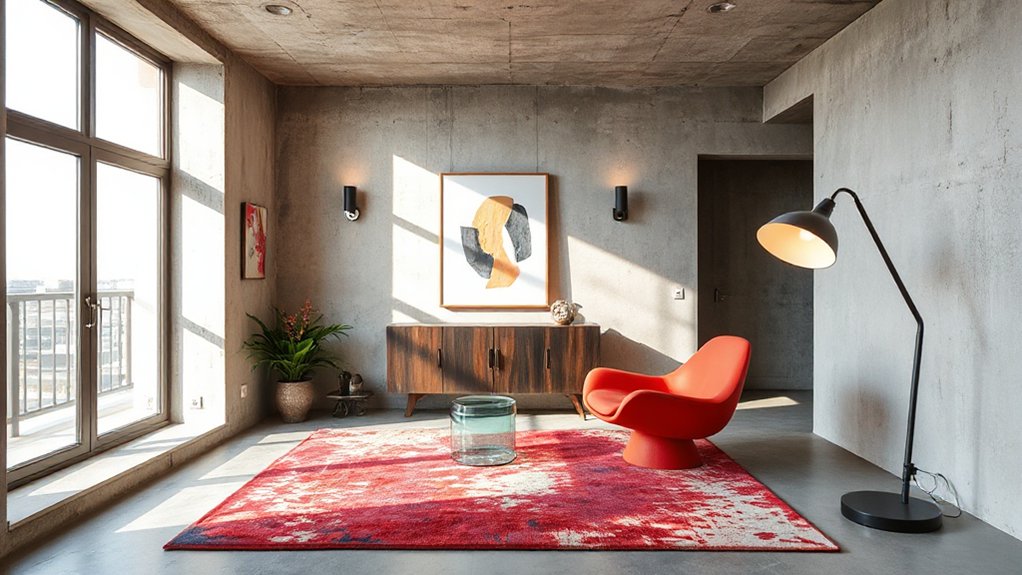
Bold accents can instantly anchor a compact, urban space without overwhelming it. You’ll craft these touches with intention, choosing items that echo the city’s rhythm without shouting.
Start with a restrained palette and introduce texture through materials like brick, concrete, brass, or matte black metals to establish a durable backbone.
Seek urban accents that balance contrast and cohesion, so bold motifs appear deliberate rather rather than loud.
Integrate statements as focal points—think a sculptural chair, a geometric rug, or a wall panel—that can be swapped as your tastes evolve.
Layer subtle patterns across textiles to keep the room dynamic yet cohesive.
Let Lighting Tell Your Story in Every Room
Lighting isn’t just a detail in a modern apartment—it’s the storyteller that shapes mood, guides flow, and defines scale in every room. You’ll use layered lighting to sculpt space: a base for clarity, task lighting for function, and accent light to highlight character.
Keep fixtures proportional to the room’s size, avoiding glare and harsh contrasts. In living areas, blend warm ambient with focused task lighting so conversations feel natural and inviting.
In bedrooms, dimmable options enable easy changes from daytime focus to restful evenings. Kitchen islands deserve dedicated lighting that reduces shadows without washing colors.
Consider lighting ambiance to unify style—spotlights, pendant clusters, and under-cabinet glow should feel cohesive. When you tune mood lighting, you tell a deliberate, tactile story with every space.
Curate Personal Mementos Without Visual Chaos
You’ll display personal keepsakes with intention, selecting pieces that tell a cohesive chapter of your life. Layer diverse textures—from framed photos to tactile mementos—to add depth without clutter.
Keep scales and colors harmonized. Let quiet focal points anchor the collection, guiding the eye and preventing visual chaos.
Display Personal Keepsakes
How can you display personal keepsakes without turning your space into a cluttered jumble? You curate with intention, prioritizing meaning over quantity. Start by selecting a few standout pieces—photos, heirlooms, travel finds—and assign them a dedicated zone.
Use vertical display to save surface space: wall shelves, a narrow ledge, or a shadow box keepsakes near eye level. Introduce Vintage furniture sparingly to anchor the room, letting it pair with clean, modern lines so memories feel intentional, not crowded.
Create Artful displays by grouping items in odd numbers and varying heights for rhythm. Keep supportive surroundings minimal—solid backgrounds, restrained color, and adequate lighting.
Rotate pieces seasonally to refresh the narrative without adding bulk. Your keepsakes become focal, not clutter, with thoughtful curation.
Layer Diverse Textures
Layering textures is about mixing tactile elements without creating visual noise. You balance surfaces by repeating a subtle family of materials—wood, fabric, metal—while keeping contrast deliberate.
Start with a neutral base and add one statement texture at a time to avoid clutter. Choose wall art that complements scale and color instead of overpowering the room; lean toward curated pieces that resonate personally, but don’t overfill walls.
Introduce textiles in varying weights—linen, wool, velvet—to create depth without heaviness. Lighting fixtures matter: select fixtures with clean lines and warm bulbs to unify disparate textures.
Keep edges soft with woven baskets, throws, and rugs, ensuring each layer has breathing space. Periodically edit, swapping in a fresher texture to maintain cohesion and intentionality.
Create Quiet Vocal Points
As you move from layering textures to creating quieter focal points, start by choosing a handful of personal mementos that truly speak to you. Curate these pieces so they feel intentional, not crowded, and place them where natural light lands.
Prioritize quality over quantity, and group items in a single, small display rather than scattering them across surfaces. Integrate Vintage furniture as anchors—one chair, a petite sideboard—that reinforces your taste without shouting.
Pair with a discreet pop, like an Artistic murals element on a nearby wall, kept within a cohesive color family. Rotate items seasonally to refresh the focal point without overhauling the room.
Maintain negative space around each piece, letting each memory breathe and your space stay calm and purposeful.
Zone Open Plans: Intimate Corners Without Walls

Creating intimate corners in an open-plan space means carving personality into the flow without breaking the room’s cohesion. You can define zones with purposeful cues, not walls, guiding movement and mood through scale, texture, and light.
Use architectural accents to frame spaces, then soften edges with fabrics and finishes that echo your overall palette. Urban greenery brings life and color without clutter, acting as a focal that feels deliberate rather than decorative.
- Define a seating niche with a contrasting rug and a slim console
- Layer lighting to sculpt mood: wall sconces, table lamps, and a key pendant
- Introduce architectural accents like framed openings or a half-wall passage
- Incorporate greenery at eye level to anchor each zone
Keep lines clean, contrasts crisp, and cohesion intact.
Add Art and Plants for Instant Atmosphere
Art and plants instantly elevate mood and character in a modern apartment, so start with a curated few statement pieces and a handful of greenery at eye level. Choose art that speaks to you and pairs with existing finishes, then vary scale to create a dynamic gallery wall.
Place potted plants where they’ll be noticed—near seating, by light sources, and at entry points—to invite a welcoming rhythm throughout the space. Mix textures by combining vintage textiles with contemporary frames, and add artistic ceramics as tactile accents on shelves.
Keep color restrained to maintain cohesion, using greens and neutrals as a unifying thread. Rotate pieces seasonally to preserve freshness, and repair any damaged surfaces promptly to sustain a polished, characterful environment.
Smart Storage Tricks That Add Character, Not Clutter
Smart storage can add character without turning a space into a catchall. You’ll keep rooms calm by choosing storage that blends with your design language and serves a purpose. Use clever, low-profile pieces that maximize function without shouting clutter.
- Look for vintage finds that pair with neutral palettes to add warmth and a story.
- Opt open shelving with woven baskets for texture and easy access.
- Choose furniture with hidden compartments to reclaim surface area.
- Integrate modular units that reconfigure for evolving needs.
Pairing form with function prevents chaos, so you’ll enjoy a streamlined silhouette that still feels curated. Keep cords tucked, labels minimal, and displays purposeful. The result: a space that’s organized, inviting, and distinctly yours.
Accessorize With Textiles That Tell Your Story
Textiles are where your room’s personality shows itself, so choose fabrics and patterns that speak to your daily life. When you select textile patterns, aim for a cohesive story rather than a random mix. Start with a core color palette that matches your scheme, then layer textures to add depth without visual chaos.
Consider how a fabric’s weight, drape, and finish affect function—soft throws for evenings, durable upholstery for high traffic. Your fabric selection should reflect habits, memories, and routines, not trends alone.
Mix prints with solids to create rhythm, and vary scale to guide the eye. Finally, keep maintenance in mind; choose washable or easy-care options for longevity and clarity in your narrative.
Refresh Corners With Rotating Décor to Keep Momentum
Rotating decor is the simplest way to keep corners feeling fresh without a full redo. You’ll refresh momentum by swapping items on a schedule, not overhaul every time.
Focus on lightweight pieces you can change weekly or monthly, so corners stay lively without stress. Use color, texture, and scale to surprise the eye, not overwhelm it. The goal is momentum refresh, not a complete theme overhaul.
- Swap a small sculpture or vase for a bold new accent hue
- Rotate a textile—pillows, throws, or a runner—for instant warmth
- Change the lighting cue with a lampshade or candle cluster
- Introduce seasonal greenery or a fresh botanical element
Keep it practical: track what you changed and why, then repeat with intention.
Measure Success: Is Your Space Truly Reflecting You?
How do you know if your space truly reflects who you are? Measure success by how easily you notice yourself in daily routines there. Track a week of interactions: which corners invite you to linger, which surfaces feel like you’re hosting your best self.
Your Personal expression should surface without effort, not scream for attention. If you’ve adjusted lighting for mood, chosen art that sparks conversation, and curated objects that tell your story, you’re on the right track.
Consider Space transformation over time: are you evolving your surroundings as you evolve? If you catch yourself thinking, “This feels like me,” you’ve achieved alignment.
If not, re-scope, rotate, and refine until the space quietly supports your everyday identity.
Frequently Asked Questions
How Often Should I Refresh Decor for Ongoing Character?
You should refresh decor every season, aligning with Seasonal updates, to keep the vibe fresh without overhauling. Mix in Artistic arrangements monthly, varying textures and colors for ongoing character while maintaining a cohesive, polished aesthetic you’ll enjoy.
What Budget-Friendly Accents Make the Biggest Impact?
Use artistic wall decals and vintage accessories—these pack big impact on a budget. You’ll transform spaces fast, layering textures, color, and personality while keeping things cohesive, practical, and polished for everyday living.
How Can I Balance Boldness With Resale Value?
Yes—balance boldness by choosing a few statement pieces and muting others. You can keep resale value intact by using discreet finishes, adding artificial plants for life, and selecting statement lighting that complements, not overwhelms, your space.
Which Fabrics Resist City Wear and Tear Best?
You’ll want fabrics with texture durability and stain resistance, obviously, right? You choose tightly woven, synthetic blends or treated natural fibers. You’ll avoid delicate silks, then; you’ll wipe spills quickly, preserving color and city-wear resilience.
How Do I Avoid Over-Personalizing a Shared Space?
To avoid over-personalizing a shared space, set clear boundaries and respect others’ tastes. Use neutral foundations, then add personal touches with removable accents. Personalization tips include rotating items seasonally, and honor shared space boundaries to maintain harmony.
Conclusion
You can make a modern apartment feel like you—without sacrificing clean lines or city practicality. Start with a lived-in color foundation, add texture, and choose furniture that blends function with personality. Use bold accents that fit your footprint, smart storage, and textiles that tell your story. If a friend worries it’ll look busy, tell them “simplicity with voice isn’t sparse, it’s intentional.” Rotate decor to keep momentum, and measure success by how authentically you feel in the space.