

The best storage sounds simple: robust, flexible solutions that fit your space, yet the moment you start detailing specs you’ll notice gaps—the messy corners, the uneven shelves, the price tags. You can fix those with durable modular units and smart shelving, but only if you tailor them to homes, garages, and workshops. Ready to map buyer intents, compare options, and verify promises before you invest? Let’s build a plan that speaks to real needs and concrete outcomes.
Which Storage Solutions Do Shoppers Look For?

When shoppers look for storage solutions, they prioritize practicality and efficiency: durable materials, versatile sizes, and easy installation top the list. You’ll notice the strongest appeal comes from modular systems that fit tight spaces without sacrificing capacity. Look for stackable bins, wall-mounted organizers, and adjustable shelving that adapt to changing needs.
In urban gardening setups, compact, weather-resistant containers and compact planter stands help you maximize yields on limited balconies or rooftops.
For digital security, invest in lockable cabinets, cable management, and discreet, tamper-resistant drawers to protect devices and data.
Durability matters: powder-coated steel, solid wood, or heavy-duty plastic withstand humidity and wear.
Clear labels, standardized sizes, and straightforward assembly save time, reduce errors, and promote consistent, reliable storage performance.
You’ll feel confident choosing versatile, durable solutions.
Define Storage Buyer Personas: Home, Garage, and Workshop
Home, garage, and workshop storage buyers each navigate distinct constraints and goals, so understanding their personas helps tailor solutions that truly fit. You’ll speak to what each space prioritizes: home focuses on aesthetics, quiet operation, and easy access; garage demands rugged durability, heavy lifting, and modularity; workshop seeks precision, organization for tools, and scalable systems.
Define personas by routines, peak use hours, and impulse triggers that drive purchases. Tie these insights to practical features: adjustable shelves, wall-mounted racks, and smart labeling that reduce clutter and time spent searching.
Emphasize storage innovation that blends with decor while resisting wear, and space optimization that maximizes every inch without compromising safety. Use these personas to guide messaging, product bundles, and installation support you offer.
Storage Buyer Intent: Pain Points, Plans, and Price Sensitivity
You’re prioritizing what matters most: Pain Point Priorities, clear Purchase Plan Signals, and how Price Sensitivity trends shape decisions.
You’ll identify what stops you from buying, the steps you’ll take to complete a purchase, and how budget pressure shifts your choices.
You’ll compare options with a practical eye, using precise signals to forecast readiness and budget fit.
Pain Point Priorities
- You crave predictable performance that minimizes downtime and frustration.
- You demand scalable options that grow with your needs, not outpace you.
- You require durable design aesthetics that fit your space and vibe.
- You seek transparent pricing and clear value tied to storage innovation.
With these priorities, you choose solutions that deliver practical impact, not hype, ensuring durable satisfaction.
Purchase Plan Signals
Because price sensitivity and clear plans drive decisions, savvy storage buyers look for signals that map pain points to concrete purchases: predictable performance, scalable growth options, and cost transparency aligned with ongoing innovation.
In this phase, you assess how vendors outline deployment milestones, maintenance windows, and upgrade paths, ensuring timelines fit your rollout strategy.
Look for concrete proofs of space optimization, such as modular racks, high-density shelving, and footprint reductions without sacrificing access.
Compare total cost of ownership, not just sticker price, and favor transparent licensing or subscription terms that reveal future pricing.
Favor vendors who document risk mitigation, service levels, and predictable refresh cycles, signaling stable storage innovation you can rely on as data needs expand.
These signals archive your plan with measurable, budget-conscious steps.
Price Sensitivity Trends
Price sensitivity among storage buyers hinges on clear cost tradeoffs and predictable value. You’ll feel the squeeze when upfront costs clash with long-term savings, making ROI the deciding factor. You want proven results, not vague promises, so you compare features against tangible metrics like space saved per dollar and maintenance ease.
Keep an eye on total cost of ownership, including installation, downtime, and scalability. Storage innovation should translate to measurable efficiency, not hype. Space optimization matters, especially in tight environments, where every inch counts and disruption is costly.
Emphasize reliability and compatibility with your existing systems to avoid hidden charges.
- Clear ROI milestones you can track
- Transparent pricing with no surprise fees
- Quick deployment without operational disruption
- Long-term scalability that protects future value
Craft a Storage Value Proposition Shoppers Won’t Ignore

If you want a storage solution that truly lowers your day-to-day friction, focus on a value proposition that highlights speed, reliability, and real-world savings. You’ll sell efficiency by showing how fast you access gear, locate items, and reclaim usable space.
Emphasize durable construction, weather resistance, and simple, repeatable setup so you don’t waste time reinventing the wheel. Tie features to outcomes: fewer trips, quicker cleanup, and predictable costs.
Include proof points like time saved per week and maintenance-free operation. Position your offering as a lasting reduction in clutter, aligning with Storage innovation and clutter management.
Deliver a concise promise, a risk-free trial, and transparent pricing. Your message should feel practical, measurable, and tailored to daily routines.
Essential Storage Categories: Modular Units to Garage Shelving
From the value you’ve already shown, it’s natural to zero in on how you store and access gear day-to-day. Essential storage categories help you pick practical solutions fast, from modular units to garage shelving, aligning with real use rather than hype.
Avoid storage myths by focusing on load capacity, adjustability, and accessibility. Trend-savvy buyers will recognize that trendy styles don’t replace function; they complement it when hardware and finish hold up under daily use.
- Modular units that scale with your needs
- Open and closed shelving for clutter control
- Adjustable rack systems for gear variety
- Durable garage cabinets with weather resilience
Core Features Storage Shoppers Care About
When you size up storage, practical capacity matters first—you want spaces that fit your gear without wasting room.
Look for smart space organization features that keep items accessible and neatly arranged, from adjustable racks to labeled bins.
Choose a durable, user-friendly design that’s easy to assemble, maintain, and adapt as your storage needs change.
Practical Storage Capacity
- Flexible compartments that reconfigure as your needs shift
- Clear panels or labeling for fast visibility and reduced search time
- Sturdy, durable builds that hold everyday items with confidence
- Creative storage ideas using Eco friendly materials for a cleaner footprint
Space Organization Features
In practical storage, how space is organized matters as much as what you store. You’ll prioritize features that maximize accessibility and minimize wasted effort. Think modular shelving you can reconfigure without tools, and drawers or bins with clear fronts so items are visible at a glance.
Look for smart layout options that guide you to high-use items and tuck away the rest, boosting space efficiency. Integrated labeling, stackable units, and adjustable height rails help you adapt as needs shift.
Storage innovation shines when systems couple flexibility with stability—so surfaces stay clean and items stay put. Choose solutions that reduce clutter, streamline routines, and preserve room for growth.
Your goal is a tidy, scalable setup that improves daily efficiency.
Durable, User-Friendly Design
Durability and user‑friendliness aren’t optional add-ons—they’re the core you’ll rely on every day. You want shelves and units that withstand daily use, resist wobble, and lock securely in place.
When design stays simple, setup speeds up and mistakes drop. Look for smooth hinges, rounded edges, and clear labeling to reduce fatigue. Materials should balance strength with low maintenance, so you don’t fight wear or spills.
Prioritize fast assembly, intuitive adjustment, and stable weight capacity. Innovative materials and Eco friendly options keep performance high without compromising sustainability.
Your goal is a lasting, practical system that adapts to changes in your space and routine.
- Quick-assembly, tool-free adjustments that save time and frustration
- Stable, foolproof mounting with clear load ratings
- Soft-close, snag-free details that protect hands and contents
- Recyclable or renewable components for ongoing value
Build Clear, Helpful Storage Comparisons

When you’re comparing storage options, start with a clear side-by-side you can trust: capacity, price, and how each unit fits your space. You’ll assess dimensions, weight limits, and modularity to guarantee future flexibility.
Translate specs into real use: will that cabinet swallow a printer, or will the shelf height accommodate bulky bins? Compare assembly time and tool needs, then factor warranty and service support.
Price isn’t only upfront; consider long-term value, maintenance costs, and potential eco-friendly materials that align with green goals.
Include storage aesthetics—how finishes, colors, and textures blend with your room. Prioritize units that maximize organization without clutter.
In short, choose clear, practical comparisons that reveal true fit, durability, and total cost of ownership.
Persuasive Storage Demos and Real-World Use Cases
Seeing is believing: a sharp demo shows exactly how storage pieces perform in real rooms, so you can trust what you’re buying. When you see how a system adapts to traffic, toys, and paperwork, decisions become confident rather than guesswork. Persuasive demos showcase durability, ease of use, and how quick reconfigurations support evolving spaces.
Real-world use cases reveal how storage innovation tackles clutter, preserves surfaces, and boosts daily flow, linking function to your lifestyle. You’ll measure success by how neatly you can access essentials without chaos.
- Experience how quick-access layouts reduce search time and stress
- Watch kids’ gear stow neatly without crowding cabinets
- See cables vanish into stylish, organized channels
- Notice proportionate beauty enhancing organization aesthetics throughout the home
Optimize Storage Pages for Conversions
To boost conversions, optimize storage pages by guiding visitors from curiosity to confidence with clear, benefit-focused messaging and scannable layouts. You’ll align content with buyer intents, placing critical data—dimensions, weight limits, and material notes—where it’s easiest to skim.
Use bold headlines, short paragraphs, and bullet lists that highlight outcomes, not just features. Feature a prominent, repeatable call to action and a visible price or delivery cue to reduce friction.
Show real-world applications, then connect them to tangible gains like faster setup and easier maintenance. For product sectioning, incorporate practical categories: storage container options by use case, and shelving options by load capacity.
Guarantee product imagery complements text, and keep navigation intuitive to minimize clicks and abandonment.
Keywords to Attract Storage Buyer Traffic

After optimizing storage pages for conversions, the next step is selecting keywords that attract the right storage buyer traffic. You’ll target terms that reflect intent and practicality, like Storage unit advantages, reliable Shelf organization, and accessible price points.
Pair broad phrases with long-tail variants to capture urgent buyers and planners alike. Include location modifiers when applicable to improve local relevance. Focus on language that promises solutions, not just features—keywords should imply security, efficiency, and ease of use.
Track performance and refine based on conversion signals, such as inquiries or reservations.
- Storage unit benefits that solve clutter now
- Shelf organization tips to maximize small spaces
- Affordable storage unit options near me
- Easy-to-implement shelf organization strategies for homes
Visuals and Specs That Drive Storage Conversions
When buyers compare storage options, clear visuals and precise specs can make the difference between a click and a reservation. You’ll win trust with side-by-side diagrams that show dimensions, weights, and load capacities in familiar units.
Use high-contrast photos that reveal true scale, mounting options, and accessibility features.
In specs, prioritize capacity per footprint, expansion potential, and compatibility with common wall systems.
Highlight installation steps, maintenance needs, and warranty details in concise bullets.
Emphasize storage innovation by contrasting traditional racks with modular, reconfigurable solutions, and call out space planning benefits like optimized aisle access and adaptable zoning.
Offer interactive tools: room planners, 3D previews, and measurement checklists.
Clear visuals paired with actionable specs reduce hesitation and accelerate confident decisions.
Price Visibility and Value Framing for Storage Purchases
Clear price visibility and how value is framed can turn interest into action after buyers assess visuals and specs. You’ll win by showing total cost of ownership, not just sticker price, and by highlighting what each feature delivers in real use.
When you frame value, tie storage innovation to practical outcomes—faster setup, easier access, fewer trips. Mention material durability upfront so confidence builds before comparisons start.
Transparency reduces hesitation and builds trust, nudging buyers toward a decision.
1) Explicit total-cost breakdown with long-term savings
2) Real-world performance claims tied to durability
3) Clear comparisons that spotlight unique storage innovation
4) Honest warranty and service terms that reinforce value over time
Smart Bundles: Cross-Sell and Up-Sell for Storage

Smart bundles open higher-value choices by pairing core storage solutions with complementary accessories and services, making it easier for buyers to say yes.
You design bundles that address immediate needs and future-proof growth, so customers see clear value without weighing every option separately.
Use cross sell strategies to connect items that genuinely fit together—think external drives with robust backup software, shelves with adjustable dividers, or NAS units paired with remote access plans.
Keep pricing transparent and highlight total savings compared to standalone purchases.
Bundle customization matters: offer tiered packages (basic, enhanced, premium) to accommodate budgets while preserving margins.
Communicate practical benefits, such as reduced setup time and simplified maintenance.
Track performance, iterate based on demand, and emphasize reliability, compatibility, and supported upgrades.
Trust Signals That Accelerate Storage Decisions
Trust signals speed up storage decisions by reducing uncertainty and accelerating trust in your purchase. You’ll feel more confident when outcomes align with expectations, backed by concrete proof and reputable references.
- Highlight storage innovation milestones that map to your needs, showing ongoing improvement rather than one-off features.
- Feature customer testimonials prominently, focusing on real results, timelines, and measurable benefits.
- Display independent third-party audits and certifications to validate performance and security.
- Provide transparent pricing, warranties, and service SLAs to set clear ownership expectations.
These signals, presented clearly, help you compare options quickly and avoid guesswork. When you see real-world impact—proof from users and verifiable claims—you move faster toward a decision you won’t regret.
Content Formats Aligned With Storage Search Intent
You’ll start by matching content formats to what Storage Intent Alignment signals you’re targeting, so users find relevant clues fast. Use formats that support quick discovery—short guides, checklists, and comparison tables—paired with clear intent labels to boost confidence.
This approach keeps discovery efficient and directly ties into Formats For Discovery, inviting readers to explore how each format serves specific storage needs.
Storage Intent Alignment
To align storage content with search intent, start by matching format and depth to what buyers want at each stage of the funnel. You’ll tailor assets from awareness to decision, ensuring each piece delivers concrete value and measurable next steps.
Use practical layouts, scannable bullets, and real-world examples that demonstrate outcomes, not just features. Prioritize content that answers core questions about getting organized, choosing materials, and implementing solutions quickly.
Integrate keywords like Storage innovations and eco friendly materials without forcing them, so relevance stays natural. Track intent signals (time on page, clicks, downloads) and adjust formats accordingly for higher engagement and faster conversions.
1) Visual comparisons that trigger confidence and reduce risk
2) Short, data-driven FAQs that resolve objections
3) Step-by-step guides that show actionable results
4) Case studies highlighting tangible gains and satisfaction
Formats For Discovery
Lean on visuals: fast-check checklists, before/after timelines, and concise step-by-step guides that reveal immediate results. Include credibility with data-backed tips and real-world examples that debunk storage myths and surface proven organization hacks.
Keep headlines scannable and subheads descriptive, so readers skim to the value. End each piece with a clear, actionable next step, reinforcing momentum and encouraging continued exploration of your storage solutions.
Measuring Storage Content Success: Metrics and Tweaks
Measuring storage content success hinges on clear, actionable metrics you can actually influence. You’ll track what moves buyers, not what sounds good in theory, and you’ll adjust quickly to improve results.
By tying content tweaks to concrete goals, you’ll see where Storage innovation and Space optimization pay off.
- Define what a successful reader action looks like and measure it weekly.
- Compare traffic sources to identify channels that drive meaningful engagement.
- Monitor time to value—how fast a reader reaches a practical takeaway.
- Iterate headlines and calls-to-action based on real conversion signals, not guesses.
Use these metrics to refine formats, test new angles, and emphasize tangible benefits.
Clear data helps you optimize storage content for serious buyers.
Smooth Checkout and Post-Purchase Support for Storage Buyers
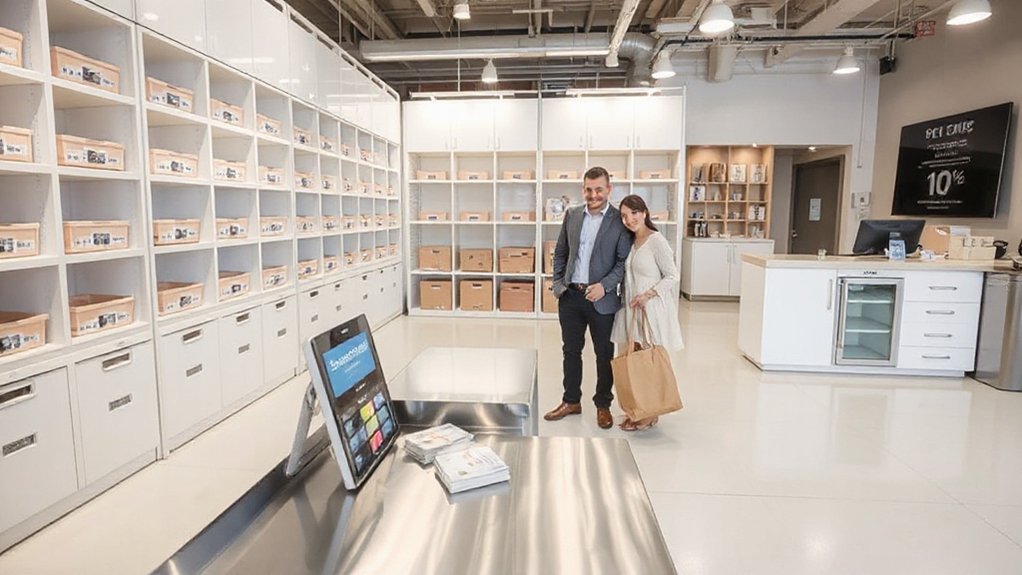
Smooth checkout wins you credibility and conversion, so streamline every step from cart to confirmation with clear, real-time guidance and minimal friction. You’ll reduce abandoned carts by showing exact totals, delivery windows, and return policies upfront, plus progress indicators at each stage.
Use accessible forms, auto-fill, and inline validation to prevent errors, and offer multiple payment options with secure, trusted gateways.
After purchase, deliver immediate confirmations and a transparent timeline for fulfillment, plus easy access to order tracking.
Post-purchase support should be proactive: send setup tips, warranty details, and quick-start guides for storage solutions.
Gather customer feedback at key milestones, then apply it to refine the experience.
Prioritize storage innovation in future updates and close the loop with responsive, personalized service.
Frequently Asked Questions
How Do I Determine the Right Storage Size for My Space?
To determine the right storage size, assess your space, items, and daily use, then plan for space optimization and aesthetic appeal; measure walls, consider vertical options, and leave room to expand, ensuring practical, scalable organization.
What Materials and Durability Matter Most in Storage?
Material preferences, durability considerations, and performance—you choose sturdy, moisture-resistant materials, you verify load ratings, you test joints, you inspect finishes, you prioritize rust-proof hardware, you compare warranties, you finalize sizes, you guarantee long-term reliability.
Which Warranties Apply to Modular Storage Units?
Warranty coverage varies by manufacturer, but most modular storage units include manufacturer guarantees on frame integrity and joints. You’ll get coverage for defects, with clear limitations. Read terms closely; you’ll want straightforward warranty coverage and reliable manufacturer guarantees.
Can I Install Storage Solutions Myself or Need Professionals?
Yes, you can DIY install, but start with a professional assessment first. Picture your space as a blank shelf; then plan, measure, and secure anchors—if any doubt arises, call in pros to prevent failures and guarantee safety.
How Do I Compare Installation Timing and Costs?
Yes, you compare installation timing and costs by doing a price comparison across providers and mapping an installation timeline. You’ll assess upfront fees, hourly rates, potential delays, and warranties to choose the most practical, cost-efficient option.
Conclusion
You now know how to add storage solutions buyers actively search for—so implement with precision. Define personas (home, garage, workshop), map pain points to modular units, shelving, and flexible systems, and craft a clear value proposition that resonates. Use visuals, compare options, and highlight pricing, warranties, and support. Track metrics, tweak content, and optimize checkout flow to reduce friction. When you align features with needs, you’ll unlock conversions faster than a lightning bolt—trust me, it’s that transformative.