


You want brighter rooms, yet your old terrace home often feels shut in by its own layout. Start with a practical assessment of current daylight—where it comes from, what blocks it, and where you lose it first. Then map quick tweaks like furniture shifts, smarter window treatments, and small color boosts that don’t scream renovation. If you’re surprised by the impact of a few mirrors or pale paints, you’ll want to explore smarter glazing options and light-enhancing plans in the next steps.
Assess Daylight Now: Quick Gap Diagnostic
To start, quickly map where daylight currently enters and where it’s blocked. You’ll sketch a simple diagram of each room, noting windows, doors, and any obstructions outside or inside that shade light. Check orientation, say north-facing or shaded by neighboring buildings, and record prevailing glare times.
Assess ceiling height, floor-to-window ratio, and whether sheer curtains or blinds are dimming visibility. Measure window openings in centimeters or inches and compare to room size; mark any low-hanging eaves or internal partitions that cut daylight paths.
Consider architectural heritage implications—preserve character while improving flow—ensuring any changes honor historical accuracy. Prioritize gaps you can fix quickly: gaps around frames, too-narrow transom windows, or bulky furniture blocking light.
Compile a concise map for targeted, low-cost improvements.
Layout Tweaks That Let Light Flow
Think about light as a path, not a feature—so start by clearing its route with simple layout tweaks. You’ll gain brightness by rearranging spaces to minimize shadows and maximize reflected light.
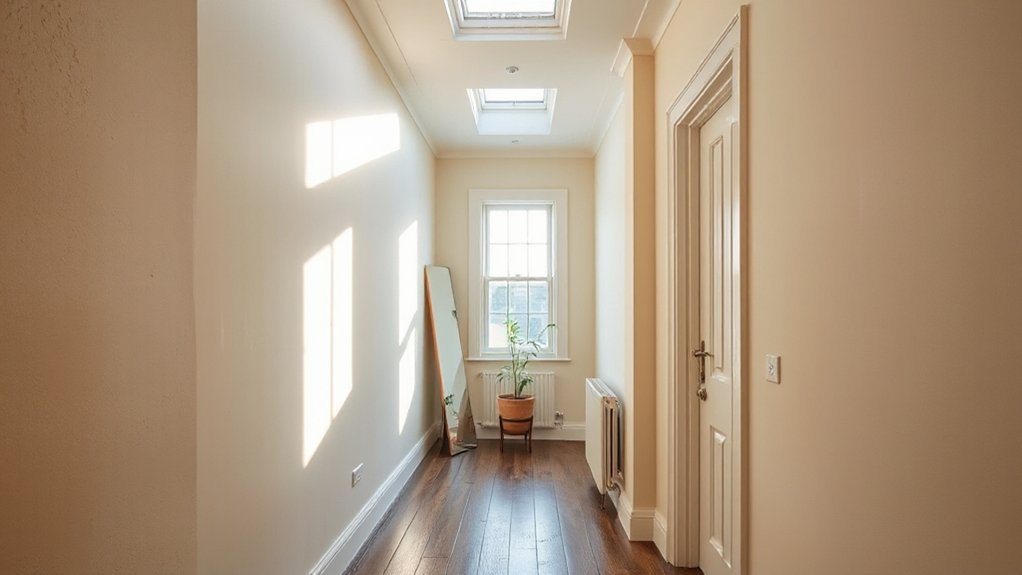
Use a narrow corridor layout as a guide: keep circulation clear, avoid dead ends, and place mirrors or light-reflective surfaces opposite windows to bounce daylight deeper.
For living rooms, pull sofas away from windows and use low-profile shelving to prevent blocking the view.
In dining areas, position tables to catch midday glow without glare.
Introduce interior plants near light sources to create depth and soften edges without absorbing too much.
If you’re planning upgrades, skylight installation can dramatically widen the light funnel without sacrificing wall space.
Prioritize open sightlines and consistent floor-to-ceiling glow.
Windows and Glazing: Smart Upgrades for More Light
Windows and glazing upgrades can dramatically boost daylight without major remodels. You can start by evaluating existing openings: consider larger or additional exterior-glazing options that preserve proportions while increasing light. Choose glazing options with low-iron glass to reduce tint, and opt for double or triple glazing that balances heat loss and brightness.
For attic or kitchen spaces, install roof windows or skylights with UV-blocking coatings to prevent glare. Use wide, flush frames to maximize glazing area and minimize visual intrusion. Window treatments matter: select light, reflective blinds or sheer curtains that roll away when not needed.
Pair treatments with internal secondary glazing if you need noise reduction. Prioritize adjustable solutions for various sun angles throughout the day.
Reflective Surfaces and Color to Multiply Daylight

Reflective surfaces and color choices can amplify daylight throughout an older terraced home without adding new windows. You’ll want to plan strategically: light-reflecting finishes, well-placed mirrors, and brighter interior paint can multiply available light.
- Interior paint: choose soft whites or pale cool tones with a satin finish to bounce light without glaring reflections.
- Mirror placement: position mirrors opposite windows or light fixtures to channel daylight deeper into rooms.
- Surface finish: opt for low-gloss or satin sheens on walls and ceilings to minimize glare while maximizing reflection.
Practical steps: measure, test samples in natural light, and adjust placements as you observe daylight shifts. This approach keeps your spaces feeling larger and brighter without structural changes.
Create a Daylight Plan: Budget-Smart Steps and Next Actions
To create a daylight plan that fits a tight budget, start by inventorying every window and potential light source in your older terraced home, noting sizes, orientations, and typical daylight hours.
Next, identify quick-win changes: relocate furniture to avoid blocking light, trim obstructive plants, and choose brighter interior color schemes that reflect more daylight.
Map the daylight hours across rooms to prioritize where to invest first.
Create a simple action list: measure, evaluate, and test each adjustment.
Consider affordable enhancements like sheer curtains, mirrors positioned to bounce light, and strategic furniture placement to open sightlines.
Set a budget cap, then schedule deadlines for each step.
Document results and refine, ensuring the plan remains flexible as you observe real-world daylight shifts.
Frequently Asked Questions
How Does Chimney Placement Affect Natural Light in Terraces?
Chimney positioning can block light if placed between windows; it often causes light obstruction. To minimize impact, you should assess sightlines, consider relocating or reconfiguring flues, install reflective surfaces, and optimize room layouts for available daylight.
Can Roof Light Installations Be Retrofitted to Narrow Terraces?
Yes, roof light installation can be retrofitted to narrow terraces with careful positioning and precise flashing. You’ll apply terrace renovation techniques, ensuring daylight ramps in/out, structural checks, and weatherproof seals for a safe, bright, efficient transformation.
Do Planners Restrict Structural Changes to Improve Daylight?
Yes, planners typically restrict structural changes to protect character and daylight. You should check local listings and guidance, and guarantee Building materials and Window sizes meet planning requirements while you plan extensions or daylight upgrades. Consider pre-application advice.
What’s the Best Hedge-Free Exterior Shading to Maximize Sun?
Did you know 60% of homeowners regret blocking sun? The best hedge-free exterior shading is vertical retractable panels, lowering glare while preserving garden privacy; consider Shade alternatives like slatted screens and adjustable canopies for practical sun control.
How Do Interior Stairs Impact Daylight Distribution?
Stairs can cast shadows and disrupt daylight; choose light-colored interior schemes to reflect more light, and select window treatment options that prioritize sheer fabrics or adjustable panels, maximizing brightness while preserving privacy and structure visibility.
Conclusion
So, you’ve mapped the daylight, tweaked layouts, upgraded glazing, and upped reflectivity—from pale paints to sheer curtains. Your space should already feel brighter, more welcoming, and easier to live in. Keep a simple daylight plan: tackle next small steps, measure costs, and schedule the work. Will you commit to testing one improvement each month and watching how the light responds? With steady, practical actions, you’ll transform your old terrace into a naturally lighter, more comfortable home.