


Case study shows a Victorian terrace with brickwork restored, sash windows painted in muted tones, and a kitchen tucked behind a reconfigured dining hall. You’ll map a light, honest layout that respects proportions, choose period-inspired fixtures, and layer discreet modern systems. The challenge is balancing durability with charm while boosting comfort and resale value, all without losing the street’s quiet rhythm. Start with core character, then the path to integrating contemporary needs without eroding history.
Identify the Core Character of Your Victorian Terrace
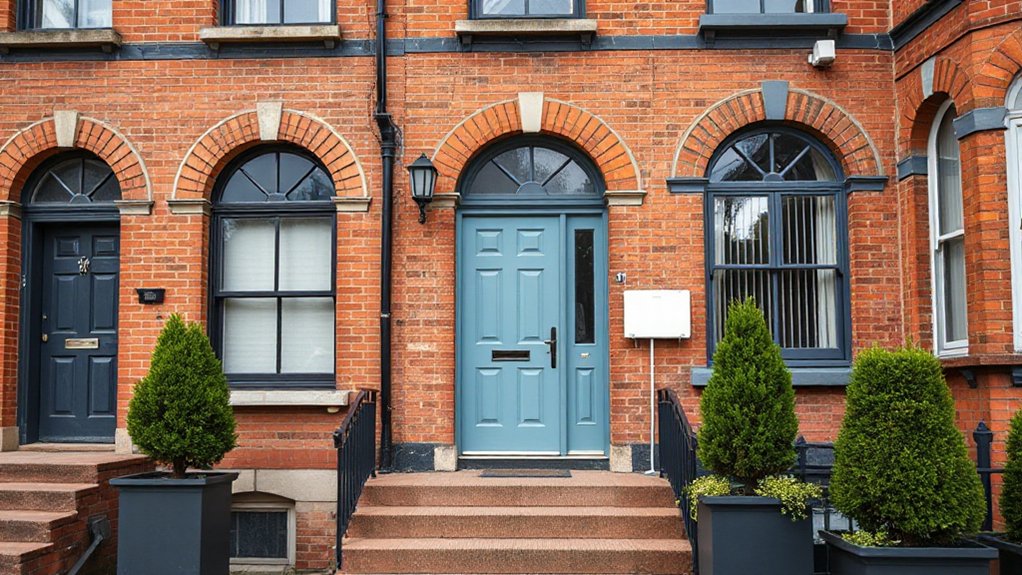
To identify the core character of your Victorian terrace, start by listing the building’s defining features: brickwork, sash windows, a stoop, and a shared side ephemera.
You’ll map each element against its original function and period nuance, then note how it survives today. Architectural authenticity matters: observe mortar lines, brick tones, and paint layers to gauge honesty of restoration versus replacement.
Consider the rhythm of the façade—benchmarks like window spacing, lintels, and door surrounds—to understand communal identity.
Cultural significance emerges from how residents interacted with these features over decades: front doors as invites, stoops as thresholds, and side passages as practical arteries.
Your goal is a precise snapshot that guides respectful updates while preserving historic voice and collective memory.
Plan a Light, Honest Layout Refresh
Start with a clear, honest plan: map the space you actually have, not the space you wish you had. Begin by measuring rooms, coordinating door swings, and noting fixed elements like chimney stacks. Sketch a lightweight layout that keeps circulation smooth and sightlines honest.
Prioritise zones: daytime living near natural light, quiet corners for study, and flexible dining that can widen or contract.
Choose vertical storage, shallow cabinets, and built-in benches to maximise floor area without crowding.
Opt for Eco friendly materials where possible, balancing durability with warmth.
Integrate Smart home technology to automate lighting, blinds, and climate control, but keep controls intuitive and discreet.
Test a few configurations digitally or with masking tape, then refine before committing.
Choose Materials That Honour the Era
You’ll choose materials that respect the era, prioritizing authenticity without sacrificing practicality.
PreserveHistoricalDetails and selectTimelessMaterials guide you to favor textures, finishes, and profiles that echo Victorian craft while offering durable performance.
Start with honest materials—wood, brick, plaster, and tile—that age gracefully and stay true to the house’s story.
Preserve Historical Details
Preserving historical details starts with selecting materials that reflect the era without over-romancing them. You approach preservation with a practical eye, prioritizing durability, provenance, and finish compatibility.
When you assess surfaces, you favor authentic textures—brick, lime plaster, timber, slate—over slick imitations, because they wear in a way that tells a true story. Your method relies on restoration techniques that respect original joinery, tool marks, and patina, not erasing them for a pristine look.
You document every choice, ensuring Historical accuracy guides your substitutions, replacements, and repairs. You test finishes on discreet areas, matching temperature, sheen, and aging.
You communicate changes to clients with clear rationale, balancing modern comfort with period integrity, so the character remains legible without needless replication.
Select Timeless Materials
Choosing timeless materials means picking surfaces and components that age gracefully with the house. You’ll balance durability, provenance, and a subtle echo of Victorian craft, avoiding fads that date fast.
Start with floors: solid timber in a warm, muted tone or faithful reclaimed boards that patina well.
For walls, plaster or lime-based finishes keep breathability and character; pair with high-contrast joinery to highlight workmanship.
When selecting countertops, opt for stone with a light, honed finish that resists stains and fingerprints.
Exterior details should respect proportions: brick, lime mortar, and slate roofing provide authenticity while modern insulation hides behind.
For hardware, weigh period-inspired options in brushed brass or black iron.
Material selection matters: it shapes both maintenance needs and the home’s future charm, not just its look.
Timeless materials ensure long-term harmony.
Maximise Natural Light and Spatial Flow
To maximise natural light and improve spatial flow in a Victorian terrace, focus on openings, furniture layout, and reflective surfaces that bounce daylight deep into rooms.
Start by widening doorways where possible to create sightlines and integrate sliding or bi-fold doors that link rooms without bulk.
Position mirrors and high-gloss finishes opposite windows to double daylight without crowding spaces.
Choose low-profile, narrow furniture and avoid clutter; opt for extendable tables and modular seating to reshape layouts as needed.
Use light, cool tones on walls and ceilings to enhance brightness, and consider skylights or light tubes where structure permits.
Outdoor landscaping and Smart technology elements should be deployed to support light ethics—protect sun paths, automate blinds, and conserve ambient glow after dusk.
Upgrade Insulation and Heating Without Diluting Character
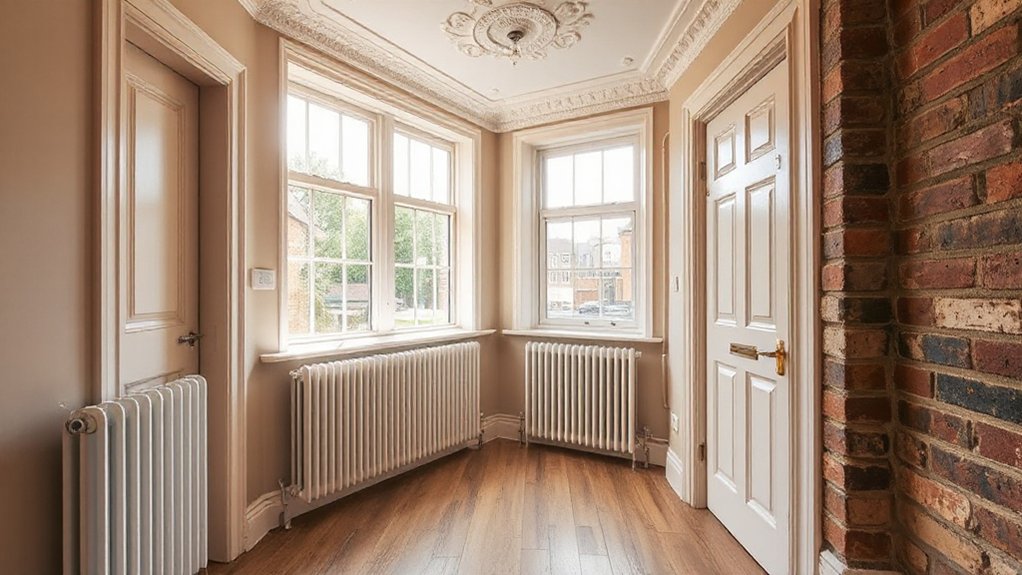
Upgrading insulation and heating in a Victorian terrace doesn’t have to clash with its character; you can boost comfort and efficiency while keeping original detailing intact.
Start with a layered approach: seal gaps at sash windows and doors, then choose eco-friendly insulation that fits historic walls without bulk. Consider breathable mineral wool or cellulose in lofts and cavities, ensuring moisture management remains intact. Prioritize super-compact, high-performance options that don’t distort profiles.
Install smart thermostats to regulate zones precisely, learning occupancy and adjusting heat to reduce waste. Choose radiator spacing and outputs that suit room sizes while preserving visible piping where appropriate.
Pair underfloor or ducted solutions with programmable controls to minimize energy use. Maintain sound-proofing and fire ratings; document all changes for future maintenance.
Modernise Kitchens and Bathrooms With Period Details
You can blend period details with a modern kitchen layout by prioritizing a logical flow, durable surfaces, and discreet storage that nods to history.
Choose vintage-style fixtures and fittings that pair clean lines with period charm, while updating plumbing, electrical, and layout for today’s use.
Let each choice—from taps to tile—support a cohesive look without sacrificing practicality.
Integrate Period Details
Integrating period details while modernising kitchens and bathrooms means choosing elements that nod to the era without sacrificing function. You’ll pair sturdy heritage fixtures with contemporary performance, ensuring layouts remain efficient and accessible.
Focus on period specific furnishings where investment yields character, like lever taps, porcelain sinks, and enamelware, but avoid ostentation that clashes with layout ergonomics.
Use finishes that echo Victorian palettes—deep greens, moody blues, brass accents—without overpowering modern systems.
For walls and ceilings, compromise between plaster reveals and clean, straight lines to keep spaces legible.
Incorporate doors, architraves, and skirting with authentic profiles sparingly to preserve flow.
Reference historical restoration techniques for subtle wear and patina, rather than full replication, keeping maintenance practical and durable.
Document choices to support future renovations while preserving sought-after authenticity.
Modernize Kitchen Layouts
A modern kitchen should flow as smoothly as a well-aged plan, balancing efficient layout with period-inflected details. You’ll prioritize a galley or L-shaped work zone that keeps tasks near water, stove, and prep space, minimizing steps. Measure doorways, passage widths, and cheek-by-jowl appliances to avoid bottlenecks.
Then tuck the sink under a sunny window for ventilation and mood. Embrace smart storage: pull-out trays, hidden bins, and adjustable shelves to reduce clutter and preserve surfaces for display.
Choose energy efficiency through induction cooking, LED lighting, and high-performance extraction that doesn’t overpower acoustics. Integrate period touches via hardware, timber tones, and enamel finishes, but keep lines clean and practical.
Plan future-proof connections for appliances and pantry expansion, ensuring a calm, cohesive kitchen that respects the terrace’s character.
Vintage-Style Fixtures Choosing
Vintage-style fixtures anchor the room’s character while remaining practical for daily use. You’ll choose pieces that nod to the era without overloading the space, balancing form, function, and future-proofing.
Start with essentials: a period-appropriate sink or tub, but pair it with modern fixtures for reliability and water efficiency. When it comes to lighting, opt for period lighting that delivers solid brightness and uses dimmers to modulate mood.
Look for vintage fixtures with contemporary internals to guarantee low maintenance and easy replacement parts. Palette and hardware matter: brass or nickel accents tie in with exposed piping or tilework, while simple, clean lines prevent visual clutter.
Prioritize scale, install unobtrusive mounting, and ensure clearances suit daily routines without compromising the Victorian vibe.
Colour and Texture Schemes That Nod to History
To honor the building’s heritage while keeping today’s comforts, choose a restrained palette that nods to Victorian tones without mimicry. You’ll balance color palettes with tactile texture, using subtle contrasts to add depth without overwhelming rooms.
Think warm neutrals as a base, then introduce accent hues inspired by ironwork, tile, and wood trim. Texture contrasts—matte walls against glossy surfaces, woven textiles against smooth surfaces—deliver dimensional interest that ages gracefully.
- Select durable, low-maintenance finishes but keep a soft, historical feel
- Pair tactile materials (linen, wool, felt) with sleek, modern surfaces
- Use restrained pops of color to highlight architectural details
Apply consistent undertones across furniture and joinery, maintaining coherence while allowing character to emerge through material quality rather than loud pattern.
Preserve and Integrate Original Features

Preserving original features roots the project in its history while guiding how you’ll work with today’s comforts. You’ll assess each element for architectural authenticity, deciding what to retain, restore, or sensitively adapt.
Begin with a careful survey of doors, stair rails, fireplaces, plasterwork, timber floors, and cornices, noting materials, dimensions, and patina. Prioritize conservation over replacement, documenting engravings, mouldings, and joinery before you touch them.
When restoration is needed, use compatible methods and traditional techniques, sourcing period-accurate finishes and respectful repairs.
Integrate modern systems discreetly — think concealed wiring and low-profile heating — so texture, scale, and light remain honest.
Create a cohesive narrative by pairing preserved features with complementary, contemporary materials, ensuring progression feel intentional rather than decorative.
Balance risk, cost, and preservation goals to maintain cultural integrity throughout the renovation.
Future-Proof for Comfort and Resale Value
If you want a Victorian terrace to stay liveable and valuable, plan for comfort and resale from the start, not as an afterthought. You’ll future-proof by prioritizing smart technology and energy efficiency without overhauling character.
Choose scalable systems, so upgrades don’t render rooms cluttered or compromised. Insulate well, seal drafts, and install efficient heating to cut running costs while preserving aesthetics.
Invest in quiet, compact controls that integrate with existing wiring and preserve original details. This approach makes your home appeal to buyers seeking low maintenance, predictable bills, and modern convenience.
- Improved comfort, lower energy bills, and easy tech integration
- Minimal disruption to period charm with smart planning
- Stronger resale price through durable, efficient upgrades
Frequently Asked Questions
How Do I Preserve Period Charm While Enabling Modern Connectivity?
You preserve period features by selective restoration and smart hybrid tech; install hidden cabling and wireless solutions, so you maintain charm while enabling contemporary connectivity. Prioritize authentic materials, discrete upgrades, and durable finishes for lasting aesthetic and practical balance.
What Budget Range Is Realistic for a Full Victorian Terrace Refresh?
You’ll likely spend £60k–£120k, depending on scope. Start with interior lighting upgrades and exterior landscaping, then layer in period-accurate fixtures. You’ll budget for trades, controls, and materials, balancing charm with modern comfort for a pragmatic refresh.
Can Energy Retrofits Be Hidden Without Changing the Look?
Yes, you can conceal energy upgrades. Plan concealed insulation under floors or walls and run hidden wiring behind existing plaster or run chases discreetly. Prioritize careful access panels, preserving aesthetics while maintaining safety and code compliance.
Which Permissions or Constraints Affect Terrace Updates in My Area?
Planning permissions and Conservation areas constrain updates; you’ll need checks with your local planning authority first. Verify listed status, retrofits rules, and any design guidance, then tailor your terrace project to comply before you start.
How Do I Balance Open-Plan Living With Historical Room Sizes?
You balance open plan living by zone, using clear open plan zoning that preserves flow while defining spaces around doors and columns. Keep historical furniture as anchors, integrating modern storage and circulation without overwhelming petite room sizes.
Conclusion
You’re not chasing perfection, you’re shaping balance. By honoring original brickwork and sash windows while embracing efficient insulation, you’ll cut energy bills and boost comfort. A study shows well-insulated Victorian homes can reduce heating demand by up to 40%—meaning cozier winters and lighter wallets. Keep a honest layout, pick period-inspired fittings, and weave smart tech in discreetly. With careful preservation and thoughtful modernization, your terrace becomes timeless, livable, and resale-ready without losing its soul.