


You can start by evaluating your street’s historic character and listing affordable, sympathetic upgrades that won’t overwhelm its essence. Prioritize durable, era-appropriate materials, practical maintenance routines, and small-scale improvements that boost safety and curb appeal. Consider neighbor and council input to ensure compliance and support. With a clear plan and modest budget, you’ll see tangible gains—but the real test is sustaining momentum as you weigh feedback and adjust tactics.
Assess Your Historic Street’s Kerb Appeal Now

Then evaluate materials—whether brick, stone, or tarmac—against era expectations to gauge authenticity. Note accessibility and safety implications, such as step variation, uneven paving, and curb height.
Map rhythmic elements like repetition in lamp columns, tree pits, and channel blocks to determine visual coherence. Consider historical signage placement and its legibility, ensuring messages aren’t overwhelmed by modern clutter.
Observe street furniture distribution, maintenance spacing, and upkeep signals to forecast long‑term appeal trajectories rather than short‑term fixes. This disciplined audit informs targeted, durable improvements.
Set a Practical, Budget-Friendly Refresh Plan
Turning your findings into action means outlining a practical, budget-conscious refresh plan that delivers lasting impact without overhauling the street. You should map priorities by impact and cost, then sequence tasks to maximize visibility with minimal disruption.
Begin with a concise assessment of essential elements: lighting, signage, plantings, and surfaces that benefit most from improvement. Use historic preservation as a guiding principle, selecting modest changes that respect character while boosting curb appeal.
Establish a formal budget planning framework, allocating contingency funds and a clear timeline. Favor scalable upgrades you can implement in stages, measuring results before expanding.
Document costs, outcomes, and stakeholder feedback to refine the plan. Present a transparent, actionable roadmap to residents, funders, and council, ensuring accountability and sustainable gains.
Choose Paints and Coatings That Respect Historic Character
Choosing paints and coatings that respect historic character starts with clarity about era-appropriate palettes and long-term performance. You assess period-specific schemes, referencing traditional fascia tones, brick hues, and timber accents, then align them with durability expectations.
Pragmatically, you balance subtle authenticity with modern practicality, selecting breathable finishes where appropriate and avoiding gloss levels that scream contemporary novelty. You weigh color fastness, UV resistance, and maintenance intervals, prioritizing products that minimize re-paint cycles while preserving character.
Consider eco-friendly coatings that meet local regulations without compromising tone or texture. Stay aware of modern paint trends, ensuring any applied sheen remains respectful to the streetscape.
Document choices for future updates, and prefer adaptable formulations that tolerate weathering without erasing historic cues.
Rejuvenate Front Doors With Period-Appropriate Colour

Choosing a period-appropriate hue sets the tone for historic integrity while enhancing curb appeal. You’ll weigh period-appropriate hue choices against door style, nearby façades, and the overall street character, guided by concise Historic Door Paint Guides.
Pair your chosen colour with complementary tones to boost return on investment and cohesion, focusing on clear, practical curb appeal outcomes.
Period-Appropriate Hue Choices
You’ll map historic colour palettes to the door, ensuring contrast with brick or render while preserving era authenticity. Prefer restrained schemes that reflect period signals—soft greens for Georgian, muted blues for Regency, ochre or brick reds for Victorian, and earthy tones for Edwardian.
Test against surrounding façades to avoid jarring pairings, then select Timeless hue combinations that endure fading and wear. Consider glaze or satin finishes to reveal depth without gleam.
Document your choices with rationale, so future restorations align with the street’s narrative, not merely personal taste. Historic colour palettes guide your decisions throughout.
Historic Door Paint Guides
Historic door paints anchor your period-inspired scheme by translating the palette you identified into durable, authentic finishes. You’ll balance historic motifs with practical coatings, focusing on longevity and subtle sheen. Prioritize weather resistance and UV stability to maintain colour fidelity over time.
- Assess period-accurate hues and test on low-traffic areas before full application.
- Choose durable finishes with appropriate gloss levels to reflect era and wear tolerance.
- Prepare surfaces thoroughly to optimise paint durability and adhesion.
- Document maintenance plans to preserve colour integrity and curb appeal.
These steps help you achieve a cohesive look that respects heritage while delivering modern resilience.
Curb Appeal Colour Pairings
Pairing curb-appeal colour with your front door hinges on clarity: select period-appropriate hues that naturally harmonize with the building’s features, neighborhood context, and lighting. You should assess colour contrast between door, trim, and surrounding façade, aiming for legible architectural cues without jarring shifts.
Start by surveying nearby doors for hue harmony, then map contrast levels against materials like brick, stone, or plaster. Choose a primary colour that respects era-specific palettes, and use complementary tones for frames, fixtures, and hardware to reinforce consistency.
Test samples at multiple times of day to observe how daylight shifts appearance. Avoid overly saturated shades that clash with streetscape. Prioritise subtle, well-balanced combinations that enhance detail, cadence, and proportion, delivering a refined, cohesive curb appeal.
Refresh Window Frames Without Altering the Facade
You can refresh window frames to lift curb appeal without touching the facade when you choose paints or finishes that complement the existing materials.
Prioritize easy upkeep materials that preserve the original character while reducing ongoing maintenance.
This approach keeps the look cohesive, prioritizes practicality, and guides choices around color, texture, and durability.
Freshen Window Frames
Freshening window frames without altering the facade is a practical way to lift kerb appeal while preserving the building’s character. You’ll boost light reflection, reduce scuffs, and extend life without dramatic changes.
Approach hinges on clean prep, compatible products, and measured coatings that respect original profiles. By treating wood, metal, and paint surfaces with targeted techniques, you preserve historic detail while improving perception at street level.
Focus on evidence-based steps that deliver durable results with minimal disruption. Window restoration and frame preservation goals align with a careful, repeatable process.
- Inspect and document existing conditions
- Clean, sand, and repair defects with compatible materials
- Apply primer, sealant, and a breathable topcoat
- Maintain seasonally and recoat when needed
Preserve Facade Character
Begin by documenting existing profiles, moldings, and glazing patterns, then select finishes and colors that mirror original palettes without mimicking novelty. Opt for paint maintenance over replacement where feasible, and choose compatible timber treatments to deter decay without threatening historic lines.
Where hardware changes are needed, retain or replicate period-style elements to preserve rhythm and scale. Prioritize reversible interventions—timber consolidation, precision redecoration, and discreet weatherproofing—so future owners can revert easily.
This aims at Facade preservation and upholds Historic integrity while delivering renewed curb appeal with minimal intrusion.
Easy Upkeep Materials
- You can refresh window frames with easy upkeep materials that don’t alter the facade, preserving historic rhythm while modernizing visibility. This approach minimizes costs and disruption, matching practical expectations for older streets.
- Consider durable finishes that resist weathering and require minimal maintenance, such as powder-coated metals and composite timbers. These materials stay vibrant longer and resist fading.
- Prioritize subtle color palettes and clean profiles that complement surrounding architecture. Avoid high-contrast schemes that clash with heritage details.
- Integrate landscaping ideas and art installations nearby to enhance curb appeal without invasive changes. Creating focal points that feel intentional rather than cosmetic.
In short, select materials that balance longevity, aesthetics, and low upkeep, supporting a polished streetscape.
Verge-Friendly Planting That Adds Charm
Verge-friendly planting can transform a street by combining practicality with visual charm, so you should choose shrubs and perennials that tolerate salty winds, compact soil, and limited maintenance.
You pursue a pragmatic mix that resists erosion while delivering seasonal interest. Focus on low-input selections that require minimal irrigation and mowing, yet still knead the verge into a coherent corridor.
Prioritize native plant choices that support local pollinators and habitat connectivity, ensuring ecological value alongside curb appeal.
Integrate diverse textures—graceful grasses, evergreen anchors, and flowering perennials—to sustain year-round structure.
Consider small-scalloped borders or mulched beds to reduce soil compaction and weed intrusion.
Highlight Wildflower verges where space allows, and cohort plantings that echo the surrounding streetscape while maintaining uniformity.
Low-Cost Boundary Treatments That Echo Tradition

Low-cost boundary treatments can dramatically improve kerb appeal without sacrificing tradition. You can achieve this by selective, robust options that respect heritage while staying practical for homeowners. Consider blending form with function to reinforce character without overinvesting.
Garden sculptures and carefully scaled features create focal points that nod to local identity, yet remain affordable. Boundary walls can be rendered in muted, weathered tones that echo historic materials, while still allowing permeability where appropriate. Use simple, durable materials for longevity and minimal upkeep.
Assess sightlines, keeping entrances inviting and boundaries unobtrusive. For a cohesive feel, repeat motifs across elements to reinforce rhythm and continuity.
- Garden sculptures as lightweight accents
- Boundary walls with traditional textures
- Railings that mirror historic details
- Permeable gaps that preserve openness
Lighting and Safety for Dark Hours Without Clashing With History
Lighting at night must be discreet yet effective, so you can improve safety without erasing the period character. You balance illumination with preservation by choosing Historic street lighting that blends with materials, scale, and textures typical of the era.
Favor warm, low-glare sources that minimize sky glow and avoid overpowering façades. Position lighting to reveal steps, doorways, and potential hazards without creating harsh shadows that distort details.
Integrate safety signage that’s legible yet unobtrusive, using understated fonts and colors aligned with historic palettes. Use timed or adaptive controls to reduce illumination when streets are quiet while maintaining visibility for pedestrians.
Regular maintenance—clean lenses, tighten brackets, and inspect cables—ensures reliability, reducing risk without compromising the street’s historic character.
Public-Facing Improvements: Porches, Steps, and Entryways
Porches, canopies, steps, handrails, and entryway lighting frame the first impression of an aged street, so you should assess how each element guides visitors and preserves character.
Consider how materials, scale, and maintenance affect accessibility, weather protection, and curb appeal without compromising historic context.
Porches and Canopies
- Porch lighting: install low-glare, warm-toned fixtures that illuminate steps and doorways without causing light spill.
- Canopy repairs: address loose fascia, leaks, and rot promptly to prevent damage to structure and curb appeal.
- Access clarity: guarantee paths are level, well bordered, and free of overgrowth that blocks the approach.
- Material harmonisation: choose colours and textures that complement the brick or stonework, preserving a cohesive streetscape.
Steps and Handrails
Steps must be uniform, slip-resistant, and clearly delineated from surrounding surfaces. Repair cracks, replace worn treads, and ensure consistent rise and run to reduce tripping.
Handrails should be sturdy, continuous on both sides where possible, and positioned at a reachable height for varied users. Choose finishes that resist weathering yet harmonize with traditional brickwork or stucco façades.
Practicality guides choice: timber sourced from sustainable mills can pale over time, while metal offers longevity with period-appropriate detailing. Regular maintenance, including seasonal clearing and rust protection, sustains appeal and safety without sacrificing character.
Entryway Lighting Upgrades
Effective entryway lighting is a practical investment that enhances safety and curb appeal by guiding visitors and highlighting architectural details. You upgrade entryway illumination with purpose, balancing function and style. Consider these steps to maximize impact:
- Assess traffic patterns and install pathway lighting that guides approach without glare.
- Use warm, energy-efficient LEDs and dimmers to tailor mood for evenings.
- Focus on key features—porches, steps, and doorways—with targeted fixtures and concealed wiring.
- Select scalable systems that allow future updates, including smart controls for schedules.
Driveway and Path Upgrades That Preserve Provenance

When upgrading driveways and paths in older UK streets, preserving provenance means choosing materials and layouts that echo historic patterns while meeting modern needs. You assess local typologies—brick pavers, stone sets, or tightly packed gravel—selecting options that respect scale, color, and texture.
Prioritize durable, reversible choices that can be removed without damage to underlying fabric, preserving archaeological integrity. Align runnels, edges, and joints with traditional grid or serpentine motifs to maintain historic aesthetics, while ensuring accessibility and safety.
Document decisions for historic preservation records, and seek guidance from conservation officers if required. Balance practical considerations—drainage, maintenance, and budget—against the desire for authenticity.
The result is a cohesive, driveway aesthetics that enhances streetscape value without compromising provenance.
Sustainable, Low-Maintenance Materials for Longevity
You’ll prioritise durable, low-maintenance materials that stand up to UK weather with minimal upkeep.
By choosing longevity-friendly options, you’ll balance resilience, eco-friendliness, and cost over time, avoiding frequent replacements.
This discussion starts with how weather resistance and sustainable choices intersect to deliver lasting kerb appeal.
Durable, Low-Maintenance Materials
1) Use durable substrates and coatings that withstand abrasion and salt exposure.
2) Select low-maintenance finishes that deter staining and fading.
3) Favor proven, locally sourced materials to reduce transport impact.
4) Plan for restorative compatibility with historic elements during repairs.
This approach aligns with durable, low-maintenance goals, sustaining charm and function.
Longevity Through Sustainable Choices
Longevity hinges on choosing sustainable, low-maintenance materials that weather UK conditions while preserving character. You’ll compare lifecycle costs, maintenance intervals, and aesthetic compatibility, prioritising options that age gracefully rather than requiring frequent replacement.
Start with sustainable landscaping approaches that reduce irrigation, support biodiversity, and mitigate heat buildup, ensuring curb appeal endures through seasons.
Eco friendly materials should be evaluated for durability, sourcing provenance, and ease of repair, not just initial appearance. Favor proven technologies and regional blends that resist staining, cracking, and weathering while minimising embodied energy.
Plan for modularity: components that can be refreshed without wholesale replacement extend longevity and keep streets cohesive.
Balance budget against performance, document performance data, and engage residents in decisions to sustain pride and curb value over time.
Weather-Resistant, Eco-Friendly Options
Many streets built for older UK neighborhoods benefit from materials that stand up to rain, frost, and heat without demanding constant upkeep. You’ll prioritise weatherproof options that minimize maintenance while preserving curb appeal. Analytical, pragmatic choices help you forecast longevity, cost, and performance.
- Weatherproof coatings provide a durable seal against moisture ingress, reducing rot and staining.
- Eco friendly paints offer UV resistance and low VOC emissions, preserving colour without compromising air quality.
- Low-maintenance substrates like fibre cement or recycled composite boards withstand weather cycles with minimal care.
- Finishes designed for longevity reduce repaint frequency, supporting long-term sustainability.
This approach balances resilience, aesthetics, and environmental impact, delivering steady kerb appeal with fewer annual interventions.
Work With Neighbours: Practical Collaboration Ideas
How can neighbours collaborate effectively to boost kerb appeal on an older UK street? You prioritise practical coordination over grand gestures.
Start with a quick, shared assessment: what plants, containers, or minor repairs can be pooled through neighbour collaboration? Create a simple inventory of resources—plants, compost, odd-numbered paving slabs, or weatherproof paint—and assign owners to every item.
Set a low-friction maintenance rota: monthly tasks for street-facing windows, tidy verges, or shared planters. Establish a simple budget for common purchases and agree on storage solutions that don’t clutter footpaths.
Use a neutral calendar to stagger tasks so access isn’t blocked. Document decisions, costs, and outcomes online to track impact and foster accountability.
This approach leverages collective effort as a scalable, repeatable method for elevated kerb appeal.
Engage With Local Authorities: Permissions and Grants
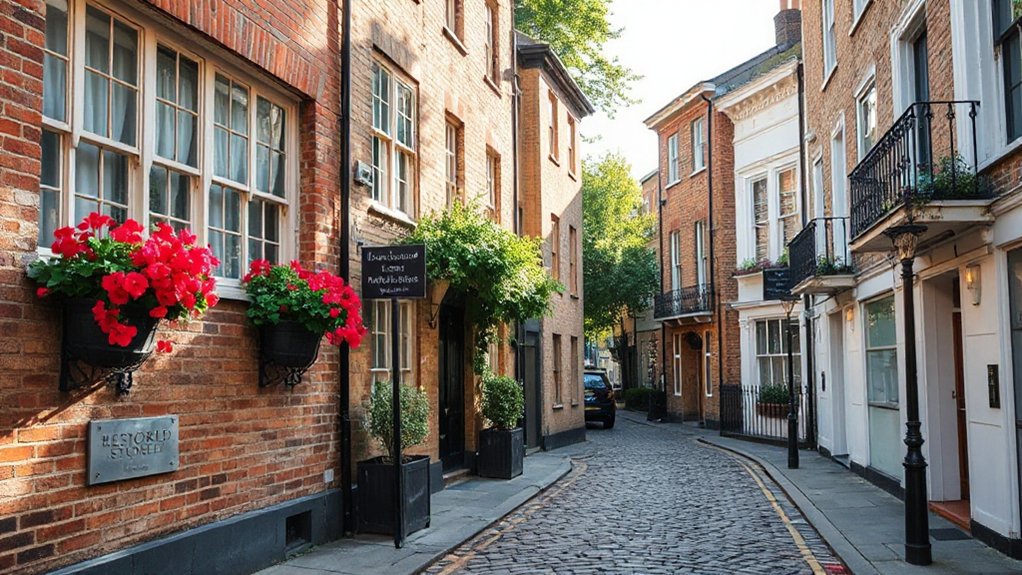
Engaging with local authorities begins with a focused map of permissions and grant options that directly affect kerb appeal on an older UK street. You’ll identify approvals for planting, signage, paving, and boundary changes, prioritising items with historic preservation value and long-term impact.
Then, assess funding streams, eligibility criteria, and monitoring requirements to avoid delays and rework. Clear documentation speeds decisions and demonstrates responsible community engagement.
- Map permissions needed for frontage changes
- Align projects with historic preservation guidelines
- Identify applicable grants and match to your timeline
- Establish a responsible liaison process with authorities
Seasonal Ideas That Fit Neighbourhood Cadence
Seasonal ideas should flow with the neighbourhood cadence to feel authentic and sustainable. You assess local rhythms—school terms, market days, and community events—and time planting and displays to peak alongside them.
Seasonal planting choices should be modest in scale yet impactful, using native species that support pollinators and require minimal maintenance.
Coordinate color schemes with nearby frontages to avoid visual clash, and rotate pallets to reflect seasonal energy without overloading the street’s character.
Plan for durability through containers and materials that weather UK seasons, reducing replacement cycles.
Historic signage can anchor seasonal displays, linking trends to place without overpowering heritage.
Track outcomes, adjusting timing and intensity year by year to sustain a cohesive, welcoming streetscape.
Signage, Fixtures, and Small Details That Tell a Story
Signage, fixtures, and small details can anchor a street’s story without overpowering its heritage. You’ll leverage contextual cues to hint at history while staying tasteful, practical, and legible for residents and visitors.
Emphasize consistency in material and scale to reinforce the street’s character, not distract from it. Historical signage should be purposeful, legible, and repaired rather than replaced indiscriminately, preserving texture and narrative.
Fixture storytelling works when everyday objects hint at past lives—door handles, lamp posts, and railings that echo era design. Maintain clear sightlines, minimal clutter, and durable finishes that weather gracefully.
Here are ideas:
1) Retain original plaques and repurpose contemporary equivalents
2) Use understated street luminaires aligned with era aesthetics
3) Integrate subtle wayfinding with local motifs
4) Curate a small, coherent material palette
Quick Maintenance Routines to Keep Kerb Appeal Lasting

Maintaining kerb appeal isn’t about grand gestures; it’s about quick, repeatable routines that keep a street looking coherent and cared for. You implement a simple cadence: a monthly sweep for debris, a quarterly assessment of surfaces, and a biannual tune-up of lighting and boundaries.
Prioritise visibility and timing—trim hedges so facades aren’t obscured; repaint fascia lines when fading becomes noticeable, not when it’s dramatic. Garden lighting should be assessed seasonally, replacing bulbs before they fail and ensuring pathways remain well illuminated for safety.
Fence repairs get scheduled alongside gate checks, preventing rot and misalignment from escalating. Establish a checklist, assign responsibilities, and track small fixes to defend against larger, costly refreshes.
Consistency sustains appeal more reliably than sporadic, large-scale interventions.
Case Studies: Small-Street Transformations That Work
You’ll see how small-street transformations succeed when sites lean on Local Materials to blend with their surroundings and preserve Local Character.
The case studies emphasize Practical, low-cost Upgrades that deliver tangible kerb appeal without overhauling essential street rhythms.
Small-Street Transformations That Work
Small-street transformations deliver outsized gains by reconfiguring use, visibility, and micro-sense of place without widening lanes or upending historical patterns. You observe how subtle tweaks can shift driver behavior, enhance pedestrian comfort, and elevate frontage without major disruption. Strategic pairing of bollards, lighting, and curb-seating creates safer, more legible streetscape that respects Historical preservation while enabling Modern adaptation.
- Reallocate curb space for micro-parklets, improving footfall without blocking traffic
- Introduce consistent lighting and signage that clarify routes and curb level rhythm
- Use contrasting paving zones to demarcate pedestrian priority surfaces
- Install low-impact street furniture to encourage dwell time and visual cohesion
These steps prove that restraint, not overhaul, drives durable kerb appeal.
Local Materials, Local Character
Local materials lend instant authenticity and coherence to micro-street transformations, grounding design choices in regional texture, durability, and climate. When you study case studies, you’ll notice how stone walls, brick facades, and timber details echo local character while resisting weathering.
Prioritise materials with proven longevity and low maintenance, and ask suppliers about regional sourcing to reduce transport costs and embodied energy.
Local craftsmanship matters: skilled masons, carpenters, and clay workers bring tactile nuance that mass-produced substitutes can’t match, strengthening historic preservation without rigid replication.
Balance heritage with modern use by preserving essential features—bands, parapets, and lintels—while allowing sympathetic updates that improve drainage, accessibility, and daily use.
In short, local materials anchor authenticity, support durability, and enhance kerb appeal through contextual resilience.
Practical, Low-Cost Upgrades
Small-scale upgrades can deliver measurable kerb appeal without costly overhauls. You’ll see practical, low-cost ideas work when you target visibility, maintenance, and cohesion with neighboring streets.
By examining small-street successes, you’ll learn to balance function and aesthetics without overinvesting. Focus on selective enhancements that yield high impact and clear signals of care.
Consider how garden ornamentation and decorative fencing can frame properties, define borders, and invite curiosity. Implementations below are repeatable and scalable.
- Introduce restrained garden ornamentation as focal points rather than clutter.
- Replace broken edging or railings with affordable, durable options that match nearby fences.
- Align fence height and style for a unified streetscape.
- Maintain frequent goods, avoid over-planting, and prune for visibility.
30-Day Action Plan for Oldest Streets
To develop an effective Day Action Plan for the oldest streets, start by mapping the current condition, traffic patterns, and pedestrian flows to identify high-priority interventions.
You’ll translate findings into a concise set of immediate tasks, assign owners, and set tight timeframes.
Prioritize quick wins that bolster historic preservation without obstructing mobility, such as targeted pavement repairs, signage updates, and cleaner verge management.
Build your plan around practical constraints, like budget caps and staffing capacity, then test ideas in daylight and off-peak hours.
Embrace community collaboration to surface street-level insights, defending decisions with data and stakeholder input.
Document outcomes, adjust allocations, and maintain transparent progress communications to sustain momentum and credibility.
Focus on actionable, measurable steps that deliver visible improvements today.
Long-Term Measurement: Track Impact and Adapt Over Time

Long-term measurement is about turning outcomes into actionable lessons. You’ll track impact over time by defining clear milestones, then comparing against baseline conditions to detect trends. Use simple, repeatable metrics that reflect Historical preservation and Community engagement, avoiding vanity stats.
Regularly revalidate goals as streets evolve, and adjust tactics with disciplined precision.
- Establish quarterly indicators for physical condition, resident sentiment, and heritage compliance.
- Schedule annual reviews to assess whether preservation principles still align with current needs.
- Collect qualitative feedback through surveys and community meetings, then translate insights into concrete changes.
- Document adaptations, timelines, and outcomes to build a transparent, transferable log for future street upgrades.
Through disciplined monitoring, you optimize impact while preserving character and inviting ongoing participation.
Frequently Asked Questions
How Can I Assess a Street’s Historic Character Quickly?
You can assess a street’s historic character quickly by noting materials, morphologies, and scale, then verify with recorded designations and era clues. Prioritize Historical preservation considerations and spark Community engagement to validate findings and guide decisions.
Which Affordable Finishes Best Suit Aged UK Streets?
Affordable finishes for aged UK streets include warm brick, reeded timber, and plaster with limewash. You’ll favor Street lighting and simple planting schemes, prioritizing durability and low maintenance to achieve cohesive, historically respectful streetscape, with pragmatic, polished outcomes.
How to Source Period-Appropriate Hardware Locally?
Finding local sources for period-appropriate hardware starts with networking and inspecting nearby antique shops, metal workers, and reclaimed yards; prioritize vintage signage and ironmongery restoration specialists. You’ll compare provenance, adjust budgets, and verify compatibility before purchasing.
What Permissions Are Typically Required for Minor Exterior Changes?
You’ll typically need neighborhood zoning reviews and planning permissions for minor exterior changes. You assess statutory constraints, consult the local planning authority, and document impacts; you anticipate potential amendments, submit clear proposals, and comply with requirements before proceeding.
How to Measure Impact of Kerb Appeal Improvements?
You measure impact by tracking metrics like perceived attractiveness, property inquiries, and footfall changes; compare before-and-after data using surveys and local observations, noting landscape enhancement and street lighting improvements to quantify curb appeal gains.
Conclusion
You’ll see real gains by starting small: fix the path, refresh the front door, and tidy boundaries. It’s affordable, practical, and respectful of history, not a risky overhaul. If neighbours fear “change,” show steady progress with consistent, low-cost updates that accumulate charm and safety. The payoff isn’t just aesthetics—it’s pride, stewardship, and measurable upkeep that strengthens whole streets over time. Small, deliberate steps compound into lasting kerb appeal.