


The garden sits like a paused clock, waiting for a deliberate autumn tune you’ll conduct. You’ll start by clearing debris, but leave a thin leaf litter layer for wildlife, then prune damaged stems with clean cuts. Next, assess soil and pests, add compost, and mulch to brace roots for winter. Plan sturdy, autumn-color perennials and frost-hardy grasses, and prepare winter-proof containers. A simple, low-maintenance routine will emerge—if you stick with it, you’ll uncover the core of a resilient garden as the season shifts.
Assess Your Autumn Garden: What to Tidy First

Start with a quick site survey to identify what needs attention: remove spent summer growth, clear fallen leaves, and assess soil condition. You’ll map plant health, noting drought-stressed specimens, disease signs, and any overcrowded borders.
Begin with Garden pruning to shape perennials and remove leggy stems, prioritizing plants most vulnerable to frost. In parallel, inspect for pest activity—scale, aphids, and caterpillars—and plan targeted pest control that minimizes collateral impact.
Clear debris from under shrubs to reduce overwintering habitats and improve air flow. Test soil moisture and organic matter; amend where compaction or nutrient deficiency appears.
Document drainage issues, rerouting heavy rainfall runoff as needed. Finalize a concise maintenance plan, listing tools, dates, and success criteria to guide autumn care and prevent regrowth problems.
Wildlife-Friendly Tidying: Do’s, Don’ts, and Quick Wins
As you tidy your autumn garden, prioritize wildlife-friendly practices that protect insects, birds, and small mammals while still achieving a neat, functional space. You’ll implement targeted, practical steps that balance tidiness with habitat value, emphasizing minimal disturbance to overwintering wildlife and careful reuse of organic matter.
Be precise about cut-back timing, leaving refuges, and avoiding broad-spectrum sprays. Integrate garden pests management with non-chemical methods, and align composting techniques to maintain habitat benefits while reducing waste. Use sharp tools, labeled bins, and clear workflows to minimize soil disturbance and maintain soil structure.
Document results to refine future steps and support biodiversity.
Retain leaf litter in sheltered areas to offer overwintering habitat.
Sort clippings for composting techniques that enhance soil structure.
Remove only unsafe debris, avoiding disruption of nests or hibernacula.
Choose Autumn-Color Perennials for Long-Lasting Impact
Autumn color comes from a targeted selection of perennial varieties that deliver long-lasting impact with minimal maintenance. You’ll choose sturdy, pest-resistant forms that perform reliably after first frost. Focus on compact to mid-height growers to maintain structure in mixed borders and containers.
For Autumn foliage, prioritize cultivars with rich reds, bronzes, and amber tones, ensuring leaf color persists well into late season. In perennial planting, favor species with complementary bloom windows to extend sightlines between molts of foliage.
Pair fibrous grasses with border-perennial suspects to create texture contrast and wind resistance. Site sun exposure and soil moisture to determine which winners suit your UK climate.
Keep labels on-hand, group by care needs, and schedule light pruning to encourage strong base growth next spring. Maintain weed-free beds during fall cleanup.
Soil Prep, Mulch, and Winter-Ready Containers
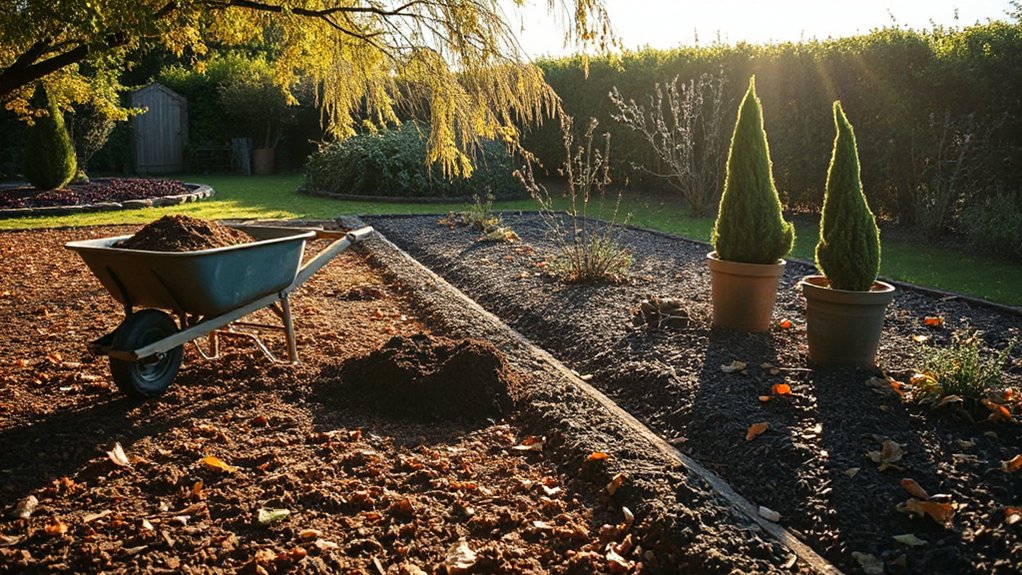
Soil prep sets the foundation for healthy autumn growth and overwintering success: test your garden soil, amend with compost or well-rotted manure to improve structure and drainage, and guarantee a balanced pH for the plant selections you’ve planned. You’ll follow a precise sequence: assess texture, adjust with organic matter, and verify nutrient availability.
Mulch after planting to conserve moisture and suppress weeds, using a breathable layer that won’t suffocate roots. For containers, select winter-ready substrates with drainage channels and a slow-release fertilizer.
Maintain tools by cleaning, sharpening, and sharpening again, ensuring accurate cuts and steady planting depth. Your practice hinges on composting techniques and consistent garden tool maintenance for lasting performance and minimal disturbance through winter.
- Test soil and amend with compost or manure
- Mulch strategically for moisture retention and protection
- Use winter-ready containers with appropriate substrates
A Simple Low-Maintenance Winter Plan and Seed-Saving Tips
A simple, low-maintenance winter plan focuses on steady protection and efficient reuse of resources: keep plants healthy with minimal intervention by prioritizing hardiness, cold tolerance, and timely actions. You’ll select hardy varieties, delay sensitive tasks, and use row covers to reduce frost damage without frequent checks.
Before freeze, label seed-saving favorites and harvest ripe pods, then dry and store them in airtight tins. For seed-saving tips, separate true seeds from hybrids, test viability, and label with year and variety.
Implement composting tips by layering browns and greens, turning once every two weeks, and using finished compost as mulch next spring.
Maintain garden tool maintenance: sharpen blades, oil hinges, and store dry to prevent rust. Minimal irrigation, insulating containers, and clean storage complete the plan.
Frequently Asked Questions
When Is the Best Day to Plant Autumn Bulbs in the UK?
You should aim for late September to early November, depending on soil temperature, to maximize bulb survival. For autumn planting, monitor rainfall and soil warmth; delay after hard frosts. Precision timing improves bulb timing and establishment, increasing bloom success.
How Do I Protect Late-Season Pollinators in My Tidy-Up?
You protect late-season pollinators by crafting wildlife habitats and pollinator shelters, then tidy up carefully. You’ll mulch beneath perennials, leave dead stems for shelter, and install shallow water sources, creating evidence-backed, practical refuges that support species through autumn.
Can I Extend Color With Foliage Plants After Blooms Fade?
Yes, you can extend color with foliage plants after blooms fade. Use foliage contrast to pair variegated or burgundy leaves with green, and aim for seasonal color enhancement through texture, height, and persistent structure in your borders.
Which Autumn Weeds Are Easiest to Control Before Winter?
Identify common autumn weeds early: dandelion, clover, chickweed, and creeping thistle. Weed identification helps you apply targeted control methods, such as hand-pulling when moist, or pre-emergent and spot treatments for lasting suppression before winter.
How Deep Should Mulch Be for Winter Protection?
Mulch should be about 5–7 cm deep for winter protection, ensuring even coverage without piling against stems. Use soil aeration first, then apply a uniform mulch color, avoiding compaction to maintain drainage and microbial activity.
Conclusion
As autumn settles, you watch your garden turn from bustle to velvet hush, each leaf a careful stroke of color. You’ve cleared the chaos, mulched the roots, and tucked containers with winter-ready certainty. Seeds tucked for safekeeping promise next year’s reprise, while perennials stand like quiet sentinels, receiving the frost with poised resilience. With a soil bed warmed by compost and a plan in place, you’ll step back and savor a garden that thrives even in the colder months.