
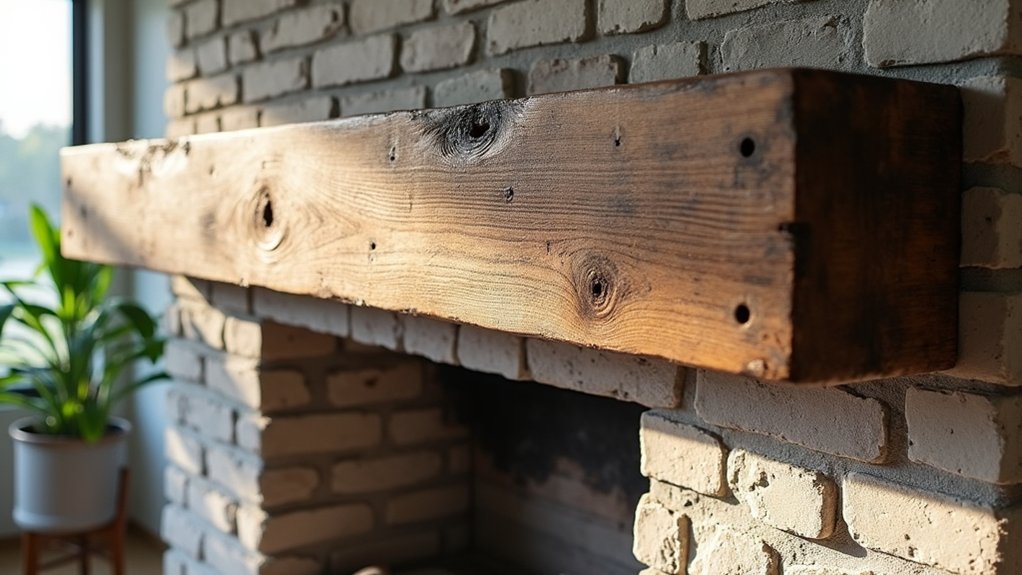

Reclaimed barn wood beam fireplace mantels bring authentic warmth, rugged character, and timeless elegance to your space. You’ll notice knots, patina, and grain that deepen with age, while the beam type, grain texture, and finish shape the mood—from rustic chatter to refined restraint. Choose by room style—farmhouse, modern, or rustic—and plan installation with proper hardware and supports. Finishes should be durable, breathable, and heat‑resistant to keep the look striking for decades; more tips await if you keep exploring.
What Makes Reclaimed Barn Wood Mantels Special

Reclaimed barn wood mantels bring warmth and character that new timber can’t replicate. You feel the history in each plank, the knots and grain telling a quiet story you can’t conjure with fresh boards.
You’re choosing material that ages with grace, patina forming as it meets daylight and hearth heat. The special edge lies in texture and resilience: unique imperfections become focal points, not flaws.
Color palettes shift with patina, letting you craft a look from rustic to refined without shouting. You’ll notice how lighting effects interact with the surface—soft glows accent the weathered surfaces, while sharper beams reveal subtle depth.
In short, you gain authenticity, durability, and a timeless silhouette that elevates any fireplace moment.
Key Factors: Beam Type, Grain, and Finish
When you choose a beam type, you shape the mantel’s character and structural feel.
You’ll notice grain texture matters for depth and warmth, while finish options define protection and tone.
This discussion covers beam types, grain effects, and finish choices to guide your selection.
Beam Type Considerations
Choosing the right beam type sets the entire fireplace tone, because the beam’s shape, size, and material dictate both structural feasibility and visual impact. You’ll weigh load-bearing needs against proportion, opting for a single thick plank, a multi-member soffit, or a timber box beam to suit your room’s scale.
Consider how grain direction communicates movement and strength, and how the finish shields against smoke while enhancing character. Vintage charm and sustainable sourcing should guide material choices, favoring reclaimed sections with minimal processing that still perform.
Precision matters: fitment, fasteners, and clearances release lasting beauty. Align your beam with existing mantels, doors, and lighting to avoid visual competition.
The result: a timeless, cohesive focal point.
- Beam shape and scale set the room’s rhythm
- Grain direction influences perceived height
- Finish durability and sheen matter for maintenance
- Reclaimed honesty supports vintage charm
- Sustainable sourcing reinforces responsible choices
Grain Texture Impacts
Grain texture does more than decorate the surface—it drives the mantel’s mood, scale, and how it reads in the room. You’ll notice grain patterns influence perceived weight: pronounced, open grain feels rustic and bold, while tight, uniform grain reads refined and quiet.
Grain direction guides lines across the piece, shaping how light interacts with the wood’s surface. You should consider grain consistency with beam type to avoid visual tension; mismatched grain can create busy focal points.
Wood aging adds character, revealing timelines through color shifts and subtle scars, which heighten authenticity without sacrificing cohesion. When selecting reclaimed beams, think how grain texture will complement surrounding materials, avoiding abrupt contrasts.
In short, grain texture plus aging tells the mantel’s story and anchors the space.
Finish Options Overview
Finish options set the mantel’s tone, and the right choice hinges on beam type, grain, and finish work together seamlessly. You’ll match the beam’s character to your room’s vibe by selecting finishes that enhance, not hide, its story.
Decide between transparent sealants for natural grain or tinted stains for contrast, always considering durability and heat tolerance. Eco-friendly preservation matters, so opt for low-VOC and water-based products when possible.
For historical authenticity, favor traditional finishes that patina gracefully and respect the wood’s age while you protect it. Your final choice should feel purposeful, not trendy.
- Emphasize grain with clear, protective coatings
- Balance contrast using restrained tint choices
- Prioritize heat-resistant, long-lasting formulas
- Use finishes that age with the wood
- Align with eco-friendly preservation and historical authenticity
How to Choose by Room Style: Farmhouse, Modern, Rustic
To match your space, start by mapping the fireplace’s vibe to the room style: farmhouse warmth, modern minimalism, or rustic ruggedness.
For farmhouse, aim for softened, creamy tones, visible grain, and historic character that whisper historical authenticity without shouting. Embrace eco-friendly materials, focusing on reclaimed beams, low-VOC finishes, and durable textures that age gracefully.
For modern, prioritize clean lines, restrained palettes, and juxtaposition with metal or glass accents. Keep proportions tight and surfaces sleek to emphasize minimalism while still honoring the beam’s provenance.
For rustic, celebrate rugged textures, pronounced knots, and a slightly weathered patina that invites tactile engagement.
Whichever route you choose, balance the beam’s history with your space’s function, ensuring timeless appeal and sustainable sourcing.
Measure, Source, and Plan Installation

Before you shop, map precise measurements and plan the install with a clear timeline. You’ll maximize vintage character by aligning mantel dimensions with your fireplace opening, wall height, and ceiling clearance, then confirm stud locations and venting constraints.
Source reclaimed beams with sustainable sourcing in mind, verifying provenance and moisture content to prevent future warping. Create a detailed sequence—delivery, acclimation, prep, and mounting—with responsible milestones and contingency buffers.
Document finish options, hole placement for fasteners, and any trim adjustments to maintain a clean line from mantel to surround.
- Measure opening, clearance, and stud layout with laser or tape
- Verify beam straightness, grain, and load capacity
- Confirm moisture content and stabilization steps
- Check ventilation, clearance, and fireplace interaction
- Plan delivery, acclimation, and installation sequence
Reclaimed vs. New Timber: Pros, Cons, and Tradeoffs
Reclaimed timber brings character and history to a mantel, but new timber offers predictability and modern performance—so your choice hinges on priorities like authenticity, stability, and cost.
You weigh vintage charm against consistent supply, finish quality, and warranty implications. Reclaimed boards deliver textures, nail holes, and a patina that age can’t duplicate, yet they can vary in moisture content and stability, requiring careful acclimation.
New timber provides uniform density, predictable workability, and lower hidden risk from pests or decay, with faster turnaround.
Sustainability benefits ride alongside both options: reclaimed reduces waste and preserves heritage, while responsibly harvested new timber minimizes environmental impact through certified sourcing.
Your tradeoffs center on authenticity versus reliability, and budget versus long‑term maintenance. Choose what aligns with your mantel’s lasting character and performance.
How to Mount: Hardware, Support, and Safety
To mount your reclaimed barn wood beam mantel securely, start with the right hardware and anchors for your wall type and load.
Guarantee proper support framing and height planning, then follow precise install steps to maintain safety and long-term stability.
I’ll guide you through each essential hardware choice and safe mounting practice, so you can confidently proceed.
Hardware Essentials
Choosing the right hardware is essential for a safe, durable mantel mount. You’ll lock in stability by selecting rated anchors, corrosion-resistant brackets, and properly sized screws that match your wall material.
Prioritize clean, low-profile supports that don’t overwhelm the beam’s character.
- Vintage hardware that pairs with reclaimed aesthetics while providing solid load capacity
- Heavy-duty brackets rated above your mantel’s weight
- Carbon-steel or zinc-plated screws for rust resistance
- Wall anchors matched to brick, drywall, or masonry
- Methods for discreet cable management and alignment checks
Remember eco-friendly sourcing is a consideration you’ll value: seek durable, repurposed or sustainably produced components.
Verify finish durability and compatibility with ancient timbers, and document installation steps for future maintenance needs.
Be precise, not verbose.
Safe Mounting Practices
Before you mount, establish a rock-solid plan: verify wall structure, select load-rated hardware, and map exact screw locations to guarantee level, secure support for the mantel.
You’ll choose anchors and brackets rated for the combined weight of reclaimed wood and live load, then confirm studs or solid backing behind the finish.
Set a weight tolerance, and predrill to prevent splitting.
Use stainless or corrosion-resistant fasteners, with spacer shims to align plumb alignment without stressing joints.
Distribute weight with a continuous ledger and vertical supports, checking every connection for tightness after install.
Prioritize Historic preservation and sustainable sourcing by selecting hardware that minimizes impact and preserves character.
Finally, test with incremental loads, then seal surrounding wall with fire-rated barrier as recommended.
Safety above all guarantees timeless style endures.
Finishes and Protection to Keep It Timeless
Finishes and protection aren’t afterthoughts; they’re the finish line that keeps your reclaimed barn wood beam fireplace mantle looking timeless. When you seal and topcoat, you lock in vintage charm while preserving structural integrity, so the look endures through seasons and trends.
Choose finishes that enhance grain, not mask it, and prioritize breathable coatings to honor sustainability benefits. Apply heat- and UV-resistant layers for long-term appeal, then maintain with gentle cleaners to avoid etching.
- Select a clear, satin finish to highlight grain without glare
- Use a breathable sealant to protect while respecting wood health
- Opt for low-VOC products to maximize sustainability benefits
- Reapply periodically to keep the sheen even
- Test finishes on scrap for color accuracy before full treatment
Budget Tips and DIY Project Ideas
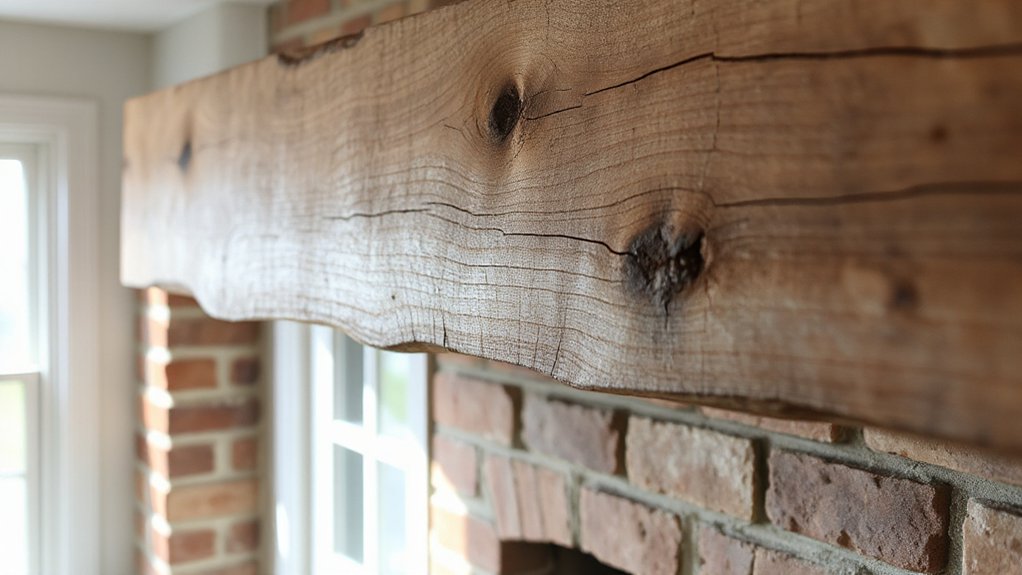
With budget-minded planning, you can achieve a stunning reclaimed barn wood beam fireplace mantel without breaking the bank. Start by auditing materials you already own or can source from salvage yards, then prioritize essential milestones over cosmetic extras.
Choose dimensional lumber with minimal defects, and embrace simple joinery like notch-and-fit or corner blocks to reduce hardware costs. Refinish only where needed, preserving natural patina to maximize value and reduce waste.
Demolish and reclaim in stages to spread expense, and compare quotes for local carpentry to spark competitive pricing. Emphasize Historical preservation by selecting authentic, period-appropriate pieces.
Track savings to reinvest in illumination or trim details. These mindful choices deliver Sustainability benefits, supporting long-term use while maintaining timeless character.
Frequently Asked Questions
How Long Does Reclaimed Barn Wood Mantel Typically Last?
Reclaimed barn wood mantels can last decades with proper care; expect 50+ years if protected from moisture. You’ll retain historical authenticity while minimizing environmental impact, provided you seal surfaces and maintain ventilation to prevent warping or decay.
Can Reclaimed Beams Be Used Outdoors or Indoors?
Yes, you can; reclaimed beams work outdoors and indoors with proper treatment. They offer outdoor durability when sealed and treated, while indoors they enhance Indoor aesthetics with rich, timeless character and polished, authoritative appeal—boldly transforming spaces.
Are There Hidden Defects to Inspect Before Installation?
Yes. You should spot hidden defects before installation. Use a thorough inspection checklist, including checks for warping, cracks, insect damage, moisture staining, and insect frass. Address issues or replace beams to avoid structural risk and future costs.
How Does Weight Affect Ceiling and Wall Structure?
Weight tests your ceiling and wall, so plan ahead. You must guarantee ceiling reinforcement and wall anchoring are solid, then feel the beam settle like thunder on wood—secure, trusted support, and you’ll confidently suspend that mantel.
What Maintenance Routine Keeps the Finish Looking New?
Finish preservation requires a gentle routine: dust weekly, wipe with a damp microfiber, and avoid harsh cleaners. You’ll maintain luster by applying a breathable sealant annually. Use light Cleaning techniques, and gently re-energize the finish as needed.
Conclusion
Reclaimed barn wood mantels bring character, warmth, and a story you can feel, lightening or anchoring any room. You’ll appreciate the texture, knot work, and history woven into every beam, from farmhouse charm to modern edge. Measure carefully, source responsibly, and plan installation with solid support. Weigh reclaimed versus new timber to balance budget and durability. Finish thoughtfully to protect without dulling the grain. It’s like capturing a whisper of the barn’s past—a timeless focal point you’ll enjoy for years.