
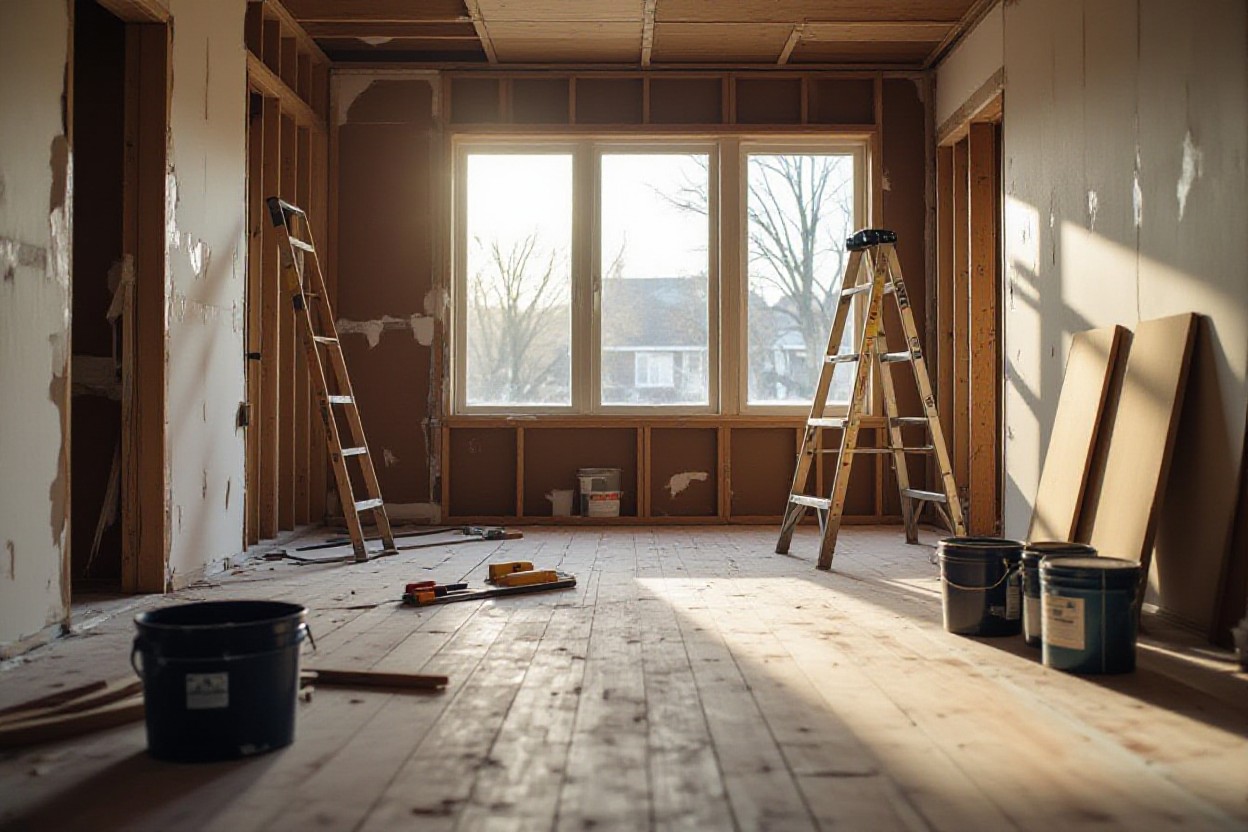

If you’ve ever swung a hammer in the name of home improvement, you’ve probably wrestled with the age-old question: when renovating, do you do walls or floors first? It sounds simple enough, but getting the order wrong can lead to extra work, extra cost, and the kind of chaos that makes you question why you started in the first place. Whether you’re freshening up a single room or giving the whole house a facelift, knowing which job comes first keeps everything running smoothly.
It’s 8 pm, you’re staring at ripped-up carpet and scuffed walls, and your brain’s doing laps around the same question: do you fix the walls first or lay the new flooring? You know the order you pick is going to affect cost, how clean the final finish looks, and how many annoying do-overs you end up dealing with. In this post you’ll walk through how the pros actually sequence a room – ceiling, walls, floors, trim – so you can map out your own project without creating a total construction circus.
What’s the Big Deal About Order?
Picture this: you’ve just laid pristine oak flooring and then your plasterer turns up with a dust-spewing sander, or your electrician needs to chase new sockets into the wall. That single decision about what you do first can add 10-20% in wasted labour, extra materials, and pure frustration, because every time you backtrack in the sequence, you pay for it in touch-ups, cleaning, and fixing damage that didn’t need to happen.
Why Sequence Matters
Because every trade leaves a different type of mess, the order you pick decides whether that mess lands on bare subfloor or your finished herringbone parquet. You avoid double work when you group noisy, dusty and wet jobs together: plastering, sanding, tiling, spraying primers. Pros think in sequences, not single tasks, which is why their jobs often run smoother and need fewer callbacks or emergency fixes.
The Classic Top-Down Approach
Most pros follow a simple ladder: ceilings, then walls, then floors, then trim and final paint. You start at the top so gravity works in your favour – dust, splatter and drips fall onto surfaces that aren’t finished yet. That way, when you finally lay carpet or glue down LVP, nearly all the heavy, dirty work is done and you’re only doing light sanding, caulking and cutting in.
On a real project, that might look like this: your decorator rolls a first ceiling coat, the plasterer fixes cracked walls, then a spark runs cables and chases out for downlights before anything pretty goes near the floor. After that, walls get skimmed, sanded and primed, you throw on a quick builders coat, then the flooring fitter comes in once, installs everything, and protects it with boards. Only then do you get the painter back for the sharp, clean final coats to skirting and walls, instead of dragging them in three separate times to fix avoidable damage.
Walls First – What’s the Real Story?
Starting with walls is basically you saying, “Let’s get the noisy, dusty chaos out of the way first.” You’re talking structural tweaks, chasing cables, patching cracks, plastering, all the stuff that throws dust into every corner and would trash a finished floor in an afternoon. By getting walls straight, sound, and primed before you even think about flooring, you keep your expensive oak, tile, or LVP out of the firing line and cut your risk of paying twice for repairs.
The Real Work Behind Walls
Behind that simple phrase “do the walls” you’ve actually got a full hit list: moving studs, adding insulation, running new electrics, maybe dropping in extra plumbing if you’re planning a wall-hung loo or more sockets. You’ll grind through sanding filler, plaster, and skim coats that create ultra-fine dust, the kind that finds its way into floorboard gaps in 10 minutes flat. So you let walls take the abuse first, then bring floors in when the messy phase is done.
Prepping for Paint – What You Should Know
Prepping walls for paint isn’t just a quick wash and go, it’s the difference between a “that’ll do” job and a finish that actually looks pro for years. You’re checking for blown plaster, hairline cracks, dodgy old paint, stains that bleed through, and those tiny dings that magically triple in size once you roll on a satin finish.
In practice, you’ll work layer by layer: scrape loose paint, fill with a decent filler (not the 99p stuff that powders out), sand with at least 120-grit, then spot-prime any bare plaster or stained areas with a quality primer-sealer. If you’ve just had fresh plaster, you’re thinning your first “mist coat” by about 20-30% so it soaks in properly instead of skinning over. And if you’re planning dark or rich colours, a tinted primer saves you an extra coat and keeps coverage even from the first roller pass.
When Do the Floors Get Some Love?
Your floors usually step into the spotlight once the messy wall work is done but before you finish painting and trim, which sounds fussy but saves you money. At this stage you’ve done your chasing, plastering, sanding, and probably a builders coat, so you can lay hardwood, LVP, or tile onto a clean, stable subfloor. Then you cover it like you’re wrapping glass – proper protection lets you crack on with skirting and final coats without gouges, paint splatter, or mystery dents appearing on day three.
Timing the Flooring Installation
You generally want flooring installed after heavy dust jobs but before skirting and final paint, so you’re not cutting and caulking over a finished surface. In a typical bedroom or living room, that’s step 5 out of 7 in the sequence you saw earlier. In kitchens, many pros lay floors before cabinets so you avoid awkward cut-outs and future height issues with appliances, especially if you’re using 8 to 15 mm engineered boards or LVP.
Protecting Your Floors for the Finish
Once your shiny new floor is down, protection stops the rest of the job trashing it. You’re aiming for a tough, walkable barrier: thick cardboard boards, sticky-edge films, or breathable fleece if you’ve got site-finished hardwood that needs to cure. Tape to skirting, not directly to delicate finishes, and double up around ladders, mitre saw zones, and doorways where trades drag tools – those are the classic damage hotspots in real-world projects.
In practice, you treat floor protection like part of the build, not an optional extra you grab at the checkout. Good decorators will run 1 to 2 mm hardboard or specialist ram board across the main traffic routes, then tape seams tight so dust and paint can’t sneak through. If you’ve just oiled or lacquered timber, you use breathable covers for at least 7 days so moisture doesn’t get trapped and cloud the finish. And if you’re living on site, it’s worth zoning the room: one path for daily use, one for work, which massively cuts down on those annoying scuffs that mysteriously appear the week before you move furniture back in.
Special Cases – Bathrooms and Tiled Rooms
Unlike a simple bedroom makeover, bathrooms and fully tiled spaces throw in extra layers like tanking, underfloor heating, and shower trays that dictate your sequence before you even touch a tile. You’ll be thinking about fall to drains, tile layout around niches, and where grout lines land against baths and trays, because a 2 mm miscalculation here can mean a constantly pooling shower floor or a nasty leak into the room below.
Why Tiling Order Changes the Game
In a tiled bathroom, the whole walls-or-floors-first debate flips, because tiles act as both finish and waterproof shell. Some tilers run floor tiles first so wall tiles sit neatly on top and hide cut edges, others do walls first to avoid walking on fresh floors, especially with large-format tiles or underfloor heating sensors in play. You’re not just chasing clean lines here – you’re protecting gradients, grout joints, and the entire tanking system.
Waterproofing and Planning for Success
Before you even choose tile patterns, your priority is building a watertight box: tanking boards or liquid membrane, taped corners, sealed penetrations, then tiles. You’ll usually waterproof the whole shower zone up to at least 1200 mm, sometimes 2100 mm, and wrap the floor, including 300 mm outside the shower. Get that sequence wrong and you risk leaks, blown plasterboard, and tiles debonding within a couple of winters.
Because water is relentless, you plan bathrooms like a mini engineering project rather than just another pretty room. You map out where pipes exit, which walls get full-height tanking, how your shower tray or wet-room former integrates with the floor, and whether the tanking goes behind or over the tray lip. In a lot of modern builds, you’ll see foam-cored cement boards on studs, then a liquid membrane with reinforcing tape on every joint, internal angle, and screw head before a single tile goes up.
That sequence matters: first fix plumbing, board, tank, flood test if you can, then tile walls and floors while constantly checking slopes to the drain with a level. You’re basically building a shallow swimming pool and then decorating it – anything less methodical and you’re gambling with hidden water damage that might take 6-18 months to show itself.

Can’t Skip the Basics – Structural Work First
Before you even think about paint colors or herringbone flooring, you’ve got to deal with the boring-but-serious stuff: structure, subfloors, and damp. If a joist is sagging 10 mm, or your walls show tide marks from rising damp, no fancy oak plank is going to hide it. You sort the bones of the room first – knock-throughs, steel beams, rotten timbers, levelling – because anything you add on top of a weak base will move, crack, squeak or fail way faster than you’d like.
Getting Subfloor Ready
Instead of jumping straight to pretty flooring, you start by checking what’s underneath: is the subfloor flat, dry, and solid? A 3 mm dip might not sound like much, but it’s enough to make laminate joints flex or tiles crack. You might need to screw down loose boards, replace sections of chipboard, add noggins to bouncy joists, or pour a self-levelling compound so your new floor actually sits right and doesn’t creak a month later.
Damp Treatments and Other Must-Dos
Once the floor is open, you’ve got a golden window to tackle damp, rot, and hidden nasties properly, not just patch over them. You might install a new DPC, inject cream into old brickwork, treat wet rot in joists, or add a liquid tanking system in a future bathroom before any tile ever goes down.
Because damp is sneaky, you treat it like an engineering problem, not just a stain on plaster. In a 1930s terrace, for example, you might discover joists sitting straight into damp external walls, so you’d add joist hangers, install a physical DPC, and improve underfloor ventilation with extra air bricks.
In basements or ground-floor extensions, you often pair a liquid DPM on the slab with a 1200-gauge membrane and then a screed, so LVP or engineered wood isn’t laid straight on a slab that’s reading 80% relative humidity. And if you’re doing a bathroom, you don’t just rely on grout – you’ll tank shower walls, tape corners, seal around trays, and run extractor ducting properly, because once tiles and floors are in, fixing trapped moisture usually means ripping everything back out.
My Take on Finishing Touches
Last week a client happily approved their freshly painted walls, then noticed every tiny scuff on the new engineered oak, so your “finishing order” really can make or break how polished the room feels. You want caulked skirting, sharp paint lines, and clean transitions between floor types so everything looks like it was always meant to be there. Perceiving how trims, sockets, radiators, and thresholds visually tie walls and floors together helps you decide what deserves your most careful, last-pass attention.
Key Factors That Affect Your Order
A typical moment is when you realise your 12 mm click LVP plus 5 mm underlay has just eaten into your door clearance, and suddenly trim and paint order actually matters. You’re balancing drying times, delivery dates, and how messy each trade is, rather than just guessing what feels right. Perceiving how dust, access routes, and heavy tools move through your space is what keeps your “final” finishes from getting trashed.
- Floor build-up thickness vs door and skirting heights
- Paint type (scrubbable matte vs delicate eggshell) near traffic areas
- Whether radiators, wardrobes, or stairs sit on top of finished flooring
- How lived-in the space is while you work (kids, pets, daily use paths)
Protection Tips You Can’t Ignore
A client once skipped floor protection to “save time” and ended up paying 15% of the flooring cost again just to fix scratches from a ladder and plaster dust. You don’t need fancy gear, just consistent habits: protect as soon as the floors go down and keep coverage until the last caulk and touch-up are done. The best projects are the ones where your protection comes off on the final day and everything actually looks finished.
- Lay 2-3 mm hardboard or specialist floor protection sheets over new floors
- Tape seams with low-tack tape so adhesive never touches finished surfaces
- Use heavy cotton drops for painting, not thin plastic that tears and shifts
- The small cost of proper protection almost always beats any repair invoice.
On bigger jobs you’ll often see pros treat protection as its own step, right after flooring and again before final paint, because trades traipse through with toolboxes, ladders, and the odd dropped screwdriver. You can copy that by zoning: high-traffic routes get rigid boards, quieter corners just need thick drops, and wet areas like bathrooms get plastic plus boards to stop moisture creeping into edges. The easy win is controlling grit by vacuuming daily and using sticky door mats at entries so tiny stones don’t act like sandpaper under work boots. The projects that still look good a year later usually have one thing in common. The protection was planned as carefully as the finishes.
- Cover thresholds where different floor types meet so edges don’t chip
- Wrap newel posts and handrails with foam and tape during works
- Use zip-up plastic dust doors to isolate sanding and cutting zones
- The more traffic and trades you expect, the heavier duty your protection should be.
Final Words
Summing up, most pros follow a top-down sequence for a reason – ceilings and walls first, then floors, then trim and final paint, because that’s how you dodge mess, damage, and paying twice for the same job. If you plan your renovation around that simple idea (dirtiest work to most delicate finishes) you’ll protect your new flooring, get sharper paint lines, and avoid a ton of annoying rework.
So before you pick up a roller or book a fitter, map out every ceiling, wall, and floor task in order and sanity-check it with your trades – future you will be very happy you did.