


You’ll want a Midlands-ready plan that’s practical and low-maintenance, with drought-tolerant natives, layered plantings, and wildlife-friendly zones. Think modular layouts, durable timber, permeable surfaces, and efficient irrigation that you can tweak as the seasons shift. Create spaces for cooking, relaxing, and growing, plus vertical greens to maximize space. Start with solid soil prep and drainage, then pick hardy, local materials. Ready to tackle the next steps and see how it all fits your yard?
Plan a Midlands-Ready Garden Layout

Start with a practical, well-structured plan that fits Midlands conditions. You’ll map sun exposure, drainage, and wind patterns first.
Then lay out zones for cooking, relaxing, and growing.
Create defined, accessible paths that minimize soil compaction and maximize light to each bed.
Prioritize compact, high-yield options like Urban vegetable gardens in raised beds so you can control soil quality and reduce weed pressure.
Use a Modern minimalist layouts approach: clean lines, simple material choices, and modular beds that can adapt as seasons shift.
Position the kitchen garden near an entry or patio for easy harvesting.
Place shady seating where you can enjoy blooms without overheating.
Keep irrigation efficient with drip lines and a simple timer.
Choose Low-Maintenance Plants for Midlands Weather
Choosing low-maintenance plants for Midlands weather starts with matching plants to the region’s mix of cool, damp winters and warm, sometimes dry summers. You’ll pick resilient options that thrive with minimal care, focusing on adaptability, soil tolerance, and pest resistance. Native trees and flowering shrubs anchor structure and seasonal interest without heavy upkeep.
- Choose drought-tolerant choices for summer dry spells
- Favor hardy native trees for year-round shade and habitat
- Integrate flowering shrubs to cue seasonal color
- Prioritize low-fuss perennials with long bloom windows
- Pair with mulching and smart watering for efficiency
Create a Cottage-Style Border for Midlands Yards
A cottage-style border for Midlands yards combines charm with practicality by layering texture, color, and scent through a mix of flowering perennials, ornamental grasses, and compact shrubs that tolerate our cool, damp winters and warmer summers.
To start, choose a staggered planting plan: low groundcovers, mid-height perennials, and airy grasses to create year-round presence.
Use a repeating color palette of soft pinks, creams, and blue-blues to keep it cohesive.
Include drought-tolerant options in sunnier pockets and place evergreen accents for winter structure.
Space plants for airflow and easy maintenance, and mulch generously to suppress weeds.
For borders near paths or fences, use the Cottage border approach to soften Midlands fencing and invite pollinators.
Keep labels handy and prune after flowering for steady growth.
Cottage border, Midlands fencing.
Build a Drought-Aware, Sunny Patio With Local Materials

Choose local materials for a sunny, drought-smart patio that lasts. Start with porous pavers and crushed stone for drainage.
Pair them with heat-reflective surfaces to cut glare and cooling needs.
Plan planting strips with drought-tolerant natives nearby to reduce irrigation while boosting color and biodiversity.
Local Materials Use
To build a drought-aware, sunny patio with local materials, start by evaluating what’s readily available in your area—think sandstone, brick, timber from nearby mills, or permeable pavers shaped for your climate. You’ll reduce transport emissions and support nearby suppliers while shaping a durable surface.
- Choose materials with high thermal mass to moderate heat
- Favor permeable options to minimize runoff and support groundwater
- Pair locally sourced stone with timber from sustainable mills
- Use native plantings to lower irrigation needs and boost resilience
- Plan a simple drainage design that directs water to lawn or beds
This approach supports sustainable landscaping, enhances microclimates, and creates a practical, low-maintenance outdoor space you’ll enjoy year-round.
Drought–Aware Patio
You can build a drought-aware, sunny patio that stays cool and lasts for years by selecting local materials and designing for water efficiency from day one. Choose permeable paving to reduce runoff, and lay it on a compacted subbase to prevent weed growth and preserve soil moisture.
Use light-colored surfaces to reflect heat, and incorporate shaded pergolas or lattice screens to cool seating zones. Plan rainwater harvesting with a discreet cistern or planter-integrated tank, feeding a drip irrigation loop for nearby containers and native plant beds.
Prioritize native plant selection in borders and containers to lower water needs and boost resilience. Integrate mulch, windbreaks, and soil amendments at installation, and schedule seasonal checks to adjust irrigation timing and fixture efficiency as weather shifts.
Design Wildlife-Friendly Corners for Year-Round Interest
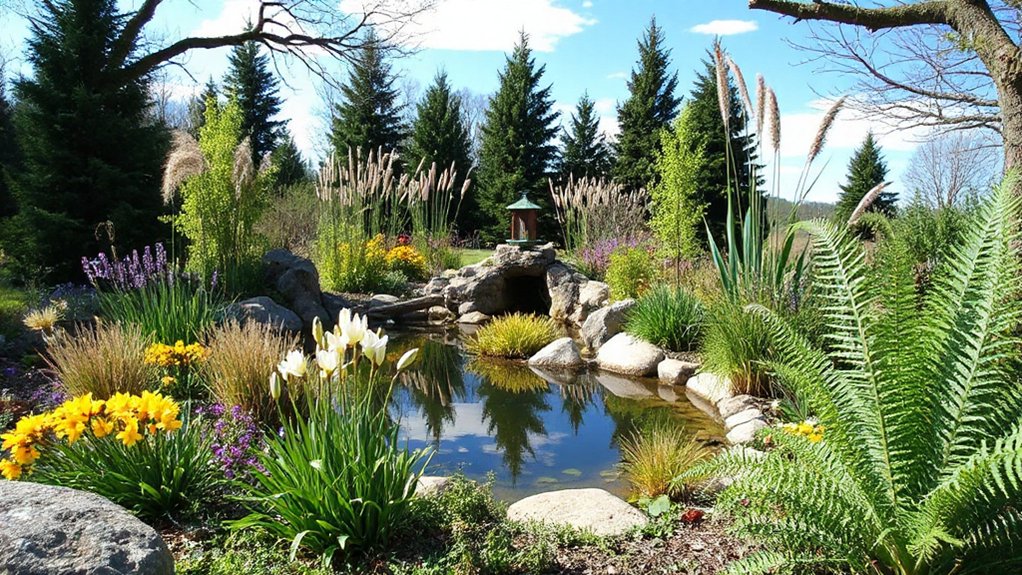
You can design wildlife-friendly corners that attract pollinators and small birds all year by pairing native plants with shelter, water, and layered structure.
Start with a year-round backbone of evergreen shrubs, then add seasonal blooms and a shallow water feature to invite different species through seasons.
Share practical tips on placement, maintenance schedules, and pest-smart practices to keep the habitat thriving without extra effort.
Wildlife Habitat Corners
Even small adjustments can turn a corner into a reliable wildlife habitat that delights year-round, so start by selecting native plants that provide food, shelter, and nesting sites across seasons. You’ll blend practical plantings with bird friendly features, creating a compact, low-maintenance ecosystem that supports local species while staying tidy.
- Choose dense shrubs for cover and fruiting natives for continuous food.
- Layer with grasses and perennials to offer varied nesting sites.
- Add a shallow water dish or shallow dish pond for hydration and insects.
- Use mulch thoughtfully to protect insects and reduce weeds.
- Maintain a yearly refresh of invasive-free plantings to sustain health.
Focus on accessibility, eye-appeal, and durability to guarantee wildlife use becomes a lasting habit.
Year‑Round Interest Methods
Year‑round wildlife appeal comes from layering structure, texture, and seasonal blooming that invite critters to linger through every month. You design Wildlife-Friendly Corners by combining evergreen backbone with seasonal accents, ensuring visual interest even in winter.
Start with a compact tree or tall shrub for height, then layer mid-height perennials, grasses, and groundcovers to create varied silhouettes and microhabitats. Choose native species that provide nectar, berries, or seeds across seasons to sustain birds, bees, and beneficial insects.
To maximize year-round color, mix COLORFUL BLOOMS with evergreen foliage and winter interest branches, rotating plants as conditions shift.
Implement low-energy Garden lighting to extend evening enjoyment without spooking nocturnal visitors. Use mulches, drip irrigation, and tidy edges for easy maintenance and quick, durable spring readiness.
Prepare Soil and Drainage for Midlands Plots
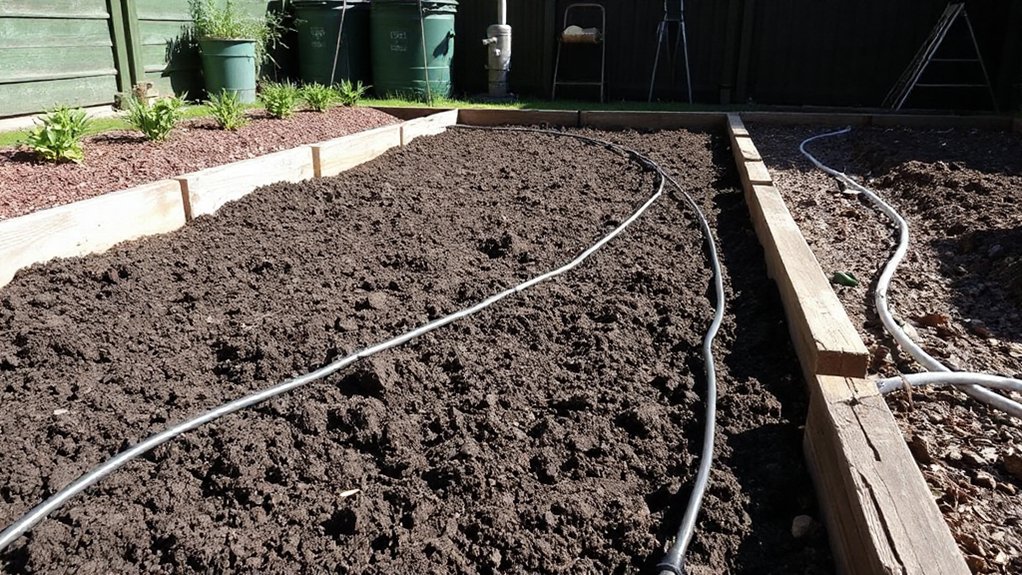
Preparing Midlands plots starts with a solid soil and drainage plan: test your soil’s pH and texture, then amend based on what you find. You’ll improve structure with organic matter, compost, and mulch, which boosts soil enrichment and resilience.
For drainage, assess slope and install appropriate solutions to prevent waterlogging. Choose beds that align with sun and wind, and consider raised borders where drainage is poor.
- Test results guide amendments and nutrient balance
- Add compost to improve texture and microbial life
- Mulch to retain moisture and suppress weeds
- Create swales or French drains for excess water
- Label soils to tailor planting choices and avoid crowding
With these steps, you’ll establish a stable base for plants, reduce stress, and ensure steady growth.
Budget-Smart Updates: Seeds and Local Materials
Could you cut costs without compromising yields by choosing seeds wisely and sourcing locally? Yes, you can. Start with open-pollinated or heirloom varieties suited to Midlands climates, then buy seeds in bulk from nearby cooperatives to reduce per-unit costs.
Prioritize core crops you’ll use weekly, and stagger plantings to spread harvests. Look for local soil clinics or community seed libraries to swap surplus seeds rather than buy doubles.
For materials, reuse containers, pallets, and offcuts from local nurseries, avoiding fancy pots. Practice Organic composting to feed beds without pricey amendments.
Set up a simple rainwater harvesting system with barrels at the shed gutter. This combination lowers inputs while preserving yields, enabling steady, affordable harvests.
Seasonal Timber and Hardscape Ideas for Year-Round Appeal
Seasonal timber and hardscape ideas can transform Midlands spaces into inviting year-round retreats, even on a tight budget. You’ll plan durable, low-maintenance features that endure Midlands seasons while staying flexible for growth.
Use untreated timber for warm, natural appeal and treat it to resist moisture. Combine permeable paving with stepped planting to reduce runoff and boost accessibility. Integrate organic mulching around beds to conserve moisture and suppress weeds, improving soil health.
Opt for compact, vertical gardening to maximize sunlit walls and fences, freeing ground space for larger planters. Choose modular elements you can move as seasons shift.
- Budget-friendly timber treatments and durability checks
- Organic mulching for moisture and fertility
- Vertical gardening to save space and increase resilience
- Permeable hardscapes to manage drainage
- Modular, seasonal-friendly layouts for year-round appeal
Frequently Asked Questions
What Are the Best Midlands-Friendly Windbreak Options?
Wind-resistant shrubs and affordable hedging are your best Midlands-friendly windbreak options. You’ll plant hardy, low-maintenance varieties, staggered for strength, install a layered hedge, and consider a fence-plus-vegetation combo to maximize wind control and soil stability.
How Often Should I Prune to Protect Midlands Tree Roots?
You should prune every 2–3 years for mature Midlands trees, prioritizing root protection by avoiding heavy cuts near roots. Tree pruning and root protection work best when you monitor soil moisture and recheck after storms, adjusting intervals accordingly.
Which Local Plants Deter Midlands Pests Naturally?
You can deter Midlands pests with companion planting and organic pest control; plant marigolds, garlic, and nasturtiums near vegetables, plus herbs like rosemary. You’ll attract beneficial insects, reduce damage, and maintain a practical, low-chemistry approach.
What Soil Amendments Work Best After Midlands Winters?
After winter’s chill, you should apply compost and mix in organic fertilizers to restore soil structure; you’ll notice improved moisture retention, nutrient availability, and germination success—keep watching the bed as you work, and adjust based on texture.
How Can I Maximize Garden Drainage After Midlands Rainfalls?
After Midlands rainfall, maximize drainage by grading surfaces away from structures, installing a perforated drainline, and creating swales; add a compacted gravel layer under paths. For garden pond design, pair with evenly spaced outdoor lighting ideas.
Conclusion
You’ve got a practical plan you can actually implement. Focus on a Midlands-ready layout, drought-tolerant natives, and low-maintenance borders, then add a sunny, timber-backed patio and wildlife-friendly corners for year-round interest. Start with soil prep and permeable hardscape to prevent drainage issues, and choose local materials to stretch your budget. Example: a small courtyard transformed with native perennials, a timber seating area, and a rain-friendly clock irrigation system—beautiful, functional, and resilient. Your garden, done.