


You’re about to risk underestimating how much a single home refresh can change your daily life. In 2026, UK homes lean into sustainable, energy-smart design with natural textures and calming neutrals, while flexible layouts and smart storage cut clutter without sacrificing style. Think durable materials, heritage touches, and calibrated lighting that feels timeless yet current. If you want a practical path to balance comfort and curb appeal, there’s a simple strategy waiting just beyond these pages.
2026 UK Home Design Trends: What’s Changing

UK homes are undergoing a notable shift in design priorities as tastes and needs evolve. You’ll notice six core trends shaping UK interiors today, each grounded in practicality and measurable impact.
First, sustainable architecture remains central: passive cooling, high-performance insulation, and low-energy systems reduce bills and emissions. You’ll also see tighter integration with outdoor spaces, linking interiors to outdoor living through large glazed openings and weather-protected terraces.
Second, multifunctional rooms gain efficiency, with adaptable zones for work, exercise, and study.
Third, compact storage becomes deliberate, prioritizing deep cabinets and hidden compartments.
Fourth, durable materials win out over trend-driven surfaces, focusing on low maintenance and lifecycle cost.
Fifth, tactile palettes emphasize calm neutrals with restrained color.
Sixth, natural light optimization remains essential for mood and health.
Warm Naturals and Textures for Cozy Living Rooms
Texture and natural hues set the foundation for cozy living rooms, guiding you toward warmth without clutter. You’ll notice how tactile surfaces—wool, linen, jute—create immediate comfort.
While anchoring color palettes in soft, earthy tones. With careful texture layering and mindful material choice, you can achieve lasting warmth and a calm, inviting space.
Warmth Through Textures
To create warm, inviting living rooms, prioritize layered textures in natural hues: think soft wool throws, brushed cotton upholstery, and ribbed linen curtains.
You’ll achieve tactile depth by combining textile families—knits, felts, and weaves—so the eye perceives varying surfaces without visual clutter.
Start with a foundational surface like a wool rug or jute floor mat, then add cozy accents via cushions in different textures and sizes.
Maintain cohesion with a restrained palette of creams, taupes, and stone tones to keep the space serene while still tactile.
Textural layering helps isolate zones for seating and conversation, reducing echo and enhancing acoustics.
Ensure fabrics are durable, easy-care, and moisture- and stain-resistant for practicality in daily UK living.
Balance warmth with breathable fabrics to prevent overstuffing.
Natural Hues And Comfort
Natural hues underpin comfort in cozy living rooms, giving you warmth without visual heaviness. You’ll pair warm neutrals with tactile textures to create depth without clutter, prioritising calm, functional layouts.
Choose eco friendly materials for furniture frames, upholstery, and rugs, ensuring long lifespans and lower environmental impact. In practice, lean into materials like seeded or FSC-certified wood, cork, linen, and cotton blends that soften edges and absorb sound.
Apply minimalist aesthetics: clean lines, restrained palettes, and purposeful accents rather than excessive ornament. Layer textiles to vary warmth: wool throws, boucle cushions, and a herringbone rug.
Balance light with shade, using sheer curtains and strategically placed lamps. By prioritising quality over quantity, you achieve durable comfort that remains stylish and adaptable across seasons.
Oak Finishes: Timeless, Durable Wood in UK Homes
Oak finishes bring a consistent grain and proven longevity to UK homes. You’ll notice how grain patterns, aging, and surface textures influence overall warmth and character.
You’ll assess how oak’s durability supports high-traffic areas while its warmth adds texture without overpowering spaces. Additionally, you’ll compare finish types and care routines to maintain its look.
In short, understanding oak grain, warmth, and finishing care helps you choose options that balance aesthetics with practical longevity.
Oak Grain Longevity
When evaluating oak finishes, prioritize species with pronounced, uniform grain that ages gracefully, preserving character over time.
Wood longevity hinges on both provenance and treatment: properly cured timber, stable moisture content, and suitable sealants mitigate checking and warping.
You’ll benefit from finishes that emphasize rather than obscure grain, enabling easier touch-ups and color matching as the surface patinas.
Consider UV-resistant coatings to prevent light-induced darkening, and avoid overly glossy sheens that exaggerate flaws.
In practice, select oak with controlled grain variation, apply durable protective layers, and maintain humidity between 40–60% for predictable, long-lasting performance.
Warmth And Texture
Opt for a medium to light tone to maintain clarity and prevent space from feeling heavy, while choosing finishes with low to moderate sheen to minimize glare.
Durable, open-grain oak resists daily wear if you select a protective coat appropriate for high-traffic areas.
Pair with textured accents to emphasize tactile interest without crowding the room, and layer cozy textiles for softness.
Keep scapes clean and uncluttered, letting wood read as a consistent, durable backbone rather than a dominant feature.
Finishing And Care
From here, focus on finishing and caring for oak to preserve its timeless appeal and durability in UK homes. You’ll start with finishing techniques that suit traffic and humidity, selecting oil, wax, or UV-curing finishes for a balance between protection and feel.
Apply a dust-free surface, sand progressively from P120 to P180, and wipe between coats to prevent dust entrapment. For darker grains, consider a pre-stain conditioner to even tone without blotching.
In daily use, follow care routines that avoid abrasive cleaners and excessive moisture; wipe spills promptly and use mats near entrances.
Maintain joints and edges with periodic light sanding and reapplication of a compatible topcoat every few years. Regular inspections catch chips or scratches early, ensuring longevity.
Space-Smart Layouts for Small UK Spaces
If you’re designing a compact UK space, smart layouts hinge on multifunctional zones and clear sightlines that maximize usability without feeling crowded. You’ll prioritize zones that serve two or more tasks, reducing corridor waste and promoting seamless shifts between cooking, dining, and work.
Place storage where it’s least intrusive, such as under benches or in shallow wall pockets, so surfaces stay uncluttered. Use furniture with integrated functions to minimize footprint, like a dining module that doubles as a desk or a sofa with hidden storage.
For kitchens, implement compact kitchen solutions that optimize counter space—pull-out prep surfaces, wall-mounted foldings, and corner carousels.
Guarantee consistent materials and muted tones to sustain visual breadth, enhancing perception of space while preserving practicality.
Regularly reassess layout as needs evolve.
Bold Yet Calm British Color Palettes by Room
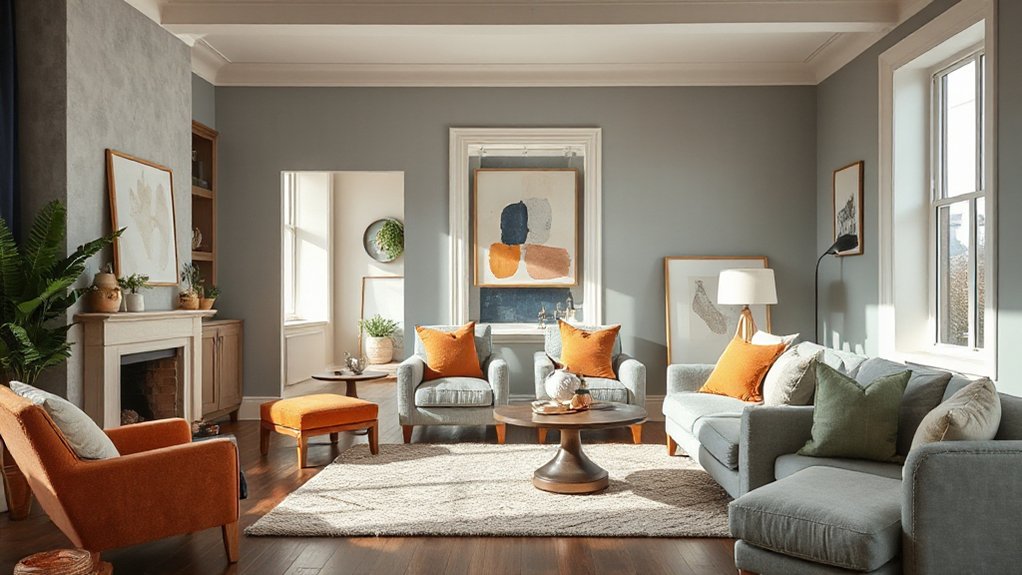
You’ll balance bold British palettes with calm, room-specific colourways to create cohesive spaces. Start by pairing polished, rich hues with softer accents in each room, ensuring the mood stays measured rather than manic.
This approach blends confident, playful hues with restrained, sophisticated tones for practical, long-lasting results.
Bold British Palettes
Start with a neutral backbone—charcoal, warm taupe, or soft greige—and invite depth through layered textures: tactile upholstery, timber grain, and matte metals.
Introduce color accents sparingly, choosing one dominant hue and two supporting tones to maintain balance.
Vintage patterns can anchor eclectic styles without overwhelming the space; use them in a statement rug, cushions, or an artful wallpaper panel, calibrated to your lighting.
Keep each room cohesive by repeating a color cue across textiles and accessories.
This approach yields bold, human spaces that read polished, not loud, and adapt gracefully to evolving tastes.
Calm Room Colourways
Start with soft neutrals—warm stone, dusty taupe, or pale sage—as the foundational backdrop, then layer with Serene palettes that introduce depth through tonal variation rather than bold contrasts. Consider matte finishes and natural textures to mute reflective glare and enhance tactility.
Tranquil accents, such as muted blues or gentle greens, should appear in key focal areas like seating, textiles, or feature walls, enabling cohesive flow between rooms. Balance scale and proportion to maintain calm tempo; use controlled color blocks and symmetric layouts to reinforce a quiet, purposeful atmosphere.
Polished Yet Playful Hues
Consider color psychology when selecting tones: deep charcoals ground rooms, while mustard, sage, or blush offer warmth without aggression. Audience-friendly schemes rely on balanced contrast—use a single dominant hue and two supporting tones to avoid visual clutter.
Playful accents should appear in textiles, artwork, or accessories, enabling quick recalibration as trends shift.
For function, apply these palettes room-by-room: kitchens benefit from durable, warm neutrals with bright focal pieces; living rooms gain depth through layered shades and tactile finishes; bathrooms leverage cool greens with metallic highlights for a spa-like feel.
Durable Fabrics and Sustainable Materials You’ll Love
When choosing fabrics and materials for UK homes, durability and sustainability should drive most decisions, not fashion alone. You’ll prioritise textiles with proven longevity, repairing options, and clear maintenance requirements.
Textile sustainability isn’t a buzzword here; it guides sourcing, production impacts, and end-of-life reuse. Look for stable fiber blends, low pilling, strong seams, and certified standards that withstand daily use.
Fabric durability matters across upholstery, curtains, and cushions, so assess rub tests, fade resistance, and cleaning versatility before buying.
Sustainable materials should align with practical needs: recycled or responsibly sourced content, reduced water footprints, and durable finishes that resist wear.
Balance aesthetics with performance by testing samples in your spaces, ensuring consistency in texture, colourfastness, and longevity over years of UK living.
Tech-Ready Interiors: Smart Storage That Keeps Clutter Down
Smart storage is the backbone of a functional UK home, turning every square meter into usable space without sacrificing style. In tech-ready interiors, you’ll pair systems with furniture that hides components behind clean lines.
Start with modular units that adapt to shifting needs—think shallow pullouts for small gadgets and deep drawers for cables, power strips, and manuals. Prioritize concealed charging hubs and integrated lighting that activates on entry.
Use labeled, visible-slot organizers inside cabinets to streamline daily routines and reduce search time. Implement vertical storage: wall-mounted shelves, peg boards, and magnetic strips keep clutter control within reach while preserving floor area.
Choose finishes that resist fingerprints and are easy to wipe. The goal is smart organization that supports flow and routine without visual chaos.
Energy-Saving Upgrades That Won’t Break the Bank

Energy-saving upgrades don’t have to cost a fortune; small changes add up quickly. You’ll optimize performance by auditing your home first: identify heat loss, drafty doors, and neglected insulation.
Prioritize quick wins like weatherstripping, radiator reflectors, and programmable thermostats to cut daily usage without major disruption. Consider solar panels if your roof orientation and budget permit; even partial installs can lower daytime electricity needs and reduce peak rates.
For water-related savings, rainwater harvesting can lower irrigation demands and utility bills, especially in gardens with seasonal demand. Pair these measures with efficient appliances and LED lighting to maximize impact.
Track energy and water use to verify payback periods, and adjust habits as you observe real-world savings. Practical, scalable, and cost-conscious upgrades yield tangible returns.
Heritage Details With Modern Execution for a British Feel
Heritage details can define a British feel when paired with modern execution, delivering timeless character without sacrificing function. You’ll fuse classic elements with current practicality to create spaces that feel deliberate rather than nostalgic.
Begin with structural cues—panelled doors, tiled floors, or moulded ceilings—then simplify with clean lines and restrained palettes to avoid heaviness.
Mix in lightweight, contemporary furniture to keep proportion balanced and guarantee daily usability.
Highlight timeless craft through visible textures: brick, lime plaster, or timber, treated with modern finishes for durability.
Use calibrated lighting to accent heritage without overpowering it.
For finish decisions, lean on a heritage revival approach: preserve original charm while updating hardware and fittings.
Introduce vintage accents as focal points, ensuring each piece serves a purpose and aligns with your British sensibility.
Start Here: A Simple, Scalable 6-Week Makeover Plan
To kick off a simple, scalable 6-week makeover, start with a clear plan that prioritizes achievable milestones and measurable outcomes. You’ll map the project into weekly sprints, defining one concrete goal per week and a quick review at the end.
Begin with a precise audit: room layout, lighting, paint palette, and key textures.
Week 1 focuses on fundamentals—decluttering, base finishes, and a budget-backed mood board.
Week 2 tests paint directions and finishes, confirming color stability under different lighting.
Week 3 introduces key furniture changes or replacements, aligned with your space flow.
Weeks 4–5 implement decor strategies, emphasizing personalized decor that reflects you without overwhelming space.
Week 6 finalizes with seasonal accents, swap-accessorize, and a maintenance plan to sustain results.
This approach stays focused, scalable, and measurable.
Frequently Asked Questions
What’s the Best Budget-Friendly Interior Upgrade for 2026?
A budget-friendly upgrade is to refresh your space with budget friendly decor and affordable renovations like fresh paint, updated lighting, and smart storage. You’ll gain impact without overspending, prioritizing practical choices and analytical spacing for maximum effect.
How Do I Mix Oak With Bold Color Accents Without Clashing?
Mix oak with bold color accents by balancing hues and tones; use color coordination to guide which accents appear where, and prioritize cohesive furniture pairing. You’ll keep contrast crisp, deliberate, and surprisingly versatile—almost too easy to pull off.
Which Fabrics Resist UK Humidity and Wear Best?
You should choose fabrics with strong fabric durability and moisture resistance, such as performance blends or treated natural fibers; they resist humidity and wear, keeping upholstery intact, colors stable, and surfaces looking new even in damp UK homes.
Can Small Spaces Feel Luxurious Without High Costs?
Yes, you can: you’ll create luxury illusions with strategic lighting, mirrors, and cohesive textures, while cost effective elegance comes from versatile furniture, smart storage, and scale-appropriate décor that maximizes space and feels premium without breaking the bank.
What Are Quick DIY Ideas for Energy-Saving Upgrades?
You’ll spark savings by installing solar panels and using smart thermostats; think of sunlight as currency and climate control as a precise instrument. You calibrate quickly, seal gaps, LED-lit upgrades, and program schedules for steady, measurable energy cuts.
Conclusion
You’ll finish with spaces that feel calm, efficient, and distinctly British. By 2026, homes embracing warm textures, oak finishes, and smart storage cut clutter by up to 40% in daily use, based on recent energy and design benchmarks. Prioritise flexible layouts and energy-saving upgrades—they deliver comfort without blowing the budget. A heritage twist, executed with modern precision, creates that innately British balance of charm and practicality. Start small, scale up: your smarter, cozier home starts now.