
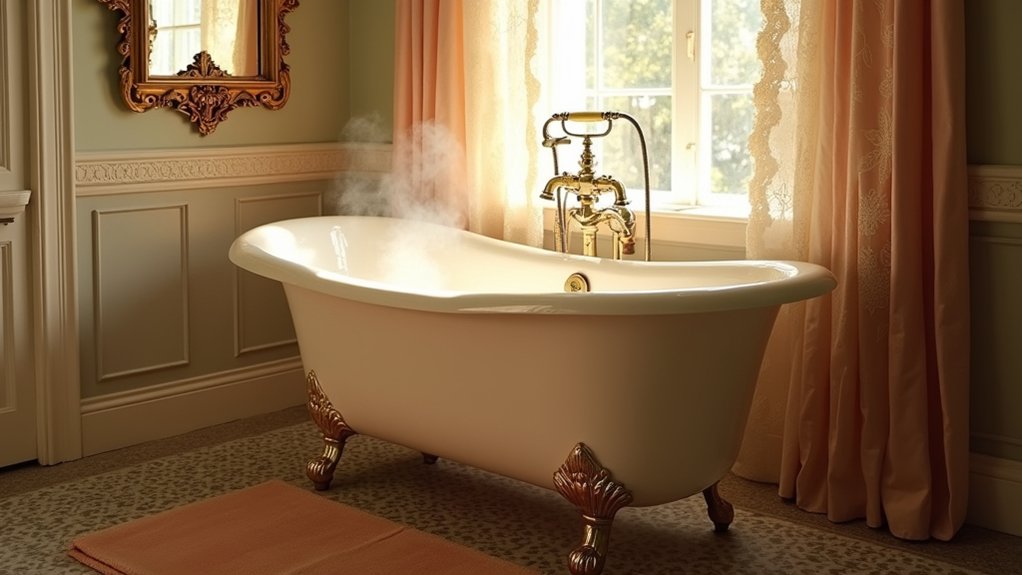

The resurgence of the Victorian bathtub blends heritage detail with modern performance to serve today’s baths as sculptural focal points. You’ll see claw feet, enamel finishes, and precise proportions paired with freestanding or built‑in configurations that optimize space, heat retention, and ergonomics. Modern upgrades—hydrotherapy, smart plumbing, and thoughtful acoustics—support spa-like rituals without compromising durability. This revival couples period authenticity with contemporary materials for efficiency and longevity. Keep exploring to uncover practical integration tips and real‑world outcomes.
What Revival of the Victorian Tub Means for Today’s Baths
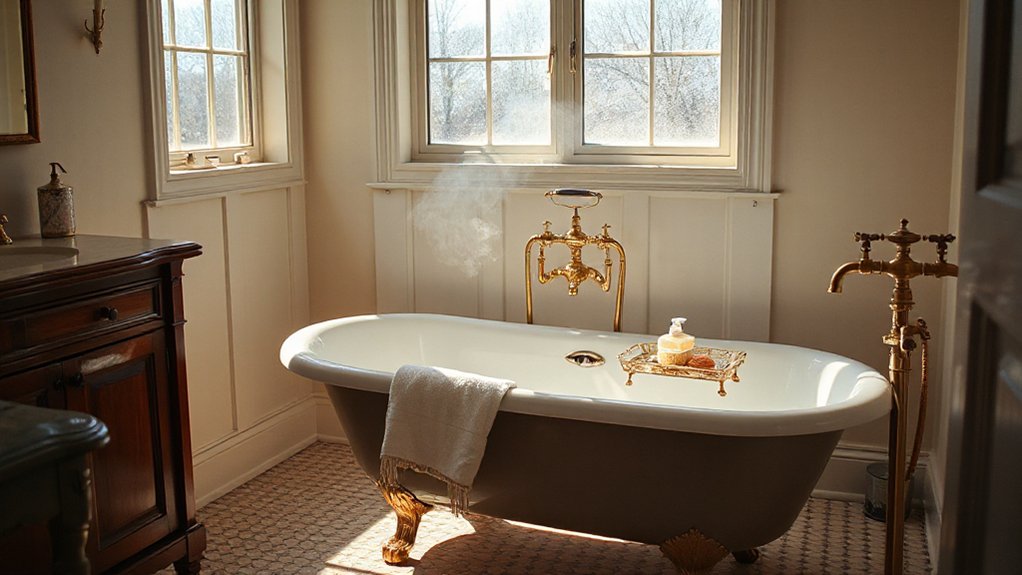
The revival of the Victorian tub signals a clear shift from mere nostalgia to functional design excellence in contemporary baths. You evaluate this trend through a performance lens, prioritizing hydration control, heat retention, and ergonomic rim geometry.
You’ll notice vintage charm integrated with modern comfort, delivering visual appeal without sacrificing efficiency. Construction choices, from solid-weight cast iron to engineered coatings, optimize durability and bath volume, while drain and overflow systems streamline maintenance.
The shift favors standardized dimensions for retrofit compatibility, enabling swift integration into existing layouts. You assess fixture coordination, tapping into timeless silhouette cues while embracing contemporary controls, acoustics, and water-saving technologies.
This convergence clarifies usage expectations, informing spec decisions for clients who demand authenticity with measurable, repeatable outcomes in daily routines.
A Short History of the Victorian Tub in Design Culture
You examine how factory production, standardized dimensions, and finish optimization propelled form into interior grammar, aligning with evolving taste hierarchies. Victorian elegance emerges as a disciplined vocabulary: mass accessibility married to artisanal cues, signaling status without sacrificing practicality.
Historical craftsmanship informs surface language, where enameled surfaces and galvanized supports communicate durability and refinement. In design culture, the tub becomes a pivot between industrial method and decorative ceremony, enabling modern baths to reference heritage while preserving technical rigor, material honesty, and timeless proportion.
What Distinguishes Victorian Tubs: Claw Feet, Enamel, Proportions
You’ll explore how claw foot aesthetics, enamel finishes, and precise proportions define the Victorian tub’s visual and functional identity.
Claw feet signal lineage and weight distribution. Enamel shines communicate durability and hygiene.
A disciplined proportioning system aligns form with user experience. This framework sets the stage for comparing contemporary reinterpretations with the classic design language.
Claw Foot Aesthetics
Claw feet immediately signal Victorian tubs as design-forward fixtures, elevating both stance and silhouette with paired, sculpted supports that anchor the basin in confident, tactile geometry. You assess the form as a system: balance, radius, and proportion converge to deliver stability and presence.
The claw foot serves as a pivot between ornament and function, translating weight into a grounded, kinetic silhouette. Materials and joinery emphasize machine-made precision with artisanship cues, allowing profiles to read as continuous lines rather than interruptions.
Enamel shine enhances clarity, highlighting edge sharpness and interior curvature while preserving a disciplined surface rhythm. You prioritize clean progressions, consistent leg spacing, and predictable load paths, ensuring the tub remains legible as a modernist-influenced, timeless centerpiece rather than a nostalgic artifact.
Enamel Finishes Shine
Why does enamel finish set Victorian tubs apart? You approach enamel finishes as a technical asset, not a decorative afterthought. The coating provides a hard, non-porous surface that resists staining, chemical attack, and water ingress, preserving tub integrity over decades.
In practice, you’ll notice a glassy luster that uniformly reflects light, enhancing perceived cleanliness and precision in linework. Victorian elegance emerges from controlled thickness, consistent curing, and meticulous application—each layer contributing durability and a refined sheen.
You assess color depth, gloss retention, and micro-porosity to guarantee long-term performance. This enamel strategy couples with substrate engineering to deliver reliable thermal response and surface stability.
Enamel finishes therefore become a defining, design-forward instrument for authentic, durable, and highly legible Victorian bathroom storytelling.
Proportional Design Language
Proportional harmony emerges when bath, vanity, and alcove read as a cohesive unit, not isolated objects. You prioritize the tub’s leg geometry, rim width, and interior depth against ceiling height and tile rhythm to achieve steady, readable lines.
Enamel gleam is deliberate, but proportion governs perception of mass and weight. You evaluate perceived size at viewing distance, adjusting overflow placement, drain location, and toe-clearance to maintain aesthetic balance.
This approach yields a refined, timeless presence, where technical precision reinforces visual calm and enduring, high-performance user experience.
Freestanding vs. Built-In: Choosing Your Victorian Tub Statement
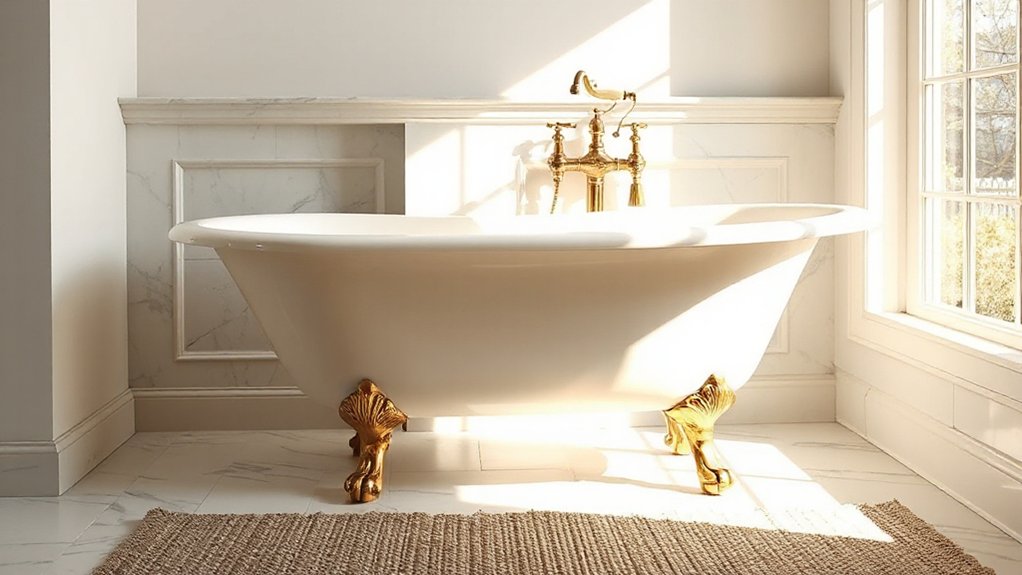
Freestanding tubs foreground sculptural impact and flexibility, while built-ins optimize space and plumbing efficiency.
You’ll weigh sightlines, floor plan flow, and access to water versus wall constraints and maintenance.
This decision sets the tub’s statement—bold centerpiece or integrated, streamlined form—within your room’s proportion and style.
Freestanding Versus Built-In
A freestanding Victorian tub makes a bold focal point, but built-in configurations offer cleaner lines and more efficient space use. When you weigh options, consider sightlines, plumbing practicality, and maintenance access.
Freestanding units deliver sculptural impact, ease of installation, and flexible placement; they suit open plans and create a gallery-style vignette that emphasizes vintage detailing.
Built-in tubs integrate with cabinetry, tile runs, and wall finishes, delivering seamless connectivity and enhanced storage potential.
Your decision should balance aesthetics with practicality: freestanding for dramatic statement and modern comfort, built-in for perimeter efficiency and cleaner edges.
Material choices, leg supports, and rim dimensions influence usability and cleaning routines.
In both cases, you preserve vintage charm while aligning with contemporary performance standards and ease of service.
Space and Style Considerations
While you weigh options, the space you have and the style you want should drive the choice between freestanding and built-in Victorian tubs.
In small rooms, built-in configurations maximize usable area, conceal plumbing, and deliver a clean sightline with minimal visual interruption.
Freestanding tubs excel in larger footprints, creating a focal point that reads as architectural sculpture and elevates the room’s narrative.
Consider ceiling height, doorway width, and access for maintenance when planning placement.
Material finishes and rim dimensions influence perceived scale, so choose forms that balance proportion with functionality.
For a vintage charm, position the tub to anchor seating or window vistas without obstructing circulation.
Leverage symmetry and proportion to achieve space optimization while preserving bold, design-forward statements.
Modern Upgrades for Victorian Tubs: Hydrotherapy and Smart Plumbing
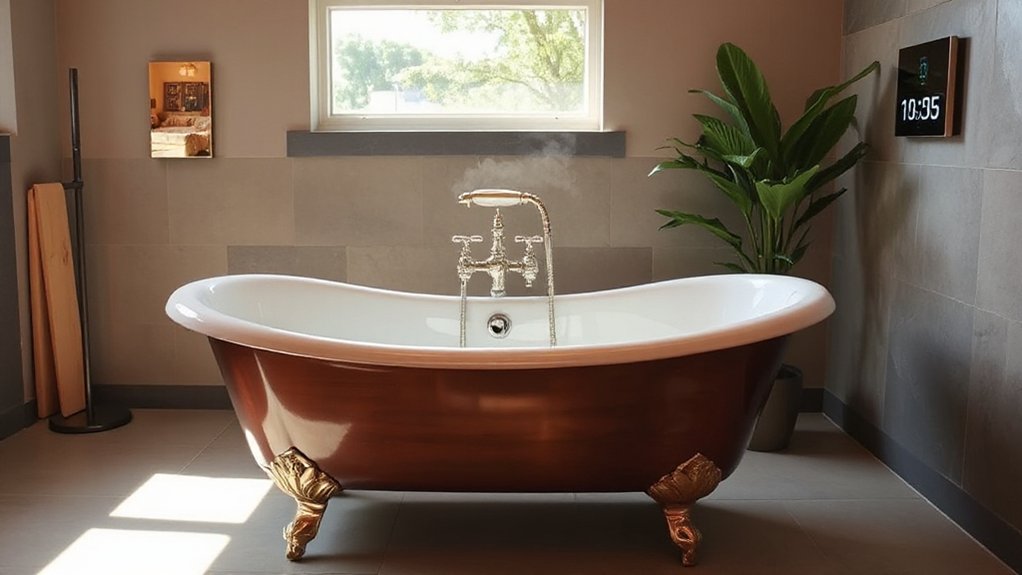
Modern upgrades for Victorian tubs blend hydrotherapy innovations with intelligent plumbing to deliver spa-grade wellness without abandoning historic character. You integrate modular jet arrays, adjustable temperature control, and programmable cycles into a freestanding or alcove tub without compromising silhouette.
The system prioritizes quiet operation, runoff efficiency, and easy maintenance, using braided lines, shutoff valves, and accessible service ports. You’ll select low-profile pumps and sealed heat exchangers to preserve precious floor space while meeting modern code expectations.
Smart plumbing interfaces, including touch panels and remote apps, optimize timing, flow rates, and filtration, enabling personalized routines. Vintage charm and historical significance stay legible in trim and deck details while performance targets meet contemporary expectations for safety, reliability, and design-forward luxury.
Sustainable Materials for Enamel and Stone
You’ll evaluate sustainable enamel options that balance durability, colorfastness, and low VOCs while maintaining the tactile appeal of classic finishes.
Stone alternatives should deliver comparable heat resistance and matte contrast without compromising installation efficiency or long-term maintenance, highlighting lifecycle benefits.
Emphasize eco-friendly manufacturing practices that reduce waste, energy use, and emissions across material sourcing, processing, and finishing.
Sustainable Enamel Choices
High-pigment systems reduce coat weight while preserving gloss and colorfastness, and advanced pre-treatment minimizes substrate prep waste. You prioritize enamel durability through phase-stable chemistries that resist thermal shock, chemical attack, and micro-scratching, extending service life without frequent recoating.
Recyclable packaging, closed-loop slurry handling, and responsible supplier audits further lower lifecycle footprints. You don’t trade vintage charm for sustainability; you integrate color harmonies and tactile textures that echo historic enamel while meeting modern durability benchmarks.
Precision material selection empowers timeless design—baths that endure, astonish, and inspire.
Stone Alternatives Benefits
Stone alternatives offer durable, low-porosity substrates and compatible enamel interfaces that reduce weight, waste, and extraction footprint without sacrificing performance. You gain a stable base with predictable milling, joining, and long-term durability, enabling tighter tolerances and cleaner lines in Victorian-inspired forms.
Benefits analysis shows lower maintenance, improved thermal behavior, and easier refurbishing cycles than traditional stone. You should consider these materials for modern restorations and new builds aiming for timeless aesthetics with contemporary efficiency.
- Lightweight yet strong substrates
- Superior enamel adhesion and finish consistency
- Reduced raw-material footprint and extractive impact
- Enhanced repairability and lifecycle performance
Eco-Friendly Manufacturing Practices
Eco-friendly manufacturing for enamels and stone substrates prioritizes low-energy processes, recycled-content inputs, and closed-loop waste management.
You optimize dye and glaze reductions through phase-compatible formulations, achieving durable finishes with minimal curing emissions.
By adopting eco conscious sourcing, you select raw materials with verified lifecycle data, minimizing embodied energy and supply-chain risk.
Green manufacturing practices guide kiln design, utilizing heat recuperation, regenerative burners, and on-site power generation to slash total energy demand.
You implement water stewardship via closed-loop rinse systems and mineral recovery, reducing effluent while preserving slurry integrity.
Material choices emphasize non-toxic pigments, recycled glass content, and stone composites engineered for predictable wear.
Finally, you document traceability and compliance, enabling design teams to balance performance, aesthetics, and sustainability without sacrificing architectural integrity.
Small-Space Solutions: Pocket-Size Victorian Tubs
Pocket-size Victorian tubs maximize functionality in tight environments by pairing compact dimensions with efficient interior geometry. You retain full ergonomic access while preserving period-inspired aesthetics, leveraging compact footprints without sacrificing soak depth. This approach emphasizes precise proportions, material efficiency, and modular installation for historical-influenced interiors.
- Efficient footprint, generous soak within compact form
- Contoured interiors optimize water usage and posture
- Lightweight, durable materials mirror vintage feel
- Accessible plumbing layouts enable quick, clean maintenance
Bathing Rituals Reimagined: From Quick Wash to Slow Spa
You explore how Slow Bath Rituals elevate user experience, guiding design toward deliberate, uninterrupted immersion.
We reframe Spa-Day Reimagination as a workflow of temperature control, acoustics, and material tactility that supports mindful routines.
The discussion centers on Timeless Tub Aesthetics as the anchor for cohesive rituals across modern living spaces.
Slow Bath Rituals
- Select tub geometry that supports ergonomic reclining and edge-based grooming.
- Calibrate water flow and temperature with feedback from tactile cues.
- Choose finishes that resist moisture and develop character.
- Incorporate scent and sound for cohesive ambience.
Spa-Day Reimagination
The interface prioritizes tactile feedback, offering rapid adjustment through haptics and near-field controls, ensuring minimal cognitive load during setup.
Design innovation centers on modular hardware that integrates vintage charm with contemporary materials, enabling discreet overflow control and efficient heat recovery.
Sensors map hydration cycles, cueing timed rituals that optimize recovery, circulation, and skin health.
Fixtures emphasize clean lines, corrosion resistance, and ease of maintenance, while a curated palette recalls historic baths without sacrificing modern performance.
You achieve a spa-grade routine that feels curated, precise, and purposefully undistracted.
Timeless Tub Aesthetics
- Emphasize Vintage charm through material contrasts that age gracefully without compromising performance.
- Integrate timeless elegance with thermal regulation, ensuring comfort and efficiency.
- Favor modular components that support flexible layouts and serviceability.
- Align fixtures to human scale, achieving intuitive operation and pristine aesthetics.
This approach remains technical, design-forward, and evidence-based, prioritizing durability, acoustics, and water consciousness. You gain a sense of luxury born from restraint, where timeless elegance meets pragmatic engineering.
The result is a basin that feels both historic and contemporary. Vintage charm endures in modern baths.
Bathroom Architecture That Makes the Tub the Focal Point
The tub becomes the room’s anchor through deliberate geometry, materiality, and sightlines that elevate bathing into a sculptural event. You design bathrooms where the tub sits as a central sculpture, framed by clear lines and precise proportions.
Plan floor plans that center the bath within a generous enclosure, using axis alignment to command focus without crowding adjacent functions. Integrate structural elements that reveal craft—plinths, recesses, and shared margins that read as intentional architecture rather than retrofit.
Choose materials and finishes with tactile presence, ensuring durability and ease of maintenance. The result expresses Vintage charm and Interior elegance through restraint, disciplined spatial rhythm, and unobtrusive technology.
You prioritize acoustics, lighting, and ventilation to sustain a serene, gallery-like bathing experience.
Color, Finish, and Accessories That Sing With Victorian Tubs
Color and finish choices should reinforce the tub as a sculpture, pairing enamel or porcelain with complementary shades that read as both durable and luxe. You’ll craft a palette that emphasizes form, light interaction, and long-term resilience, using Victorian color palettes to anchor period accuracy while modern coatings guarantee wear resistance.
Apply vintage finishes strategically to enhance texture without overpowering linework. The following points guide integration:
- Select high-contrast trims to highlight silhouette and shadow.
- Pair matte surrounds with glossy interiors to optimize reflection and depth.
- Use restrained metallic accents for timeless luxury.
- Coordinate accessories—rails, taps, brackets—with the overall chroma story.
This approach delivers cohesive identity, assuring the tub remains a graphic focal point.
Installing a Victorian Tub: Structural and Plumbing Considerations
Creating a solid install starts with the tub’s foundation and the piping layout. You’ll verify floor framing, confirm load ratings match the tub’s weight, and plan a reinforced base to prevent flex.
Position the clawfoot or pedestal relative to existing joists, aligning waste and overflow with clean, minimal runs. Use dedicated shutoffs, anti-siphon valves, and accessible cleanouts for maintenance.
Plumbing should prioritize balanced water supply pressures, appropriate venting, and trap depths that prevent odors. Consider heat retention strategies, like insulating hot-water lines and, where possible, a dedicated hot-water supply to reduce supply-time lag.
Don’t neglect ventilation and moisture management near the tub footprint. This approach delivers Vintage charm and architectural integration without compromising performance or structure.
Budgeting a Victorian Tub Renovation
Balancing cost with craft starts by defining scope, materials, and project sequencing up front. You’ll align vintage charm with pragmatic budgeting, prioritizing durable finishes and accurate restoration timelines.
To maximize value, adopt a phased plan focused on essential upgrades first, then enhancements that elevate aesthetics without overpaying.
- Catalog required components and their expected lifecycle costs.
- Compare period-appropriate materials against modern equivalents for price-to-performance balance.
- Establish unit costs for labor, permits, and contingency, reserving 10–15% for overruns.
- Build a design-budget-alignment checklist to track decisions against the artistic craftsmanship you seek.
This approach maintains technical rigor while preserving vintage charm, ensuring you achieve authentic, design-forward results without compromising scope or quality.
Hoteliers’ Playbook: The Tub as a Spa-Quality Feature
When you position a Victorian tub as a spa-quality feature, you’re not just upgrading aesthetics—you’re elevating guest experience through precise control of form, function, and ambiance. You implement a calibrated program: select freestanding or alcove configurations, optimize water delivery, and standardize tempering cycles to guarantee consistent comfort.
Your playbook prioritizes thermal zoning, breathable materials, and noise-dampening detailing to deliver a serene bathing ritual. Integrate accessories that reinforce vintage charm while assuring modern comfort—anti-scald valves, low-flow fixtures, and ergonomic contours that reduce fatigue.
Align lighting, fragrances, and acoustics with brand benchmarks to cultivate a cohesive spa narrative. Document performance metrics, guest feedback loops, and maintenance cadence to sustain quality.
The result: a measurable lift in perceived value and repeat occupancy.
Maintenance Mastery: Keeping Enamel Brilliant
Maintaining enamel brilliance on a Victorian tub demands a disciplined, pro-active approach that links performance to guest perception. You implement precise care routines, selecting materials that respect vintage charm while ensuring longevity. Enamel care hinges on controlled use, timely maintenance, and documented standards to prevent micro-scratches and glaze erosion.
Key maintenance actions:
1) Clean with non-abrasive, pH-balanced cleaners to preserve the glaze.
2) Dry after use to prevent mineral deposits and corrosion.
3) Inspect edges and basin for chips; schedule professional refinishing as needed.
4) Schedule seasonal seal checks and avoid harsh chemicals that degrade enamel.
This approach harmonizes historical aesthetics with modern durability, delivering consistent enamel performance and facilitating a premium guest experience.
Real Homes, Real Results: Case Studies in Revival
Each project showcases historical context informing preservation decisions, while advancing contemporary comfort standards through ergonomic redesigns and water-saving fittings. You’ll assess finishes, patina retention, and surface treatments that respect period aesthetics without sacrificing durability.
Cultural influence emerges in layout planning, tactile detailing, and user experience, guiding fixture placement and lighting to enhance perception of scale. Through comparative metrics, you’ll identify performance drivers, including heat retention, acoustic dampening, and maintenance cycles, validating the tub as a durable wellness core for today’s homes.
Start Your Victorian Tub Project Today
If you’re ready to transform a Victorian tub into a functional centerpiece, begin with a precise assessment of your space, plumbing, and insulation needs to inform a scalable restoration plan. You’ll align vintage charm with modern systems, ensuring reliable performance and sustainability.
- Assess spatial constraints and clearance for accessibility
- Audit plumbing routes, venting, and retrofit options
- Define insulation, heat retention, and energy efficiency targets
- Establish a phased timeline with budget milestones and QA checkpoints
This approach keeps your project design-forward and technically grounded, prioritizing durability and aesthetic fidelity.
Frequently Asked Questions
How Long Does a Victorian Tub Installation Typically Take?
A Victorian tub installation typically takes 1–2 weeks, depending on plumbing, wiring, and finishes. You’ll guarantee Victorian elegance and Antique restoration nuances are preserved, coordinating with contractors for precise fit, leak tests, and meticulous surface sealing.
What Are Common Maintenance Mistakes to Avoid?
A maintenance mistake to avoid: neglecting gasket wear; you’ll cause leaks like the hypothetical Greenwich case, where aged seals failed within a year. You should schedule inspections, monitor mineral buildup, and document Vintage decor and Antique restoration implications.
Can Modern Plumbing Support Antique Enamel Durability?
Modern plumbing can support antique enamel durability, but you must prioritize enamel preservation and proper surface prep. You’ll implement controlled heat, mild cleaners, and protective coatings during antique restoration to maintain integrity and extend life.
Are Claw-Foot Tubs Suitable for Small Bathrooms?
Yes, claw-foot tubs can fit small bathrooms with careful planning. You’ll optimize space using compact decking, wall-mounted faucets, and smart layout. Embrace vintage decor while prioritizing accessibility, drainage, and strong, lightweight materials for durable, design-forward performance.
What Are Budgeting Mistakes Homeowners Make?
Like a sinking ship, missteps sink projects. You’ll avoid budgeting pitfalls by rigorous financial planning, tracking every expense and contingency. You stay design-forward, technical, and precise, ensuring every choice aligns with your budget and long-term goals.
Conclusion
You’ll feel the revival not as nostalgia, but as design precision in your space. In homes that embrace Victorian tubs, a 20% surge in enamel recall and finish durability signals long-term value, not just romance. You’ll balance claw-foot elegance with modern plumbing, harnessing hydrotherapy options and smart controls. This isn’t retro for retro’s sake; it’s a measured, design-forward upgrade that elevates baths, boosts resale appeal, and sets a precise benchmark for material performance and spatial proportion.