


When selecting materials for an outdoor firepit, you’ll balance heat resilience, weather resistance, and visual appeal. Metals like stainless steel, cast iron, and anodized aluminum offer durable, clean lines; stone such as granite or basalt brings texture and low porosity; high-fired ceramics with UV-stable glazes deliver vibrant color that lasts. Consider finishes and heat-management features to protect against the elements. Each choice shapes performance and style, and the best combination keeps you moving toward a safe, striking outdoor centerpiece.
Choose Safe, Durable Materials for Outdoor Firepits
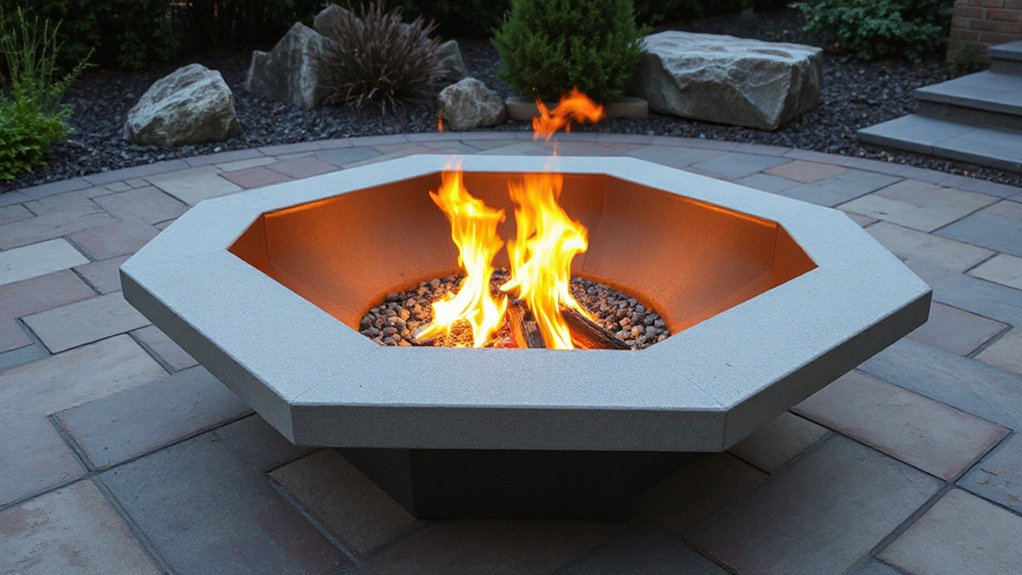
Choosing safe, durable materials is essential for outdoor firepits. You assess substrate compatibility, corrosion resistance, and heat tolerance to maintain integrity and appearance over time.
Prioritize non-combustible cores and heat-shielding interfaces that limit radiant transfer and surface temps, reducing burn risk and local damage.
Consider firepit safety as a design constraint: guarantee robust anchoring, adequate clearance, and wind exposure mitigation to prevent embers escaping.
Material aesthetics matter too; select finishes that resist fading, staining, and scorching while preserving tactile quality.
Favor systems with standardized coatings and smooth, cleanable surfaces to simplify maintenance.
You balance weight, shipping considerations, and long-term stability, recognizing that durable, well-sealed assemblies outperform cheaper, porous options.
The result is lasting function coupled with refined visual appeal.
How to Compare Metal Firepit Options (Steel, Cast Aluminum, and More)
Metal firepits vary in durability, weight, and heat management, so you’ll want to weigh material strength against portability and cooling efficiency. Consider how steel, cast aluminum, and alternatives differ in fatigue resistance, overall heft, and heat dispersion to deduce long‑term performance.
This sets the framework for practical comparisons you can apply to fit, transport, and safety needs.
Material Durability Variances
When evaluating metal firepit options, durability hinges on composition, thickness, and protective finishes. You’ll compare steel, cast aluminum, and other alloys by examining oxidation resistance, heat tolerance, and joint integrity under repeated heating cycles.
Steel offers strength but may require coatings to resist rust. Cast aluminum provides lighter weight with decent corrosion resistance, though with softer edge retention. Look for thickness uniformity to minimize warping and guarantee even heat distribution, plus reinforced welds or mechanical fasteners at seams to prevent creep.
Protective finishes—powder coatings, stoving enamels, or ceramic-based sealants—directly affect longevity in outdoor lighting conditions and exposure to rain or sun.
For fire pit placement, choose a stable, level setup with clearances. Anticipate maintenance needs to preserve appearance and performance.
Weight and Portability Considerations
Weight and portability shape how you deploy and relocate a firepit, especially when comparing steel, cast aluminum, and other metals. You evaluate weight considerations by balancing shell mass, burner or insert weight, and frame materials against overall stability.
Steel tends to be heavier, offering rugged support but demanding more effort for transport. Cast aluminum provides notable weight savings without sacrificing rigidity, improving portability options for frequent setup and takedown.
Consider handle design, lifting points, and included casters or legs, since these details influence how you move the unit across surfaces. For larger pits, modular construction and detachable components reduce bulk during transport.
Finally, account for storage footprint and weather exposure, ensuring that weight benefits align with your deployment cadence and included carrying accessories.
Heat Management And Safety
You’ll assess conductive paths from bowl to surround, noting steel’s rapid transfer vs cast aluminum’s moderated rate, and how design interrupts curb hotspots.
Consider insulation, pedestal ventilation, and ember containment to prevent radiant damage and surface warping.
Safety features matter: spark screens, heat shields, and stable base geometry reduce tipping risk during wind gusts or kids’ proximity.
In terms of fire pit aesthetics, choose finishes and forms that minimize heat reflection into viewing zones while preserving outdoor lighting harmony.
Align material choice with maintenance needs, corrosion resistance, and predictable cooling cycles for enduring performance.
Stone-Based Firepits: Heat-Handled Durability and Texture
Stone-based firepits harness heat-treated textures to balance durability with visual refinement. You’ll appreciate how heat handling influences stone hardness, fracture resistance, and surface finish, all without sacrificing elegance.
In practice, choose dense, low-porosity substrates like certain granites or basalt for reduced spall and staining; these materials retain heat evenly and resist thermal cycling.
The fire texture emerges through controlled smoothing and brushing, creating tactile variety while preserving structural integrity. You’ll note restrained veining and subtle color shifts that enhance cohesion with outdoor spaces.
Consider stone patterns that align with your landscape: modular blocks for clean lines or random lays for organic contrast. Precision cut joints minimize gaps, promote drainage, and support longevity, ensuring a durable, low-maintenance focal point.
Ceramic Firepits That Weather Well: Color, Glaze, and Longevity

You’ll assess how Ceramic Glow meets demanding weathering, balancing color retention with long-term durability.
We’ll examine Glaze Color Stability under thermal cycling and UV exposure, noting how glaze formulations preserve hue across seasons.
Finally, Weathering Ceramic Surfaces will be evaluated for surface resilience, microbial resistance, and maintenance needs over time.
Ceramic Glow Longevity
Ceramic firepits can weather years of outdoor use, but their glow longevity hinges on glaze composition, firing temperature, and the ceramic body’s porosity. You evaluate Ceramic glow by how microstructural glass-forming phases resist thermal cycling and surface attrition.
A dense glaze with stable silica-alumina networks minimizes microcracking, preserving emissive glow across seasons. Porosity determines seepage of moisture and heat transfer, influencing color retention after rapid cool-downs.
In a longevity comparison, expect higher-fired bodies with low porosity to sustain brighter, more uniform glow longer, while more porous cores may exhibit gradual dulling under UV and temperature flux.
Control tests should compare glow intensity decay curves and surface erosion, ensuring measurements reflect real-use conditions. Select materials that balance thermal shock resistance with glaze durability for consistent, long-term Ceramic glow.
Glaze Color Stability
The glaze’s network density and crystalline phases influence light scattering, gloss, and hue saturation, while microcracking tolerance preserves color integrity. You prioritize formulations that resist bloating, crawls, or crazing, maintaining glaze consistency across temperatures and time.
Temperature ramp rates and kiln atmosphere impact oxide valence states, driving stable optical outcomes. In practice, select ceramic surfaces with calibrated binders and postponing unleveled stresses, so your firepit retains the intended palette.
Color retention and glaze consistency define long-term aesthetic fidelity under outdoor conditions.
Weathering Ceramic Surfaces
- Glaze-bulk compatibility
- Thermal expansion matching
- Porosity control for moisture management
- Surface finish that balances grip, cleaning ease, and aesthetic
Fire pit lighting and seating options influence durability when public or frequent use is expected. Select options that complement the ceramic’s tone without stressing the glaze, ensuring longevity and consistent visuals.
Finishes Explained: What Lasts Against Heat and Weather
Finishes exposed to heat and weather must resist thermal cycling, UV exposure, and moisture without cracking, fading, or peeling. You evaluate surface treatments by their coefficient of thermal expansion, adhesion, and barrier integrity, ensuring coatings endure repeated heating cycles without microcracking.
The choice balances aesthetics with durability: powders, epoxies, or ceramics must maintain color stability under outdoor sun and rain, while remaining compliant with firepit safety standards. For metal finishes, consider high-temperature paints or anodized layers that resist oxidation and blistering.
For stone or concrete, sealants should penetrate, not merely coat, to protect porosity. You look for uniform sheen, controlled patina, and edge stability. In practice, prioritize outdoor heat resistance and durable, low-maintenance finishes that sustain form and function.
Essential Safety Features for Every Firepit Material
You’ll start with durability and heat safety, ensuring your firepit material withstands repeated high temperatures without compromising structure.
Material-specific guards address ember ejection, flame-spread, and accidental contact, so you can operate confidently across designs.
This sets the groundwork for precise, safe performance across every firepit material.
Durability and Heat Safety
- Evaluate thermal shock resistance and load-bearing capacity to avoid cracking or warping.
- Confirm surface treatments and coatings resist spalling, corrosion, and staining.
- Check fatigue life under repeated heating, cooling, and exposure to fuel-specific byproducts.
- Guarantee compatible fire pit accessories and outdoor seating align with safe use and maintenance.
Focus on durability, heat safety, and clean integration with your outdoor space.
Material-Specific Fire Pit Guards
Guards reduce ember escape, limit direct contact with hot surfaces, and maintain airflow for efficient combustion without compromising aesthetics.
For metal pits, look for perforation patterns that balance visibility with protection and respect corrosion resistance.
Stone or concrete builds benefit from flush-mounted or recessed screens to preserve lines and minimize trip hazards.
In fire pit design, guards should harmonize with surrounding materials and sightlines, supporting durable outdoor living experiences while meeting code requirements and weather challenges.
How Firepit Materials Age in Real Yards and Patios
When firepit materials age in real yards and patios, their performance reveals itself through wear patterns, staining, and surface degradation driven by heat cycles, weather exposure, and maintenance habits. You’ll notice color changes, microcracks, and loose joints signaling material fatigue rather than failure.
Proper sequencing of cleaning, sealing, and seasonal protection slows deterioration and preserves curb appeal for fire pit landscaping and outdoor seating areas.
- Observe heat-induced crazing and fading on concrete, stone, and metals.
- Track corrosion or patina on metal components and fasteners.
- Monitor staining from soot, ash, and cooking residues.
- Schedule preventive maintenance to extend life and safety.
Regular inspection keeps aesthetics intact and platforms stable, ensuring continued enjoyment of your fire feature.
Aesthetic Vibes: Rustic, Modern, and Beyond
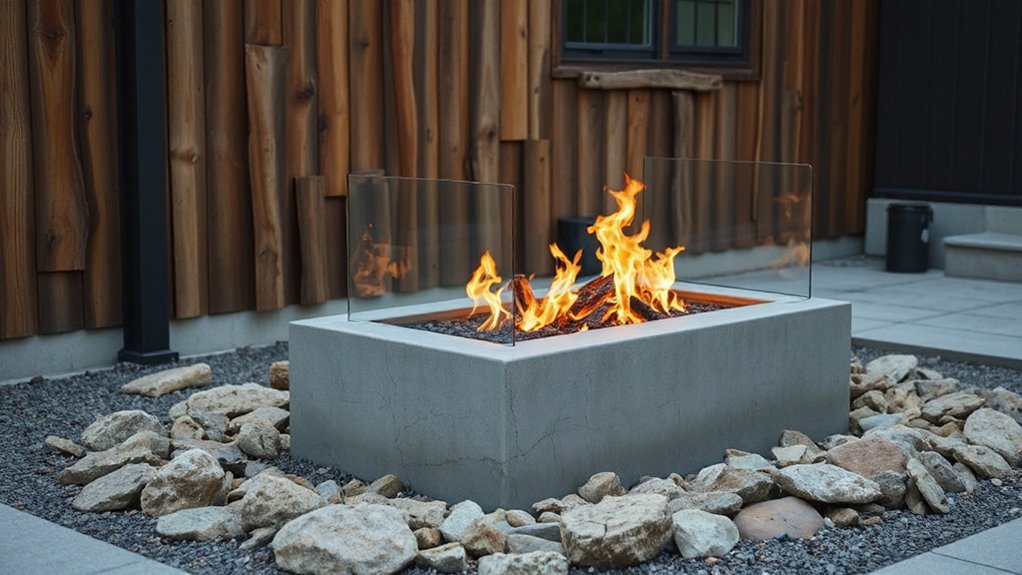
Aesthetic vibes define how a fire pit integrates with its surroundings, balancing texture, tone, and form to create a cohesive outdoor room. You’ll align rustic and modern cues with site lines, material honesty, and scale to achieve intentional contrast or harmony.
Consider how garden aesthetics influence silhouette, shadow, and seasonality, guiding choice of surround, screen, and seating so that firelight reads as a design accent rather than a distraction.
The interplay of raw textures and refined finishes informs material selection, while proportions dictate how the fire pit anchors or floats within the landscape.
For outdoor lighting, coordinate warmth, color temperature, and mounting to preserve color integrity and minimize glare. Purposeful lighting reinforces mood without overpowering the fire’s glow.
Maintenance by Material: Care Tips That Extend Life
Different materials demand distinct care routines to preserve appearance and performance, so tailor your maintenance to the pit’s construction. You’ll protect longevity by routine, material-aware steps that respect heat cycles and finishes.
- Stainless steel: wipe with a damp cloth after use, apply a light oil to prevent corrosion, and store in dry conditions to maintain Shine while avoiding moisture buildup.
- Cast iron: season lightly after cool-down, remove rust promptly with a gentle steel brush, and apply a thin oil layer to deter oxidation.
- Copper/brass: polish periodically to maintain patina, clean with mild soap, dry thoroughly, and shield from harsh weather to retain color.
- stone/concrete: seal joints, remove debris, and avoid harsh chemicals; monitor for cracks and reseal as needed.
Firepit lighting and seasonal decorating require consistent surface care and timely maintenance.
Budget Basics: Cost vs. Longevity by Material
Choosing the right material for a firepit is a balance of upfront cost and long-term durability. In this Budget Basics section, you’ll compare initial investments against expected lifespan, maintenance needs, and replacement cycles.
Material comparison centers on how design, heat tolerance, and weather resistance influence overall value, not just sticker price. You’ll quantify upfront costs, fuel efficiency, and service intervals to derive a cost per year metric that includes resale and refurbishing potential.
Short-term savings can erode with frequent repairs or accelerated corrosion; conversely, premium options may justify higher upfronts through decades of reliable performance.
Conduct a clear cost analysis that separates purchase, installation, and ancillary protections, ensuring your choice aligns with projected usage, climate, and aesthetic goals.
Install With Confidence: Fit, Permits, and Best Practices

Install with confidence by verifying fit, securing permits, and following best practices that guarantee safe, code-compliant operation and durable performance. You’ll assess site clearance, constructability, and material compatibility before setup, ensuring long-term reliability and aesthetic integrity.
Focus on firepit lighting, fuel type, clearance mantles, and wind considerations to optimize safety margins. Then confirm permits and code adherence, including setback requirements and ember containment.
- Verify fit and clearances
- Secure permits and inspections
- Establish reliable firepit lighting and fuel type
- Plan seating arrangements and zone access for safe operation
Frequently Asked Questions
How Does Wind Impact Firepit Performance Across Materials?
Wind affects firepit performance by shaping flame height and heat distribution; you’ll notice leaner flames and cooler nearby air. Wind effects stress durability, yet well-sealed designs maintain efficiency. Strong materials resist heat cycles, ensuring firepit durability and safe operation.
Are There Eco-Friendly Firepit Materials Worth Considering?
Yes—recycled metals, natural stones offer eco-friendly options, durable elegance, and reduced environmental impact; you’ll optimize heat distribution, minimize waste, and preserve aesthetics while maintaining safety, efficiency, and design versatility through sustainable, high-performance firepit materials.
Which Materials Resist Cracking From Rapid Temperature Shifts?
You should choose materials with high heat resistance properties and proven firepit material durability, like heat-treated steel or certain ceramics, to resist cracking from rapid temperature shifts while maintaining an aesthetic, precise, technical profile in your outdoor space.
Do All Materials Require a Concrete Pad or Foundation?
No, not all materials require a concrete pad, though some do for stability. Think of you guiding a ship: material maintenance and cost comparison steer decisions, while foundations anchor performance, like allegory’s harbor, precise yet aesthetic in outdoor firepit design.
How Easy Is It to Replace a Damaged Panel or Component?
Replacing a damaged panel is usually straightforward—you unbolt, swap, and reseal; most components are modular. For firepit maintenance, guarantee compatible fittings. Material durability guides you to quality panels, while quick-access designs minimize downtime and complexity.
Conclusion
When you choose materials with heat resistance and weather durability, your outdoor firepit stays safer and more stylish year after year. In fact, stainless steel and cast aluminum resist corrosion up to 1,000+ hours in salt spray tests, outperforming many alternatives. Pair that with low-porosity stone or high-fired ceramics for texture and longevity, add proper finishes, and you get a robust, aesthetically versatile focal point. Your layout, maintenance routine, and budget decisions all reinforce lasting performance.