
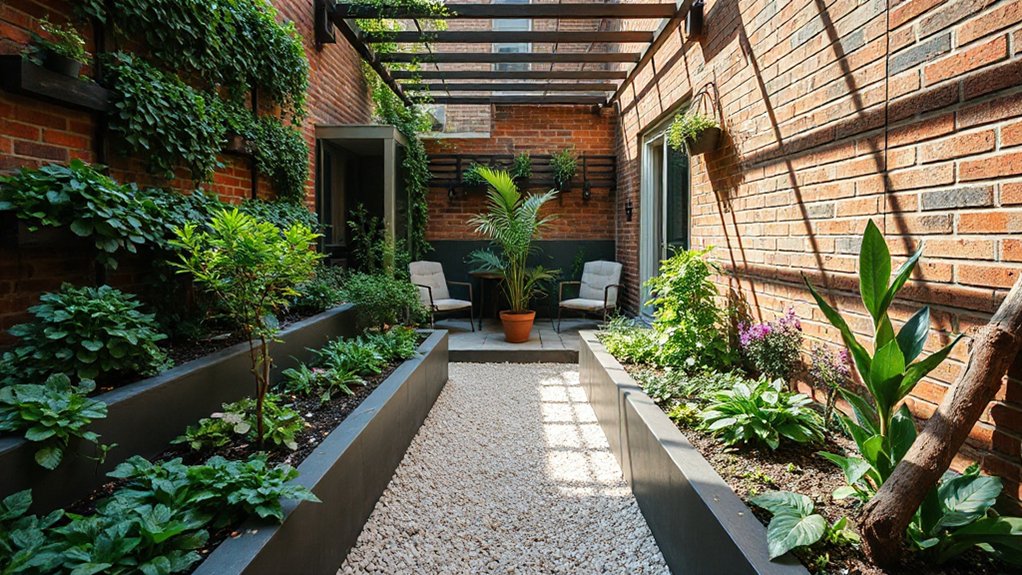

A city balcony turned small edible oasis shows how you can fit raised beds, vertical vines, and a narrow dining nook into 200 square feet. You’ll balance sun and shade with smart zoning, keep pathways clear, and use color and texture to feel bigger without clutter. But the false economy of oversized furniture or sprawling containers can wreck the flow you’re after—so what layout choices keep access, privacy, and beauty intact as you scale up your plan?
Core Principles for Tiny Urban Yards

Small urban yards demand efficiency. You design with purpose: compact layouts, defined zones, and scalable plans that stretch every square foot.
Core principles prioritize circulation, sightlines, and accessible maintenance. You select durable, compact species and embrace vertical solutions to free ground space for movement and utility.
Garden art adds focal points without crowding, while plant symbolism guides color, texture, and seasonal rhythm, sparking meaning without clutter.
You’ll pair low-profile paths with seating alcoves that invite short breaks and long stays, keeping maintenance simple.
Functional clarity drives irrigation, soil prep, and pruning routines, minimizing waste and time spent on chores.
Practical precision supports aesthetic discipline, ensuring every element serves a function, survives conditions, and contributes to a calm, organized exterior.
Assessing Site: Light, Space, and Constraints
Evaluating site conditions starts with a clear read of light, space, and constraints. You assess how sunlight moves across your parcel, noting hours of sun, shade pockets, and seasonal shifts. This is a precise site assessment: map fixed elements, slopes, drainage, and existing structures, then translate them into usable zones.
Measure available width, depth, and access points, ensuring circulation remains simple and efficient. Consider wind patterns, noise, and privacy risks; document any microclimates that affect plant choices.
Prioritize flexible, scalable layouts that accommodate growth and changing needs. Translate observations into practical decisions: where to place functions, what to plant first, and how to stage improvements.
Conclude with a sunlight analysis that informs plant palettes, container strategies, and future expansions.
Vertical Greening: Walls, Trellises, and Living Fences
Vertical greening transforms tight sites into lush, usable space. You leverage vertical gardening to maximize sun exposure, airflow, and plant variety on walls, trellises, and fencing. Use sturdy supports, drought-tolerant species, and smart irrigation to keep maintenance lean and predictable.
Living fences create privacy and wind breaks without consuming ground area, while adding seasonal texture and color.
- Install freestanding or wall-mounted trellises with appropriate weight ratings.
- Choose climbers and vines suited to your climate for steady growth and minimal upkeep.
- Integrate planters or pocket systems for modular, scalable green walls.
- Plan irrigation and pruning routines that keep vigor high and clutter low.
This approach emphasizes practical precision, aesthetic discipline, and functional clarity in vertical gardening and living fences.
Compact Container Layouts for Crops and Color

Compact container layouts let you grow both crops and color without sacrificing floor space. You design with vertical stacking and compact pots to maximize yield in tight spots. Choose a mix of fruiting herbs, compact vegetables, and ornamental focal plants to boost container gardening appeal.
Use staggered heights, tiered shelves, and trellises to optimize sun exposure and airflow, reducing disease risk. Group crops by water needs and harvest cycles to minimize maintenance. Rotate plant families seasonally to preserve crop diversity and soil essentiality.
Select glossy foliage and bright blossoms to create visual rhythm without clutter. Label containers for quick care checks, and mulch to conserve moisture. Keep drainage clear and reuse pots as seasons shift, preserving a tidy, productive balcony or patio.
Sunken and Terrace Gardens for Micro-Rooms
Sunken and terrace gardens transform micro-rooms by creating defined levels that maximize sun and airflow without stealing floor space. You stage plants across stepped elevations, gaining depth without crowding. Sunken gardens emphasize microclimates, while terrace gardens provide accessible, modular planting zones.
- Position seating at one level and planting at another to separate functions
- Use durable edging to maintain steps and prevent soil spillover
- Choose compact, sun-loving varieties for strong color at each level
- Install lightweight, permeable mulch to reduce maintenance and moisture loss
This approach delivers visual order and practical separation, balancing aesthetics with easy care. You’ll enjoy better light distribution, improved air circulation, and accessible gardening zones that suit tight urban plots.
Sunken gardens and terrace gardens work together to maximize usable space while preserving a cohesive, calm exterior.
Multi-Level Decks and Raised Beds for Depth
Multi-level decks and raised beds add perceived depth to tight plots by layering spaces without widening the footprint. You create vertical layering by stacking platforms and planter tiers, guiding sightlines along deliberate flights of space.
Use compact, durable materials that contrast with surrounding greenery to emphasize depth cues without visual clutter. Elevate seating or dining zones on upper levels to pull the eye downward and inward, while narrower ground shelves keep circulation clear.
Raised beds offer defined edges that frame micro-horizons, making each level feel intentional rather than ad hoc. Plan staggered heights to avoid tunnel effects, and integrate built-in benches for efficient use of square footage.
This approach delivers depth enhancement while maintaining accessibility, balance, and a cohesive, low-maintenance aesthetic.
Zoning for Privacy: Buffers and Sightlines
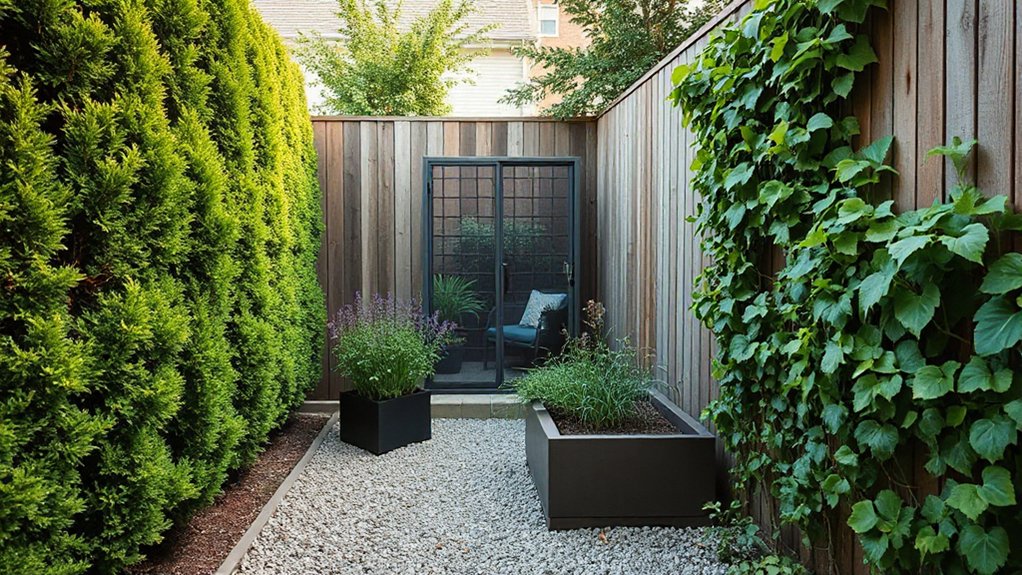
You’ll establish privacy with clear buffers that block sightlines while enhancing the garden’s rhythm.
Use purposeful plantings and hardscape elements to create distinct zones that feel intentional rather than isolated.
Balance open sightlines with tactile screens and strategic spacing to maintain both adaptability and visual calm.
Privacy Buffers Layout
Design privacy buffers by aligning sightlines and plant material to create screened, usable spaces without blocking natural light. You’ll shape compact buffer zones that read as polite edges, not walls, preserving air and view. Focus on calibrated plant heights, textures, and spacing to maintain daylight while curating intimacy.
- Map sightlines from every outdoor room, placing privacy screens where neighboring eyes intrude.
- Layer plants in height and density to form natural screens without feeling boxed in.
- Use evergreen accents for year-round structure, complemented by seasonal blooms for color.
- Maintain clean lines with disciplined pruning and consistent soil health to sustain durable buffer zones.
Sightline Strategies Balance
Sightline balance hinges on precise zoning: align where privacy buffers meet open views so you can see the whole yard without inviting peeking from neighbors.
You design sightlines by pairing tall screens with low-tillage foregrounds, keeping edges crisp and pathways direct.
Place hedges or lattices to frame focal points while preserving generous sight through seating and activity zones.
Use verticals to break sightlines subtly, not obstructively, so the space reads as one cohesive plane.
Prioritize visual harmony by repeating materials, colors, and textures across buffers, paths, and open areas.
Test angles from key seating to entry points, ensuring movement reads cleanly and privacy feels earned, not imposed.
With disciplined spacing, your yard delivers sightline balance and practical, enduring beauty.
Pathways That Expand Movement Without Waste

Pathways should invite movement while preserving space for plants and outdoor rooms. You design corridors that flow, not crowd, using durable materials and clear sightlines. Every route serves function first, then form, minimizing waste and maximizing use.
- Use perimeter routes to border beds, keeping central breaks for seating and viewing.
- Implement graceful curves to shorten travel distances while creating edge moments for garden art.
- Choose narrow, modular pavers or compact mulch that compacts well and requires minimal maintenance.
- Integrate stepping stones with mulch infill to reduce hardscape mass, aiding water infiltration and wildlife habitats.
This approach keeps paths purposeful, clean, and inviting, supporting wildlife habitats and refined garden art throughout small urban spaces.
Plant Selection by Light, Soil, and Scale
Light, soil, and scale shape what thrives in small urban gardens just as routes shape how you move through them. You choose plants by how they perform under your light levels, the soil you tune, and how much space they demand.
Identify sun exposure first, then map shade tolerance for understory plants and bloom timing to avoid crowding. Check soil texture and drainage, applying targeted soil amendments to improve structure and nutrient availability without overloading beds.
Favor compact forms and vertical options to maximize reach without crowding. Consider scale: avoid oversized specimens in tight corners, select dwarf or tidy varieties for containers and raised beds.
This disciplined approach keeps color, texture, and function in balance, producing reliable, low-maintenance results.
Water-Wise Designs: Irrigation and Drainage
Smart water planning reduces waste and keeps urban plots thriving. You manage irrigation with purpose, pairing efficient delivery with drainage that prevents puddling and erosion. Rain harvesting supplies your system, reducing runoff while keeping beds evenly moist. Drought tolerant plants anchor thirsty zones and stabilize soil, lowering maintenance.
- Install drip lines near plant roots to minimize evaporation.
- Use mulch to conserve moisture and suppress weeds.
- Incorporate a simple rain barrel with a shutoff valve for overflow control.
- Route drainage to keep paths dry and prevent pooling, directing excess to landscape beds.
This approach emphasizes reliability, quiet efficiency, and a neat, unobtrusive footprint. You’ll enjoy uniform moisture, healthy foliage, and minimized water bills—essential for compact city plots. Rain harvesting and drought tolerant choices keep triumphing through varied seasons.
All-Season Design: Shade, Wind, and Lighting

Shade, wind, and light shape a small garden’s year-round performance, so design for all seasons from the start. You’ll prioritize microclimates, selecting shaded shelves and sun pockets that maximize usability.
Use Seasonal plant arrangements to keep color and structure through migrating weather, not sporadic blooms.
Wind control comes from solid screen plants and thoughtfully oriented fencing; avoid bulky, exposed massing.
Light management matters more than you think: reflectors, light shelves, and container placement extend growing windows without overheating.
Choose Eco friendly materials for edging, planters, and supports to reduce maintenance and toxins.
Implement compact, layered planting with drought-tolerant species to minimize irrigation.
Maintain clear sightlines, functional paths, and accessible seating to ensure year-round enjoyment.
Layouts for Square, Rectangular, and Irregular Lots
Square, rectangular, and irregular lots demand layouts that maximize use without wasting space or creating awkward gaps. You shape these plots with disciplined zoning, clear sightlines, and purposeful pacing, prioritizing flow over filler.
Garden art and water features act as focal points that unite compartments without crowding them.
- Place a central garden art accent at a visual hub to guide movement and create balance.
- Pair compact water features with seating alcoves to extend usability and sensory appeal.
- Align paths to the longest axis for effortless navigation and expanded planting bays.
- Use vertical structures to draw the eye upward and increase perceived depth.
This approach yields efficient, aesthetically disciplined designs that feel expansive yet intimate.
Hybrid Layouts for Balconies and Yards
Hybrid layouts blend balcony and yard principles to maximize limited floor area without sacrificing cohesion. You fuse vertical and horizontal spaces with purpose, creating a stepped rhythm that reads as one garden.
Prioritize sight lines and flow: keep paths slim, progressions gentle, and zones clearly defined.
Balcony privacy matters; use screens, trellises, and compact plantings to shield seating without blocking air or light.
In the yard, container diversity helps adapt to weight limits and soil constraints, while maintaining visual harmony with color and texture.
Choose scalable elements—modular planters, tiered shelves, foldable chairs—that you can reconfigure as needs change.
Use concise plant palettes to minimize maintenance and maximize impact, ensuring every element earns its keep and contributes to a cohesive micro-landscape.
Flexible Furniture and Modular Elements

1) Choose stackable, lightweight seating that doubles as storage.
2) Use modular planters that can rearrange into aisles or seating nooks.
3) Integrate foldable surfaces for dining or work without permanent footprints.
4) Pair weatherproof cushions with quick-clip modular sections for instant reconfiguration.
These choices maximize utility while preserving calm aesthetics. Maintain a restrained palette, precise alignment, and consistent hardware to sustain visual discipline.
You gain flexibility without sacrificing order, ensuring any layout adjustment remains purposeful. Flexible furniture, Modular elements enable scalable, enduring functionality that adapts to growing plantings, entertaining, or retreat, with minimal effort and maximum clarity.
Color and Texture Tricks to Visually Expand Space
Color and texture can dramatically alter perceived space in a small urban garden. You’ll use color contrast to create focal points and guide the eye toward narrow passages or vertical structures, making the area feel longer and more cohesive.
Keep palettes limited—two to three hues—so surfaces don’t compete for attention. Texture layering adds depth without bulk: pair smooth paving with a rough timber screen and soft foliage near eye level, then introduce a reflective surface to bounce light.
Choose plants with varied leaf shapes and sizes for rhythm, but group by zone to maintain order. Use light-colored planters to recede, while darker accents anchor corners.
Maintain clean lines, deliberate spacing, and consistent finish to uphold practical aesthetics.
Real-Life Case Study: A City Garden in 200 Sq Ft
You’ll notice how a small-space garden centers on Small-Space Garden Essentials: smart zoning, compact paths, and vertical accents that pull in height without crowding the footprint.
In this 200 sq ft case, you’ll map an Optimized 200 Sq Ft Layout that balances sun, shade, and workflow, from entry to harvest.
This Urban Plot Success Story sets a clear template you can adapt for your own city garden, guided by practical precision and restrained, purposeful design.
Small-Space Garden Essentials
In a 200-square-foot city garden, smart layout decisions reveal both function and beauty, guiding you from entry to oasis with purpose. You’ll harness vertical space, drought-smart plants, and compact furniture to maximize usable acres of calm. Botanical art and intentional textures elevate the sense of place, turning walls and borders into curated scenes.
- Prioritize micro-zones: dining, growing, and lounging, each clearly defined.
- Choose scalable beds: modular, raised, or in-ground with crisp edges for tidy lines.
- Use monochrome foliage with pops of color to maintain visual quiet.
- Implement a simple irrigation loop with drip lines for Garden therapy without waste.
Optimized 200 Sq Ft Layout
Despite its compact footprint, this 200 sq ft city garden proves you can optimize layout with purpose: a clear flow from entry to oasis, defined micro-zones, and scalable beds that remain tidy with crisp edges.
You enter along a crisp path, then pivot to three key zones: dining, growing, and retreat. Path-width is kept narrow but navigable, while beds are framed with timber edging for clean sightlines.
Container clusters maximize verticality without crowding, and a single irrigation line reduces clutter. Garden art punctuates focal points, guiding your eye without distraction.
Pest control is integrated through native companion plantings and physical barriers, not sprays. Scale your plan by modular modules, ensuring maintenance remains swift and predictable.
The result is disciplined beauty, functional clarity, and enduring order.
Urban Plot Success Story
When a compact 200 sq ft city plot needed to do it all, this urban garden proves that thoughtful zoning and scalable routines deliver real impact. You’ll see a precise balance of verticals, paths, and microbeds, designed for maximum outputs with minimum waste.
Urban wildlife wanders through deliberate sheltering, while soil improvement practices keep fertility steady over seasons.
- Establish a staggered bed system that fits shade, sun, and wind exposure.
- Layer compost, mulch, and cover crops to boost soil biology without regular inputs.
- Install compact trellises and vertical planters to multiply growing space.
- Schedule a simple 15-minute weekly maintenance ritual for cleanliness and resilience.
Budget-Smart Planning: Where to Invest First

Smart budgeting for a compact urban garden starts with a clear priority: invest where you gain the most daily impact. You’ll optimize tiny gains first: essential tools, robust containers, and reliable irrigation that save time and water.
Focus your budget allocation on elements that nurture consistency and quick wins, like quality soil amendments, smart edging, and compact, high-yield plants that fit your space. Resist over-planning aesthetic flourishes before you secure core function.
Clarify investment priorities: durability, ease of upkeep, and versatility across seasons. Choose modular solutions that scale, so today’s needs become tomorrow’s expandability.
Track costs and outcomes, separating must-haves from nice-to-haves. By prioritizing impact over impulse, you preserve budget flexibility for future enhancements while maintaining daily garden reliability.
Maintenance-Friendly Layouts That Stay TidY
A tidy, maintenance-friendly garden starts with a deliberate layout that minimizes steps and maximizes accessibility: group similar tasks, place frequently used tools within arm’s reach, and choose paths wide enough for a cart or wheelbarrow. You’ll reduce clutter by defining zones for soil work, compost, and water, then keep garden accessories within a single, organized station. Seasonal planting becomes predictable when you mark plug-and-play sections for timing.
- Align beds to sun routes and keep access aisles clear for pruning and hauling.
- Install modular paths and raised beds to minimize bending and kneeling.
- Centralize irrigation control near the tool station for quick adjustments.
- Zone cleanup tasks at the end of each day to maintain tidy edges.
This approach supports garden accessories use while maintaining seasonal planting discipline.
Frequently Asked Questions
How to Measure Usable Garden Area in Tiny Plots Accurately?
Measure usable garden area by tracing boundaries, subtracting paths, structures, and setbacks, then multiply length by width in meters. Use grid overlay for irregular shapes. This informs garden design and layout planning with practical precision and clarity.
What Are Cost-Effective Purchases That Maximize Space Impact?
Like a compact compass, you maximize space with cost-effective picks. You choose garden furniture that folds or stacks, plus decorative lighting that’s energy-efficient, boosting ambiance without crowding. This practical approach delivers functional clarity and aesthetic discipline in tight plots.
How to Avoid Soil Compaction in High-Traffic Zones?
You avoid soil compaction by installing sturdy foot traffic barriers and routinely aerating with modest soil punctures. Prioritize raised beds or stepping stones, plus mulched paths to preserve aeration, drainage, and aesthetic discipline amid careful, practical maintenance.
Which Plants Thrive With Minimal Maintenance in Small Yards?
Try native species and drought tolerant plants; you’ll minimize maintenance, thrive in small yards, and still look sharp. You’ll soon realize your clever garden jokes land best when living with nature, not fighting it, reducing chores dramatically.
Can Seasonal Shading Affect Edible Harvest Productivity?
Seasonal shading can reduce harvest productivity, but you can counter it by selecting sun-loving crops, using reflective surfaces, and staggering plantings. Monitor microclimates, rotate crops, and design shade-tolerant beds to maintain consistent harvest productivity.
Conclusion
You’ll engineer your tiny plot with surgical precision, darling. Embrace verticals, not clutter; grow tomatoes on a trellis, herbs on a balcony ledge, and onions in a sunlit corner. Map zones like a maestro, zone dining, lounging, and crops with laser focus. Budget smart, invest in durable basics, and prune like a drill sergeant. Maintainable layouts sneak into your routine, not your excuses. Satire aside, you’ll prove small spaces aren’t cramped minds—just meticulously cultivated ego-boosters.