
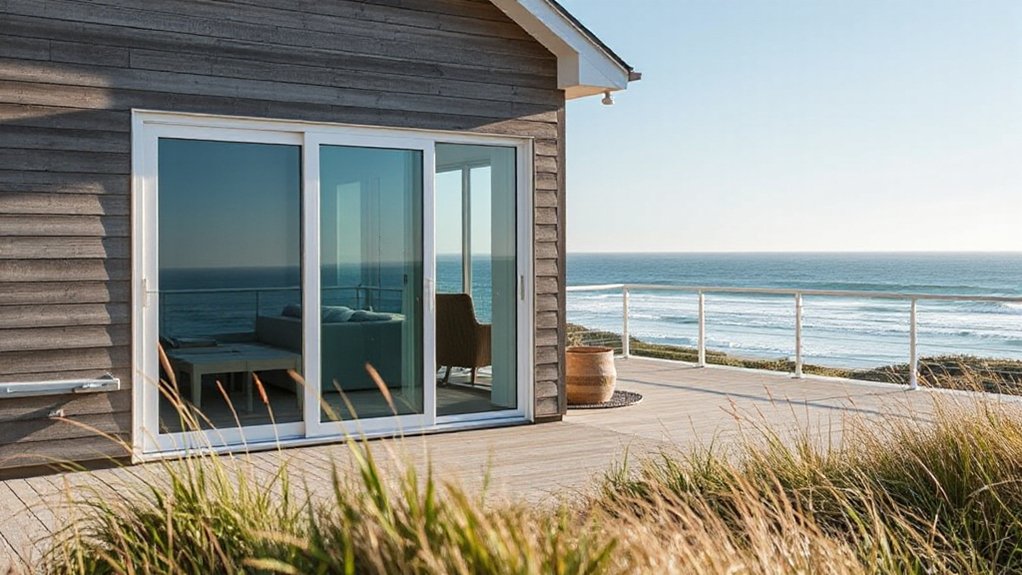

Coastal living changes what you can build, so start by thinking about salt resistance, wind loads, and flood risk as you plan an extension for Bournemouth. You’ll want durable materials that handle salt spray, solid foundations, and raised floors, plus windows that maximize sea views without compromising insulation. Plan for robust drainage and coastal landscaping that reduces erosion. Ready to map out your specifics, from cladding choices to window systems, and see what fits your site and budget?
How Coastal Climates Shape Your Extension Needs
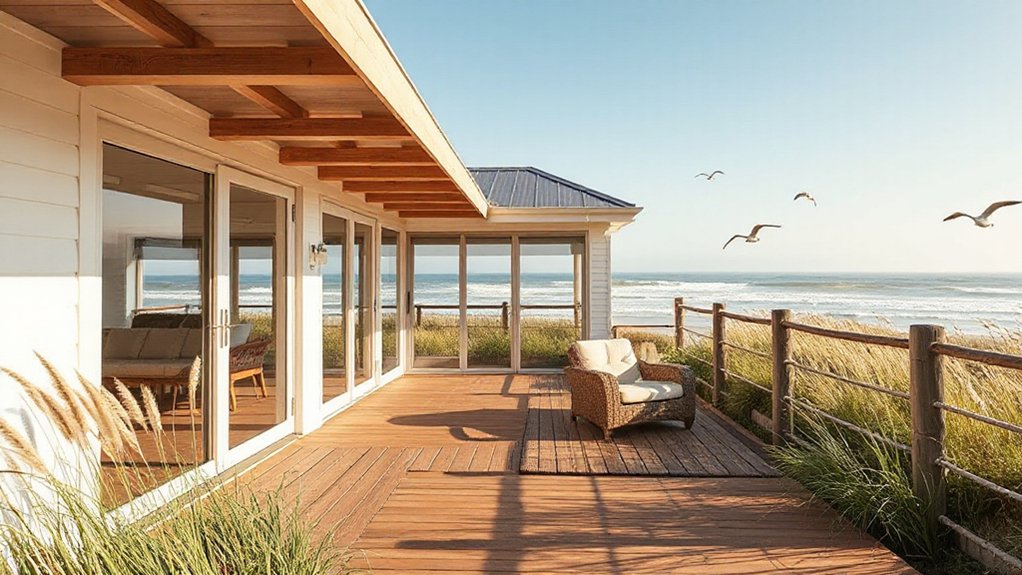
Coastal climates shape every extension decision, from framing and insulation to materials and drainage. You’ll consider wind loads, salt exposure, and humidity, shaping structural choices that stay durable decade after decade.
Your layout should account for Marine flora nearby, influencing landscaping and moisture management without inviting invasive species.
Plan for coastal erosion by incorporating reinforced foundations and raised footings where the shore shifts, plus slopes that shed water quickly.
Materials must resist corrosion yet stay affordable, with sealants and battens chosen for salt spray.
Ventilation remains essential to prevent damp, while insulation targets temperature swings typical of shorefront sites.
Drainage should steer water away from foundations and into established drainage channels.
You’ll tighten detailing around joints and cladding to minimize salt ingress.
Salt-Resistant Materials for Coastal Extensions
Choosing salt-resistant materials starts with a clear view of what holds up best in coastal air and spray, from corrosion resistance to long-term durability. You’ll weigh options like weathering steel, vinyl, composite decks, and anodized metals.
Focusing on Coastal-Environment Durability is essential to see how each material stands up to salt exposure and humidity.
Ongoing Maintenance for Longevity becomes your practical plan: routine cleaning, protective coatings, and inspection intervals that keep your extensions looking and performing well.
Salt-Resistant Materials Overview
What makes salt resistance essential for coastal extensions, and how can you choose materials that stand up to brine, humidity, and wet-dry cycling? You’ll want a concise overview that guides practical choices.
Prioritize corrosion prevention by selecting metals with protective coatings, or composites with salt-proof binders. For timber, look for durable species or treated options that resist moisture and decay, and ensure fasteners match the wood system.
In material selection, favor alloys with low electrochemical activity, stainless variants, or aluminum with appropriate finishes. Consider coatings designed for coastal exposure and long-term maintenance cycles.
Evaluate permeability, vapor resistance, and UV stability to minimize moisture ingress and degradation. Verify compatibility with existing assemblies, and document warranties.
Keep a clear record of performance in similar climates to inform future updates.
Coastal-Environment Durability
Getting materials right for coastal extensions means testing them in salt, moisture, and cycle conditions from the start. You’ll prioritize corrosion-resistant fasteners, coatings, and framing that tolerate sea spray and humidity without swelling or fatigue.
Choose materials with proven salt-erosion performance, like weathered steel with protective seals or multi-coated aluminum, and guarantee paints and sealants maintain flexibility in temperature swings.
For structure, look for rot-resistant elements and low-porosity surfaces that rinse clean after coastal storms. Consider beam and deck options with approved coastal-grade certifications, plus drainage that avoids standing water near foundations.
Integrate Beachfront landscaping to minimize windborne salt impact on finishes, and plan Coastal flora-friendly stabilization where soil chemistry supports plant resilience.
This approach sustains aesthetics and structural integrity amid harsh coastal conditions.
Maintenance for Longevity
Salt exposure demands ongoing care to keep coastal extensions durable. You’ll prioritize salt-resistant materials that resist corrosion and wane moisture damage while withstanding drying winds and sea spray. Choose fasteners, flashing, and cladding rated for marine environments, and guarantee coatings tolerate de-icing and humidity without cracking.
For framing, opt for pressure-treated or naturally durable timber, or corrosion-resistant steel with appropriate coatings. In landscaping, select native, salt-tolerant species and soil amendments that promote healthy roots despite saline spray, supporting landscaping durability overall.
Regular inspections matter: reseal joints, recoat faded paint, and repair blistered surfaces promptly. Track paint preservation, cleaning surfaces at least twice a year to remove salt buildup. With disciplined maintenance, your coastal extension retains performance and curb appeal longer.
Choose Window Systems for Sea Views
Choosing window systems that maximize sea views starts with matching frame materials and glazing to exposure, wind loads, and salt spray. You’ll want durability and clarity, with optical quality that resists haze from damp air.
Prioritize window frame materials that perform in salty conditions while keeping maintenance minimal, and pair them with glazing options that reduce glare without sacrificing light.
- Window frame materials: aluminum-clad timber for strength and aesthetics in a coastal setting
- Glazing options: double or triple glazing with Low-E coatings to cut heat gain and glare
- Sealing details: enhanced gaskets and weep systems to manage moisture and salt spray
Consider tilting or fixed configurations to balance views and ventilation, and confirm warranties cover coastal exposure.
Coastal-Grade Insulation and Moisture Management

To keep your coastal addition dry and comfortable, start with moisture control strategies that address salt air, humidity swings, and wind-driven rain.
We’ll evaluate insulation performance metrics that matter at the shore, like continuous vapor barriers, thermal bridging, and dew-point safety margins, tailored to the local climate.
As we discuss coastal climate adaptation, you’ll consider practical details such as materials, installation details, and inspection routines to sustain long-term performance.
Moisture Control Strategies
Moisture control is essential in coastal homes, where salty air, high humidity, and driving rain challenge materials. You combine moisture-aware design with trusted coastal-grade insulation, creating barriers that breathe where needed and seal where necessary.
Focus on interior humidity management to prevent condensation, and schedule regular checks for any changes in wall or floor conditions. Use moisture-resistant finishes and install vapor retarders only where appropriate to avoid trapped dampness, which can drive mold growth.
Prioritize airflow in kitchens, bathrooms, and utility spaces with properly sized vents and exhausts. Pair high-performance sheathing with proper flashing at joints and corners to deter leaks.
- Use humidity-sensitive materials in high-moisture zones
- Guarantee continuous, well-sealed vapor barriers
- Schedule routine moisture and mold prevention checks
Insulation Performance Metrics
Coastal-grade insulation isn’t just about R-values; it’s about how those ratings perform in humid, salt-laden environments. You’ll assess metrics that matter on the coast: actual in-situ thermal performance, moisture resilience, and long-term durability.
Look beyond labeled values to how insulation interacts with framing and air barriers during seasonal swings. Thermal bridging remains a critical factor; you want continuous runs of low-Conductivity material and well-terminated gaps at corners, edges, and junctions.
Check compound factors like permeability and air tightness together, since vapor barriers must work with ventilation to prevent condensation. Use metric-rich comparisons, such as heat flux under dynamic conditions, and verify lab-to-field consistency.
Document test methods, installation tolerances, and maintenance checks to ensure sustainable, coastal-ready performance.
Coastal Climate Adaptation
Do you know how climate drives every choice for coastal-grade insulation and moisture control? You’ll plan for fluctuating humidity, salt spray, and stronger winds by selecting materials that resist corrosion, damp, and mold while staying energy efficient.
Coastal climate adaptation means detailing ventilation, vapor barriers, and drainage to handle rain bursts and tidal spray, so your extensions perform year‑round. You’ll want robust moisture management that prevents condensation behind walls and in roofs, and you’ll monitor structural joints for salt-induced fatigue.
Marine wildlife and coastal erosion considerations shape placement, access, and drainage patterns, reducing runoff burden on dunes and shorelines.
- Choose moisture‑resistant sheathing with sealed joints and corrosion‑proof fasteners
- Install controlled ventilation paired with exterior cladding designed for salt exposure
- Align landscaping and drainage to minimize erosion and habitat disruption
Foundations and Drainage: Coastal Constraints Up Front
Foundations and drainage in coastal sites demand upfront planning because soil conditions, flood risks, and high groundwater influence every design choice. You’ll prioritize robust footing details, choose compatible materials, and map drainage paths before a single shovel turns.
Start with soil stability: confirm bearing capacity, identify compaction requirements, and anticipate shrink-swell cycles from salt exposure. Use continuous foundation supports and consider pile solutions where proximity to water undermines soil strength.
Corrosion prevention guides metalwork, including protective coatings and sacrificial anodes, given salt-laden air and damp subgrades.
Drainage design should route runoff away from the building envelope, with permeable sub-base options to reduce hydrostatic pressure. Guarantee drainage water is kept clear of foundations and that waterproofing covers joints and penetrations.
Plan coordination between structural, land drainage, and coastal protection measures from day one.
Conservatories by the Sea: Pros, Cons, and Alternatives
When you weigh conservatory climate, you’ll balance sun exposure, heat gain, and humidity against coastal winds and salt corrosion to decide what fits your site.
With installation cost insights, you’ll compare panel types, ventilation, and warranties to avoid surprise budgets while planning for weatherproofing and long-term maintenance.
If you consider alternatives and tradeoffs, you’ll map options like sunrooms, lanais, or fully glazed extensions against comfort, durability, and resale value.
Conservatory Climate Considerations
Coastal conservatories face unique climate challenges from salt spray to humidity, so you’ll want a design that minimizes heat gain in summer and losses in winter while resisting corrosion.
In practical terms, choose low-iron glazing for reduced haze, insulated frames, and corrosion-resistant alloys or treated timber to withstand harsh winds and salt corrosion.
Roof ventilation is essential; install vents or a ridge vent to purge heat without drafts.
Sealing must be meticulous around joints and glazing beads to prevent damp and rot.
Use exterior finishes with UV and salt resistance, and consider microclimate shading to curb glare.
Regular sealing checks keep performance stable, even when salt air dries into the surface.
- Impact-resistant glazing and coatings
- Corrosion-resistant frames and fittings
- Ventilation strategies to manage humidity and heat
Installation Cost Insights
Considering the sea’s impact on costs, you’ll want a clear view of what drives price for coastal conservatories and how to optimize value from day one. Coastal installations hinge on frame materials, glazing choices, and weatherproofing, plus skilled fitters who understand salt air degradation.
Expect higher prices for corrosion-resistant alloys, insulated roofs, and thermally broken joints, but these pay off with durability and lower maintenance.
Site preparation matters: foundations, drainage, and wind load secure long-term performance, yet can add upfront cost. Plan for local permits and timing, especially during busy seasons.
Interior decor decisions influence budget early—choose glass, trim, and finishes that harmonize with landscaping design goals. Prioritize durable floor options and moisture control to protect both interior and exterior spaces.
Alternatives And Tradeoffs
Options beyond traditional coastal conservatories can trim risk and improve value; you’ll weigh pros, cons, and when alternatives fit better. You’ll find that other extensions may better suit seaside constraints, cost timelines, and local aesthetics, especially near Bournemouth’s shore.
Consider coastal landscaping and seaside landscaping as complementary priorities to maximize durability, privacy, and view lines. Alternatives like sunrooms with tempered glass, modular flex spaces, or fully sheltered decks can reduce heat loss and wind exposure while preserving sunlight.
Tradeoffs often involve maintenance, insulation, and permitting, but they can offer faster build times and lower long-term upkeep. Align choices with your site, climate, and coastal regulations to avoid repainting salt-affected surfaces.
- Coastal and seaside landscaping considerations
- Practical material choices and maintenance
- Timelines, permits, and long-term value
Coastal Extension Styles: A-Frame and Shed-Style Options
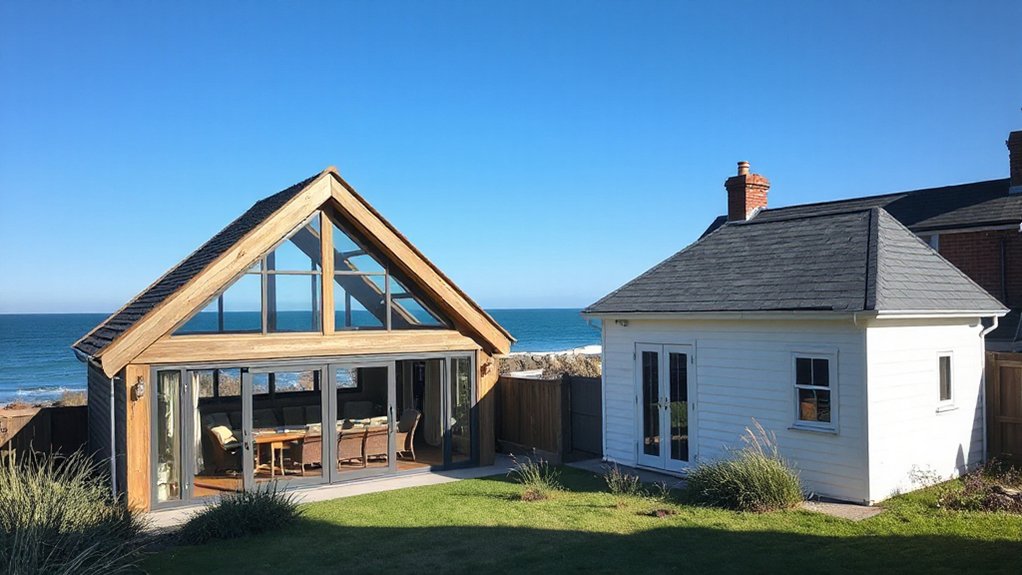
If you’re weighing extension styles for a coastal home, A-frame and shed-style options offer efficient footprints and sea-spray resilience. You’ll appreciate how A frame styles maximize interior volume with angled roofs that shed wind-driven spray, while preserving compact exterior footprints.
Shed options deliver flexible layouts, straight lines, and simple integration with existing lines of your property, minimizing maintenance and material costs.
In coastal settings, frame construction tends to resist salt exposure when using treated timber or corrosion-resistant steel components, and quick-to-build panels reduce on-site time.
Choose durable cladding that handles salt air without warping.
Consider window placement and door orientations that optimize natural light while limiting water intrusion.
These choices help you balance portability, cost, and performance for long-term seaside use.
Roofs, Fascia, and Soffits That Resist Salt Spray
Roofs, fascia, and soffits in salt-ready coastal homes must stand up to wind-driven spray and damp conditions, so choose materials and details that resist corrosion from day one. You’ll want durable coatings, stainless or hot-dipped galvanized metal, and PVC or fibre cement where timber isn’t ideal.
Consider seamless rainwater gutters and corrosion-resistant brackets to reduce maintenance. Select fascia profiles that shed salt-laden air and prevent pooling, and confirm soffit vents resist moisture ingress.
Regular inspection helps catch early rust or rot, supporting long-term roof maintenance and fascia repair before problems worsen.
- Use corrosion-resistant metals or fibre cement instead of untreated timber
- Seal joints and fasteners with marine-grade finishes
- Prioritize continuous drainage and venting to limit salt buildup
Budgeting Coastal Extensions: Costs and ROI
Budgeting coastal extensions requires upfront honesty about budget ranges, long-term savings, and ROI, not just sticker price. You’ll weigh material durability, corrosion resistance, and maintenance cycles against initial costs to avoid surprises.
Start with a realistic envelope: define base construction, weatherproofing, and coastal landscaping as separate line items.
Seaside architecture choices often carry premium for wind loads, salt spray protection, and reinforced membranes, but can reduce future repairs.
Factor in seasonal weather delays and permit contingencies, then set a contingency cushion of 10–15%.
Evaluate ROI through energy savings, increased sea-view value, and potential rental income. Document projected payback periods, then compare against alternative upgrades.
Track lifecycle costs, including repainting and roof seals, to guarantee coastal landscaping maintains curb appeal without hidden expenses.
Do You Need Planning Permission for Seaside Extensions?

Coastal extensions usually fall under planning rules, but the specifics depend on location, size, and setback requirements. You’ll likely need to check with your local planning authority about whether your seaside extension requires planning permission, or if permitted development rights cover it.
In areas with sensitive coastal features, historical preservation and erosion considerations can influence what you can build and where. You should understand zoning regulations for your plot, including height, alignment, and materials, to stay compliant while preserving views and access.
Application timelines vary, so start early and prepare accurate drawings, impact assessments, and energy-efficient plans if required.
- Historical preservation considerations and how they affect design
- Zoning regulations you must meet for coastal plots
- Permitted development vs. full planning paths and timelines
Sustainable and Energy-Efficient Coastal Extensions
Sustainable, energy-efficient coastal extensions start with a tight, site-aware design that minimizes heat loss and maximizes natural ventilation, while respecting sea-facing views and salt air exposure. You’ll prioritize high-performance insulation, airtight envelopes, and low-owe-to-heat losses, choosing materials with proven coastal durability.
Use passive strategies: cross-ventilation, shaded facades, and thermal mass that stabilizes indoor temperatures. Retrofit existing structures with weather-resistant seals and renewable-ready electrical layouts so future upgrades are seamless.
Ground your approach in local climate data and coastal ecology, protecting Coastal flora by avoiding intrusive landscaping and runoff. Address Marine pollution by managing waste workflows and stormwater on-site.
Document testing, energy modeling, and maintenance plans to guarantee ongoing efficiency without compromising comfort or resilience.
Design Tricks to Maximize Sea Views and Natural Light
To maximize sea views and natural light, start with a layout that prioritizes sightlines from key living and dining spaces. Then bias window placement and glazing to capture the horizon without glare. You’ll use wide, unobstructed glass, slim frames, and clerestory options to keep walls open and air flowing.
Choose light, neutral internal finishes that reflect but don’t wash out the view. Position seating to face the sea while keeping circulation clear.
Integrate seaside landscaping beyond reach of salt spray, with hardy coastal plants that frame glazing rather than block it. Pair with oceanfront furniture that’s durable, moisture-ready, and easy to move for seasonal light shifts.
- Maximize sightlines with minimal mullions
- Use coastal textures that resist salt and wind
- Place seating to frame horizons and access outdoor areas
Frequently Asked Questions
Are There Specific Windspeeds to Design Around for Bournemouth Extensions?
Yes, you should design around specific windspeeds for Bournemouth. Consider wind resistance requirements and structural standards, focusing on gust factors, coastal exposure, and resilient connections to guarantee your extension withstands local weather without failures.
What Are the Best Fast-Drying Interior Finishes Near Salt Air?
You should choose salt resistant coatings and moisture resistant drywall for fast-drying interiors near salt air, ensuring long-term adhesion, minimal maintenance, and mold resistance in coastal environments. These materials perform well under coastal humidity and wind-driven spray.
Do Coastal Lenders Have Unique Mortgage Requirements for Extensions?
You’ll find coastal lenders often require marine safe materials and strict adherence to coastal building codes, so you should verify terms early; plan for corrosion-resistant detailing, assertive inspections, and finish costs that reflect salt air realities.
How Can I Minimize Timber Decay From Sea Spray Exposure?
You can minimize timber decay from sea spray by applying salt resistant paint and employing timber treatment methods like pressure-treated timber, water-repellent finishes, and regular resealing; also seal joints, use corrosion-resistant fixings, and maintain good ventilation.
Are There Regional Planning Quirks Unique to Bournemouth?
Yes—Bournemouth has coastal planning quirks you’ll navigate through with Coastal architecture awareness and Local building codes. You adjust designs for sea spray, flood risk, and cliff-adjacent constraints, ensuring permits, setbacks, and materials suit prevailing breezes and erosion patterns.
Conclusion
You’ve got the essentials to plan a coastal extension that lasts. Prioritize salt‑sealed joints, storm‑ready foundations, and impact‑resistant glazing to guard against sea spray and gusts. Choose weathering or composite cladding that ages like a coastal companion, not a foe. Crank up insulation and drainage, trim costs with smart planning, and keep sea views in sight. Think of your extension as a sturdy lighthouse—visible, resilient, guiding you home through the weather.