


Set a ROI-focused kitchen remodel budget up front, set clear priorities, set realistic timelines. You’ll want timeless layouts, durable materials, and smart, energy-efficient tech that buyers notice. Think efficiencies in workflow, low-maintenance finishes, and reversible updates that refresh spaces without a full overhaul. You’ll see how small, deliberate choices can prevent value killers and keep costs in check, while delivering lasting appeal—and you’ll want to explore the step-by-step plan that follows to maximize your return.
Set a Roi-Focused Kitchen Remodel Budget up Front

If you want to maximize value from your kitchen remodel, start with a Roi-focused budget right away. You’ll map out a practical plan by defining target costs for core elements, then align them with your ideal return.
Begin with budget planning that prioritizes high-impact upgrades, like durable cabinets, energy-efficient appliances, and solid countertops, while trimming cosmetic frills that don’t boost value.
Set a realistic contingency—typically 10 to 15 percent—to cover surprises without sinking your ROI.
Establish clear funding sources and milestones, so you can track progress and stay on track.
When you’re ready to proceed, focus on contractor selection by evaluating bids for scope clarity, timelines, and total costs.
A disciplined budget foundation saves time, reduces friction, and protects your resale value.
Timeless Layout Changes That Maximize Resale Value
Prioritize functional traffic flow so you can move comfortably between zones without crowding the work triangle.
Make storage accessible and intuitive—pull-out drawers, lazy Susans, and labeled bins keep everyday essentials within reach and reduce clutter.
These timeless layout tweaks support resale value by boosting usability for any future buyer.
Functional Traffic Flow
Are everyday movements through your kitchen efficient enough to boost resale value? Start by mapping traffic patterns from prep to cleanup, ensuring each zone flows without bottlenecks.
Prioritize a work triangle that keeps your main appliances within reach while reducing cross-traffic. Keep countertops clear along the primary path so you can move freely without forcing detours.
Place the sink, stove, and refrigerator to minimize backtracking, and consider a dedicated prep area that doubles as a staging spot for groceries and groceries-to-go items.
Optimize workflow by zoning tasks: prep, cook, and cleanup should each have dedicated, well-lit space.
Install flexible lighting and accessible outlets to support multitasking.
Fine-tune door swing directions and consider pocket doors for seamless passages between rooms.
Accessible Storage Solutions
When you design storage with accessibility in mind, every inch becomes usable and appealing to future buyers. Pull-out organizers, adjustable shelves, and deeper drawers turn tight corners into workable space.
Accessible storage isn’t just neat—it speeds daily tasks and reduces clutter, a strong resale signal. Prioritize universal design: low, reachable cabinets, one-hand openers, and pull-down pantry ladders that work for all heights and abilities.
Use labeled bins and transparent fronts so contents are easy to locate, cutting down on rummaging and wasted time. Integrate vertical solutions like wall-mounted racks and magnetic organizers to free counter space while keeping essentials within arm’s reach.
Seal the deal with durable hardware and smooth-soft-close mechanisms that convey quality, reliability, and long-term practicality to prospective buyers. Accessible storage, universal design.
Cabinet Upgrades That Deliver the Best ROI
Upgrading your cabinets is one of the most impactful yet cost-effective remodel moves you can make. You’ll boost ROI by choosing durable materials, smart storage, and timeless finishes that resist trends.
Start with soft-close drawers and full-extension slides to improve daily usability. Consider refacing if the box work is solid; it’s cheaper than full replacement and cuts waste.
Select neutral tones or warm wood tones to expand perceived space and align with kitchen aesthetics. Prioritize higher-quality hinges, lazy Susans, pull-out trays, and custom compartments for practical organization.
For value, pair cabinetry with integrated lighting and a maintenance-friendly finish. Tie in cooking techniques by ensuring easy access to frequently used tools, and avoid clutter to maintain a clean, high-end look that buyers notice.
Countertops That Balance Style and Cost
- Marble countertops—useful as a statement piece in smaller runs or in islands with good sealant and proper maintenance.
- Quartz blends—mimic marble with better stain resistance and predictable pricing, fitting budget countertops nicely.
- Solid-surface layers—affordable, repairable, and versatile for practical layouts without sacrificing style.
Energy-Efficient Updates Buyers Notice

You’ll notice that energy-saving upgrades pay off in both daily use and buyer perceptions, from LED lighting to high-efficiency appliances.
When you highlight visible savings, you make the choice practical and tangible for prospects who value lower bills and quieter performance.
Equipping the kitchen with clear, measurable energy benefits helps buyers see the long-term value beyond initial costs.
Energy-Saving Kitchen Upgrades
If you’re choosing a new kitchen, energy-saving upgrades offer immediate, measurable benefits, from lower utility bills to quieter appliances and better overall comfort. You’ll notice smarter performance, fewer drafts, and a kitchen that stays comfortable year-round with efficient cooling and heating.
1) Choose energy-efficient appliances with the ENERGY STAR label, and integrate smart controls to reduce idle energy use.
2) Install LED lighting, motion sensors, and well-sealed cabinetry to minimize heat loss and drafts while maintaining task lighting.
3) Explore solar panels and complete energy audits to identify gaps, optimize insulation, and plan solar-ready wiring for future resiliency.
These steps create steady savings, increase durability, and appeal to buyers seeking practical, future-proof upgrades.
Visibility Of Utility Savings
Seeing tangible utility savings in a kitchen remodel isn’t just a bonus—it’s a buying signal. You’ll notice it in real terms, not abstract promises.
When you highlight products with high utility efficiency, you give buyers a concrete reason to value the upgrade. Show energy labels, performance specs, and expected annual cost savings to translate features into dollars.
Appliances with efficient compressors, insulated cabinets, and low-flow fixtures reduce monthly energy and water bills, reinforcing perceived value.
Documented cost savings from upgraded windows, doors, and lighting further strengthen the case.
In conversations and listings, translate tech specs into daily impact: fewer phantom loads, predictable bills, faster ROI.
You’ll appeal to budget-minded buyers who crave measurable, practical advantages.
Lighting and Electrical Upgrades That Elevate Value

Upgrading lighting and electrical systems isn’t just about brighter spaces—it boosts usability, safety, and home value. You’ll design with purpose, prioritizing reliability, efficiency, and style through deliberate lighting design choices and solid electrical safety practices. Here’s how to elevate value:
- Upgrade to layered lighting with task, ambient, and accent layers, choosing energy-efficient LEDs and dimmers for flexibility.
- Modernize outlets and switches, add code-compliant GFCI/AFCI protections, and plan convenient layouts for small appliances and prep zones.
- Invest in subtle, coordinated fixtures and color temperature that complement cabinets and countertops, plus surge protection and organized wiring for future upgrades.
This approach minimizes hazards, maximizes usability, and creates a cohesive, high-value kitchen aesthetic.
Smart Storage Solutions Buyers Love
Smart storage is where buyers see real value, so start with a hidden pantry that tucks away everyday clutter and glassy surfaces.
Explore pull-out storage tricks that make every inch count, from spice racks to utensil drawers, so you glide through prep with everything you need at hand.
Finish with vertical cabinet organization that maximizes height, reduces reach time, and keeps your counters clean and inviting.
Hidden Pantry Helpers
- Pull-down shelves in tall cabinets to reach snacks and canned goods without heavy lifting.
- Narrow, vertical bins inside pantry doors for spices, oils, and small bottles.
- Transparent canisters and labeled drawers to enhance storage organization and quick visibility.
With these tweaks, you create a hidden pantry that stays tidy, inviting, and highly functional.
Pull-Out Storage Tricks
Hidden pull-out storage makes every inch count, so you’ll reach what you need fast and keep the rest out of sight. You’ll love pull-out storage because it transforms clutter into accessibility: spices, lids, utensils, and measuring cups glide into view with a single pull.
Use slim pull-out shelves beside the sink for cleaning supplies or under the countertop for small appliances that you actually use weekly. For higher efficiency, install multiple depths to maximize vertical space without crowding; soft-close hinges prevent slams and protect fragile items.
Consider hidden compartments within drawers for recipe cards or seasonal accessories, maintaining a clean look. This approach delivers practical organization, faster meal prep, and higher perceived value in any smart kitchen remodel.
Vertical Cabinet Organization
Ever wish your tall cabinets could work as hard as your countertop space? You’ll access smarter vertical cabinet organization with practical, quick wins that maximize every inch.
Start by installing adjustable shelves and slim pull-out trays to turn dead space into accessible storage. Use labeled bins for spices, lids, and small gadgets, so you can see and grab what you need in seconds.
Pair a rotating rack with a pantry-height rail system to keep frequently used items within arm’s reach, reducing rummaging time and clutter. With vertical storage, you double capacity without expanding footprint, boosting home value through organized efficiency.
- Adjustable shelves, smart pull-outs, and labeled bins
- Rotating rack plus rail system for easy reach
- Clear containers and consistent labeling for quick access
Finishes That Refresh With Value: Paint, Hardware, and Fixtures
Refresh your kitchen without a full remodel by choosing finishes that deliver big value: paint, hardware, and fixtures. You’ll impact style and perceived quality with smart choices you can change now.
Start with paint finishes that resist stains and glare, yet read clean from across the room. Matte or satin often hides flaws while still brightening the space.
For hardware updates, select cohesive metal tones—brushed nickel, matte black, or antique brass—that echo your cabinetry and faucets. Avoid trendy overkill to ensure longevity.
Fixtures should be durable and easy to clean, with simple lines that won’t date quickly.
Consider lighter trim around cabinets to lift ceilings and create a more open feel.
Prioritize neutral palettes with subtle contrast for timeless appeal and solid resale value.
Smart Appliances and Tech That Increase Home Value
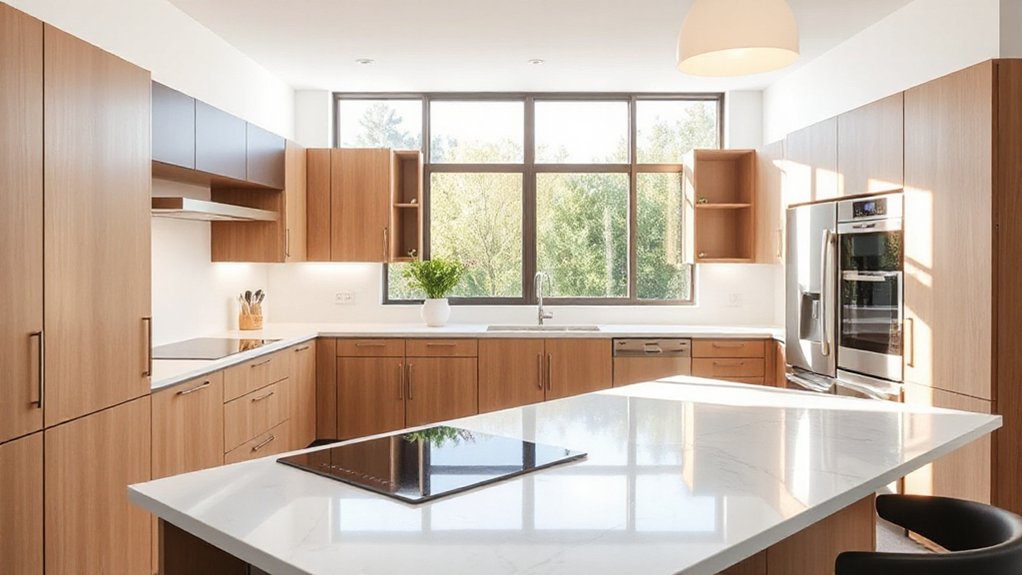
Upgrading to smart appliances and integrated tech adds measurable value by boosting efficiency, convenience, and modern appeal. You’ll enjoy tighter energy use, remote control, and streamlined workflows that buyers notice as soon as they tour your kitchen.
With home automation, routines become seamless, from lighting scenes to climate adjustments that sync with cooking activity. Below are practical ideas you can implement now.
1) Install connected refrigerators, ranges, and dishwashers that report status, use predictive maintenance, and integrate with your preferred hub.
2) Choose smart lighting and outlets that automate based on time, occupancy, or recipe steps, reducing waste and boosting ambiance.
3) Add a centralized control hub or app suite to monitor appliances, set routines, and share access with family members for convenience.
Durable, Low-Maintenance Materials Worth the Investment
Durable, low-maintenance materials save you time and money in the long run, making your kitchen remodel more practical and enjoyable. Focus on surfaces that resist stains, scratches, and heat, so upkeep stays simple.
Quartz countertops delivered a consistent look, strong resistance, and easy cleaning, reducing daily worries about spills and fingerprints.
Pair them with durable cabinetry frames, melamine or plywood cores, finished with sealed coatings to deter moisture damage.
For the backbone of your workspace, choose stainless steel appliances that clean quickly, resist smudges, and hold resale appeal without demanding special cleaners.
Flooring should tolerate spills and traffic; consider porcelain tile or a high-grade vinyl plank.
With these choices, you boost value while enjoying a kitchen that stays beautiful with minimal effort.
How to Avoid Kitchen Remodel Value-Killers
To avoid kitchen remodel value-killers, start by defining a clear budget and a realistic timeline. Then prioritize changes that boost resale appeal without ballooning costs. You’ll protect value by focusing on quality over flash and choosing timeless details that age well.
- Pick neutral Kitchen color schemes and durable materials, so rooms feel cohesive and broad appeal remains intact.
- Compare Flooring options that stand up to traffic, moisture, and wear, prioritizing cost-efficient maintenance.
- Plan reversible updates like hardware swaps and lighting upgrades, which refresh without major reconstruction.
Stick to midrange cabinets and countertops that look premium but aren’t over-customized. Avoid boutique finishes, flashy backsplashes, or ultra-high-end appliances that outpace the market.
A Step-By-Step Plan to Prioritize Projects for Max ROI

So you can maximize ROI, start by mapping your project list against two criteria: impact on resale value and the disruption or cost each change entails.
Next, categorize items as must-do, nice-to-have, or optional. For each, assign a rough budget and a realistic timeline, then compare against your available capital and the home’s market segment.
Use budget planning to set a total cap, then allocate funds to high-ROI upgrades like fixtures, cabinetry updates, and energy-efficient appliances.
Prioritize projects with quick turnover and minimal downtime to reduce carrying costs.
When you’re ready to execute, refine contractor selection by comparing bids, clarifying warranties, and verifying references.
Document milestones, communicate changes promptly, and track progress against the plan to avoid scope creep.
Finally, re-evaluate ROI after completion to validate choices.
Frequently Asked Questions
Do Roi-Focused Remodels Require Permits or Inspections Upfront?
Yes, roi-focused remodels often require permits and inspections up front. You should verify permit requirements and understand inspection processes early, follow code, document changes, and coordinate with inspectors to avoid delays and guarantee compliant, value-boosting results.
Which Kitchen Layouts Yield the Highest Resale Premium?
Open concept design yields the highest resale premium, you’ll love spacious sightlines and flow. Pair luxury appliances with smart storage and durable finishes, and you’ll maximize appeal while enjoying practical, efficient workflows throughout every kitchen task.
How Long Does It Take to Recoup Remodel Costs?
Remodel costs break even in roughly 5–15 years, depending on scope. You’ll maximize value with Budget considerations and Material durability, so plan smartly, track expenses, and prioritize durable finishes that resist wear while pleasing buyers.
Do Buyers Value Small Cosmetic Updates Over Major Renovations?
Yes, you’ll see value in minor upgrades because buyer preferences often favor them over major renovations. You should focus on small cosmetic updates, like lighting and finishes, which deliver practical appeal and quicker, cost-effective returns.
What Maintenance Costs Follow a High-Roi Kitchen Upgrade?
“Two heads are better than one,” so you’ll face ongoing costs after a high-ROI kitchen upgrade. Expect appliance upgrades and cabinet refinishing to require regular maintenance, parts, and occasional replacements to keep efficiency and value intact.
Conclusion
You’re standing in a kitchen that looks timeless, right as you notice your budget staying intact. Coincidentally, the same durable materials you chose for cabinets and counters echo in the floors you’ll scrub next spring. Your ROI isn’t just a number—it’s the calm you feel cooking with energy-saving lights and smart touches. The layout flows, storage hides in plain sight, and every detail whispers value. Remodel smart, stay practical, and watch your home—and your mindset—rise in value.