


Did you know listings with high-quality photos and fast response times fetch 2–3x more inquiries? You’ll want a practical, data-driven approach to prepare an apartment for high-demand rental listings. Focus on quick, impactful upgrades, sharp curb appeal, and a streamlined application process so you stand out without overinvesting. The next steps reveal how to lock in ideal tenants faster, while maintaining a professional facade that keeps prospects engaged. Let’s get you to that first batch of strong inquiries.
Define Your Ideal Tenant and Your Value Proposition

To set the stage for successful rentals, start by defining your ideal tenant and articulating your value proposition. You’ll quantify needs, preferences, and constraints that align with your property’s strengths.
Clarify income thresholds, credit expectations, and rental history benchmarks to streamline Tenant screening, reducing guesswork and post-lease issues.
Articulate what sets your unit apart—location perks, amenities, accessibility, safety, and responsive management. Translate these into a concise value proposition: why this home is the smart choice for target tenants and why you’re a reliable landlord.
Use this framework to guide Lease negotiations, ensuring proposed terms reflect risk tolerance and market realities. Document criteria, communicate transparently, and maintain consistency to attract qualified applicants and close leases efficiently.
Assess Your Apartment’s Market Value and Appeal Today
Evaluating your apartment’s market value and appeal starts with grounding expectations in current rental dynamics and your property’s built-in strengths. You’ll quantify value by comparing unit specs, recent comps, and the performance of nearby listings. Then, translate findings into a compelling narrative about why renters choose you. Focus on objective metrics and tangible differentiators to shape pricing bands, showings, and photos.
1) Benchmark values against recent leases in your area, adjusting for apartment amenities and neighborhood amenities to justify price ranges.
2) Highlight unique features, accessibility, and energy efficiency that elevate perceived value without overpromising.
3) Align marketing messages with verified data, ensuring photos, floor plans, and descriptions reflect real, measurable advantages.
Prioritize Fixes That Speed Approvals and Improve Perceived Value
You should start by prioritizing fixes that earn quick approvals, focusing on items a typical applicant notices first.
Highlight how these improvements boost perceived value with concrete outcomes, like faster processing and fewer questions.
Target high-impact fixes, selecting practical upgrades that deliver noticeable, cost-effective results.
Prioritize Fast Approvals
Prioritizing fast approvals means prioritizing fixes that shorten get-ready time while boosting perceived value. You’ll target clear, executable changes that reduce wait times and reassure applicants, pairing speed with credibility. Implement processes that streamline screening, document delivery, and lease execution, so approvals occur in days—not weeks.
1) Automate pre-screening and digital signing to cut back-and-forth and accelerate commitments.
2) Centralize document requests (income, IDs, references) and provide transparent timelines, so applicants know what’s needed and when.
3) Highlight pet friendly policies and flexible lease terms in listings and in-app prompts to attract a broader pool and shorten negotiation.
These moves boost velocity and appeal without sacrificing reliability, helping you fill vacancies faster.
Highlight Perceived Value
Quickly demonstrating value is essential when speed matters. You’ll frame improvements around what tenants notice first: condition, cleanliness, and smooth access to essential features.
Prioritize fixes that enhance Perceived value and shorten approval cycles by reducing friction in applications, showings, and disclosures. Document upgrades with concise, quantifiable benefits—durability of finishes, energy efficiency, and reliable systems—that clearly translate to lower risk for landlords and faster tenant decisions.
When presenting the unit, align visuals with reality: photos, floor plans, and inventories should mirror actual condition to boost tenant perception.
Emphasize predictable processes, transparent timelines, and hard deadlines for applications. By signaling reliability and value upfront, you influence decisions before competing listings enter the frame.
Target High-Impact Fixes
To speed approvals and boost perceived value, zero in on fixes that stakeholders notice most and that reduce friction in the application and viewing process. Focus on changes with measurable impact on tenant screening timelines and lease agreements clarity, so decisions move faster and with confidence.
Target high‑impact tweaks that buyers and managers value, not cosmetic fluff, and verify each fix against training, policies, and compliance.
- Streamline application flow and document checks to cut screening delay
- Clarify lease agreements with standardized terms and highlights for easy auditing
- Improve unit presentation with consistent photos, floor plans, and move‑in readiness cues
Boost Curb Appeal in 24 Hours or Less
Time is of the essence, so you’ll start with fast exterior touchups that restore surface cleanliness and curb presence.
Then you’ll brighten the entryway to create an inviting first impression that signals good maintenance and safety.
Fresh Exterior Touchups
1) Apply a fresh coat to doors, shutters, and fascia, using weather-appropriate paint and clean, crisp lines to punch up contrast with the facade.
2) Trim, deweed, and edge garden landscaping along walkways, and replace mulch to refresh texture and color without major renovation.
3) Upgrade outdoor lighting with low-heat LEDs, bright but warm tones, and strategic placement to highlight architectural features and landscaping.
These actions create immediate visual lift, guiding buyers to notice garden landscaping cues and outdoor lighting as signals of well-maintained spaces.
Brighten Entryway Appeal
Add decorative accents that signal care, such as a clean console, a seasonal vignette, and a durable doormat. Repaint a small, high-visibility area with a neutral, durable finish to refresh impression without heavy labor.
Seal gaps around doors to improve insulation and reduce drafts. Keep pathways clear and trim shrubbery for a direct, inviting approach. These precise actions deliver measurable lift without substantial downtime or expense.
Declutter for Space Without Losing Warmth

Decluttering for space without sacrificing warmth starts with a practical plan: remove nonessential items, then strategically group and display what remains to create an open, inviting feel. You’ll maximize square footage while preserving comfort, focusing on functional surfaces and cohesive accents.
Space optimization hinges on purposeful concealment and selective visibility, so you avoid visual noise that shrinks perceived room size. Maintain warmth preservation by keeping textures, soft lighting, and personal touches that signal homey livability.
- Sort items by necessity and frequency of use, then store surplus in labeled bins.
- Group related belongings to form purposeful zones and clear pathways.
- Replace excess decor with streamlined pieces that echo a calm color palette and tactile coziness.
Deep Clean for Hygiene Wins
Could you guarantee pristine hygiene in less than a day? Deep cleaning isn’t cosmetic—it’s a procedural win that builds buyer confidence.
Start with a systematic room-by-room plan that prioritizes high-touch surfaces: door knobs, light switches, faucets, counters, and appliance handles.
Apply proven disinfection techniques, using EPA-registered products appropriate for kitchens and baths, and follow contact-time guidelines to ensure effectiveness.
Remove grime, then sanitize to a consistent level of hygiene standards across every zone.
Declutter and ventilate as you work to prevent recontamination.
Use color-coded cloths and separate tools for each area to avoid cross-contamination.
Document steps, timelines, and product data sheets for transparency.
A thorough, reproducible clean demonstrates professionalism, reduces tenant friction, and elevates perceived value in a competitive market.
Refresh on a Budget: High-Impact Upgrades Under $200
You can boost appeal with budget-friendly upgrades that pack a punch, focusing on tasks under $200 that deliver noticeable value.
Prioritize high-impact improvements—things like fresh lighting, hardware updates, and smart storage—that reshape perception without breaking the bank.
This approach keeps the project practical, measurable, and ready for quick rental turnover.
Budget-Friendly Upgrades
Looking to punch up appeal without breaking the bank? You can achieve meaningful impact with focused, cost-conscious upgrades that respect budget planning and tenant screening considerations. Each improvement should enhance perceived value while remaining practical and trackable.
- Refresh fixtures and hardware: swap out dated knobs, install updated cabinet pulls, and replace boring lighting to brighten spaces with minimal cost.
- Upgrade surfaces strategically: reseal and refresh countertops, reface a worn vanity, or apply a peel-and-stick backsplash to elevate kitchens and baths.
- declutter and optimize layout: reconfigure staging, add smart storage, and improve accessibility to create a cleaner, more functional flow.
These steps deliver high perception of quality, support screening conversations, and stay under the $200 threshold.
High-Impact Improvements Under $200
Focus on quick, repeatable wins: install adjustable LED lighting to brighten spaces without increasing energy costs, and replace dated hardware with sleek, durable finishes that convey modernity.
Creative decor accents—mixing textures, art, and plants—can dramatically elevate perceived value without overhauling the room.
Optimize storage with smart storage solutions: under-cabinet organizers, vacuum-sealed containers, and modular shelving that adapts to varying needs.
Prioritize surfaces that endure high use; refresh countertops or backsplash with removable, renter-friendly options.
Document and showcase these upgrades in photos to demonstrate tangible returns for prospective tenants.
Stage for Flow and Light: Make Every Room Feel Bigger
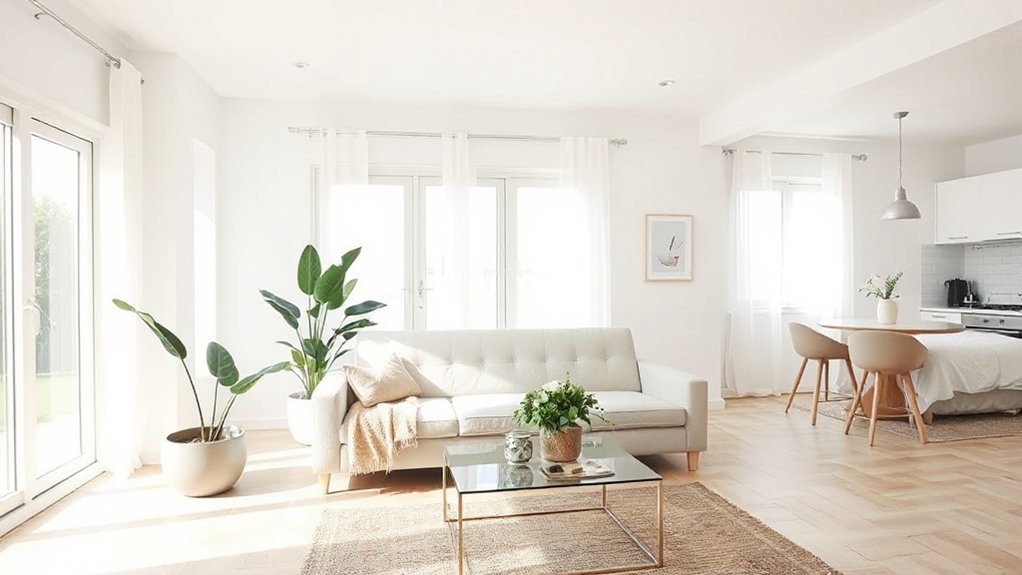
To stage for flow and light, rearrange furniture to create clear sightlines and open pathways that guide the eye from room to room. You’ll maximize perceived space by grouping larger pieces against walls and using low-profile seating to reduce congestion. Use lighting techniques to brighten focal points without clutter, and guarantee even illumination across zones to avoid harsh shadows.
Effective furniture arrangement directs traffic, supports natural focal points, and enhances room scale.
- Place sofas and chairs to form unobtrusive pathways and maintain sightlines between entry, living, and dining areas.
- Use multi-level lighting (ambient, task, accent) to expand perceived height and depth.
- Choose mirrors and glass surfaces strategically to reflect light without creating glare.
This approach creates a cohesive, larger-feeling footprint that appeals to high-demand renters.
Create a Turnkey Online Experience for Rentals

Creating a turnkey online experience for rentals means you can streamline every step from listing to lease signing. You’ll implement an integrated system that automates inquiries, shows availability, processes applications, and channels approvals.
Use virtual staging to present rooms with flexible layouts and furniture options, so prospects visualize potential use without on-site visits. Embed video tours and 360-degree views to reduce unnecessary showings, speeding decisions.
Configure secure e-signature workflows and digital document requests to minimize friction. Offer transparent pricing, screening criteria, and policy details upfront to raise trust and reduce back-and-forth.
Favor eco-friendly upgrades in the listing—high-efficiency appliances, smart thermostats, and LED lighting—to attract quality applicants and lower operating costs.
Monitor conversion metrics, iterate messaging, and maintain responsive support to preserve momentum.
Capture Photos That Sell Your Space
Capturing photos that sell your space starts with a clear plan: identify the room moments you want to highlight, optimize lighting, and stage with purpose. You’ll translate these decisions into a repeatable workflow that improves appeal and speeds inquiries.
- Photography tips: frame each shot to emphasize function, keep lines straight, and avoid clutter; shoot wide angles that reveal scale without distortion.
- Lighting techniques: maximize natural light, control shadows with diffusers, and balance color temperature for warmth without yellow casts.
- Execution: shoot in RAW, steady with a tripod, and curate a minimal set of decisive images per room to convey livability.
Write Honest, Compelling Listing Copy for Renters
Ever wondered how to turn a rental listing into an instant “yes”? Craft honest, compelling copy that speaks directly to renters’ needs while setting clear expectations.
Start with a precise property snapshot: layout, square footage, utilities, pet policy, and ceiling timelines for availability.
Describe practical benefits—proximity to transit, storage, and safety features—without hype.
Tie features to renter outcomes, not just specs: quiet rooms for remote work, efficient heat for budgeting, ample natural light for mood.
Include essential processes succinctly: Tenant screening steps, required documentation, and typical response timelines.
Mention Lease agreements clearly: lease length options, renewal terms, and move-in fees.
Maintain transparency about incentives or restrictions to avoid misalignment.
End with a concise call to action and a direct contact path for questions.
Optimize Showings for Speedy Interest

A streamlined showings schedule keeps demand high by reducing back-and-forth and filling slots efficiently.
Present the property with a welcoming, distraction-free layout so prospective renters envision living there and can decide faster.
We’ll align access, timing, and information to maximize interest while minimizing friction.
Streamlined Showings Schedule
To maximize tenant interest, implement a streamlined showings schedule that concentrates tours into tight, high-impact windows. You’ll reduce downtime and accelerate screening, ensuring you capture serious prospects quickly. Structure it around prequalified interest, verified availability, and rapid feedback loops to support decisive lease negotiations.
- Schedule clumps of back-to-back showings within 2–3 hours, with clear time-block limits and automated reminders.
- Pair each viewing with brief, targeted property data cards to expedite decision-making and pre-screening with Tenant screening criteria.
- Implement a post-showing debrief process: collect impressions, flag questions for fast answers, and move strong applicants toward lease negotiations without delay.
Welcoming Property Presentation
Optimize interior lighting to eliminate shadows, highlight architectural features, and guarantee consistent color rendering across rooms. Use a layered lighting plan: ambient, task, and accent, controlled at adjustable levels for photos and in-person viewings.
Maintain noise control to deliver an undistracted experience; address potential sources before showings and deploy white-noise considerations for busy corridors.
Present a tidy, functional layout where each room demonstrates purpose, storage, and scale.
Document accessibility and maintenance notes for quick buyer confidence, reinforcing credibility and speeding decision-making.
Leverage Virtual Tours and 3D Walkthroughs

Even better, you can boost interest and reduce in-person showings by integrating virtual tours and 3D walkthroughs that accurately reflect the space, layout, and amenities. Your goal is to convey flow, scale, and features without ambiguity, using precise visuals and data-backed details.
Focus on immersive experiences that let buyers inspect rooms, closets, and fixtures as if they’re there, while supporting decisions with measurements and context. Emphasize reliability, not hype, by pairing virtual staging and 3D renderings with real photos.
Maintain consistency across listings and update as layouts or finishes change.
- Align visuals with actual dimensions and finishes
- Highlight key amenities and storage using virtual staging
- Provide scalable tours across devices for maximum reach
Simplify the Application Process With Clear Steps
Streamline your rental process by laying out a clear, step-by-step application path that applicants can follow without guesswork. You’ll present a single, scannable checklist: required documents, accepted formats, and submission method. Use labeled sections so renters can confirm each item before moving on.
Emphasize transparency around timelines to curb back-and-forth delays. Integrate tenant screening criteria upfront, detailing credit, income, and rental history thresholds so applicants self-assess before applying.
Provide sample forms or templates for quick completion, and establish a standardized acknowledgment that confirms receipt and expected review windows.
For landlords, couple the process with proactive communications about lease negotiation expectations, including deposit terms, move-in dates, and any contingencies.
Clear steps reduce friction, accelerate decisions, and improve overall applicant quality and market responsiveness.
Set Competitive Rent and Terms That Beget Interest
Pricing should attract qualified applicants and minimize vacancy time; therefore, set rent and terms that reflect market data, property value, and your leasing objectives. You’ll implement pricing strategies that balance competitiveness with profitability, while aligning with tenant screening outcomes to reduce risk. Adopt transparent terms, clear renewal options, and consistent application criteria to deter objections and speed decisions.
- Calibrate rent using comps, demand cycles, and unit features; publish a precise price with structured incentives only when they drive qualified interest.
- Pair rent with fair lease terms (length, deposits, pet policies) that support predictable occupancy and easy renewals.
- Tie concessions to measurable milestones (preference for longer leases, timely applications, or verified income) to optimize applicant quality.
This approach preserves cash flow and strengthens tenant screening effectiveness.
Gather Social Proof and Clear Lease Policies

Integrate a concise lease outline: term lengths, renewal options, security deposit, pet rules, late fees, and screening criteria. Clearly state required documents, screening timelines, and response commitments to avoid ambiguity.
Use consistent language across listings and FAQs so applicants know what to expect before contacting you. Emphasize compliance with legal standards and fair housing.
Social proof should be easy to verify, hosted on a dedicated page, and accessible from each listing.
Lease policies must be scannable, with bullet points and a summary. This clarity reduces back-and-forth and elevates qualified applications.
Plan Move-In Ready Maintenance and Stellar Tenant Service
You’ve already set clear expectations with social proof and lease policies, so now you’ll extend that reliability into move-in readiness and ongoing tenant service. Plan for a proactive maintenance calendar, rapid issue triage, and documented handoffs to property managers.
Align service standards with tenant screening and lease negotiations to minimize disputes and delays. Ensure systems are inspected, repairs completed, and warranties in place before a lease starts. Communicate response times, expected resolutions, and escalation paths in writing to reinforce trust.
1) Establish a pre-move-in checklist that covers safety, appliances, and referencing repair tickets.
2) Build a responsive support protocol with tracked timelines and clear ownership.
3) Integrate feedback loops from tenants into ongoing service and renewal planning.
Frequently Asked Questions
How Long Does It Take to Rent Out After Upgrades?
It typically takes 1–4 weeks to rent out after upgrades, depending on market demand and showing frequency. You’ll improve tenant screening quality and secure steady occupancy, while highlighting lease renewal incentives to attract qualified applicants quickly.
What Documentation Should Tenants Provide Upfront?
Not sure I can rent to you without proper docs—overlooked paperwork costs you time. You’ll provide ID, proof of income, two recent pay stubs, rental history, and consent for tenant screening and lease agreements.
Which Platforms Yield the Fastest Applications?
Platforms with rapid turnarounds include large rental marketplaces and reputable property sites. Use a Rent application template and pre-fill on multi-platforms. Marketing strategies should highlight quick processing times, verification speed, and clear next steps to accelerate approvals.
How Is Landlord Liability Minimized During Showings?
To minimize liability during showings, you implement strict access control and documented waivers, plus require liability insurance and proof of coverage; you also provide clear guidelines on handling Property damage risks and incident reporting for every visitor.
What Early Move-In Incentives Attract Applicants?
Ever wonder what early move-in incentives attract applicants? You offer flexible terms, rent credits, or covered utilities to sweeten proposals; emphasize streamlined tenant screening and lease renewal benefits, showing faster occupancy and predictable, compliant tenancy from day one.
Conclusion
You can close faster by delivering a polished, turnkey experience. Start with a bright photo set and honest listing that proves value, then back it with a simple application flow and responsive maintenance. Think of it like planting a seed: a flush of fresh paint, clean lighting, and a welcoming entry set the stage for rapid approvals. In one week, you’ll transform interest into signed leases, with tenants who feel confident and cared for from day one.