
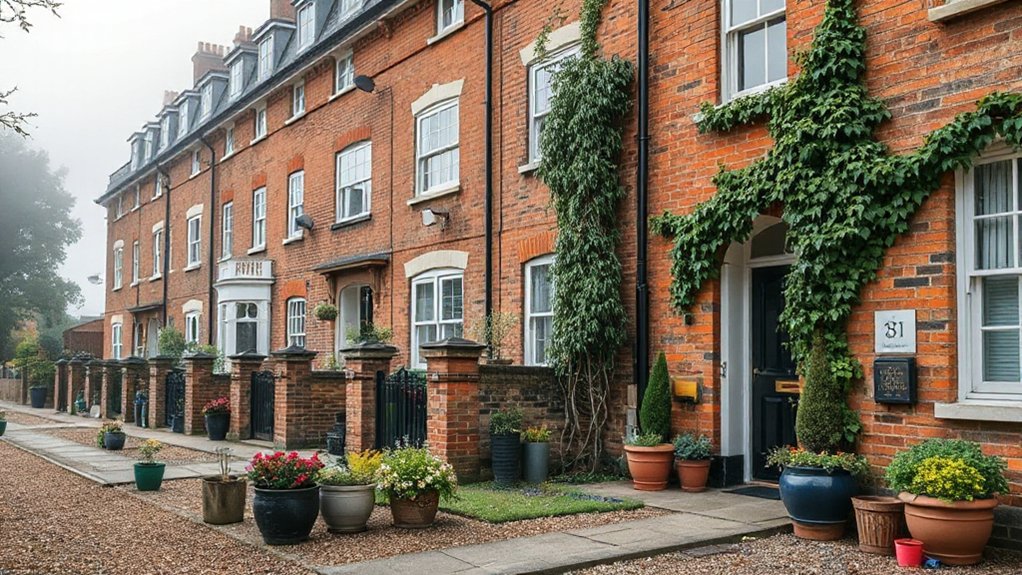

Like a door you can’t fully open, your street hints at what lies beyond its borders. You’ll want to identify the period style that whispers from brick, railings, and front gardens, then plan restorations that respect that character rather than replace it. Start with practical, cost-conscious steps—tidy boundaries, seasonal plants, and steady maintenance—so you can see steady, authentic improvement while coordinating with neighbours for lasting impact. Keep the balance, and the curb will begin to tell its story.
What Kerb Appeal Means on Historic UK Streets

In historic UK streets, kerb appeal isn’t just about looks; it signals respect for place, time, and community. You’ll notice it in how a doorway’s timber grain and paint finish reflect careful maintenance, and how a garden plot speaks to daily care.
Kerb appeal isn’t vanity; it frames first impressions before you step inside. You recognize Historical architecture as a living dialogue between era-specific details and endure-worn textures, from brick bond patterns to sash window rhythms.
Street character emerges through consistent boundaries, tidy boundaries, and purposeful lighting. Practical choices—repointed brick, clean streetscape, and period-appropriate railings—support a coherent story.
When you value these cues, you strengthen the street’s identity, inviting neighbours and visitors to engage with the area respectfully.
How to Identify Your Street’s Period Style and Character
How can you pinpoint your street’s period style and character quickly and reliably? Start with a visual scan at eye level: note rooflines, bay windows, sash or casement windows, and chimney stacks. Compare these architectural features to known eras: Georgian symmetry, Victorian eclectic details, Arts and Crafts simplicity, or mid‑century pragmatism.
Compile a pocket checklist: prevailing building materials, decorative motifs, and roof forms. Observe street furniture and lighting styles, as they echo planning trends and era choices.
Examine boundary walls, railings, and window proportions for proportional harmony. Map consistency along the street—clusters reveal common periods.
Photograph details, then cross‑reference with local conservation notes or parish records. Use these cues to triangulate period style, guiding restoration choices that respect authentic character.
Restore Brickwork and Masonry for Authentic Charm
Brickwork and masonry are your street’s backbone, so tackle restoration with a plan that respects historic materials and finishes. You begin by evaluating mortar joints, identifying lime-based mixes rather than modern cement, to allow for movement and breathability.
Choose authentic materials that match age and tone, from pale lime to weathered bricks, and source reclaimed units where possible for seamless character.
Clean brickwork with soft brushes and minimal water, avoiding high-pressure blasts that damage joints.
Repair gaps with tooling that mirrors original patterns, using compatible mortars in low strength to prevent spalling.
Repoint selectively, prioritising joints near decorative details.
Seal only where moisture intrusion is evident.
Document the process for future maintenance, and preserve the patina that tells your street’s story.
Restoration techniques become part of its enduring charm, not a repaint.
Refresh Railings and Gates in Period-Appropriate Finishes

Refresh railings and gates with period-appropriate finishes to carry the restored brickwork’s authenticity across the street. You approach railings with a practical plan: assess existing metal, identify authentic finishes, and map restoration steps before touching paint or powder coating.
Clean thoroughly, remove rust with a wire brush, and apply a rust converter where needed. Rebuild any loose balusters, then re-adhere elements using compatible fixings to preserve structural integrity.
Choose finishes that match the era—soft blacks, deep greens, or muted metallics—staying faithful to the surrounding architecture.
For wooden gates, sand smooth, treat with preservative, and finish with a low-sheen varnish or oil that resists weather but wears gracefully.
This railing restoration enhances vintage charm while keeping maintenance straightforward and visually cohesive.
Rebuild Traditional Front Gardens With Period Planting
A traditional front garden sets the curb appeal when you align planting with the street’s period character and durable, low-maintenance choices. You rebuild with clarity: select a compact, layered structure that respects the plot’s proportions, using evergreen backbone trees or shrubs for year-round structure, edged with seasonal color.
Prioritize Traditional planting features like clipped hedges, brick physostegia accents, and stone paths that echo local materials. Plan heights to guide sightlines from the pavement to the door, avoiding obstruction of windows.
Choose a palette inspired by period gardens—soft greens, muted blues, brick-red blooms—then repeat motifs for cohesion. Integrate permeable surfaces for drainage and easy maintenance, plus a small seating area to invite use.
This garden design balances charm, practicality, and longevity.
Weatherproof Doors and Period-Inspired Lighting Choices
You’ll start by checking weatherproofing on your doors, sealing frames and gaps so drafts don’t snipe your kerb appeal.
Then choose period-inspired lighting that highlights architectural features while staying energy-smart and durable for UK seasons.
Keep the focus tight on upkeep plus authentic style cues to set the scene for your home’s façade.
Weatherproof Doors Upkeep
If your front door looks weathered but still functions well, a focused upkeep routine can dramatically boost kerb appeal without a full replacement. You’ll seal gaps with proper weatherstripping, then scrub stubborn grime using a mild detergent and a soft brush to avoid timber damage.
Inspect hinges, screws, and the lockset; tighten or replace as needed, and oil moving parts to silence creaks. Repaint or re-stain in a period-appropriate hue, choosing a durable finish that resists fading.
Protect adjacent surfaces with masking, and consider a low-VOC stain for kinder indoor air quality.
Plan small, intentional upgrades: garden pathways guide the eye toward the door, while mailbox upgrades complement the entrance’s balance and draw.
Finish with a neat threshold and a tidy surrounding area for lasting impact.
Period-Inspired Lighting Choices
Period-inspired lighting can quietly transform a UK street-facing façade, balancing period authenticity with modern reliability. You select fixtures that mimic gaslit aesthetics but use LEDs and weatherproof seals. Prioritize warm temperatures (2700–3000K) to preserve historic mood and avoid harsh glare on brickwork.
Choose period inspired lighting with muted finishes—brass, aged bronze, or matte-black—to blend with masonry and timber. Position wall-mounted lanterns at doorways and along paths to guide visitors without overpowering architectural details.
Integrate subtle uplighting to highlight cornices, plaques, and vintage signage without creating shadows that distort depth. Guarantee durability with IP ratings suitable for UK weather, and verify compatibility with smart timers for consistent ambience.
Pair the look with vintage signage near entryways to reinforce character and cohesion.
Color Palettes That Respect the Era
When choosing color palettes for older UK streets, start with the era’s authentic backbone: brick, stucco, and timber frame tones that already exist on the block. You’ll build a cohesive scheme by matching brick reds, ochres, and terracottas with plaster neutrals and chimney-black accents.
Use light contrast to highlight architectural details without shouting; a pale, sun-baked hue on stucco and a slightly cooler mortar tone can unify varied façades. Introduce subtle variations within the same family to maintain depth while preserving harmony.
Consider how modern landscaping interacts with your palette: guarantee plantings don’t clash but instead echo earthy tones. Favor contemporary color schemes that respect history yet feel fresh, like muted greens with charcoal trims, or slate-blue doors set against warm brick.
Shared-Street Etiquette and Maintenance Responsibilities
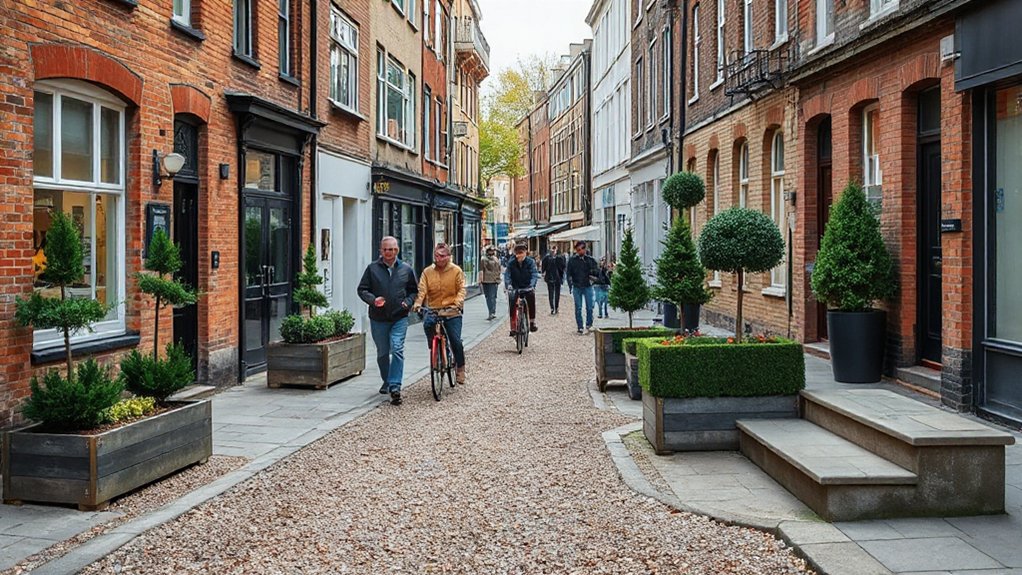
Shared-street etiquette starts with clear expectations: you’ll agree on who handles litter, what responsibilities sit with each user, and how to signal when issues arise.
We’ll outline maintenance clarity—who trims hedges, cleans gutters, and reports hazards—so everyone stays safe and the street looks cared for.
Shared Street Etiquette
Shared streets require clear etiquette and defined maintenance roles to keep them safe and functional. You implement simple, visible signals for right-of-way, with pedestrians, cyclists, and motorists sharing space respectfully. Move at a predictable pace, and use quiet, defensive driving or walking to prevent confusion.
Establish shared routes and enforce temporary barriers during events, so seasonal or modal changes don’t surprise anyone. You coordinate with local businesses to place public art that guides flow without obstructing sightlines, and with planners to position street furniture as cues rather than obstacles.
Regular, quick checks for debris, uneven surfaces, or damaged markings keep confidence high. You document feedback, adjust rules, and communicate changes through concise notices to maintain trust in the shared environment.
Maintenance Responsibility Clarity
Clear ownership of maintenance tasks prevents confusion and keeps the shared street safe. You’ll avoid clashes when roles are explicit, so routine fixes don’t stall for days. Define who clears litter, who trims edge hedges, and who reports faults in paving or lighting, then document it plainly for residents and visitors.
Communication stays crisp through a simple map or notice board, reducing guesswork during weather shifts or events. Consider garden fencing, driveway paving, and curb paint as signals of responsibility, not excuses to delay.
You keep the street presentable by scheduling seasonal checks and quick-response repairs, reinforcing a cooperative mindset rather than territorial boundaries.
- Clarify responsibilities with a visible plan including garden fencing and driveway paving maintenance
- Use a shared contact point for reports and updates
- Schedule regular checks to prevent small issues from escalating
Cooperative Upkeep Practices
Cooperation is the backbone of smooth shared-street upkeep: everyone knows their role, keeps grit and litter under control, and acts quickly when issues appear.
You’ll establish a simple rota for routine checks—weekly sweeping, monthly gutter clearance, quarterly edge trimming. Define responsibilities for garden pathways and street furniture, assigning a lead resident for each area to streamline decisions.
Communicate through a shared noticeboard or digital chat, posting squarely what’s expected and by when. Use clear signage to remind pedestrians and cyclists of etiquette, like yielding to wheelchairs and prams, and reporting hazards within 24 hours.
Stock essential tools in a communal shed: gloves, trowels, weed killer, a mini-sweeper. Document repairs, track costs, and celebrate small wins to sustain cooperation.
Maintain consistency; build trust; preserve charm.
Cost-Saving Strategies That Preserve Historic Integrity
To save money without compromising historic character, start with a focused plan that prioritizes maintenance over costly overhauls. You’ll identify urgent repairs, reuse authentic materials where possible, and schedule work during off-peak seasons to cut labour costs.
Emphasize reversible changes and avoid modernist overhauls that clash with period charm. Consider small upgrades that deliver impact, like upgrading drainage, preserving original railings, and integrating discreet, compatible modern landscaping that respects scale and materials.
If you’re repainting, choose historically accurate palettes and durable finishes that resist weathering. Address urban graffiti with proactive protective coatings and rapid-response removal to deter defacement without erasing character.
Modern landscaping can blend with historic streetscapes through restrained plantings and low-profile features that enhance curb appeal without distortion.
- Prioritize reversible, material-compatible fixes
- Schedule maintenance to minimize disruption and cost
- Use discreet, period-appropriate landscaping and coatings
Maintenance Routines to Keep Kerb Appeal Timeless
A practical maintenance cadence keeps kerb appeal timeless, so you’ll plan seasonal checks for durability and curb-appeal impact.
Start with a clear routine: seasonal outdoor cleaning, timely repairs, and proactive upkeep to prevent wear from weather and foot traffic.
Let’s tighten practice with precise tasks and metrics that match your street’s rhythm and historic character.
Seasonal Maintenance Cadence
- Schedule quarterly checks and record outcomes
- Prioritise lighting and paving maintenance alongside seasonal tasks
- Use a simple log to track improvements and future needs
Seasonal Outdoor Cleaning
In spring, sweep paths, wash gates, and freshen moss-prone joints with a gentle cleaner, avoiding pressure that could damage stone.
Summer calls for targeted washing on dusty brickwork, plus timely resealing where needed.
In autumn, clear fallen leaves promptly and rinse away puddle-prone areas to prevent staining.
Winter requires careful edging and protectants to deter frost crumble.
Keep garden furniture and outdoor sculptures tidy with light brushing and non-abrasive cleaners.
Consistency matters; routine care sustains timeless kerb appeal without overdoing any single step.
Timeless Repair Practices
- Regular inspections and prompt repointing
- Seasonal cleaning and moisture management
- Coordinated, compliant repairs that respect street art aesthetics
Quick-Win Improvements That Deliver Instant Curb Impact

Small, quick wins can instantly boost your kerb appeal: start by giving the front boundary a clean, high-contrast edge with crisp paint or timber. Then tidy paths and driveways so they read as deliberate, inviting spaces. You’ll see instant impact from simple upgrades that don’t require full renos.
Focus on curbside storytelling: trim hedges into neat boxes, remove dead or overhanging growth, and edge borders for crisp lines. Introduce low-cost, high-visibility features, like planters and seasonal color, to guide the eye toward the property.
Integrate practical street furniture—a compact bench or a discreet lantern—to anchor the curb zone without clutter. Embrace Curbside gardening by selecting drought-tolerant perennials for year-round structure.
Keep textures varied, but cohesive, ensuring elements align with the home’s age and materials.
Frequently Asked Questions
How Can I Assess Planning Permission Implications for Tweaks?
You should check with your local planning authority and consult renovation guidelines before making tweaks, so you understand Planning approval requirements and any constraints. You’ll assess scope, apply for permissions if needed, and document changes for compliance.
Are There Grants Available for Historic Street Improvements?
Yes, you can access historic preservation grants and community funding. You’ll apply for partnerships, match funding, and showcase impact. Historic preservation, Community funding anchor your plan; you’ll leverage grants, crowdfunding, and local sponsorship to revitalise streetscapes, respecting heritage.
What Are Common Conservation Area Restrictions to Watch?
Conserve Street aesthetic by following local guidelines; you’ll typically need permission for alterations, demolition, or new signage. Watch restrictions on Historical signage, materials, colors, and shopfronts; plan discreet, respectful changes to preserve era character and planning compliance.
How Do I Protect Footpath Rights During Improvements?
You protect footpath rights by coordinating with local council, keeping disruptions minimal, and clearly marking detours. Prioritize footpath safety and historic paving integrity, use compliant barriers, and document all changes to avoid disputes during improvements.
Which Materials Are Best for Low-Maintenance Historic Costs?
You should choose low-maintenance options like durable paving and composite edging, prioritizing cost-efficient, historic-appearing looks. Landscaping options with drought-tolerant plantings reduce upkeep, while Fencing materials like treated timber or aluminum offer longevity and easy care.
Conclusion
You’ve got the blueprint to elevate kerb appeal without losing history. Start with a plan: tidy boundaries, choose period-appropriate plants, and keep brick and railings honest to their age. Maintain regularly, repoint and repaint as needed, and share upkeep with neighbors so standards don’t drift. Small, sustained actions add up—like bricks in a wall, each one matters. Stay consistent, stay respectful, and you’ll see curb charm grow, brick by brick, day by day. It’s a chapter you can keep writing.