


You can reclaim space in a compact apartment by prioritizing vertical storage, multi-functional furniture, and hidden organizers that stay out of sight. Think tall shelves, wall hooks, and bed designs with drawers, plus ottomans and hollow coffee tables for quick access to essentials. Keep a simple routine to maintain order, and reassess as you go. Start small—then see how a few targeted tweaks release a calmer, more usable home, without sacrificing style or comfort.
Foundations for Small-Space Storage: Core Principles
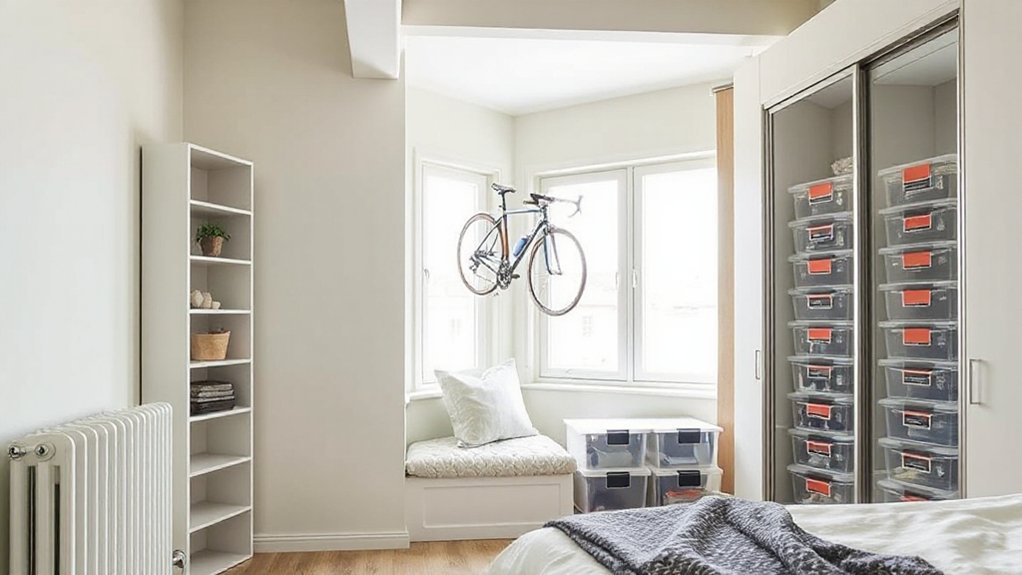
What separates great small-space storage from okay setups is a clear framework: maximize vertical and hidden storage, group related items, and optimize every surface. You’ll start by mapping zones: daily essentials, seasonal items, and overflow, then assign each zone a dedicated storage strategy.
Elevate verticals with tall shelving, wall hooks, and hanging organizers; push items off the floor to reduce clutter. Group related items so you can grab what you need without rummaging. Use clear bins and labeling to maintain order, and tuck rarely used pieces into high cupboards or under beds.
Color schemes help you see organization at a glance, while lighting techniques reveal hidden corners and sharpen contrasts between zones. Maintain simplicity, and revisit the framework seasonally to preserve efficiency and flow.
Choose Multi-Functional Furniture That Frees Space
Think through multi-functional essentials that pull double duty, so you get more use out of every piece. Consider under-seat storage and other clever compartments to keep everyday items neatly stowed without extra bulk.
Explore wall-mounted options that free floor space while adding surfaces and hooks for quick access.
Multi-Functional Essentials
Smart, space-saving furniture is your best ally in compact apartments. When you choose multi-functional essentials, you streamline clutter and boost usable square footage.
Look for pieces that serve more than one purpose, like a sofa that hides drawers or a bed with built-in shelves. Opt for modular units you can rearrange as needs shift, so you don’t buy more than you require.
Prioritize hidden storage, lift-top tables, and ottomans with compartments to keep daily items out of sight. Assess each item for durability, ease of access, and weight limits to guarantee reliability.
This approach supports smart storage and space optimization, letting you maintain order without sacrificing style or comfort. Your layout stays adaptable, efficient, and inviting.
Under-Seat Storage Solutions
Under-seat storage is a proven way to reclaim floor space without sacrificing comfort. You’ll transform small living areas by selecting multi-functional pieces that tuck away clutter without aging your style.
Start with ottomans and benches that open for everyday items, keeping blankets, remotes, and chargers neatly out of sight.
Use hollow coffee tables, daybeds, or storage ottomans to create hidden compartments, so you never hunt for essentials.
Choose slim-profile sofas with built-in cubbies under the seats for magazines and chargers, avoiding bulky bins.
Prioritize durable hinges and soft-close mechanisms to prevent pinched fingers.
Label bins inside, so you access what you need quickly.
Consider modular units that reconfigure as needs shift, maintaining a clean, organized look.
Under seat storage ideas keep spaces flexible and efficient.
Wall-Mounted Furniture Options
Wall-mounted furniture frees floor space while keeping essential items within easy reach. You’ll gain versatility by choosing pieces that multitask, like floating shelves that hold books, decor, and storage bins without crowding surfaces.
Wall mounted desks transform nooks into productive work zones without swallowing square footage; drop-down or fold-away options keep the room open when not in use. Mounts should align with your tallest storage needs, so organize by height and accessibility.
Use vertical space for slim cabinets or slim-line organizers to corral daily essentials, reducing clutter on counters. Pair floating shelves with discreet hardware and labeled bins to maintain order.
When selecting, prioritize strength, expansion potential, and ease of reconfiguration to adapt to changing layouts.
Implement Vertical Storage That Scales Up
Start by building upward with your storage plan, prioritizing shelves and cabinets that fit the room’s height and reach.
Extend vertical racks to maximize wall space without widening footprint, choosing adjustable options for future changes.
This scalable approach keeps clutter in check while you adapt to evolving needs.
Build Upward Storage
To maximize every inch of space, build upward with modular shelving, tall bookcases, and ceiling-height organizers that you can add to as needs grow. You’ll create a scalable system that respects flow and accessibility, avoiding clutter while expanding storage vertically.
Consider ceiling mounted shelves for slim gaps above desks and seating, and pair lofted beds with under-bed drawers or open cubbies to reclaim floor space.
- Install modular vertical modules that snap together, letting you reconfigure as you acquire new items.
- Integrate ceiling-height organizers with doors or bins to conceal clutter and simplify access.
- Use lofted beds to free floor space, adding drawers, shelves, or a small desk beneath.
These choices deliver durable, practical storage without sacrificing room circulation or aesthetics.
Extend Vertical Racks
Choose adjustable brackets to fine‑tune spacing as you rotate items seasonally or change routines. Pair with floating shelves to extend surface efficiency without bulk, especially above desks or counters. Use hanging organizers for slim gaps between racks, turning narrow widths into practical niches.
Prioritize strong hardware, wall anchors, and weight limits to prevent sag. Regularly reassess, remove surplus, and reconfigure modules for evolving needs.
Build Daily Decluttering Habits That Stick
Daily decluttering doesn’t have to feel overwhelming; instead, make it a quick, repeatable routine you actually stick with. You’ll reduce clutter triggers by pairing a short check with a decision you repeat daily, shaping habit formation that lasts.
- Set a 5-minute window each day to sort one area, then reset to its baseline.
- Use a simple rule: keep only what you use at least monthly; donate, recycle, or discard the rest.
- End with a 60-second reset: return items to their homes and note any items that caused friction.
Keep it consistent, not exhaustive. The key is momentum: small wins compound into lasting organization and a calmer space.
Hidden Storage Tricks You Can Use Today
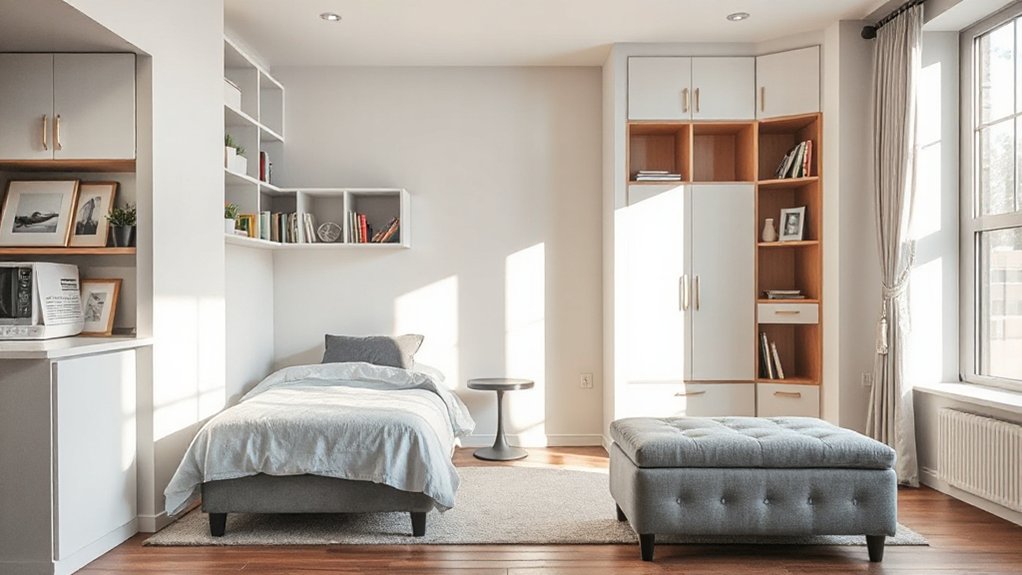
Hidden storage isn’t about big renovations; it’s about clever, immediate gains you can implement today. You can reclaim space with hidden compartments inside existing furniture, like beds, ottomans, and desks. Choose pieces that open smoothly, and keep a small labeling system so you don’t forget what hides inside.
Look for hollow bed frames or storage footboards to stash seasonal gear without clutter. Install slim, pull-out shelves behind doors for flat items and overflow. Use secret drawers tucked into stair risers or under window seats to store documents, chargers, or crafting supplies.
Keep a dedicated bin or tray inside each hidden area to prevent jumble. With these techniques, you maximize every square inch while preserving a clean, accessible living area.
Room-by-Room Layouts for Compact Living
Smart, efficient layouts start with a clear plan: map each room’s essential functions, then prioritize movable furniture and vertical storage to maximize floor space. You’ll optimize room-by-room layouts by combining flexible pieces, wall shelving, and clear zones for work, sleep, and dining.
Use compact storage container solutions under beds and above cabinets to keep surfaces free, and align closets with dedicated organizers for easy access to clothing and gear.
- Assess each room’s core tasks, then choose multipurpose furniture that folds, slides, or stacks.
- Zone areas carefully to improve flow, using vertical storage to reduce footprint.
- Prioritize closet organization and labeled storage containers to maintain clutter-free spaces.
Maintenance Routine for an Open, Calm Home
To keep an open, calm home feeling uncluttered, establish a simple maintenance routine that you can perform in minutes each day and a deeper weekly cadence for deeper cleans. You focus on daily quick clears, wipe surfaces, and put items away before bed.
Set a 10-minute morning sweep: open blinds, clutter check, trash/recycle, and kitchen wipe-down.
Weekly, schedule a 30-minute reset: dust high, wipe vents, sanitize counters, and check containers for expiry.
Use a timer to stay concise and prevent drift into perfectionism.
Maintain zones to minimize friction and encourage consistency.
Clean as you go to reinforce cleaning routines, not chaos.
This steady rhythm supports mood enhancement by preserving calm, orderly spaces and predictable flows, reducing decision fatigue and promoting efficient use of storage.
Frequently Asked Questions
How Do You Measure Available Vertical Clearance for Storage Solutions?
To measure available vertical clearance, start at your ceiling and confirm you have the same height across the area. Use a tape measure for ceiling height, then note clearance measurement to plan shelves or hanging storage accurately.
Can You Quantify Cost Versus Space Savings for Top Storage Choices?
You’ll save about 20% more space with multi functional furniture and hidden storage; cost per cubic foot drops as you stack features, so you gain value. You quantify this by comparing unit costs against realized space savings.
What’s the Best Way to Stage Small Spaces for Easy Access Daily?
You optimize daily access by grouping items, using labeled bins, and keeping high-use essentials within arm’s reach. Focus on decor organization that blends with your space, and implement access optimization strategies like vertical shelving and pull-out solutions.
How Do You Protect Furniture Longevity in Constantly Moved Setups?
Move your mindset from moving to guarding: treat each shift as a promise to preserve. Use protective covers, corner guards, and padded, non-slip mats. Furniture protection and longevity preservation depend on careful cushioning, stable bases, and gentle handling.
Are There Quick Fixes That Won’T Affect Home Safety Ratings?
Yes—opt for decorative storage that’s lightweight, secure, and modular, minimizing trip hazards. Prioritize Safety considerations like non-slip bases, anchored shelving, and stable stacks; relocate frequently used items to reachable spots for quick, safe access.
Conclusion
Here’s the thing: you’ve learned the rules—vertical, multifunction, declutter, hidden storage. Now you apply them, adapt, and watch spaces transform before your eyes. The shelves fill with what you actually use, not what you fear you’ll need. The closet stays quiet, the desk appears when you need it, and the room breathes. But stay alert—each season, each move, each habit shift reveals what you’re really keeping. Will you let it tighten, or finally break free? The choice begins now.