


Creating a cosy living room in a townhouse starts with a clear, practical plan you can live with. You’ll pick a warm palette, layer textiles, and choose flexible furniture that fits narrow spaces without crowding traffic flow. Focus on a conversation-friendly layout, smart storage, and lighting that softens shadows. Add personal touches and easy seasonal updates to sustain the vibe. Ready to sketch your space? There’s more to optimize before you start.
Define Your Cozy Townhouse Vision in 3 Questions

Start by clarifying what “cozy” means to you and your space. You’ll define a clear target for your townhouse, focusing on function, flow, and tactile comfort.
Ask three questions: What’s the single mood you want to feel daily, and which focal piece anchors that mood? How do you balance open sightlines with intimate corners, and where will you most often sit or gather? Consider practical constraints, like chair height, lighting warmth, and storage needs.
Tie your answers to concrete choices: Outdoor furniture should invite lingering evenings, while Kitchen organization supports quick, tidy routines without breaking the vibe.
Write down your answers, then map them to one-page sketches or checklists to keep decisions aligned with your cozy vision.
Measure Your Space for Smart Layouts
Before you lay out furniture, measure everything you’ll use to anchor the plan: wall lengths, doorways, window openings, and ceiling height.
Then map traffic paths, ensuring at least 2 feet of clearance for main routes.
Record outlet placements and built‑in elements, so you can place lamps, screens, and charging stations without cords snaking across floors.
Sketch scale diagrams or use a simple grid to test furniture footprints against real measurements.
Consider design trends that suit your space, noting where natural light shifts throughout the day.
For smart living, mark where you’d install sensors, hubs, and speakers, aligning with power and data access.
Keep future needs in mind, too, planning for home automation upgrades without crowding rooms.
Precision now saves rearrangements later.
Plan a Conversation-Friendly Floor Plan
A conversation-friendly floor plan places seating to face each other and the main focal point, so conversations flow naturally. Start by defining the primary seating cluster centered on the TV, fireplace, or artwork. Then position secondary seats to create intimate nooks without blocking paths.
In a townhouse, consider a rectangular layout that preserves a clear traffic flow from entry to rear doors. Avoid long sightlines that encourage lounging away from the group.
Use modular seating to adapt for guests and daily routines, ensuring at least one conversational circle of 6–8 feet in diameter. Plan sightlines to outdoor access for an outdoor oasis when weather permits, and integrate discreet tech where it won’t disrupt discussion.
Establish consistent rug heights and lighting to anchor the conversation zones and accentuate the focal point.
Pick a Warm, Complementary Color Palette

Choosing a warm, complementary color palette sets the tone for a cozy townhouse living room while supporting the conversation-friendly layout you planned. You’ll align hues with both mood and function, using color psychology to encourage relaxation and dialogue.
Start with a dominant warm base, then layer accents that repeat and harmonize across the space. Pay attention to paint finishes; matte walls soften light, while satin or eggshell adds subtle sheen for depth without glare.
- Pick a warm base (creamy, taupe, terracotta) and echo with two complementary accents.
- Test swatches in different lighting to confirm perceived warmth and balance.
- Choose finish pairs (matte walls, satin trim) for cohesion and practicality.
Scale Furniture for Narrow Rooms
Scale furniture proportionately to fit narrow rooms without crowding, using pieces that match your space rather than overwhelm it.
Prioritize maximizing vertical storage with slim profiles and wall-mounted options to free floor area.
Choose slender, multi-functional pieces that still offer essential seating and surface space.
Scale Furniture Proportionately
To keep a townhouse living room from feeling cramped, scale furniture to fit the narrow space by prioritizing proportional silhouettes—shorter sofas, slim-arm chairs, and compact coffee tables. You balance flow and function by choosing pieces that don’t overwhelm walls or walkways, then complement with vintage accents and artistic accessories to add personality without bulk.
- Place a low-profile sofa centered on the main wall, then frame it with slim chairs that mirror its width.
- Use a narrow coffee table or ottoman instead of a wide one, preserving traffic routes and sight lines.
- Mix textures and finishes—matte wood, metal, and subtle fabrics—to create depth without crowding the room.
This approach keeps scale intact while adding character and cohesion.
Maximize Vertical Storage
Even in a narrow townhouse, vertical storage can free up floor space without crowding the room. Start with tall, slim bookcases that tuck beside doors or corners, using adjustable shelves to adapt to different items. Install wall-mounted units at eye level to keep frequently used objects reachable without bending.
Choose shelving solutions with reinforced backing for stability and brackets that hold heavy loads securely. Use modular systems so you can reconfigure as needs change, avoiding bulky freestanding cabinets.
Opt for shallow-depth shelves in hallways or above seating to store seasonal items while preserving openness. Mount hooks, rails, and pegboards near work zones for tools or decor, keeping surfaces clear.
Color-match units to walls to vanish into the backdrop, maintaining a cohesive, airy feel.
Choose Slim Profile Pieces
When you’re decorating a narrow townhouse, choose slim-profile pieces that tread lightly but still offer function. In tight spaces, scale matters more than size: furniture should fit without crowding, and paths should stay clear.
Seek low, narrow sofas and armless chairs, and opt for legs that lift visuals off the floor. This keeps sightlines open and enhances lighting. Add storage with wall-mounted or floor-to-ceiling units to avoid bulk.
Favor minimalist decor, clean lines, and compact silhouettes, so every inch earns its keep. Pair a slim coffee table with a light rug to define zones.
Use vintage accents sparingly to add character without weight.
- Choose a slim sofa with exposed legs and minimal upholstery
- Install wall-mounted shelves at varying heights
- Add a small vintage sideboard as a focal point
Layer Textures for Warmth and Depth
Textured layers add immediate warmth and depth to a townhouse living room. You’ll layer textiles in deliberate ways, balancing soft and rugged surfaces for cohesion.
Begin with a neutral foundation: a solid sofa and rug in muted tones. Add textile layering through throws, cushions, and drapery in varying fabrics—linen, wool, corduroy, faux fur—choosing densities that feel tactile without cluttering visual space.
Introduce depth with a mix of matte and subtle sheen finishes, ensuring patterns stay restrained. Keep ambient lighting as a unifying element, combining warm LED sources, floor lamps, and table lamps to sculpt shadows and highlight textures.
Maintain scale and repetition: echo a single color family across textures to avoid busy contrast and preserve a calm, cohesive mood.
Maximize Natural Light With Reflective Surfaces
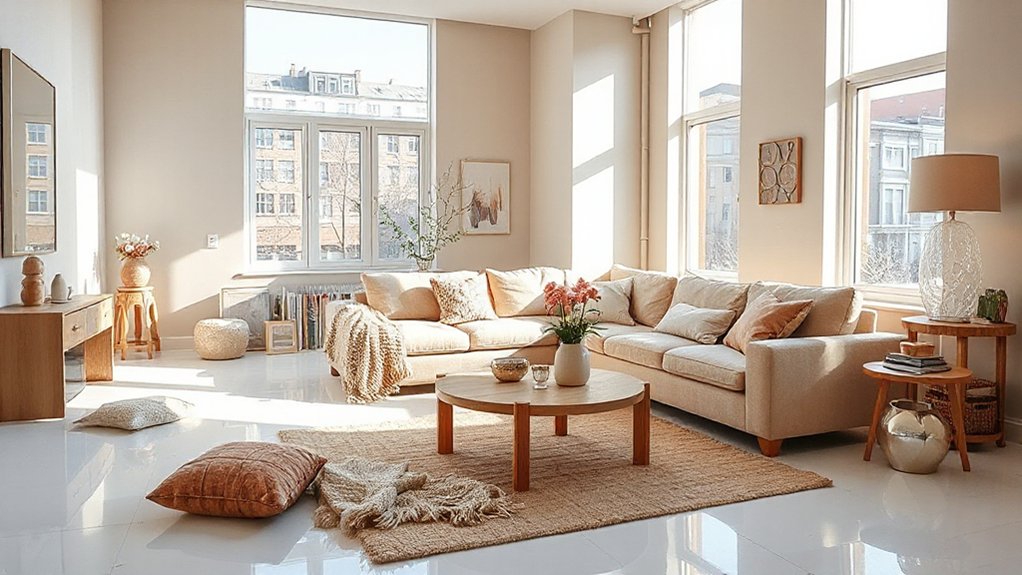
Place reflective surfaces where natural light hits most interiors, such as near windows or opposite walls.
Use light-boosting materials—glass, glossy paints, and metallic accents—that bounce daylight deeper into the room.
Keep placement simple and purposeful to maximize light without creating glare or crowding the space.
Reflective Surfaces Placement
To maximize natural light in a townhouse, position reflective surfaces strategically so light bounces deeper into rooms. You’ll boost brightness without overpowering decor by choosing practical placements that enhance usability and mood.
- Mirror placement should align with entry points and task areas, amplifying daylight from windows without creating glare.
- Glass accents, like a glass coffee table or transparent shelving, refract light across seating zones for a breathable feel.
- Position wall panels or framed mirrors opposite windows to extend the glow to corners, keeping sightlines clear and clutter minimal.
Keep surfaces clean and wipe down regularly to maintain reflectivity. Avoid bulky mirrors that trap corners or overwhelm the space, favoring balanced, proportional choices.
Light-Boosting Materials Used
What light-boosting materials work best to reflect and amplify daylight in a townhouse? You’ll prioritize surfaces that bounce light without adding glare. Choose high-reflectance paints in pale neutrals or soft whites with a low-sheen finish to maximize diffusion.
Use mirrors or glass-backed panels strategically opposite windows to double daylight without multiplying fixtures. Layer textiles and furnishings in eco-friendly materials that won’t absorb too much light; opt for light-colored upholstery and lightweight drapery to maintain brightness.
Consider glossy or semi-gloss laminates for tabletops and storage fronts to reflect alongside walls. For texture, incorporate vintage textiles as accents rather than dominant surfaces, ensuring they don’t dull the glow.
Maintain balance with natural tones and avoid heavy, dark furnishings that trap shade.
Create Hidden Storage to Cut Clutter
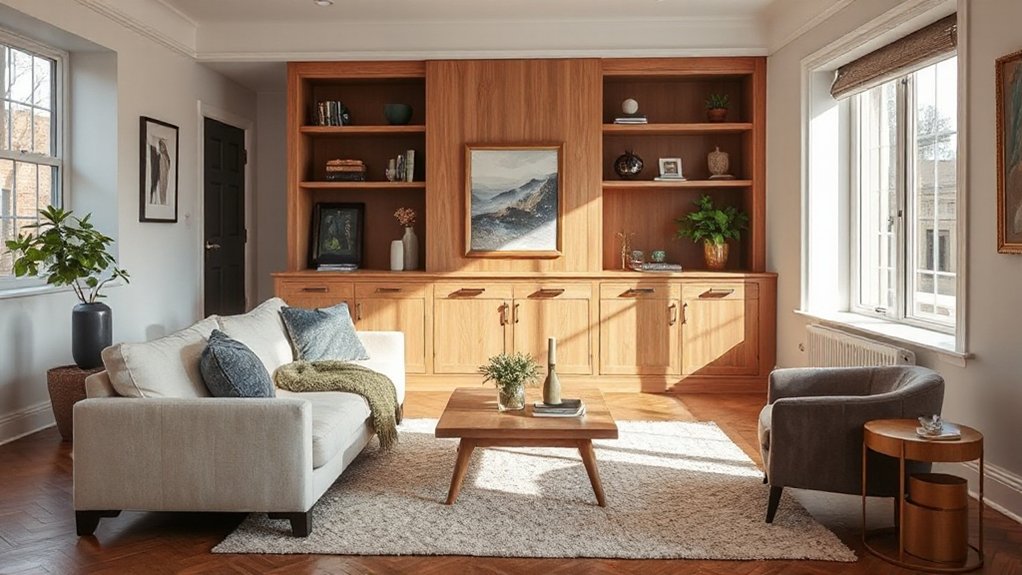
Hidden storage is your first line of defense against clutter. You’ll reclaim surface space by choosing clever, discreet solutions that blend with your townhouse’s aesthetic.
1) Use coffee tables and ottomans with hollow cores to store blankets, remotes, and magazines.
2) Install built-in benches or window seats with lift-up lids for seasonal decor and extra throws.
3) Create hidden compartments in existing furniture, like beds or sideboards, to stow cables and small tech accessories.
Hidden compartments and secret compartments pay off in high-traffic rooms, keeping clutter out of sight while preserving style. Prioritize sturdy hardware, soft-close mechanisms, and uniform finishes so storage remains seamless, not shouty.
Regularly purge and rotate items to maintain an uncluttered, cozy living space.
Add Intimate, Statement Lighting
Intimate, statement lighting instantly sets the mood in a townhouse living room. You’ll balance ambient lighting with focused accents to create depth, not glare.
Choose statement fixtures as focal points, but keep them proportionate to the space. Install dimmable options so you can shift from bright tasks to soft evenings.
Place ambient sources high or behind furniture to soften shadows without overexposing walls. Add task lighting near seating for reading, using adjustable arms or wall-mounted sconces.
Reflective surfaces, like a mirrored coffee table or glossy finishes, amplify light without adding clutter. Pair warm bulbs with metal, glass, or fabric shades to enhance texture.
Keep cords hidden and maintain clean sightlines to preserve coziness.
Use Rugs to Define Zones and Comfort
Rugs anchor the living area and carve out usable zones, so pick sizes and shapes that fit the flow of your townhouse. You’ll create comfortable boundaries without walls, guiding foot traffic and conversation. Choose vintage textiles and eco-friendly materials to add character while staying sustainable. Layering rugs can define a seating cluster and a reading nook in a compact floor plan.
- Match rug sizes to furniture footprints to keep paths clear and zones distinct.
- Use contrasting textures and colors to highlight each area without clutter.
- Prioritize durable, easy‑care materials that age well and reduce upkeep.
Keep edge alignment tidy, and avoid oversized patterns that overwhelm the space. The result: practical zones that invite use and feel cohesive.
Personalize With Artwork and Sentimental Objects
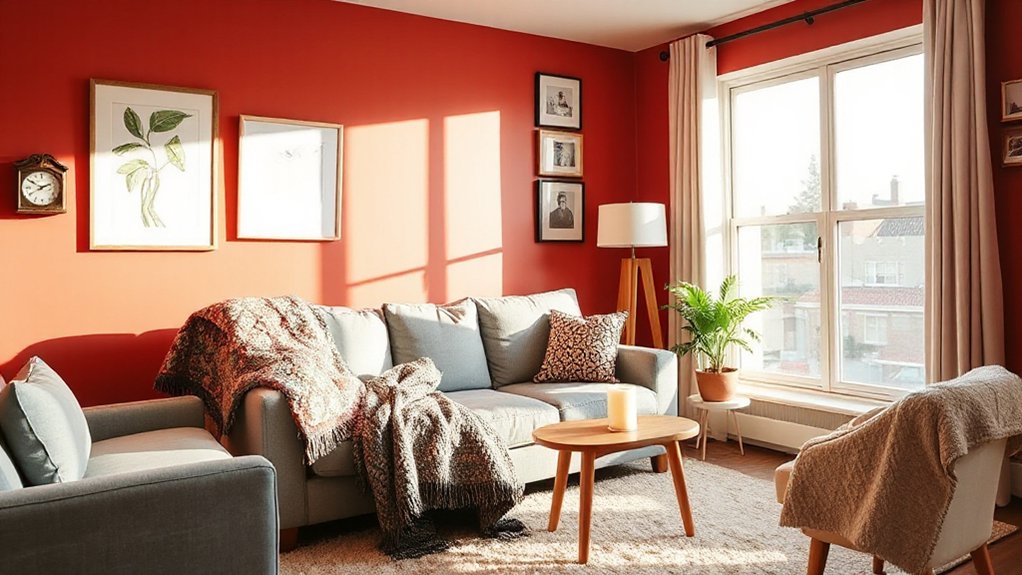
Turn your space into a personal story by displaying meaningful keepsakes and shaping a curated gallery that reflects you. Start with a focal wall or shelf for a few select pieces, then rotate them seasonally to keep the look fresh.
Keep captions brief or let the objects speak for themselves to retain a clean, cohesive vibe.
Display Meaningful Keepsakes
You need to display meaningful keepsakes by choosing artwork and sentimental objects that tell your story without cluttering the room. Use thoughtful placement to create focal points, not busy walls. Prioritize quality over quantity, and rotate items seasonally to keep the display fresh.
Keep frames simple, and group pieces by theme or color for cohesion. Make sure lighting highlights memory displays without glare. Choose sentimental keepsakes that evoke warmth and conversation, minimizing duplicates.
- Curate a small gallery wall with 3–5 works that share a mood or palette.
- Create a shelf vignette using a standout object paired with 2 supporting pieces.
- Rotate one item monthly to maintain interest while preserving calmness.
Sentimental keepsakes should feel intentional, not overbearing, and always integrate with the room’s overall tone.
Curate Personal Gallery Space
A personal gallery space should feel intentional, not cluttered, so choose artwork and sentimental objects that tell your story and fit the room’s tone. Start with a focal piece that reflects your personality, then build a cohesive display around it.
Prioritize a restrained color palette to keep the space calm and cohesive. Curate items by rhythm, balance, and meaning rather than volume.
For art display, mix sizes and textures but guarantee frames and matting harmonize with the wall color. Plan wall arrangements at eye level, using painter’s tape to map layouts before nailing.
Group related pieces in small clusters, and leave negative space to prevent overload. Rotate seasonal pieces to keep the gallery feeling fresh without sacrificing coziness.
Label meaningful objects discreetly to reinforce story and intention.
Bring in Greenery for Freshness
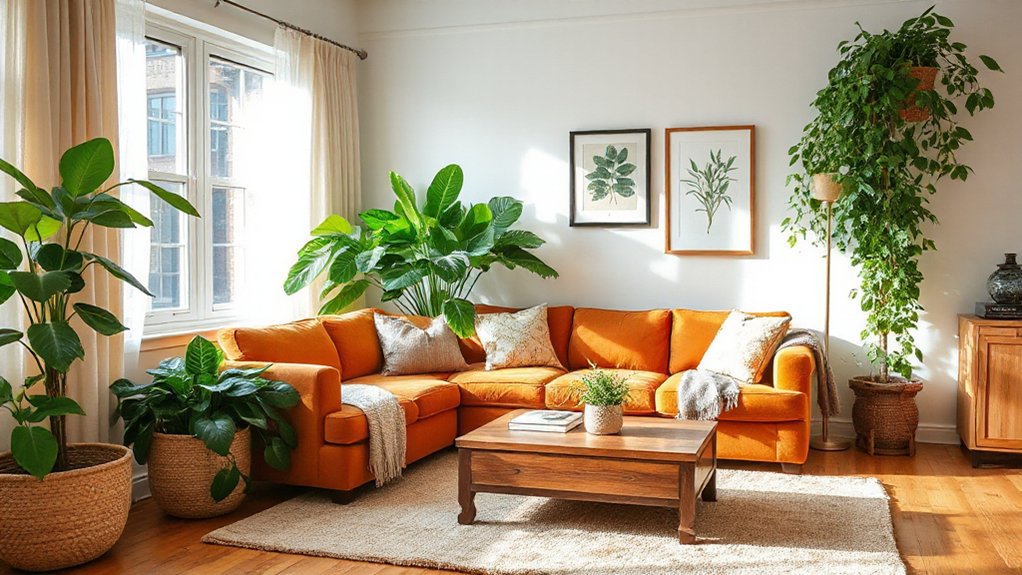
Since greenery instantly freshens a space, start with a few well-placed plants in low-light spots and on shelves to soften edges and bring life into a townhouse living room. You’ll improve air quality and texture with manageable, compact options and simple care routines.
Focus on grouping plants by light needs and water schedules for reliable results. Indoor plants add structure without clutter, while green decor ties the room to nature through color and form.
- Place a trio of varied heights on a console or window sill for layered depth.
- Mix foliage textures—fuzzy, glossy, and matte leaves—to create visual interest.
- Choose low-maintenance species and pair with a weekly watering reminder.
Introduce Soft Soundscapes With Textiles
Soft textile layers soften the room and absorb excess noise, creating a calmer base for daily living. Build in quiet room ambience with plush throws, woven rugs, and padded cushions that invite you to linger.
Let tactile soundscapes—sound-absorbing fabrics and textured surfaces—reward your senses with subtle, comforting depth.
Soft Textile Layers
To soften a townhouse living room, layer textures that absorb sound and invite lingered conversations. You’ll tune the space with soft textile layers that dampen echoes while adding tactile warmth. Focus on practical choices that endure daily use and maintain clarity of design.
- Choose textile patterns with subtle contrasts and larger weaves for visual depth, while prioritizing fabric durability for frequent use.
- Mix throws, cushion covers, and upholstery in three complementary textures (linen, wool, and cotton blends) to build depth without overcrowding the room.
- Test thickness and density by draping samples over seating—store a few options for seasonal changes and easy refreshes.
Quiet Room Ambience
Layering textiles here isn’t just about look—it shapes the room’s sound. You’ll craft a quiet space by pairing dense fabrics with lighter weaves to control echo and create warmth.
Start with a heavy curtain and a wool rug to absorb footsteps and reduce glare, then add textured cushions and throws in mixed densities for subtle, softened noise. Soft linens can diffuse sharper sounds without muting the room’s character.
Keep surfaces uncluttered to prevent sound from bouncing between walls. Use a small, underfoot sound buffer—like a sound-absorbing furniture cover or a woven pouf—and place plants to break reflections.
The result is a peaceful retreat you can truly hear, not just see. This quiet space invites calm, conversation, and easy, restorative presence.
Tactile Soundscapes
Textural soundscapes come alive when you pair fabrics that respond differently to touch and movement. You’ll craft ambient acoustics by layering soft, breathable textiles with denser weaves, letting highs breathe and lows settle. Focus on tactile textures that react to footfalls, brushing against arms, or a door’s closure to create subtle, evolving noises.
- Mix velvets, boucle, and linen blends to produce contrasting rustles and muffled thuds.
- Place textiles near seating and windows to modulate reflections without overpowering speech.
- Use weighted throws and paneling to dampen echoes while adding warmth and dimension.
Result: a calmer living room with deliberate, responsive sound shifts that enhance comfort and perceived space.
Optimize Window Treatments for Mood
Natural light shapes mood, so start by choosing window treatments that control brightness without dulling the space. You want options that adapt from bright morning glare to soft evening glow.
Consider layered solutions: sheer curtains to filter daylight, paired with tighter coverings for privacy and drama. Curtain styles should emphasize tone—think light, breathable fabrics for warmth, or heavier textiles for coziness.
For flexibility, implement motorized or easily adjustable blinds that respond to your routine. Blind options offer precise control, reducing glare while preserving view and air flow.
Confirm hardware is discreet so trim lines stay clean and uncluttered. Test color temperatures under your main lighting to confirm mood alignment.
Prioritize ease of operation, maintenance, and compatibility with existing decor.
Use Purposeful Color-Blocking and Accent Walls

Color-blocking basics help you define zones and guide traffic. A well-chosen accent wall adds depth without overwhelming.
Consider bold contrasts for focal points and softer tones for balance. Then test swatches in your natural light.
Use practical tips—start small, measure precisely, and keep furniture proportionate to the wall you’re highlighting.
Color Blocking Basics
Color blocking is a practical way to define zones and add personality to a townhouse living room. You’ll harness color harmony to separate seating from conversational nooks, using deliberate contrasts and cohesive neutrals. Start with a restrained palette and layer at actual wall planes to avoid clutter.
Choose one bold hue for a focal wall and balance with lighter shades in adjacent spaces, applying paint techniques like edge crisping and feathered blending for polish.
- Define zones with a single, bold accent color and complementary neutrals.
- Use clean edges and consistent finish across walls to reinforce harmony.
- Plan your application with sample patches to confirm balance before painting.
This approach remains practical, precise, and ready for a cosy, organized space.
Accent Wall Impact
Accent walls aren’t just decorative; they’re the core tool for guiding the eye and defining zones in a townhouse living room. By choosing a single, well-placed accent wall, you create a wall focal point that anchors seating arrangements and traffic flow.
Pick a color or texture that contrasts with neighboring walls but complements your furniture, rug, and artwork. Use purposeful color-blocking to emphasize architectural features—fireplace alcoves, built-ins, or window niches—without clutter.
Keep finishes matte or satin to avoid glare, and balance with neutral tones elsewhere to maintain coziness. Apply recessed lighting or a wall sconce to highlight texture without overpowering the room.
Avoid overdoing patterns; subtle variation yields depth, cohesion, and a polished, inviting vibe.
Practical Application Tips
To apply purposeful color-blocking and accent walls effectively, start by choosing one focal area per room where color will anchor the layout. Then pick two complementary hues and pair them with a neutral base to maintain balance. Consider seasonal decor as your cue for temporary pops, swapping in accents that won’t overwhelm. Prioritize fabrics that are pet friendly and easy to clean to keep your space practical.
- Identify a single wall or nook for your accent and keep it visually grounded with trim or shelving.
- Use bold color blocks sparingly, layering with textures like textiles and art for depth.
- Restrict patterns to small doses and select pet friendly fabrics for upholstery and cushions to maintain durability.
Smart Furniture: Flexible, Space-Saving Pieces
Smart furniture makes a small townhouse feel bigger by combining multiple functions into a single piece. You’ll gain usable surface, storage, and seating without adding clutter.
Pick modular sofas with built‑in under‑seat bins or hidden chests, so you can store blankets, remotes, and chargers out of sight.
Opt for nesting tables that slide apart when needed and tuck away when not in use, boosting floor space for movements.
Choose coffee tables with lift tops to expose work surfaces or hidden journals.
Use wall‑mounted desks that fold down for work sessions, freeing floor area afterward.
Prioritize pieces with durable mechanisms and smooth finishes to endure daily use.
For space optimization, measure clearance, plan traffic paths, and avoid oversized silhouettes that overpower the room.
Small-Scale Décor Hacks That Boost Coziness
Small-scale décor tricks can make a townhouse feel warmer without clutter. You’ll boost coziness with precise, quick changes that respect space and function.
- Use color psychology cues in textiles and pillows to cue calm or warmth, pairing soft neutrals with accent hues that encourage contentment without overpowering the room.
- Prioritize furniture ergonomics: keep seating at elbow-height for comfort, and place cushions where your back naturally aligns to support longer lounging times.
- Layer textures subtly—throws, weaves, and a single tactile rug create visual warmth and invite touch, while maintaining a clean silhouette that prevents crowding.
Budget-Friendly Upgrades That Pay off

Reconsider textiles: replace heavy drapes with lighter ones, add a performance rug, and sequence cushions for color and texture.
Focus on layout: declutter, re-position seating for conversation, and optimize traffic flow near entryways.
Quick refreshes like repurposing furniture, adding a statement throw, or updating hardware on a console deliver impact without expense.
Use budget hacks to source affordable accents, and tackle DIY projects that suit your skill level, reinforcing cohesion without overspending.
Small, deliberate upgrades compound into a noticeably cozier space.
Maintenance Habits to Keep the Cozy Vibe
To keep the cozy vibe, establish a simple, recurring routine that sustains warmth, comfort, and order. You’ll protect texture and scent by quick daily checks, then weekly tasks that prevent buildup and clutter. Plan around all-season needs so Outdoor seating stays inviting and Kitchen integration remains seamless.
1) Daily wipe-downs and quick declutters to keep surfaces calm and accessible.
2) Weekly airing and fabric refreshes, plus seasonal fabric swaps to preserve softness and color harmony.
3) Monthly upkeep, including vent cleaning and furniture rearrangement, to maintain flow and energy.
Consistency trims stress and lengthens the life of cozy details. With routine, you’ll enjoy steady comfort, minimize repairs, and preserve the townhouse’s intimate atmosphere without sacrificing function or style.
Frequently Asked Questions
How Can I Balance Coziness With a Small Budget?
Yes, you can balance coziness on a tight budget by prioritizing budget friendly decor and DIY cozy accents; pick versatile pieces, reuse what you have, add textiles, warm lighting, and small, affordable upgrades you can DIY yourself.
Which Fabric Textures Stay Cozy Year-Round?
Seasonal fabrics stay cozy year-round: you’ll love textured knits, brushed cottons, and wool blends. Prioritize textural layering, mixing boucle, velvet, and linen with warm underlayers. You’ll feel warmth through varying weights, thermal weaves, and durable, easy-care options.
Can Scent Influence a Cozy Townhouse Mood?
Yes, scent can influence a cozy townhouse mood. Try Aromatherapy benefits and Scent layering to create fragrance zones, boost relaxation, and maintain balance; you’ll notice calmer evenings, focused mornings, and a consistently inviting ambience throughout your space.
How Often Should I Refresh Wall Art for Coziness?
Dial up freshness every 6 to 12 months; you refresh wall art placement and art style choices to keep vibe current. You rotate pieces seasonally, declutter cords, and precise lighting boosts coziness while maintaining practical, timeless selection.
What Are Quick Fixes for Echo-Prone Spaces?
You’ll curb echoes fast by adding soft furnishings and acoustic panels. Place plush rugs, heavy curtains, and fabric-covered furniture strategically, then install acoustic panels where reflections occur for a calmer, more intimate room feel.
Conclusion
You’ve got the plan to cozy up your townhouse, from color palettes to smart, space-saving furniture. Keep traffic flow clear, layer textures for warmth, and add personal touches to make it yours. Do quick seasonal refreshes and tuck away clutter to maintain the calm. Think of your living room as a warm blanket you unfold—soft, inviting, and always ready for a conversation. With intentional details and practical tweaks, coziness stays within reach.