
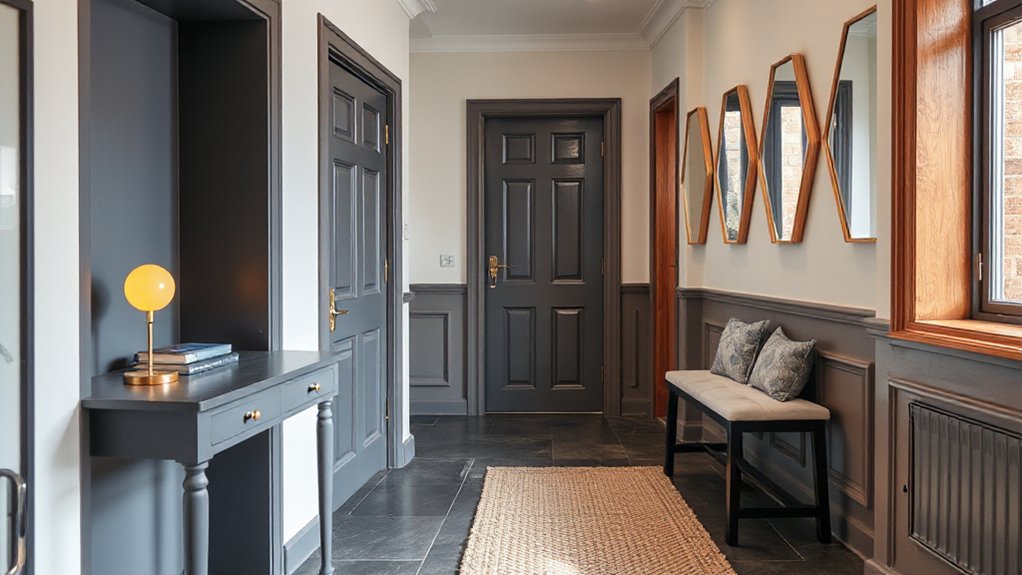

Did you know that a well-designed entrance hall can add up to 10% to a home’s perceived value? In a terraced layout, you’ll want smart lighting, slim storage, and mirrors to widen narrow corridors, plus cohesive textures that tie indoors to outdoors. Start with a practical plan, then tune every detail—from door clearance to traffic flow—so your space feels calm, functional, and stylish as soon as you step inside. Curious how the details come together?
What a Stylish Entrance Hall Does for a Terraced Home

A stylish entrance hall sets the tone for your terraced home because it’s the first impression guests—and you—receive. You’ll signal intentional design from the moment you step inside, shaping mood and flow for every arrival.
A well-defined hall improves navigation, so coats, shoes, and bags have tidy homes, not clutter. Strategic lighting highlights key features and guides movement, while mirrors enlarge narrow spaces without crowding them.
Vintage furniture adds character without overpowering modern lines, creating contrast that feels curated, not chaotic. Artistic decor injects personality with curated pieces that don’t overstate, keeping the space approachable and breathable.
Practical storage solutions, like discrete shelving and labeled bins, keep daily routines efficient. In short, a purposeful entrance elevates curb appeal, daily ease, and the overall feel of your home.
Assess Your Narrow Corridor: Realities and Opportunities
You’ll start by confronting Narrow Corridor Realities—notice how width, lighting, and sightlines shape every decision.
Use Lighting and Space Tricks to brighten the hall and carve perceived width, then map Flow and Storage Opportunities to keep traffic smooth while tucking away essentials.
Pin down practical steps now: measure, test scale with furniture, and plan a cohesive, stylish rhythm from entry to main rooms.
Narrow Corridor Realities
Narrow corridors aren’t just tight spaces to navigate; they’re design opportunities that can shape your entire hall’s feel. You’ll notice that every inch counts, so plan storage and movement in tandem. Start by measuring clearances around doors and furniture to avoid pinch points.
Then prioritize vertical solutions—wall hooks, slim cabinets, and mirror panels—to multiply perceived space. Entrance symmetry matters: align a consistent line of sight from door to doorway, balancing wall decor and functional elements for calm, predictable flow.
Choose door hardware with a unified finish and minimal projection to reduce snag risk and keep passages smooth. Materials should mirror your palette for cohesion—think matte metal, glass accents, and light-reflective surfaces to brighten narrow depths without clutter.
Finally, anticipate future needs with modular pieces you can relocate as tastes evolve.
Lighting and Space Tricks
Lighting can transform a tight hall from claustrophobic to welcoming, so start by layering sources to add depth and function. Blend overhead, wall, and floor lighting to guide movement and highlight architecture. Choose a slim pendant and discreet wall sconces to keep sightlines clear, then add a high-right-angled reflector or mirror to bounce light deeper.
Opt for a cool-neutral palette to maximize brightness, and use dimmers to adjust mood without clutter.
Space tricks: install slim, shallow furniture and floating shelves to reduce bulk while increasing surface area. Incorporate personalized decor in small doses—photo-ledges, a single sculptural piece, or a narrow console.
Seasonal accents—soft textiles, a seasonal runner, or a seasonal citrus scent—keep the entry feeling fresh without overpowering.
Flow and Storage Opportunities
A narrow corridor rewards smart flow and clever storage: start by mapping the path from door to room, then identify pinch points where traffic slows or bags collide.
You’ll optimize width with slim storage: choose wall-mounted hooks, a narrow bench with hidden compartments, and a compact console that doubles as a catch-all.
Prioritize vertical storage to free floor space, adding slim shelving above footwear cubbies.
Lighting should guide movement, so place LEDs along the ceiling line and under shelves for visibility at all hours.
Incorporate artistic murals as visual depth—keep patterns restrained to avoid crowding the space.
Use vintage accessories selectively: a single well-chosen mirror or clock can amplify light and character without clutter.
Aim for cohesive color and texture to sustain a calm, stylish flow.
Plan Lighting That Flatters Every Hour
To make a hallway that always looks inviting, plan lighting that adapts to the hour and mood you want. Start with layered layers: ambient ceiling fixtures for general light, task lamps near mirrors, and accent LEDs to highlight art or architecture.
Use dimmers to shift from bright mornings to cozy evenings, and set 2700K to 3000K warmth for welcome statements, cooler tones for daytime clarity.
Choose a mix of vintage charm pieces and sleek, modern minimalism fixtures to balance styles without clutter. Prioritize CRI above 90 for true color, and align brightness with traffic patterns—entrance, mirror checks, coat storage.
Incorporate smart controls for presets that reflect routine hours, seasonal shifts, and entertaining moments. Keep cords concealed and switches accessible at typical eye level.
Smart Storage That Frees the Doorway

Smart storage should free the doorway, not crowd it, so start with a slim console or wall cabinet that tucks in beside the door rather than across it. Choose shallow depths to keep sightlines open and a finish that mirrors your hall’s palette.
Use concealed compartments and a small tray for keys, mail, and sunglasses, so clutter never blocks the threshold. Install wall hooks above for coats and bags, keeping floor space clear for entering guests.
Integrate smart lighting at the storage edge—motion sensors or dusk-to-dawn illumination—to guide your path without glare. Add cozy textiles like a cushioned bench pad or wool runners in the landing zone for warmth and texture.
This setup blends practicality with style, prioritizing flow and function.
Flooring That Unifies Indoors and Outdoors
Flooring that seamlessly connects indoors and outdoors starts at the threshold with a single, continuous material or a carefully chosen duo that reads as one. You’ll want a surface with consistent grain, color, and texture that tolerates foot traffic, dirt, and moisture.
Choose materials that blur boundaries—large-format porcelain, slab limestone, or a durable timber-look tile—that extend beyond the door and into exterior paving. Consider a restrained palette aligned with color psychology: warm neutrals for inviting energy, cooler grays for calm, or subtle earth tones to ground the space.
Eco-friendly materials matter: recycled porcelain, responsibly sourced timber, and low-VOC coatings keep air and water cleaner. Install with flush thresholds and matching joint lines to minimize trip points and create a seamless, gallery-like flow.
Wall Finishes That Brighten Without the Clinical Vibe
Bold wall finishes can brighten a hall without feeling clinical by choosing textures, tones, and finishes that reflect light and warmth. You’ll opt for washable paints in soft whites, warm beiges, or downy pastels, since color psychology shows brightness uplifts mood and energy.
Introduce subtle texture with plasters, quartz-sand finishes, or a tactile limewash to add depth without glare. Consider panels with a matte or eggshell sheen to reduce reflections while keeping a modern edge.
For acoustic treatment, pair fabric-backed art, woven wall hangings, or cork panels in select zones to absorb echo without clutter. Use strategic color blocks near doors or stairs to guide flow, and keep trim simple to preserve a cohesive, spacious feel.
Finish with a glossy door or mirror-free zone for calm, reflective balance.
Mirror Placement to Extend a Narrow Hall

Place mirrors strategically to bounce light and visually widen a tight corridor. Start with a tall, slim mirror on the side wall to create a continuous reflection. Use mirrored panels or a framed pair to amplify depth, aligning edges with light sources.
Keep the layout practical: mirror placement basics first, then add subtle width-boosting tricks as you assess the space.
Mirror Placement Basics
To make a narrow hall feel longer and brighter, start with a correctly sized mirror that reflects the length of the hallway rather than its width; this simple step visually doubles the space.
In Mirror Placement Basics, aim for a mirror that sits flush against the wall with minimal frame depth to avoid crowding. Height should align with eye level to maximize light bounce, not merely decorate.
Place mirrors opposite a light source or window to amplify daylight. Consider framed choices that echo your palette; vintage accents can pair with modern frames for a curated look.
Use color contrasts, such as a pale wall with a bold frame, to create depth without overwhelming the space. Keep treatments simple, secure, and proportional to the hallway’s dimensions.
Narrow Hall Illusion Tips
Mirrors remain your best ally for a narrow hall, but the trick is placement that visually lengthens rather than widens. To create depth, hang a tall mirror flush against the wall so reflections travel down the space, not across it.
Position mirrors opposite light sources to bounce daylight and brighten corners. Use multiple mirrors in offset frames to add rhythm without crowding. Choose glass with minimal bevels for clean lines that read modern, not busy.
Frame styles matter: slim, contemporary adjuncts read longer, while vintage accessories add personality without breaking flow. Lean, not mount, a full-length mirror at the far end to reciprocate depth.
Colour psychology guides your palette; favor cool neutrals with warm accents to balance scale. Keep decor streamlined, letting mirrors do the lifting.
Textiles and Textures for Warmth and Coziness
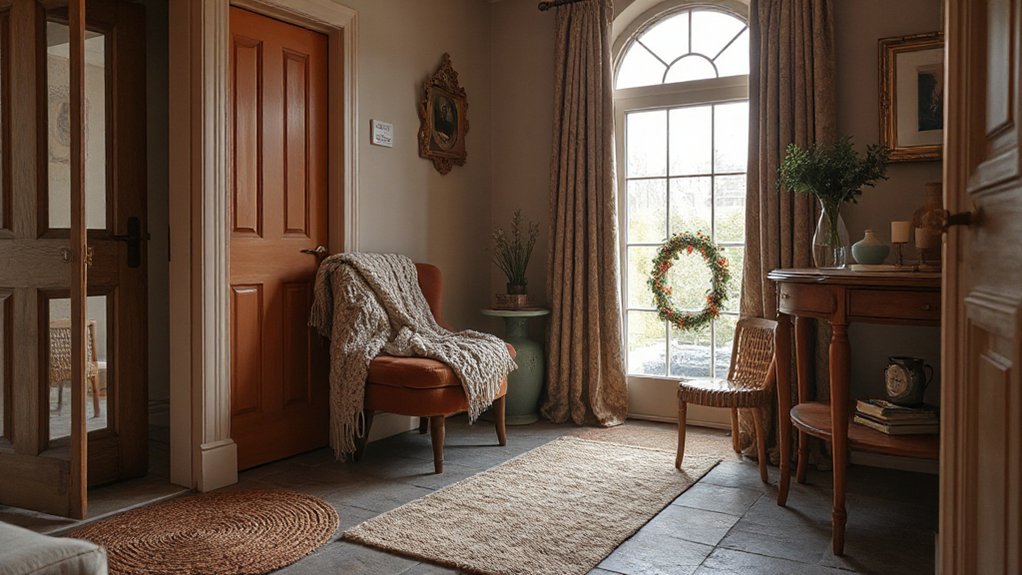
Textiles and textures instantly warm a terrace hallway, so start with a soft underfoot layer like a plush runner or thick sisal to absorb sound and set a cozy tone.
You’ll balance warmth with practicality by layering textiles: a durable floor covering, a cushy mat near the door, and a washable rug to handle dirt and traffic.
Textile layering adds depth without clutter, so mix materials—jute, wool, and a fiber blend—to create tactile interest.
Introduce Texture contrast through pairing matte kilim with a glossy leather bench or metal-framed mirror.
Add throws and cushions in coordinated palettes for seasonal adaptability, ensuring seams and edges are reinforced for high-traffic wear.
Keep maintenance simple with washable covers and removable, breathable fabrics.
Statement Accents That Reflect Your Personal Style
Start with Statement Style Basics to quickly establish the look you want, then layer in Personal Touch Textures to echo your daily life.
Choose Accessory Color Palettes that coordinate with key furniture and fixtures, so every piece feels intentional rather than random.
Keep it practical: pick a couple of standout accents, test them in the space, and refine until your hall feels unmistakably yours.
Statement Style Basics
You can ground your entrance’s vibe with a few signature accents that reflect who you are, and you don’t need a full makeover to pull it off. Focus on concise, repeatable statements you’ll enjoy every day. Here are simple anchor ideas:
- Garden decor picks that echo your outdoor aesthetic—planters, a small sculpture, or a botanical print that travels indoors.
- Window treatments that set mood and light control—layered curtains or a sleek blind in a color that matches your palette.
- A personal art or photograph trio framed in uniform mats to create a cohesive gallery feel.
Keep materials durable, scale-appropriate, and easy to swap seasonally. This approach preserves flow while signaling your style.
Personal Touch Textures
Textures you can feel and notice—those personal touches that echo your daily life—add warmth and character to a terraced hall without overwhelming it. You’ll start with careful selections of Personalized accessories that speak to your routine, from a vintage coat stand to a handmade mirror frame.
Aim for cohesion by mixing metal, wood, and a soft fabric that reflects your daily rituals. Introduce textured wall finishes to create subtle depth—think a tactile plaster or a linen-inspired paint effect in a neutral base.
Keep surfaces balanced: one statement wall, two complementary textures, and minimal clutter. Lighting should skim textures rather than wash them out; consider wall sconces that cast gentle shadows.
Finish with a durable matte seal to preserve the texture and ease maintenance.
Accessory Color Palettes
Could a few well-chosen colors elevate your entrance hall from functional to striking? Accessory color palettes let you echo your personality without overhauling walls. Choose decorative accent choices that harmonize with existing schemes, then test with swatches in lighting you actually use day to day.
Focus on three reliable tactics:
- Contrast accents: pair dark trim with warm neutrals for depth, then pop a single bright hue as a focal point.
- Material-matched tones: align metallics, woods, and ceramics to a core palette so textures feel cohesive.
- Seasonal switch-outs: rotate small accessories to reflect trends while preserving your base color logic.
Keep palettes simple, swap confidently, and let statement pieces guide visitors’ first impressions. accessory color palettes, decorative accent choices.
Timeless Color Palettes for an Elegant Hall
Looking for a timeless vibe? Start with a restrained palette built on neutrals and deeper accents. You’ll want a base of warm whites, soft creams, or pale greige as the backbone, then layer with charcoal, navy, or espresso for contrast.
Introduce color with deliberate, small-scale selections: a single accent wall, a painted console, or a textile runner that echoes your flooring. Keep sheen purposeful—matte walls, satin woodwork, and a touch of metallic in lighting or hardware adds dimension without shouting.
When pairing hues, favor undertones that harmonize across rooms to preserve flow. Vintage accents and artistic sculptures act as focal anchors, so place them where the eye lands first.
Use lighting to enhance mood and avoid overpowering saturation.
Compact Entry Furniture That Fits and Functions
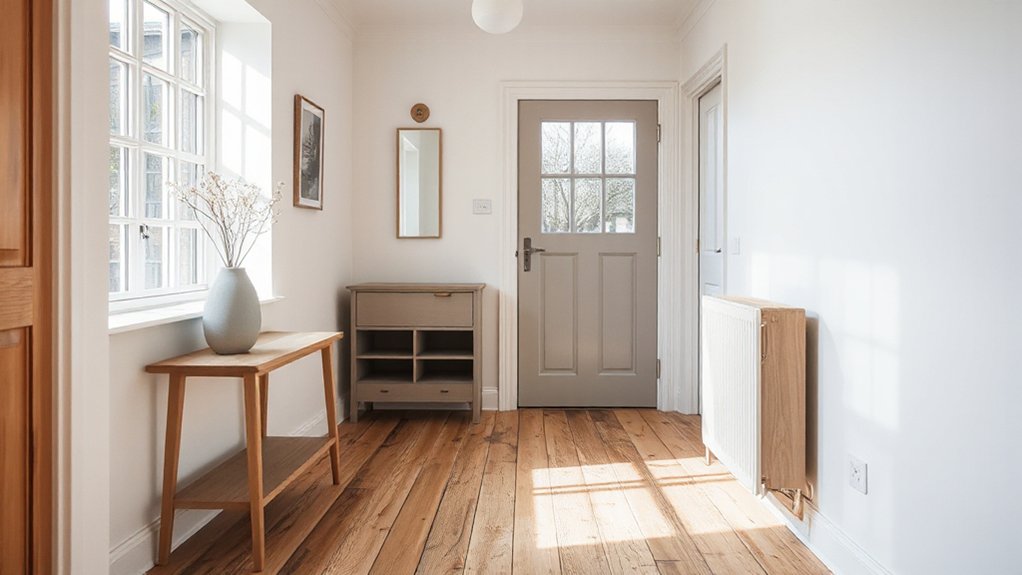
Even in a compact footprint, smart entry furniture can be both functional and stylish. In a terraced hall, choose pieces that multitask: slim seating, space-saving storage, and clean lines that read as intentional design. Prioritize comfort and practicality without bulk, so you actually use the space daily.
Consider materials that resist scuffs and are easy to wipe down, like treated wood or laminate with a protective veneer.
- entryway seating that tucks under a console or mudroom bench to save floor space
- coat storage with a narrow profile, wall-mounted hooks, and a shallow shelved cubby
- a small landing pad or tray to corral keys, mail, and everyday essentials
For added polish, pair neutrals with a bold accent in a single accessory.
Subtle Tech That Blends In at the Threshold
Subtle tech at the threshold should vanish into your space while still doing the heavy lifting. You’ll prioritize concealed controls and clean lines over flash.
Choose smart gadgets that operate discreetly: mirror-like displays behind glass, low-profile sensors recessed into cornices, and a compact speaker system tucked under a console.
Hidden tech should support routine arrivals—gesture-activated lighting, automatic doors to a coat alcove, and a quiet HVAC monitor that adapts to occupancy.
Aim for a single power source with cable management that keeps cords invisible. Integrate a small, flush-mount charging dock near the console so devices land and power up without clutter.
Prioritize interfaces that respond to natural motion and voice without shouting. Subtle tech blends, so your entrance stays pristine and welcoming.
Door and Hardware Upgrades That Lift the Entrance
Upgrading your door and hardware instantly elevates your entry, blending durability with contemporary style. You’ll choose finishes and fixtures that set the tone for the hall, while considering color psychology to influence mood as guests arrive.
Focus on robust hinges, weatherstripping, and a smart lock for security without clutter. Seasonally, swap accents to refresh the vibe without a full overhaul, using simple, practical updates that stay on trend.
- Select a bold door color or matte black hardware to anchor the space and convey confidence.
- Pair handles, escutcheons, and hinges in cohesive finishes for a seamless look that reads high-end.
- Integrate lighting that highlights texture and color choices, plus seasonal decorations that rotate with the year.
Plants for a Welcoming Touch
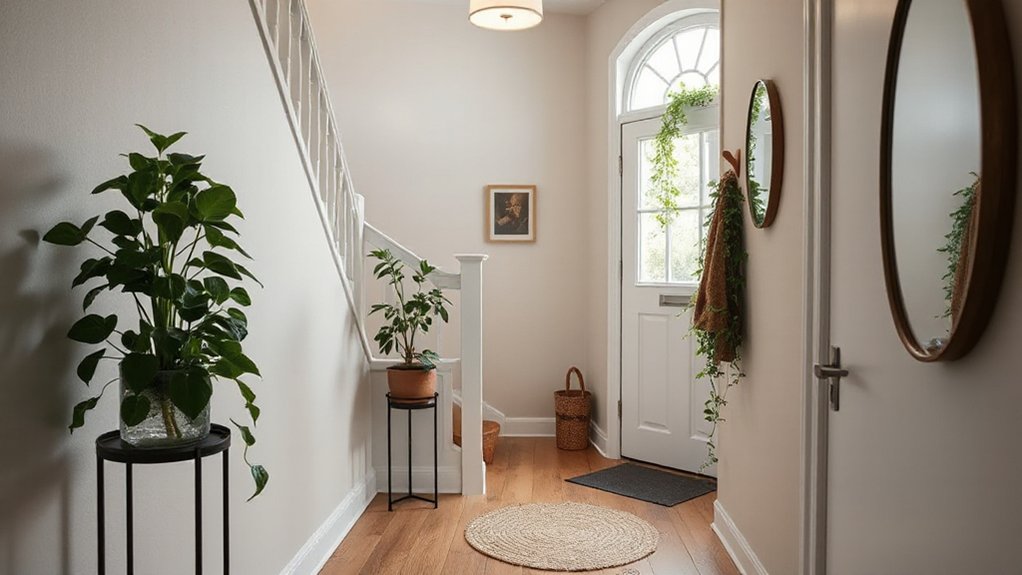
What plants best welcome guests into a terraced hall, and how can you use them without crowding the space? Choose compact, low-maintenance varieties like sago palm, ZZ plant, or pothos in wall-mounted baskets.
Place one focal plant near the door to draw the eye inward. Use vertical space with slim planters and a narrow console to keep flow open.
Layer textures with a small tray of trailing greenery and a single upright specimen for structure. Group 2–3 plants to create a cohesive vignette without overwhelming the hallway.
Select finishes that echo garden decor, such as matte ceramic pots in earthy tones.
Coordinate artwork selection with greenery to balance color and scale, ensuring the entrance remains fresh, modern, and inviting.
Seasonal Styling Ideas That Don’t Require a Full Redo
Seasonal styling can refresh your terraced hall without a full redo by swapping key accents and small decor elements. You’ll feel an instant lift by updating focal pieces and color cues, not renovating walls.
Start with Seasonal wreaths on the door to set the tone, then adjust Entryway color with a single new accent—think a drum of paint or a chic runner. Keep surfaces uncluttered to let your changes breathe.
- Swap a seasonal wreath and door hardware to signal the moment.
- Introduce one entryway color shift via a rug, lamp shade, or wall-art frame.
- Refresh small textiles like cushions and a throw for cohesive texture.
Budget-Friendly Upgrades With Big Impact
Smart, budget-driven tweaks can deliver big impact without a full reno. You’ll start with color psychology: paint a single accent wall in a warm, inviting shade and keep the rest neutral to maximize light reflection.
Swap generic hardware for matte black or brass pulls on a console or storage bench to elevate the entry with minimal cost.
Add Feng shui principles by clearing clutter, placing a small plant near the doorway, and aligning furniture to create a smooth flow, which instantly feels more intentional.
Layer lighting with a dimmable overhead and a focused wall sconce to spotlight key features.
Use mirrors to bounce light, but avoid overmatching; choose one statement mirror with a simple frame for a grounded, contemporary look.
Quick DIY Ambience Tweaks You Can Try Now

If you want a quick lift, start with a few practical ambience tweaks you can do today. You’ll notice a sharper vibe by blending vintage accents with minimalist decor for balance. Focus on three simple moves:
1) Swap out bulky fixtures for slim, matte-finish options that echo vintage charm without clutter.
2) Layer light with a warm bulb mix and a narrow mirror to widen the entry and reflect clean lines.
3) Curate a small, purposeful palette: 2 neutrals plus one muted accent, then keep surfaces clear.
Keep textures tactile: a woven rug, a leather-framed mirror, and a ceramic vase. These elements deliver instant polish while remaining easy to update as trends shift.
Maintaining a Chic Entrance Year-Round
Prioritize durable, low-maintenance materials for key surfaces, and choose finishes that resist fingerprints and scuffs.
Rotate outdoor decor to reflect weather and mood, swapping textiles and accents without overhauling the core layout.
Plan scent-aware steps: keep a small, stylish diffuser or scented candle near the door, refreshed monthly to preserve a welcoming aroma.
Use smart organization: labeled baskets, a slim coat rack, and a slim mirror to amplify light.
Finally, document color and texture cues you love, then repeat them consistently.
From Plan to Reality: A Narrow-Hall Makeover Blueprint
Start with a tight layout that prioritizes flow: place key storage and a slim console where you won’t crowd the corridor, maximizing every inch of width.
Let lighting do the heavy lifting by layering a focused ceiling light with a couple of wall sconces to open the space and highlight color notes.
Keep the plan lean and adaptable, so you can tweak furniture placements as you test real-world movement and daily use.
Layout To Maximize Space
To maximize space in a narrow hallway, start with a precise plan that prioritizes traffic flow and storage. You’ll design zones that minimize clutter while keeping essential items reachable. Use built-in solutions, wall-mounted hooks, and slim furniture to preserve width. Choose a cohesive palette and reflective finishes to brighten the corridor. Incorpor incorporate artistic details that feel intentional, like artistic murals in a narrow alcove or vintage accents on a slim console to add character without bulk.
- Map entry routes and designate a dedicated drop zone to reduce mid-hall traffic.
- Fit storage verticality: tall, shallow cabinets, wall hooks, and mirror-fronted storage.
- Select scale-appropriate pieces with hidden storage to maintain openness.
This approach stays practical, trend-conscious, and precise.
Lighting For Narrow Halls
Rather than relying on a single overhead fixture, layer lighting in a narrow hall to shape the space and guide the eye. You’ll combine ambient, task, and accent lighting so the corridor feels longer and more inviting.
Install wall sconces at eye level to create vertical interest without crowding the ceiling, and opt for warm-white bulbs (around 2700–3000K) to soften reflections on glossy surfaces.
Add a slim LED strip along the baseboard or under a handrail for subtle guidance, especially at night.
Use color psychology cues—cool neutrals for calm, warm tones for coziness—paired with vintage accents like a restored brass fixture or retro wall art.
Keep wiring clean, switches accessible, and test shadow patterns to guarantee depth without glare.
Frequently Asked Questions
How Long Does a Stylish Entrance Transformation Typically Take?
It typically takes 1–2 weeks for a stylish entrance transformation. You’ll plan properly, install entrance lighting, and choose hallway accessories. You’ll pace tasks, stay practical, and keep timelines realistic while prioritizing quality and trend-conscious details.
Can Small Changes Create a Bigger Hallway Feel Quickly?
Yes, small changes can, by coincidence, create a bigger hallway feel fast. You’ll install decorative wall panels and statement lighting, align them with your doors and floor, and your space appears brighter, taller, more practical, and trend-conscious.
What Budget Range Yields Noticeable Impact?
A budget of around $200–$800 yields noticeable impact. You’ll upgrade with entrance lighting, add decorative hooks, and refresh walls; aim for daylight tones, layered lighting, and a tidy landing to maximize perceived space and functionality.
Are There Age-Friendly Adjustments for Narrow Halls?
Coincidentally, yes: you can add age-friendly adjustments for narrow halls. Install low-profile entrance lighting, slip-resistant runners, and wide, rounded door handles. Use decorative accents sparingly, and keep clear paths; your space stays practical, stylish, and accessible.
Which Color Schemes Suit Terraced-House Entrances Best?
You should pick light neutrals or soft pastels for a terraced entrance, leveraging color psychology to feel welcoming, while balancing with contrasting accents; choose paint finishes that reflect traffic and footprints—matte for walls, semi-gloss for trims.
Conclusion
So you’ve planned smart lighting, slim storage, and cohesive finishes, your narrow hall becomes a stylish intro, not a squeeze. Layer overhead, wall, and floor lamps to keep every hour flattering, and mirror strategically to illusion-expand. Choose textures and accents that feel fresh yet timeless, like a well-tailored outfit. Your space will flow effortlessly, like a well-edited wardrobe. With practical tweaks and mindful detail, you’ve got a chic entrance that welcomes, showcases, and lasts.