


In Cardiff, you’ll boost rental appeal by blending modern, flexible layouts with study-friendly zones and fast, reliable Wi‑Fi, then backing that up with durable finishes and energy-efficient upgrades. Prioritize accessible design, strong safety features, and clear compliance signals, while crafting communal spaces that feel inviting to student life. Get your photos right, offer virtual tours, and set pricing that attracts steady demand. Then you’ll see where the bottlenecks are and what to improve next.
Cardiff Student Rental Landscape: Key Challenges and Opportunities

Cardiff’s student rental scene blends steady demand with shifting supply, creating both pressure and opportunity for landlords, developers, and tenants. You’ll find that student housing needs are tied to term dates, university cycles, and housing policy, so planning ahead matters.
The landscape features rising standards for space, energy efficiency, and communal design, while rental regulations tighten compliance around licenses, safety checks, and tenancy terms. You’ll want to align unit layouts with study zones, shareability, and convenience to attract longer tenancies and steady occupancy.
Balancing price landscapes, maintenance responsiveness, and transparent communication reduces churn. Look for partnerships with property managers who understand carded lease controls, deposit protections, and dispute resolution.
In short, targeted upgrades, clear rules, and proactive compliance access both occupancy stability and investor confidence.
Who You’re Renting To: Identify Your Ideal Cardiff Student Tenant
Understanding your ideal Cardiff student tenant starts with clarity about needs, routines, and budgets, then aligning your unit features to meet them. You’ll map who benefits most from your space, considering study habits, social patterns, and optional amenities.
Define two or three tenant personas to guide marketing, screening, and upgrades, ensuring alignment with tenant preferences and safety standards.
Prioritize flexible leases, reliable Wi-Fi, quiet study zones, and accessible storage to appeal to a broad spectrum of student housing needs. This approach keeps listings precise, reduces turnover, and boosts satisfaction.
- Clear persona-based targeting for marketing and upgrades
- Core amenities aligned to study focus and social life
- Consistent screening that respects tenant preferences and safety
Cardiff Market Trends: Where Rents, Demand, and Supply Sit Now
You’ll see Cardiff’s rents moving with the academic calendar, so plan around peak demand and quick turnover to keep units filled.
There’s a clear pulse between price, vacancy, and student flow, with gaps where supply lags behind booking windows.
Expect seasonal shifts, and design your listings and amenities to bridge those gaps while staying concise and true to your target renter.
Rents and Market Pulse
What’re the latest signals on rents, demand, and supply in Cardiff’s student market, and what do they mean for rental decisions this term? You’ll notice stable rents overall, with modest upticks in pick-up periods around exams, and steady demand tied to newer builds.
Supply remains balanced, but pockets of limited two-bedroom options push some flexibility for groups. Pause on long-term commitments if your plan is flexible; otherwise, lock in favorable terms now to avoid rising rates later.
- Competitive bathroom-to-bedroom ratios and layout efficiency
- Short-term lets vs. semester renewals balancing cost and convenience
- Community events and student discounts shaping perceived value
Design-minded tip: curate showreels of unit features, highlighting student discounts and local events to boost appeal.
Demand and Supply Gaps
Soft demand shifts and tight pockets define the current Cardiff student market: two-bedroom units in newer builds are scarce, while larger groups are nudging into nearby zones with varied price bands.
You’ll notice demand fluctuations across campuses, with some blocks spiking during term starts and others cooling mid-semester.
Supply shortages constrain projected moves, especially for purpose-built student accommodation and modern shared flats that fit mid-to-large groups.
In design-minded terms, the gap creates a need for modular layouts, adaptable common areas, and efficient every-square-meter planning.
To stay ahead, map target corridors where build quality aligns with student budgets, and align leasing terms to accommodate shorter renewal cycles.
Practical steps: pre-commitments, staggered turnovers, and transparent, data-backed pricing to reduce friction.
Seasonal Rental Trends
- Peak windows align with term starts
- Refresh cycles reduce vacancy
- Feature flexible layouts for groups
Set a Cardiff-Savvy Price: How to Price for Student Demand

Pricing for student demand in Cardiff isn’t guesswork—it’s a data-driven process that combines lease economics with campus rhythms. You’ll map move-in windows, exam calendars, and term lengths to smart pricing tiers, then test adjustments in small increments.
Use real-time demand signals: application pacing, inquiry frequency, and view-to-lease conversion. Align your pricing with student life, not just market rate, so you sustain occupancy through key weeks.
Build a transparent framework that differentiates offers by room type, distance to campus, and furnishing level. Track competitor moves, but rely on your data: occupancy targets, revenue per available room, and lease fill velocity.
Incorporate pricing strategies that reward longer commitments and prompt renewals, and consider tenant preferences like flexible start dates and inclusive utilities.
Value-Driven Pricing: Balancing Rent, Costs, and Attractiveness
You weigh Rent-to-Value as a practical guide, aiming for rents that reflect true value without overpricing students.
Consider Cost-Quality tradeoffs—how tighter budgets meet needed amenities, reliability, and safety in a way that fuels demand.
Then craft Attractive, Affordable bundles that pair essential features with transparent pricing, so you stand out without sacrificing margins.
Rent-to-Value Balance
- Proximity and accessibility as core value
- Transparent pricing and reliable upkeep
- Flexible terms that enhance perceived affordability
Cost-Quality Tradeoffs
Begin with a precise cost analysis: list utilities, maintenance, internet, and amenity fees, then model seasonal spikes and renewal risks.
Next, perform a quality assessment to rank space, safety, acoustics, storage, and social spaces. Use those scores to set price anchors that reflect durability and desirability rather than short-term discounts.
Prioritize durable upgrades over cosmetic tweaks when they improve endurance and satisfaction.
Communicate value transparently: note what’s included, how repairs respond, and expected energy savings.
Iterate prices quarterly, aligning them with occupancy targets and feedback, ensuring every dollar reinforces comfort, reliability, and appeal.
Attractive, Affordable Bundles
Bundling rent with carefully chosen costs and perks creates a compelling value proposition for students. You’ll balance base price, utilities, internet, and amenities to craft affordable packages that feel tailored rather than generic.
Design the bundle around predictable monthly costs, easy shifts, and measurable perks, so students trust what they’re paying for. Focus on perceptible value: faster Wi‑Fi, included public transport passes, and flexible lease terms.
Test different combos in pilot blocks to refine pricing and features. Use clear labeling to show savings over a la carte options, reinforcing affordability without sacrificing quality.
Align incentives with local campus life to boost retention and referrals. Affordable packages, Student incentives.
- Transparent pricing tiers
- Inclusive utility options
- Timely renewal perks
Energy-Efficient Upgrades That Pay Off in Cardiff
If you’re upgrading a Cardiff rental, prioritize energy-efficient choices that save money from day one. Start with sealing gaps around doors and windows to cut drafts. Then upgrade to a high‑efficiency boiler or heat pump and a programmable thermostat to trim ongoing energy use.
Replace incandescent bulbs with LEDs and add smart lighting controls to reduce idle consumption in common areas. When selecting appliances, target A‑rated or better models and consider a compact, efficient washer‑dryer combo to save space and water.
For cooling, install reflective roof coatings or proper insulation in lofts to minimize AC needs. Track energy savings with a simple billing comparison and pursue utility rebates where available to accelerate payback.
Budget-Friendly Improvements That Increase Value

You don’t need a big budget to boost your rental’s appeal and value; smart, affordable updates can pay back fast. Focus on practical upgrades that tenants notice daily and that enhance longevity, not just aesthetics. Prioritize finishes, storage, and lighting to create a polished feel without overspending.
Build-in ideas around durability and easy maintenance to boost perceived value and encourage longer tenancies. Track impact with simple feedback from occupants to drive ongoing improvements in a cost-efficient loop.
- Budget upgrades to high-traffic zones (kitchen, entry, bathroom) using durable materials and fresh hardware
- Smart lighting, efficient outlets, and task lighting to improve usability and ambiance
- Clear systems for tenant engagement, feedback, and quick response to requests
These moves reinforce value through quality, consistency, and proactive communication.
Create Social, Study-Friendly Common Areas
Think about spaces that invite interaction and focus at the same time, with zones for socializing, quick chats, and quiet study alike.
Start with flexible study areas—mobile tables, modular seating, and writable surfaces that adapt to group work or solo work in minutes.
Add student-centric amenities like power outlets, coffee touches, and clear wayfinding to keep social and study flows smooth and intentional.
Socially Engaging Spaces
Creating socially engaging spaces means designing common areas that invite both collaboration and focus. You’ll blend comfort with clarity, tailoring zones for group work and solo study, so residents feel welcome to linger, converse, and concentrate. Prioritize sightlines, comfortable seating, and robust Wi‑Fi to support quick meetups or deep work.
Use durable, easy‑clean finishes and flexible furniture to reconfigure spaces by need. Integrate community building prompts through signage, micro-event boards, and casual nooks near entrances.
Outdoor amenities should extend indoor sociability, offering weather-smart seating, shade, and accessible paths. For layout, place gathering clusters near windows to boost mood and energy.
- Flexible seating configurations for varied group sizes
- Clear wayfinding and signage to reduce friction
- Integrated tech hubs that serve both collaboration and quiet work
Flexible Study Areas
Integrate defined zones: a sociable hub, a silent alcove, and a spill-safe coffee station to keep disruption minimal. Use lighting that shifts from bright task to warm ambient as needed, reducing eye strain during late sessions. Opt for storage that’s accessible but discreet, preventing clutter.
Flexible study areas, Modern furniture, align with daily rhythms, enhancing appeal without sacrificing practicality.
Student-Centric Amenities
- Flexible seating zones
- Quiet study alcoves
- Social hubs with coffee and charging stations
Flexible Leases for Short- and Long-Term Students
For students juggling classes and leases, flexible terms can be a game changer, blending short bursts of room rental with longer commitments when needed. You’ll design lease options that adapt to term dates, academic calendars, and internships, ensuring a smooth transition between living phases.
Emphasize clear start and end dates, pro-rated rents, and notice periods that stay manageable for renters and landlords alike. Promote lease flexibility as a value proposition in marketing copy, highlighting predictable costs and the ability to scale up or down without penalty.
When drafting Rental agreements, include contingency clauses for breaks around exams or study abroad, and define responsibilities for utilities, maintenance, and renewals. This practical approach reduces friction and reinforces a thoughtful, design-minded rental experience.
Lease flexibility matters.
Fast, Reliable Internet: Building Tech-Ready Spaces

High-speed, reliable internet isn’t a luxury in student housing—it’s a baseline. You’ll design tech-ready spaces that keep flows smooth for studying, streaming, and collaboration. Prioritize robust Internet infrastructure with scalable bandwidth, prioritized workstations, and accessible network rooms.
Locations matter: pull cables cleanly, label runs, and protect equipment from wear and vandalism. Confirm Wi Fi security is tight—strong encryption, guest networks with isolated access, and automatic firmware updates on all devices.
Create wired options in common areas to reduce wireless contention. Plan for future upgrades, 10– or 20-gig backbone, PoE switches, and discreet cabling paths. Your goal is reliable, fast, and secure connectivity that supports everyday student life and short-term stays.
- Assess backbone capacity and switch density
- Segment networks for privacy and performance
- Harden devices and monitor for breaches
Standout Bedroom Basics: Comfort, Security, and Durability
As you move from shaping tech-ready spaces to the bedroom itself, the focus is on comfort, security, and durability that pair seamlessly with everyday student life. You’ll prioritize a bed with proper support, breathable bedding, and a layout that reduces clutter.
Integrate thoughtful storage—under-bed drawers, vertical shelving, and a small wardrobe—so belongings stay secure and out of sight.
For bedroom comfort, choose acoustic panels or heavy curtains to dampen noise and drafts, plus adjustable lighting for study and relaxation.
Security features matter: a sturdy door with reliable latch, reachable power outlets, and a concealed charging spot to minimize cables.
Durability comes from using solid, easy-care materials and finishes that withstand high use and quick cleaning.
Together, these elements create a practical, inviting retreat.
Furnishings That Balance Cost and Style for Students
Smart furnishings that balance cost and style start with versatile essentials: pieces that work hard, look good, and stay within a student budget. You’ll prioritize modular, durable items that adapt to dorm or flat layouts, with neutral tones accented by affordable color pops.
Focus on efficient storage, easy-clean materials, and compact silhouettes that maximize floor space without sacrificing vibe. Furnishing styles should mix form and function, staying cost effective without sacrificing comfort.
- Multi-purpose desk with integrated storage and charging
- Foldable or stackable seating that doubles as décor
- Slim-profile wardrobe or storage dresser with soft-close drawers
This approach keeps costs predictable, enhances daily routines, and preserves design cohesion across rooms, while ensuring the space remains welcoming for study and social life.
Must-Have Amenities That Win Cardiff Student Interest
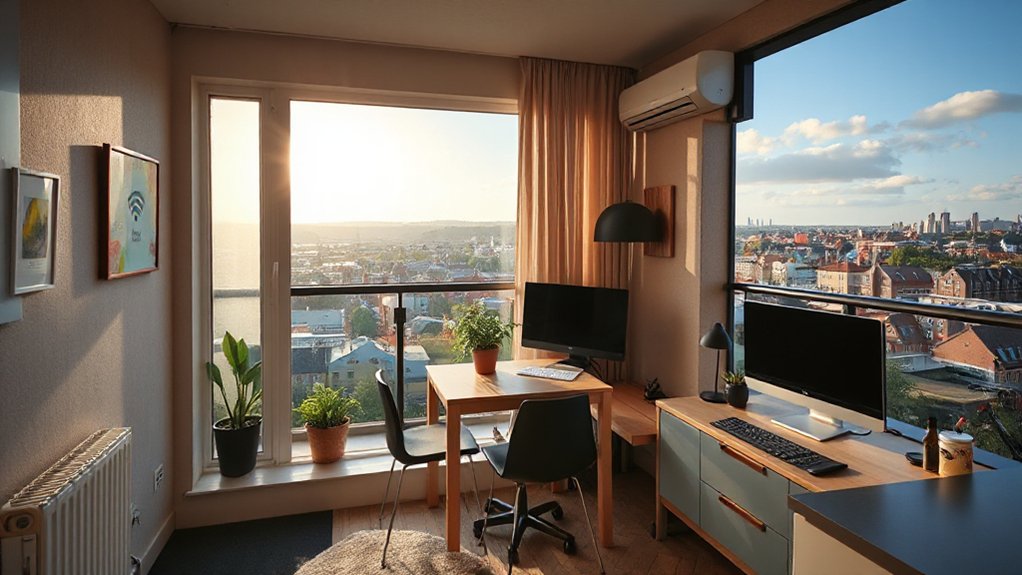
Cardiff students look for genuine value and a smooth daily flow, so prioritize amenities that save time, reduce friction, and enhance both study focus and social life.
You should design spaces with practical zoning: quiet study nooks, communal hubs, and smart storage that minimizes clutter.
Efficient laundry areas, fast Wi‑Fi, and USB‑C charging ports in all rooms keep routines seamless.
Consider on-site bike storage and transit access to cut commute time, plus safe, well-lit outdoor spaces for socializing.
Forward‑thinking elevators or accessible entrances widen appeal.
Include clear signage and intuitive wayfinding to reduce friction.
When selecting features, reference Student housing regulations and ensure visible compliance.
Pair these with transparent rental lease agreements, clearly outlining responsibilities and timelines to build trust.
Clear and Honest Communication: Terms Students Understand
Clear and honest communication starts with terms you can actually understand. You’ll set expectations by clarifying tenant screening steps and the lease agreements upfront, so you and your potential tenants stay on the same page from day one. Use plain language, define any jargon, and spell out fees, timelines, and renewal options.
Provide a written summary of key points and offer a Q&A to address common concerns. This approach reduces misunderstandings, speeds decisions, and builds trust.
- tenant screening criteria and process
- lease agreements: length, deposits, and renewal terms
- transparent timelines, fees, and notice requirements
Marketing to Students: Showcasing Your Cardiff Property Online
To attract student renters in Cardiff, start with standout online listings that mirror how students search: concise, visual, and mobile-friendly. You’ll design listings with scannable headlines, high-contrast photos, and quick-bulleted specs: rent, bills, location, proximity to campuses.
Keep descriptions factual and energetic, emphasizing nearby amenities and study-friendly spaces. Optimize for mobile: load times under three seconds, legible fonts, and tappable contact buttons. Integrate clear calls to action, such as “Book a viewing this week.”
Build trust through transparent terms and frequent updates. Leverage student networking to spread your reach: partner with campus groups, join housing boards, and solicit student reviews. Foster campus partnerships for reliable referrals and co-hosted events.
Monitor analytics weekly, refine keywords, and A/B test headlines to improve click-through and inquiries.
Photos and Virtual Tours That Convert: Tips and Tools

You’ll start with crisp, well-lit photos that highlight key spaces and flow, because Photo Quality Matters sets the first impression.
Use a guided virtual tour with smooth pacing and clear room-by-room progressions, following Virtual Tour Best Practices to keep viewers engaged.
Invite interaction through hotspots and questions to boost Engagement Through Interaction, turning curious browsers into inquiries.
Photo Quality Matters
High-quality photos and immersive virtual tours can make or break a rental listing in student cities, where competition is fierce and first impressions count. You’ll prioritize sharp images, accurate color, and clean composition to convey space and light.
Focus on photo quality and image resolution to avoid blur, pixelation, or misrepresentation. Use natural light, shoot at key angles, and edit minimally to preserve realism.
Your goal is clarity: show layout, storage, and study areas so students picture daily life. Pair stills with a concise floor plan and a quick caption for context.
- Prioritize sharp, well-lit images with consistent color
- Highlight room dimensions, layout, and usable spaces
- Use high-resolution files and minimal editing to preserve accuracy
Virtual Tour Best Practices
Virtual tours can turn curiosity into bookings when they’re fast, accurate, and easy to navigate. You should plan a concise sequence: entryway, living area, kitchen, bedrooms, and bath, then a amenities check.
Use bright, neutral lighting and steady camera motion to minimize distortion, and embed accessible captions for every scene.
Optimize file sizes so pages load in under three seconds on most devices.
Employ virtual staging to illustrate furniture layouts without overloading the frame, keeping spaces scalable and realistic.
Include a 3D walkthrough option for key rooms to let viewers orbit at their own pace.
Provide hot spots that reveal dimensions, storage, and electrical outlets without clutter.
Consistent color profiles and metadata ensure search relevance, aiding both speed and accuracy in decision making.
Engagement Through Interaction
You can turn viewers into inquiries and bookings by pairing engaging photos with interactive tours that feel intuitive and trustworthy. In this section, use photos to tell a story: capture communal spaces, study nooks, and transit-accessible angles to boost community engagement and tenant interaction.
Integrate hotspots in virtual tours for floor plans, utility details, and nearby amenities, so viewers feel informed, not overwhelmed. Keep loading times snappy and captions concise, with consistent branding and color cues that reinforce your property’s design-minded vibe.
Highlight safety features, accessibility, and sustainability moments to build trust. Test with current students for feedback and refine until each click moves toward a booking.
- High-quality, context-rich photos
- Interactive tour hotspots with concise callouts
- Quick, student-focused feedback loop
Efficient Viewings and Smart Applicant Screening
Efficient viewings start with a tight scheduling plan and a clear checklist: confirm move-in dates, set time blocks for each property, and reserve time buffers for travel and unexpected delays. You’ll map visit sequences to minimize backtracking, and pair each showing with a brief property note template to capture visuals, layout, and feasibility at-a-glance.
Use a standardized checklist for lighting, fixtures, storage, and accessibility, then log impressions while they’re fresh. For screening, blend tenant screening with viewing notes: verify income stability, rental history, and co-signer needs in a single session, reducing back-and-forth.
Prioritize viewing efficiency by pre-walking routes, sharing property highlights beforehand, and offering virtual tie-ins for preliminary interest. This disciplined approach speeds decisions while preserving quality, clarity, and candidate confidence.
Compliance, Safety, and Habitability: Do This Now in Cardiff
Cardiff landlords and renters should prioritize compliance, safety, and habitability now, building on the efficiency mindset from streamlined viewings. You’ll tighten checks, codify standards, and protect tenants with clear expectations.
Focus on accessible routes, secure entry, and functional lighting to support daily life on campus. Documented processes reduce disputes and speed up renewals, while showing prospective students you value reliability as much as price.
- Compliance essentials: up-to-date licenses, gas and electrical checks, and energy labeling
- Safety protocols: fire safety, carbon monoxide detectors, and emergency plans
- Habitability measures: noise control, adequate heating, and ventilation
Act now by scheduling a quarterly audit, sharing results publicly, and closing gaps before leases start. This elevates trust, minimizes risk, and enhances appeal.
Frequently Asked Questions
What Unique Cardiff Student Needs Aren’T Covered Elsewhere?
You need to address gaps like accessible student housing and richer cultural amenities; you’ll tailor spaces to study and social life, offering modular layouts, quiet zones, and on-site cultural events that integrate local arts, music, and clubs.
How Do We Balance Cost With Long-Term Tenant Retention?
You balance cost with retention by offering affordable amenities and lease flexibility, tailoring plans to tenant needs. You implement scalable spaces, durable fixtures, and smart utilities, ensuring predictable bills. You design layouts that adapt, boosting loyalty and long-term occupancy.
Which Local Regulations Most Impact Cardiff Student Lets?
Did you know 72% of landlords overlook licensing windows? You’ll navigate Cardiff by prioritizing License regulations and zoning restrictions; you’ll map permits, attend councils, and design compliant spaces with practical, design-minded detail for steady occupancy.
What On-Campus Trends Should Landlords Watch in Cardiff?
You should monitor on-campus trends like demand for campus amenities and vibrant social spaces, because these drive student interest. Invest in flexible study nooks, well-lit social zones, robust Wi‑Fi, noise controls, and accessible pathways throughout properties.
How Can We Measure Rental Appeal Impact Quickly?
Rental demand spikes instantly when you track metrics weekly, and you adjust accordingly; tenant satisfaction climbs as you iterate. You’ll measure impact quickly by surveys, turnover, and bookings, refining amenities, pricing, and marketing for maximum appeal.
Conclusion
You’ve got the plan to make your Cardiff rental standout: smart layouts, fast Wi‑Fi, durable finishes, and crave-worthy common spaces that attract busy students. Highlight flexible study zones, safety updates, and energy efficiency in every listing. Anticipate the objection: “It’s cheaper to rent elsewhere.” Show them the value—strong marketing, quick viewings, reliable upkeep, and compliant, comfortable living—so they stay put. Implement, iterate, and watch demand and satisfaction rise.